“I Don’t Feel Like Myself”
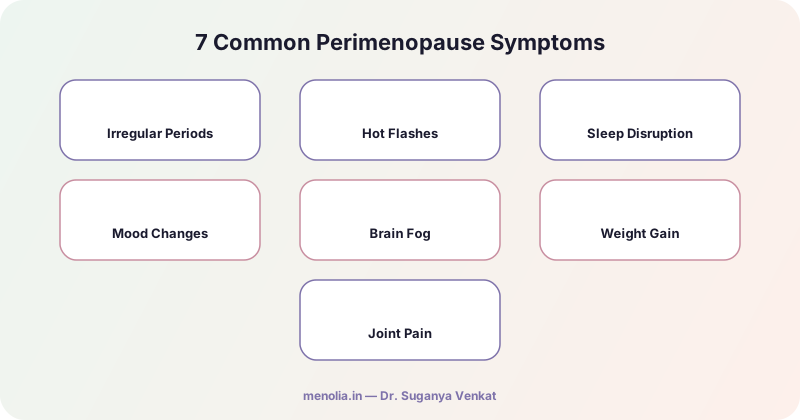
This is the phrase I hear most often from women in perimenopause. Not “I have hot flashes” or “my periods are irregular” — but “I just don’t feel like myself.”
They describe:
- Anxiety that appeared from nowhere — in women who were never anxious
- Irritability so intense they don’t recognise themselves
- A low mood that hangs like a fog — not sadness exactly, but a loss of joy
- Crying at things that wouldn’t have bothered them before
- A sense of dread or doom, especially in the morning
- Loss of confidence and motivation
- Feeling disconnected from people they love
If this resonates with you — you’re not imagining it, you’re not weak, and you’re not “just stressed.” Your hormones are fundamentally shifting, and they’re taking your mood chemistry with them.
The Science: Why Menopause Affects Mood
Estrogen and Your Brain Chemistry
Estrogen is deeply involved in mood regulation:
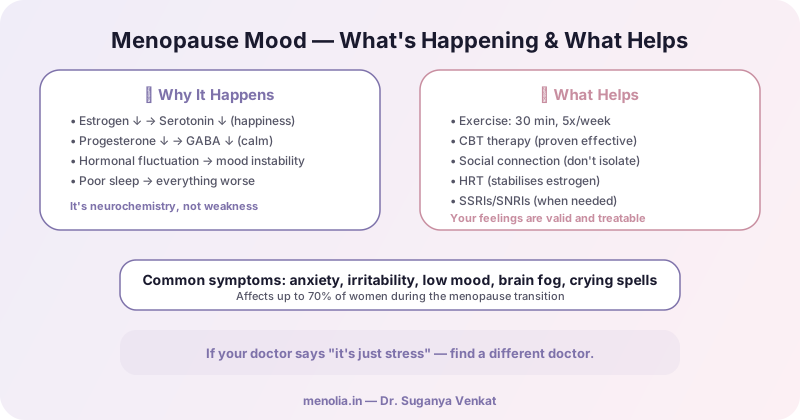
- Serotonin (the “happiness” neurotransmitter) — estrogen promotes serotonin production and increases serotonin receptor sensitivity. When estrogen drops, serotonin activity drops.
- Dopamine (motivation and reward) — estrogen modulates dopamine signaling. Declining estrogen can reduce motivation and pleasure.
- GABA (the calming neurotransmitter) — progesterone (which also declines) promotes GABA activity. Less GABA = more anxiety.
- Norepinephrine (alertness) — fluctuating estrogen can cause norepinephrine spikes, which feel like anxiety or panic.
It’s the Fluctuation, Not Just the Decline
Here’s what’s key: it’s not just that estrogen is lower — it’s that estrogen is wildly unpredictable during perimenopause. One day high, next day low. Your brain can’t adapt to a moving target. This is why perimenopause (the transition) often causes worse mood symptoms than post-menopause (when levels are stably low).
The Vulnerability Window
Research shows that women are most vulnerable to mood disturbances during two hormonal transitions:
- Postpartum (estrogen drops after delivery)
- Perimenopause (estrogen fluctuates and eventually declines)
Women who experienced postpartum depression or severe PMS are at higher risk of perimenopause mood symptoms. The same hormonal sensitivity that made those transitions hard makes this one hard too.
Types of Mood Changes
New-Onset Anxiety
The most common and often most distressing. Women who have never been anxious suddenly experience:
- Generalised worry and restlessness
- Heart palpitations and chest tightness
- Morning anxiety or dread
- Social anxiety
- Health anxiety
- Difficulty relaxing
Irritability and Rage
A simmering anger that erupts at small triggers. Many women describe feeling “touched out” — overstimulated by noise, demands, and people. This is related to reduced GABA (calming neurotransmitter) and serotonin.
Depression
Not always classic sadness. Perimenopause depression often presents as:
- Loss of interest in things you used to enjoy
- Fatigue that isn’t explained by poor sleep alone
- Feeling disconnected or emotionally flat
- Difficulty making decisions
- Withdrawing from social life
Mood Swings
Rapid shifts between feeling fine and feeling terrible — sometimes within the same day. Related to the erratic hormonal fluctuations.
What Helps: Evidence-Based Treatments
1. Regular Exercise
The evidence for exercise in menopause mood management is overwhelming.
- Increases serotonin and endorphins
- Reduces cortisol (stress hormone)
- Improves sleep (which improves mood)
- Provides a sense of accomplishment and control
- Social exercise (group classes, walking with friends) adds connection
Target: 30 minutes of moderate exercise, 5 days a week. Aerobic exercise (walking, swimming, cycling) has the strongest evidence, but any movement helps.
2. Cognitive Behavioural Therapy (CBT)
CBT is proven effective for menopause-related anxiety and depression — multiple randomised controlled trials confirm this.
CBT helps you:
- Identify and challenge negative thought patterns
- Develop coping strategies for anxiety
- Build resilience to hormonal mood shifts
- Improve sleep (CBT-I)
- Reduce catastrophising about symptoms
3. Social Connection
Isolation amplifies every mood symptom. During a time when many women withdraw, connection is medicine:
- Talk to friends about what you’re going through
- Join a perimenopause support group (online or in-person)
- Maintain regular social activities, even when you don’t feel like it
- Consider couples counselling if your relationship is strained
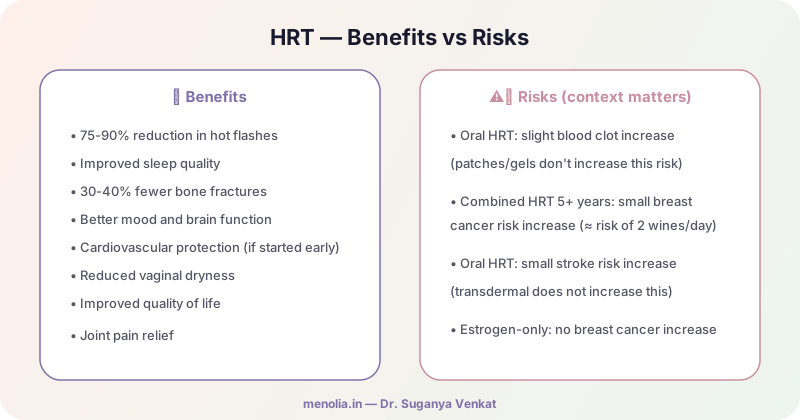
4. HRT for Mood
HRT can be very effective for mood symptoms during perimenopause:
- Stabilises estrogen levels (reduces the fluctuation that causes mood swings)
- Improves sleep (which improves mood)
- Reduces hot flashes and night sweats (which cause distress and sleep disruption)
- Micronised progesterone specifically has anxiolytic (anti-anxiety) properties
Important: HRT works best for mood when symptoms are clearly linked to the menopause transition. It’s not a replacement for therapy or antidepressants when those are indicated.
5. Antidepressants (When Needed)
For moderate to severe depression or anxiety, SSRIs or SNRIs may be appropriate:
- They work on the same neurotransmitters affected by estrogen decline
- Some (venlafaxine, paroxetine) also reduce hot flashes
- They can be used alongside or instead of HRT
- There’s no shame in medication — it’s treating a neurochemical imbalance
6. Stress Management
Your stress tolerance is genuinely lower during perimenopause. What you could handle before may now be overwhelming. This isn’t weakness — it’s neurochemistry.
- Daily meditation or mindfulness (10 minutes minimum)
- Yoga (combines movement, breathing, and mindfulness)
- Journaling
- Set boundaries — say no to what drains you
- Delegate and ask for help
7. Nutrition for Mood
- Omega-3 fatty acids — anti-inflammatory, supports brain health
- B vitamins (especially B6, B12, folate) — involved in neurotransmitter production
- Vitamin D — deficiency is linked to depression; common in Indian women
- Magnesium — calming mineral, often deficient
- Reduce sugar and ultra-processed food — blood sugar spikes worsen mood instability
- Moderate caffeine — can worsen anxiety in sensitive women
What to Tell Your Doctor
If your mood has changed during perimenopause, be specific with your doctor:
- “My mood changed around the same time my periods became irregular”
- “I’ve never had anxiety before, but now I feel anxious most days”
- “This is affecting my work/relationships/quality of life”
- “I want to discuss whether HRT, therapy, or medication would help”
If your doctor dismisses your symptoms as “just stress” or “normal aging” — find a different doctor. Your mood matters.
The Bottom Line
Menopause mood changes are hormonal, neurochemical, and treatable. They are not character flaws. They are not “all in your head” — they’re in your brain chemistry.
You deserve to feel like yourself. At Menolia, Dr. Suganya addresses mood as a core part of perimenopause and menopause care — because no amount of nutrition plans and exercise routines matter if you’re too anxious or depressed to follow them.
Your feelings are valid. And help exists.