“Is This Menopause, or Is My Disease Getting Worse?”
I hear a version of this question from a specific group of women: those who came into perimenopause already managing rheumatoid arthritis, lupus, or Sjogren’s syndrome. They notice their joints feel different. Their fatigue has a new texture. A flare that used to follow a predictable pattern now seems to arrive out of nowhere, or one that used to arrive on schedule now stays quiet.
They ask their rheumatologist. They ask their gynaecologist. Often, neither doctor has time in a short appointment to walk through how two systems, hormonal and immune, are shifting at the same time.
This post is for that specific overlap. Not general immune ageing (I have covered that separately, why women get sick more often after 45), but what happens when you already carry a diagnosed autoimmune condition and you are moving through the menopausal transition.
What This Post Covers
- How rheumatoid arthritis activity tends to change around menopause, and why early menopause matters more than menopause itself
- What the evidence shows about lupus flares after menopause, and why “it gets better” is only half true
- Why Sjogren’s dryness often worsens at menopause, and how to tell ordinary dryness from a Sjogren’s flare
- Why hormone therapy is not a simple decision in this group, and who needs specialist input before starting it
- What menopause does NOT mean for your autoimmune disease
The One Idea That Organises Everything Below
Oestrogen is an immunomodulator. It does not simply switch inflammation up or down. It regulates immune tolerance, the system that recognises “self” tissue as safe. When oestrogen falls at menopause, that regulation loosens in some women, which is part of why autoimmune conditions become more common after 45.
But “more common” and “more active in someone who already has the disease” are two different questions, and the evidence answers them differently for each condition. Menopause is one input among several, alongside disease duration, medication, age, sleep, and each condition’s own biology. It is never the whole explanation, and your rheumatologist will weigh it alongside everything else in your chart, not instead of it.
Rheumatoid Arthritis: Higher Risk of Onset, Complicated Picture on Activity
Does menopause make you more likely to develop RA?
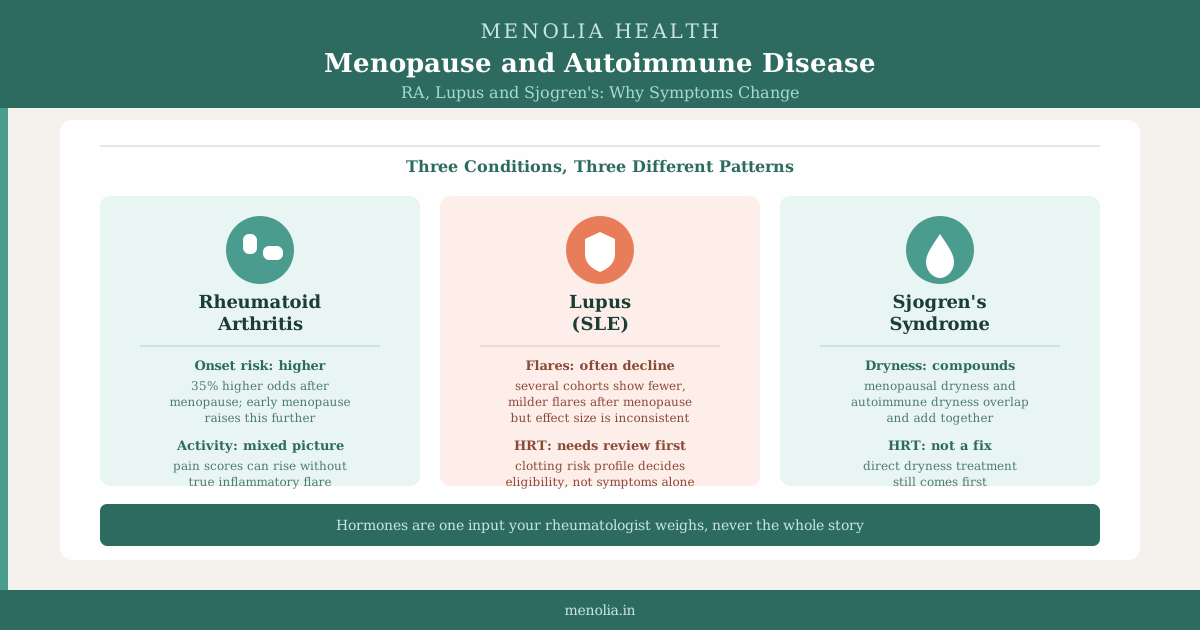
Yes, and this part of the evidence is fairly consistent. A 2024 systematic review and meta-analysis pooling seven observational studies found postmenopausal women had significantly higher odds of developing RA than premenopausal women (OR 1.35, 95% CI 1.04 to 1.67), roughly 35 percent higher odds (Namavari et al. 2024, BMC Rheumatology, PMID 39350181). The association was considerably stronger for early menopause, defined as menopause before age 45 (OR 2.97, rising to 3.16 after adjusting for publication bias).
This is about who develops RA, not about what happens to RA activity in someone who already has the disease.
If you already have RA, does menopause make it worse?
Here the evidence is genuinely mixed, and this is the part that gets flattened into oversimplified answers. Some cross-sectional studies do find higher disease-activity scores (CDAI, DAS28) in peri- and postmenopausal women compared with premenopausal women with RA. But when researchers adjust for age, disease duration, and seropositivity, much of that difference disappears. A large Korean cohort study found that women who went through early menopause (before 45) had worse baseline disease activity, more fatigue, worse sleep, and lower quality of life scores, both at baseline and over time (Park et al. 2023, RMD Open, PMID 36792311). Interestingly, in that same line of research, women whose RA actually began after menopause did not show worse inflammatory or radiographic markers, despite reporting worse composite scores and quality of life.
What this tells us clinically is important: a rise in a symptom score after menopause does not automatically mean your joints are more inflamed. Composite RA scores include how you feel, tender joint counts, your own global assessment, alongside objective inflammation markers like ESR and CRP. Menopausal sleep disruption, hot flushes, low mood, and new joint aches from oestrogen decline can all raise a symptom score without a parallel rise in synovitis.
The practical distinction to ask your rheumatologist to help you make:
- A true flare usually shows new swollen joints (not just painful ones), prolonged morning stiffness, and CRP or ESR that has moved from your own baseline.
- Symptom amplification without a true flare looks like more pain and fatigue but stable inflammatory markers and no new swelling. This is often driven by menopausal sleep disruption, vasomotor symptoms, or new-onset joint aches that are not autoimmune at all (see menopause joint pain for how common this is even without any autoimmune diagnosis).
Neither pattern means you should assume the worst. Both are manageable, and the management is different, which is exactly why the distinction matters and is worth a proper rheumatology review rather than a self-diagnosis.
A note on hormone therapy and RA
Hormone therapy is not established RA treatment. A randomised, placebo-controlled trial of raloxifene (a selective oestrogen receptor modulator) added to standard RA therapy in postmenopausal women found no significant improvement in disease activity, function, or pain scores compared with placebo. If you are considering HRT for menopausal symptoms and you have RA, that decision should be based on your menopausal symptom burden and cardiovascular risk profile, not on a hope that it will control your joints. It very likely will not, and that is a fair, evidence-based expectation to set with your doctor.
If your RA symptoms have changed since perimenopause started and you’re not sure whether it’s a flare or menopause layering on top, WhatsApp Dr. Suganya at wa.me/919940270499. We work alongside your rheumatologist, we never replace that relationship, to help you sort out what’s hormonal and what needs their attention.
Lupus: Flares Often Decline, But “Often” Is Not “Always”
This is the condition where women most often hear a hopeful half-truth: “lupus gets better after menopause.” It is true on average, and it is not the whole story.
What the cohort studies found
Mok et al. followed 34 women with lupus onset before menopause across their pre- and postmenopausal years and found flare frequency declined from 0.50 to 0.14 flares per patient-year after menopause, a statistically significant drop, with severe flares becoming less frequent too (Mok et al. 1999, Scandinavian Journal of Rheumatology, PMID 10665741).
But not every cohort found the same size of effect. The Toronto lupus cohort compared activity before and after natural menopause and found flare rates of 0.56 versus 0.43 per year, and severe-flare rates of 0.17 versus 0.12 per year: a modest decline that did not reach statistical significance (Sánchez-Guerrero et al. 2001, American Journal of Medicine, PMID 11690572). A later long-term trajectory analysis from the same group found disease activity improved at a similar rate before, during, and after menopause, and attributed the overall decline in lupus activity to time and disease duration rather than to menopause itself (Urowitz et al. 2006, Journal of Rheumatology, PMID 16981295).
Put together: average lupus activity tends to be lower after menopause in several studies, but the decline is modest and inconsistent, and it does not mean the disease switches off. A postmenopausal woman with lupus can still develop an important renal, neurological, or haematological flare. Lupus that started after menopause also tends, at a group level, to look different: less of the classic malar rash, less kidney involvement, fewer blood-count abnormalities, than lupus that started at a younger age, but this is a group tendency, not a guarantee for any individual.
What this means practically: if your lupus has been quieter since menopause, that is a genuinely good and common pattern, but it is not a reason to stop routine monitoring: blood counts, kidney function, complement levels, and whatever markers your rheumatologist has been tracking. Quieter on average still calls for the same regular checks.
Lupus and hormone therapy: where the caution is real
This is the one area in this post where I want to be especially direct, because the evidence here has a genuine safety signal that matters.
The SELENA trial randomised 351 postmenopausal women with inactive or stable lupus to combined oestrogen-progestin HRT or placebo for 12 months. Severe flares were not significantly increased by HRT (8.1 percent versus 4.9 percent, not statistically significant), but mild-to-moderate flares were: 1.14 flares per person-year on HRT versus 0.86 on placebo, and 64 percent of women on HRT had at least one flare of any severity versus 51 percent on placebo (Buyon et al. 2005, Annals of Internal Medicine, PMID 15968009).
The trial excluded women with high-titre antiphospholipid antibodies, lupus anticoagulant, or a history of blood clots, and this exclusion matters enormously. Oestrogen adds clotting risk on top of the clotting risk lupus itself can carry, especially in women who are antiphospholipid-antibody positive. If you have lupus and you are considering HRT for menopausal symptoms, this is a decision for your rheumatologist and gynaecologist together, not something to start on your own or based on a general HRT conversation that did not account for your lupus and antibody status. For women with stable disease, no clotting history, and a negative antiphospholipid profile, HRT can often be considered after that joint review. For women with a positive antiphospholipid profile or prior clots, it usually cannot.
Sjogren’s Syndrome: Where Menopause and Disease Genuinely Overlap
Sjogren’s is the condition where menopause and the disease itself point in the exact same direction, dryness, which is precisely why it is the hardest of the three to disentangle.
Menopause alone causes dry eyes, dry mouth, and vaginal dryness because the glands and mucosal tissue that produce tears, saliva, and vaginal lubrication all respond to sex hormones. Sjogren’s syndrome causes the same three symptoms through an entirely different, autoimmune mechanism: the immune system attacking the moisture-producing glands directly. When a woman with Sjogren’s goes through menopause, she is often dealing with both mechanisms compounding each other, which is why dryness so often intensifies noticeably around this life stage.
A study of women with primary Sjogren’s found that more severe dry-eye symptoms correlated with lower oestrogen levels, particularly oestrone, while dry-mouth symptoms correlated more strongly with lower androgens (testosterone and androstenedione). Inflammatory activity, measured by ESR, was also inversely correlated with androgen levels (Forsblad-d’Elia et al. 2009, Journal of Clinical Endocrinology & Metabolism, PMID 19318446). This supports a real hormonal contribution to Sjogren’s symptom severity, but it is an association, not proof that replacing a hormone reverses the disease.
This is the important caution: systemic HRT is not an established Sjogren’s treatment, and for dry eye specifically, some observational data points the other way, with systemic hormone therapy associated with a higher prevalence of dry-eye disease in some studies. If you are considering HRT for vasomotor symptoms, bone protection, or genitourinary syndrome of menopause, that is a reasonable, separate conversation. Just do not expect it to resolve Sjogren’s-driven dry eye or dry mouth, and do not delay direct treatment for those symptoms (lubricating drops, saliva stimulants, dental protection) while waiting to see if HRT helps.
Telling ordinary menopausal dryness from a Sjogren’s flare
- Severity and persistence. Ordinary menopausal dryness is usually mild to moderate and responds well to over-the-counter lubricants. Sjogren’s dryness tends to be more severe, more persistent, and less responsive to simple lubrication alone.
- What comes with it. Joint pain, unusual fatigue, swollen salivary glands, or rapidly worsening dental decay alongside the dryness point toward Sjogren’s, not menopause alone.
- New onset versus known diagnosis. If you already carry a Sjogren’s diagnosis and your dryness has clearly stepped up around perimenopause, that is a recognised, evidence-supported pattern, not something you are imagining.
- When to ask for antibody testing. New, disproportionate dryness with joint pain or fatigue, without a prior autoimmune diagnosis, is worth raising with your doctor for anti-Ro/anti-La antibody testing rather than assuming it is simply menopause.
If dryness, joint pain, or fatigue has become harder to explain since perimenopause started, WhatsApp Dr. Suganya at wa.me/919940270499 for a conversation about what’s worth raising with your rheumatologist. We coordinate around your existing specialist care, we do not replace it.
What Menopause Does NOT Mean
I want to close this section clearly, because both extremes of the story circulate, and both do a disservice to women navigating this.
Menopause does not mean “your autoimmune disease is over.” Even in lupus, where average activity tends to decline, monitoring should continue. RA and Sjogren’s do not reliably “burn out” at menopause either.
Menopause does not mean “your autoimmune disease is guaranteed to get worse.” The early-menopause-and-RA link is real, but general postmenopausal RA activity, once you adjust for age and disease duration, is a much more mixed picture than that framing suggests. Lupus, on average, tends to quieten.
The individual answer sits between those two stories, and it is built from your own bloodwork, your own symptom pattern, and your own disease history, not from a general statement about “hormones and autoimmune disease.” That is exactly why this is a conversation for your rheumatologist to lead, with your gynaecologist weighing in on the menopause-specific decisions (HRT, GSM treatment, bone protection) alongside them.
Frequently Asked Questions
Q: Does menopause cause autoimmune disease?
Menopause does not directly cause conditions like RA, lupus, or Sjogren’s. But the hormonal recalibration around menopause is associated with a higher likelihood of RA onset (about 35 percent higher odds in postmenopausal versus premenopausal women, and considerably higher after early menopause), and can unmask a pre-existing susceptibility in some women. It is one factor among several, alongside genetics, smoking, and other exposures.
Q: Will my rheumatoid arthritis get worse after menopause?
Not necessarily. Some women notice worse joint symptoms and fatigue around menopause, but a chunk of that is often menopausal sleep disruption, hot flushes, and new-onset joint aches rather than true inflammatory flare. Early menopause (before 45) is more clearly linked to worse RA outcomes than menopause at the usual age. Ask your rheumatologist to distinguish true flare (new swelling, rising CRP/ESR from your baseline) from symptom amplification.
Q: Does lupus really improve after menopause?
On average, several studies show fewer flares after menopause, with one cohort finding flares dropped from 0.50 to 0.14 per patient-year. But other cohorts found smaller, non-significant declines, and researchers debate how much is genuinely due to menopause versus longer disease duration and ongoing treatment. Either way, “quieter on average” is not “resolved,” and routine monitoring should continue.
Q: Can I take HRT if I have lupus?
It depends heavily on your antiphospholipid antibody status and clotting history. In a randomised trial of women with stable, inactive lupus and no history of blood clots, HRT modestly increased mild-to-moderate flares without significantly increasing severe flares. HRT is generally avoided or used with great caution in women with antiphospholipid antibodies or a prior clot, because of added clotting risk. This decision needs your rheumatologist and gynaecologist reviewing your case together.
Q: Why does dryness get so much worse at menopause if I have Sjogren’s?
Because ordinary menopausal dryness and Sjogren’s dryness share the same target tissues (eyes, mouth, and vaginal lining) but arise through different mechanisms, hormonal decline in one case, autoimmune gland damage in the other, and they add together. This is a well-recognised overlap, not something you are imagining or exaggerating.
Q: Does HRT help Sjogren’s dry eyes or dry mouth?
Systemic HRT is not an established Sjogren’s treatment, and for dry eye specifically, some studies have found systemic hormone therapy associated with a higher rate of dry-eye disease rather than improvement. Direct treatment (lubricating drops, saliva stimulants where appropriate, dental protection) remains the primary approach for Sjogren’s dryness, regardless of your HRT decision for other menopausal symptoms.
Q: I don’t have an autoimmune diagnosis, but my joints and dryness have both worsened since perimenopause started. Should I worry?
Not automatically, both are extremely common features of ordinary menopause on their own. But if you notice joint swelling (not just pain), unusual fatigue, or dryness disproportionate to typical menopausal symptoms, it is reasonable to ask your doctor about basic autoimmune screening (ANA, anti-Ro/anti-La, rheumatoid factor) rather than assuming everything is hormonal.
The Conversation Worth Having
If you are managing RA, lupus, or Sjogren’s through your menopausal transition, the single most useful thing you can bring to your next rheumatology appointment is a clear, honest account of what has actually changed: new swelling versus new pain, sleep quality, energy, and any bloodwork trends you have access to. That conversation, informed by what the evidence does and does not show, is far more useful than trying to decide alone whether “it’s just menopause” or “it’s my disease.”
At Menolia, part of what Dr. Suganya Venkat and the team do is help women make sense of exactly this kind of overlap, sorting out what belongs in a menopause conversation and what needs to go back to a specialist, so nothing falls through the gap between two doctors who each only see one part of the picture. If this is where you are right now, WhatsApp Dr. Suganya at wa.me/919940270499 to talk it through.