Reaching for a steel tumbler on the top shelf hurts. Fastening a blouse behind your back has become difficult. At night, you keep searching for a position that does not press on the shoulder.
If this sounds familiar and your periods are also changing, it is reasonable to ask whether menopause and frozen shoulder are connected. They overlap in age, but we do not yet know that falling oestrogen directly causes frozen shoulder. That distinction matters: a stiff shoulder needs its own examination, rather than being put down to hormones.
Frozen shoulder, also called adhesive capsulitis, most commonly affects people aged 40 to 60 and is more frequent in women. The shoulder capsule becomes thick and tight, restricting movement. These features are described in the American Academy of Orthopaedic Surgeons’ frozen-shoulder guide.
There are treatments to ease pain and improve function. You do not have to wait for menopause to end before asking for help.
Does Menopause Cause Frozen Shoulder?
The timing has prompted research into hormones, but an age overlap does not establish a cause. It also does not show that the painful shoulder of an individual woman is due to low oestrogen.
A 2026 pilot study examined records from 1,952 postmenopausal women aged 40 to 60 in one healthcare organisation. Frozen shoulder was recorded less often among hormone-therapy users, but the difference was not statistically significant. This was a retrospective study, not a trial showing that HRT prevents or treats frozen shoulder (Reinke et al., Climacteric, 2026, PMID 41614260).
HRT is not an established treatment for frozen shoulder. If you are considering it for menopause symptoms, discuss those symptoms and your individual risks with your gynaecologist. Mention the shoulder too, without expecting HRT to replace shoulder assessment or physiotherapy.
For other midlife joint symptoms, see Menopause Joint Pain: Why It Happens After 40. A symptom appearing during perimenopause still deserves a diagnosis in its own right.
How Do You Recognise Frozen Shoulder?
Pain and a gradual loss of movement are the main clues. Everyday tasks can reveal the change before you think of it as stiffness:
- Reaching up to hang clothes or comb your hair becomes harder.
- Reaching behind your back to dress is restricted.
- Turning the arm outwards becomes difficult.
- Pain makes lying on that side uncomfortable.
The important examination finding is a restriction in both active and passive movement. Active means you move the arm yourself. Passive means a clinician gently moves it while you relax. In frozen shoulder, both are limited; pain with one particular movement alone does not confirm the diagnosis (AAOS guide).
A doctor or physiotherapist will also consider rotator-cuff problems, arthritis and pain referred from the neck. An X-ray may help check for arthritis or another bone problem. MRI and ultrasound are not routinely necessary to diagnose frozen shoulder, although they can help when another injury is suspected. An online consultation can help you plan where to go, but it cannot replace a hands-on shoulder examination.
What Helps Frozen Shoulder?
Gentle movement and a tailored physiotherapy plan
Avoid completely stopping use of the shoulder, but also avoid forcing it through painful movements. The NHS shoulder-pain guidance recommends gentle movement and advises against activities that worsen pain, strenuous self-devised exercises and heavy gym equipment.
A physiotherapist can choose stretches suited to your current range and pain level, then adjust them as movement improves. The 2025 Lee guideline supports range-of-motion work and considers self-stretching an adjunct when properly prescribed. It does not establish one home-exercise dose for everybody.
For example, the AAOS guide illustrates a supported overhead stretch while lying down and a doorway external-rotation stretch. Ask your physiotherapist to demonstrate the movement, choose repetitions and explain when to stop. Do not ask a family member to force your arm higher.
For comfort while awaiting an appointment, the NHS suggests resting the arm on a cushion and trying a wrapped heat or cold pack. Before buying painkillers at a chemist, show the pharmacist your current medicines and mention your health conditions. Ask which option is suitable and how long to use it; get medical advice if pain remains difficult to manage.
Corticosteroid injection
A corticosteroid injection into the shoulder joint can be considered for pain and function, sometimes combined with physiotherapy. The 2025 Lee guideline supports this option, while rating the evidence as low certainty. The aim is symptom relief and improved function, not a guaranteed permanent cure.
Discuss benefits, risks and alternatives with the clinician performing the injection. If you have diabetes, mention it: the same guideline reports transient blood-glucose increases among injection adverse effects, so you may need a monitoring plan. An injection is a choice to discuss, not an obligatory next step for every painful shoulder.
Hydrodilatation
This procedure injects fluid into the joint to stretch the capsule, often with corticosteroid and local anaesthetic, under imaging guidance. It may be considered when symptoms remain troublesome.
A 2008 Cochrane review found short-term benefits from distension with saline and steroid compared with placebo, but uncertainty about superiority to alternatives (Buchbinder et al., PMID 18254123). The 2025 Lee guideline says hydrodilatation with steroid could be considered, again on low-certainty evidence. Choose it with the clinician based on symptoms and the likely benefits, rather than waiting for a particular stage of the illness.
Surgery and specialist review
If pain remains severe, the diagnosis is uncertain or progress is unsatisfactory despite treatment, return for review. An orthopaedic specialist can discuss further options, including manipulation under anaesthesia or arthroscopic capsular release when appropriate. These have risks and require rehabilitation; the AAOS guide recommends discussing continued nonsurgical treatment as well as surgery.
Before that appointment, note which tasks remain difficult, whether pain interrupts sleep, and which treatments have or have not helped. This gives the clinician more useful information than simply saying the shoulder is still stiff.
Shoulder stiffness alongside changing periods, sleep or hot flushes?
An online menopause consultation can cover your changing periods, sleep and hot flushes alongside your medical history, and help you prepare questions for a local shoulder appointment. For continuing menopause support, explore the Menolia perimenopause program. Shoulder examination, rehabilitation and injections belong with your local shoulder-care team.
Talk to Dr. Suganya on WhatsApp
The Three Phases Are a Description, Not a Deadline
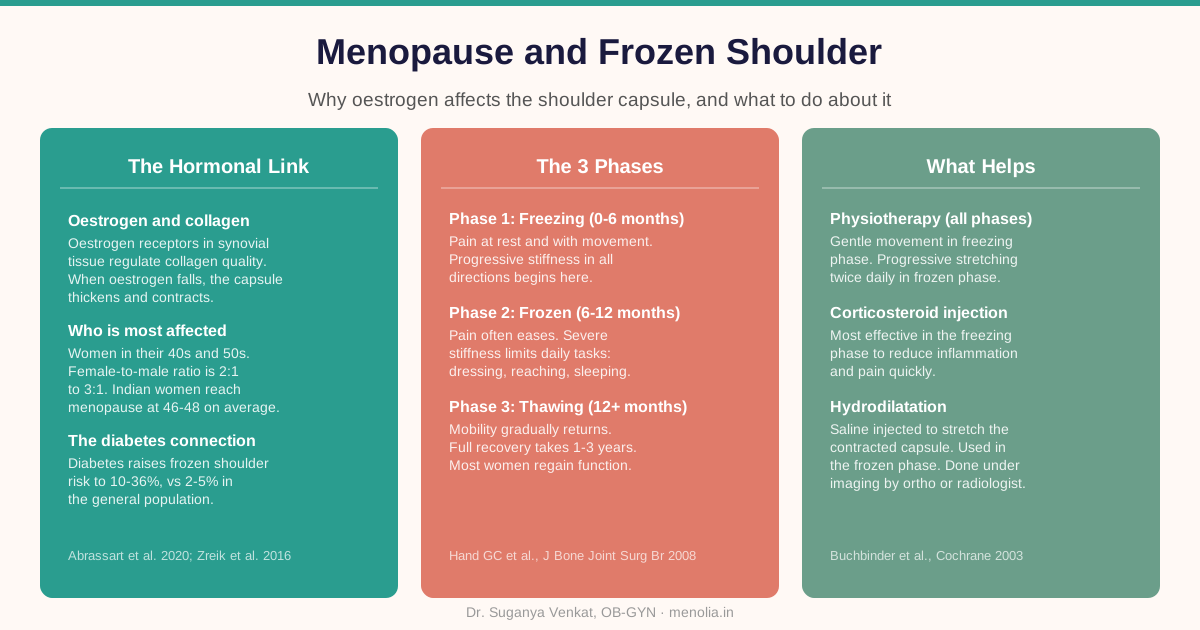
You may hear the terms freezing, frozen and thawing:
| Term | What it describes |
|---|---|
| Freezing | Increasing pain with a gradual loss of movement |
| Frozen | Stiffness dominates; pain may ease but dressing and reaching remain difficult |
| Thawing | Movement gradually improves |
These labels can help explain symptoms, but there is no reliable month-by-month schedule that everyone follows. A review specifically challenged the routine description of frozen shoulder as a predictable, three-phase condition that always resolves by itself (Abrassart et al., EFORT Open Reviews, 2020, PMID 32509332).
Recovery may take months to years, and full movement is not guaranteed. In a follow-up study of 223 people with primary frozen shoulder, 59% reported normal or near-normal shoulders and 41% reported ongoing symptoms; most persistent symptoms were mild. Follow-up averaged 4.4 years after onset (Hand C et al., Journal of Shoulder and Elbow Surgery, 2008, PMID 17993282). Because the study included men and women, these figures give a general picture rather than a forecast for Indian women in midlife.
Treatment and follow-up should respond to your pain, function and progress, not to whether you have reached a particular month on a chart.
Diabetes and Thyroid Disease Matter
Diabetes has a better-established association with frozen shoulder than menopause itself. A meta-analysis estimated frozen-shoulder prevalence among people with diabetes at 13.4% (95% confidence interval 10.2% to 17.2%). People with diabetes were five times as likely as controls to have the condition in the included studies (Zreik NH et al., Muscles, Ligaments and Tendons Journal, 2016, PMID 27331029). The estimate combines the study populations; your own assessment will depend on your symptoms and health history.
Thyroid disease is also associated with frozen shoulder. The 2025 clinical practice guideline by Lee et al., PMID 40602400, reviews both associations.
Tell the examining clinician about diabetes, thyroid disease, previous shoulder surgery or an injury that kept the arm still. If you have not had a recent diabetes assessment, ask whether testing is appropriate; the Zreik review recommends considering diabetes screening in people presenting with frozen shoulder. Continue your usual diabetes care, but do not regard a glucose result as a substitute for assessing the shoulder.
For related metabolic health questions, read Menopause and Blood Sugar.
Food and General Midlife Health
You do not need a special “collagen diet” or supplement stack to accompany shoulder treatment. The treatment guidance cited above does not establish haldi, sesame, amla or collagen supplements as treatments for frozen shoulder.
You can keep familiar meals such as dal or chana with rice or roti, vegetables and dahi while following any individual diabetes advice. Keep the focus on a practical eating pattern while the shoulder-care plan addresses movement and pain. For the separate question of protecting bones in midlife, see How to Prevent Osteoporosis.
When Should You Seek Help?
Arrange an examination if pain is worsening, persists beyond two weeks or makes moving your shoulder very difficult. Do not wait months on the assumption that this is a normal part of menopause.
Seek urgent local care for sudden severe pain, inability to move the arm, a visibly changed or badly swollen shoulder, persistent numbness, symptoms after an injury, or shoulder pain with fever or feeling unwell. These are the urgent features in the NHS shoulder-pain guidance; they should not be managed as routine frozen shoulder over WhatsApp.
For gradual stiffness without these urgent features, book a local orthopaedic outpatient department (OPD) or physical medicine and rehabilitation appointment if the diagnosis is unclear. A qualified physiotherapist can help with assessment and rehabilitation; an injection or an uncertain diagnosis needs medical review. In India, services may be separate: Apollo Chennai’s shoulder-clinic description gives one example of orthopaedics, physiotherapy and image-guided treatment working together, rather than a recommendation for a particular hospital.
Call before travelling: ask whether you need a referral, what the first assessment includes, and whether physiotherapy, medicines or imaging are billed separately. If offered an injection, request a written quote covering the drug, imaging guidance and procedure fee. A metro-versus-small-city price estimate would be misleading without a quote from your chosen service.
My advice is to bring a short list of the movements you have lost, not only a pain score. Ask: “What finding supports frozen shoulder, what can I practise at home, and when should we review progress?” Your gynaecologist and shoulder clinician can work alongside each other.
FAQ: Menopause and Frozen Shoulder
Can menopause directly cause frozen shoulder?
A direct causal relationship has not been established. Frozen shoulder commonly occurs at an age that overlaps with menopause. The 2026 Reinke pilot study did not find a statistically significant association between HRT use and frozen-shoulder occurrence; it cannot prove prevention or treatment benefit.
How long does frozen shoulder last?
It can take months to years. Freezing, frozen and thawing describe common symptom patterns, not fixed deadlines. Some people have persistent symptoms, so worsening pain or disappointing progress should prompt review rather than indefinite waiting.
Will HRT help a frozen shoulder?
It is not an established treatment. Discuss HRT for your menopause symptoms on its own benefits and risks, and arrange shoulder-specific care separately. Observational hormone research is not evidence that HRT will release an already stiff capsule.
Is frozen shoulder different from shoulder arthritis?
Yes. Frozen shoulder involves the capsule around the joint; arthritis is a different joint problem. Both can cause stiffness. Examination and sometimes an X-ray help distinguish them; MRI is not automatically needed.
I have diabetes and my shoulder is getting stiff. Are they connected?
They may be. Diabetes is associated with frozen shoulder, but it does not explain every painful shoulder. Mention your diabetes and arrange an examination. If an injection is proposed, ask about short-term glucose monitoring.
Can I exercise with frozen shoulder?
Gentle movement is usually encouraged, with exercises tailored by a physiotherapist. For an already assessed frozen shoulder, one example from the AAOS guide is a supported lift: lying on your back, use your unaffected arm to help lift the affected arm overhead only as far as a gentle stretch, then slowly lower it. Stop if this causes sharp or worsening pain. Have your clinician show you the technique and set repetitions; if you have the urgent signs above, get assessed rather than starting stretches.
Want to talk through the menopause symptoms alongside your shoulder problem?
WhatsApp Dr. Suganya for an online consultation. Please use local urgent care for the warning signs listed above.
Dr. Suganya Venkat is an OB-GYN with 15+ years of clinical experience. She completed her DNB OB-GYN from GKNM Hospital, Coimbatore, her MD Pathology from CMC Vellore, and her MBBS with five gold medals from SRMC. She founded Menolia to give Indian women honest, evidence-based support through perimenopause and menopause.