You go in for a routine health check, the same panel you have done for years. Cholesterol, thyroid, fasting glucose, HbA1c. The numbers come back and your fasting glucose has crept up to 105. Your HbA1c is 5.9. Last year both were squarely in the normal range.
Your physician calls it pre-diabetes and asks you to come back in three months. You leave the clinic confused. Nothing about your diet has changed. You are still walking. The weight has not really moved. So why is the blood sugar suddenly different?
If you are between 45 and 55 and watching your fasting glucose, HbA1c, or HOMA-IR drift upward, you are not imagining it. The hormonal transition through perimenopause and menopause changes how your body handles glucose. In India, where the metabolic risk is already higher to begin with, this shift matters more than most women are told.
This article discusses the hormonal transition, blood tests, and food and activity choices to bring to a conversation with your doctor.
What this post covers
- How falling oestrogen changes insulin sensitivity
- Why Indian women carry a higher background risk
- The four tests every woman over 45 should know about
- Symptoms that often get dismissed
- Five practical areas for blood-sugar management
- India-relevant foods and meal patterns that calm the post-meal spike
- When to talk to your doctor about medication
What changes in the body when oestrogen falls
Oestrogen is not just a reproductive hormone. It quietly shapes how every cell in your body responds to insulin.
Three things shift during the menopause transition:
1. Insulin sensitivity drops. Oestrogen receptors are present on muscle, liver, and fat cells. Oestrogen helps these tissues take up glucose efficiently. As oestrogen declines, the same amount of insulin moves less glucose into cells, so the pancreas has to release more (Carr, J Clin Endocrinol Metab 2003).
2. Fat redistributes to the abdomen. Pre-menopausal women store fat in the hips and thighs (subcutaneous, metabolically inert). Post-menopausal women store more fat around the abdomen and viscerally around the liver and pancreas. Visceral fat actively releases inflammatory signals and free fatty acids that worsen insulin resistance (Lovejoy et al., Int J Obesity 2008).
For more on this, read our guide on Menopause & Fatty Liver. 3. Muscle mass declines. Sarcopenia (age-related muscle loss) accelerates after menopause. Skeletal muscle is the body’s largest glucose sink, taking up about 80 percent of insulin-driven glucose disposal (DeFronzo, Diabetes 2009). Less muscle means less glucose disposal capacity, even at the same level of activity.
Together, these three shifts explain why the same diet and lifestyle that worked at 38 produce different bloodwork at 48. Stefanska et al. (Adv Clin Chem 2015) summarised this well: the menopause transition is a metabolic transition.
Why Indian women carry a higher background risk
The hormonal shift is universal. The starting point is not.
Indian women carry more visceral and ectopic fat at any given BMI than women of European ancestry. This is the South Asian phenotype, well documented across decades (Misra et al., J Clin Endocrinol Metab 2008; Sniderman et al., Int J Epidemiol 2007). At a BMI of 23, an Indian woman often has the same metabolic profile as a European woman at BMI 27.
The ICMR-INDIAB study (Anjana et al., Lancet Diabetes Endocrinol 2017) showed that 11.8 percent of Indian adults have diabetes and another 13.4 percent have pre-diabetes. The proportions rise steeply with age and are driven by exactly the same insulin-resistance pathway that menopause amplifies.
The age of menopause in India is also earlier than in Western populations. Several studies put the average between 46 and 47 (Ahuja M, J Midlife Health 2016, PMID 27721640). That means Indian women are spending more years in the post-menopausal, lower-oestrogen state.
This is not a reason to panic. It is a reason to take the bloodwork seriously, start the levers early, and be specific about what you eat and how you move.
The four tests every woman over 45 should know about
Ask for these annually from age 40, or earlier if you have a family history of diabetes, gestational diabetes in your past, or PCOS history.
1. Fasting blood sugar (FBS). Below 100 mg/dL is normal. 100 to 125 is impaired fasting glucose (pre-diabetes). 126 or above on two occasions is diabetes (American Diabetes Association, Standards of Care 2024).
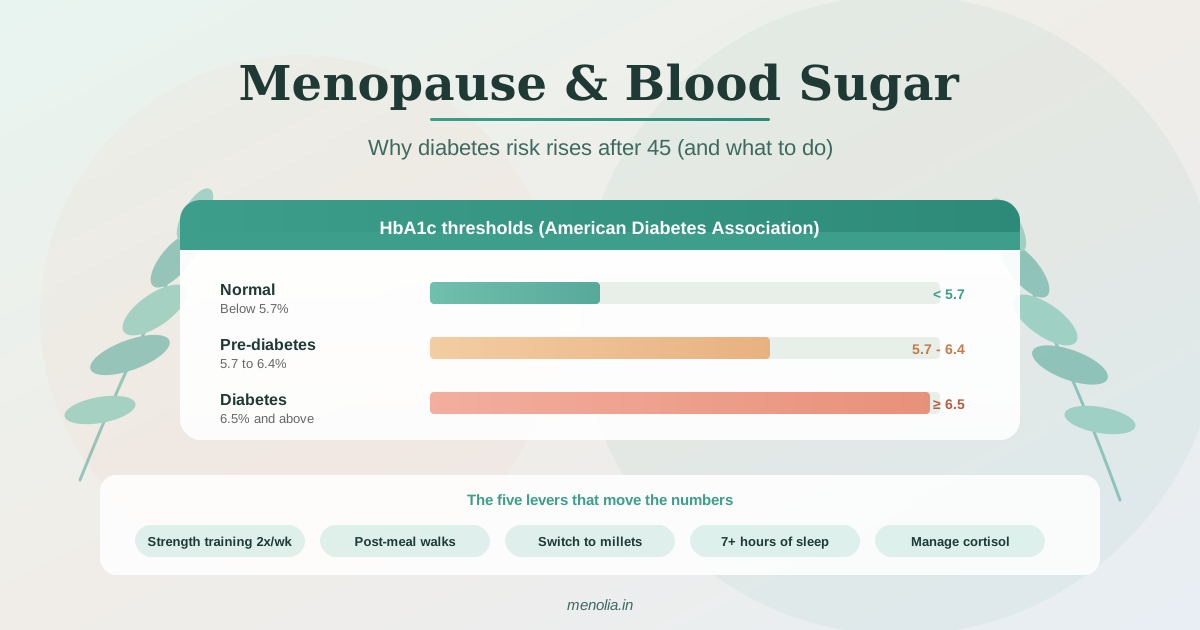
2. HbA1c (glycated haemoglobin). Reflects the average blood sugar over the previous three months. Below 5.7 percent is normal. 5.7 to 6.4 percent is pre-diabetes. 6.5 percent or above is diabetes.
3. Fasting insulin and HOMA-IR. A more sensitive marker of insulin resistance. HOMA-IR is calculated from fasting insulin and fasting glucose; values above 2.5 in Indian populations suggest insulin resistance (Singh et al., Indian J Endocrinol Metab 2013). This often rises before fasting glucose itself does, so it can flag the issue years earlier.
4. Oral glucose tolerance test (OGTT). A 75-gram glucose load with a two-hour reading. The most sensitive test for impaired glucose tolerance. Useful when fasting numbers are borderline but symptoms or risk factors are present.
A lipid profile (total cholesterol, LDL, HDL, triglycerides), thyroid panel (TSH), and vitamin D level usually go alongside, since the post-menopause cluster of changes affects all of these together. We have written about the cholesterol shift in our menopause cholesterol guide and the blood pressure shift in our menopause blood pressure guide.
Symptoms women often dismiss
Insulin resistance and pre-diabetes are quiet conditions. Most women feel fine until the bloodwork tells them otherwise. But there are patterns to watch for.
- A heavy, sleepy feeling about an hour after lunch (especially after rice, idli, or biscuits with chai)
- Increased thirst or more frequent urination, especially at night
- A skin tag or two appearing around the neck or under the arms
- A darker, velvety patch on the back of the neck or in the armpits (acanthosis nigricans, a sign of higher insulin)
- Slow-healing cuts
- Recurrent vaginal thrush or urinary tract infections
- Stronger cravings for sweets in the late afternoon
These are not diagnostic on their own. They are signals that your body’s insulin signalling may be working harder than it used to. If you notice them, the four tests above will give you the clear picture.
Five practical areas for blood-sugar management
Lifestyle changes are not a soft alternative to medication. In the Diabetes Prevention Program, the largest study of its kind, lifestyle modification was more effective than metformin at preventing the progression from pre-diabetes to diabetes (Knowler et al., NEJM 2002). The resistance-training evidence below is a separate source; it should not be read as verification of this entire five-part menopause plan.
1. Include resistance training.
Skeletal muscle helps dispose of glucose. A 2013 review centred on type 2 diabetes reports benefits of resistance training for insulin sensitivity and glycaemic control, including a reduction in HbA1c in a meta-analysis of supervised resistance-exercise studies (Strasser and Pesta, BioMed Research International, 2013, PMID 24455726). It describes diabetes guidance at that time recommending resistance training at least twice a week alongside aerobic activity. Your starting load, session length, and progression should be matched to your health and fitness. Bodyweight squats, supported lunges, dumbbells, and resistance bands are options.
Before choosing exercises, you can use our list of health concerns to discuss before starting. For the separate food-planning side, our muscle-loss article lists Indian protein-containing foods. These are navigation pointers, not evidence that a particular home routine or meal will lower your HbA1c.
2. Walk after meals, especially after rice or rotis.
A 10 to 15 minute walk after a carbohydrate-heavy meal reduces the post-meal blood sugar peak by 20 to 30 percent in pre-diabetic adults (Reynolds et al., Diabetologia 2016). The mechanism is straightforward: walking pulls glucose into working muscle directly, without needing extra insulin. The biggest impact is the post-dinner walk, when most Indian households eat their largest carbohydrate load. Even pacing on the terrace or in the corridor counts.
3. Switch the carbohydrate, do not eliminate it.
Indian meals are carbohydrate-rich, and that is fine. The shift is to lower-glycaemic-index choices. Replace polished white rice with hand-pounded rice, brown rice, or millet (ragi, bajra, jowar, foxtail). Replace white-flour rotis with bajra or jowar rotis. Pair every carbohydrate with protein and fibre (dal, dahi, palak sabzi, methi, vegetables, sprouts) so the glucose release is slow and steady. Jenkins et al. (Am J Clin Nutr 1981) introduced glycaemic index, and four decades of evidence consistently shows lower-GI eating improves blood sugar control. We unpack the Indian foods further in our perimenopause diet guide.
4. Sleep at least 7 hours, in a dark, cool room.
Even one night of partial sleep restriction increases insulin resistance the next day in healthy adults (Donga et al., J Clin Endocrinol Metab 2010). Menopausal sleep is often disrupted by hot flashes, night sweats, and joint discomfort. Treating these specifically (cool room, layered bedding, no caffeine after 2 PM, magnesium at bedtime, addressing severe symptoms with your OB-GYN) is part of the metabolic plan, not a separate one. See our menopause sleep guide.
5. Manage cortisol; it is part of the same loop.
Chronic stress raises cortisol, and cortisol raises blood glucose. Twenty minutes of pranayama, yoga, or meditation most days of the week is not optional self-care, it is metabolic care. Black and Slavich (Ann N Y Acad Sci 2016) reviewed the evidence on mind-body practices and inflammatory and metabolic markers; the benefits are real and reproducible.
For more on this, read our guide on Menopause & Cortisol.
💬 Worried about your fasting glucose or HbA1c?
Send your latest report to Dr. Suganya on WhatsApp. She will tell you what the numbers mean for you specifically, what to ask your physician, and what to start this week.
Indian foods that calm the post-meal spike
The Indian kitchen has the right tools; you do not have to import anything.
Dals and pulses. Moong dal, masoor dal, toor dal, rajma, chana, lobia. High protein, high fibre, low GI. Aim for at least one dal at lunch and one at dinner. Whole pulses (rajma, chana, lobia) move blood sugar more slowly than split dals.
Millets. Ragi (finger millet), bajra (pearl millet), jowar (sorghum), foxtail millet (thinai), little millet, kodo millet. Most are GI 50 to 60 versus polished rice at 70 to 80. Rotate them through the week instead of relying on rice every meal.
Sabji and saag. Palak, methi, sarson, drumstick leaves, lauki, tinda, tori, baingan, capsicum. Half your plate should look green or colourful at every meal. Fibre slows glucose absorption and feeds the gut microbiome that supports insulin sensitivity.
Methi (fenugreek). Methi seeds contain 4-hydroxyisoleucine, which has been shown in randomised trials to lower fasting glucose and HbA1c in type 2 diabetics (Gupta et al., J Assoc Physicians India 2001). One teaspoon of soaked methi seeds at night, or a tablespoon of methi leaves daily.
Dahi and chaas. Plain unsweetened curd at every main meal slows the gastric emptying of carbohydrates and adds protein. Chaas with bhuna jeera is excellent post-meal in summer.
Til, alsi, and pumpkin seeds. A tablespoon of mixed seeds daily provides magnesium (linked to better insulin sensitivity), omega-3, and fibre. Sprinkle on dahi or sabji.
Whole fruit, not juice. Amla, guava, pomegranate, orange, papaya, apple, pear, berries (when in season). Fruit between meals or with protein, not on an empty stomach as juice. Avoid packaged juices entirely; they spike glucose without the fibre brake.
Spices that earn their place. Haldi, jeera, dalchini (cinnamon), saunf, methi, hing. Cinnamon at 1 to 6 g daily has shown small but consistent reductions in fasting glucose in meta-analyses (Allen et al., Ann Fam Med 2013). A pinch in your coffee, dalchini in dahi, or in your morning oats.
What to limit, not eliminate. White rice, refined wheat (maida), packaged biscuits, mithai, sweetened drinks (chai with three teaspoons of sugar, packaged juice, soft drinks), deep-fried snacks. Saving these for special occasions rather than daily intake is the practical rule. The framing is “less often, smaller portion, paired with protein” rather than “never again.”
When to discuss medication with your doctor
Lifestyle is the foundation, and for many women in the pre-diabetes range it is enough. But there are situations where adding a medication, usually metformin, is a sensible decision rather than a defeat.
Reasonable to discuss medication when:
- HbA1c is at 6.5 percent or above on two occasions
- HbA1c is 6.0 to 6.4 percent and not budging after three to six months of consistent lifestyle effort
- You also have central obesity, hypertension, and dyslipidaemia (the metabolic syndrome cluster)
- You have a family history of early type 2 diabetes
- You are post-menopausal with PCOS history (insulin resistance has been there for longer)
Metformin is the first-line drug, has decades of safety data, and helps insulin sensitivity directly. The Diabetes Prevention Program showed metformin is roughly half as effective as intensive lifestyle change for prevention; the two combined are more effective than either alone (Knowler et al., NEJM 2002). It is not a one-way street, and many women come off it once their lifestyle changes settle in.
This is a conversation with your physician, ideally one who looks at your bloodwork in the context of your menopause stage rather than treating each number in isolation.
Frequently asked questions
Does HRT improve blood sugar?
For some women, yes. Salpeter et al. (Diabetes Obes Metab 2006) reviewed 107 trials and found that postmenopausal hormone therapy reduced abdominal fat, fasting glucose, and HOMA-IR. The benefit is modest and is not the primary reason most women take HRT. If you are considering HRT for hot flashes, sleep, or genitourinary symptoms, the metabolic benefit is a useful side-effect to know about. It is not a substitute for the five levers above.
My fasting glucose is 102 but my HbA1c is 5.5. Should I worry?
A single fasting reading slightly above 100 is not diagnostic. Repeat it in 4 to 6 weeks, ideally with a HOMA-IR alongside. The HbA1c at 5.5 is reassuring (it reflects three months of average sugar). What I would do in your place: start the strength training, do the post-dinner walk, swap one rice meal a day to millet, and recheck in three months.
Is jaggery a healthier sugar substitute for me?
Jaggery has trace minerals (iron, magnesium) that white sugar does not, but it is still 95 percent sucrose and raises blood sugar similarly. The honest framing: jaggery in small quantities, occasionally, is fine. As a daily replacement for sugar in tea or sweets, it does not protect your blood sugar.
I am thin. Can I still have insulin resistance?
Yes. Lean PCOS, lean type 2 diabetes, and the South Asian phenotype all describe metabolically unfit-but-thin states. Visceral fat (around the liver and pancreas) and low muscle mass (sarcopenia) drive insulin resistance even at a normal BMI. Strength training is especially important for thin women in the menopause transition, who may otherwise lose muscle quietly while staying the same weight on the scale.
Does intermittent fasting help blood sugar in menopause?
It can, but the evidence is more mixed in women than in men, and especially in menopausal women where cortisol balance matters more. Time-restricted eating (a 10 to 12 hour eating window, for example 8 AM to 8 PM) is gentler than longer fasts and easier to sustain. Longer fasts (16:8 or 18:6) can backfire by raising cortisol and disrupting sleep in some women. We unpack this in detail in our menopause and intermittent fasting guide.
How quickly can blood sugar improve with lifestyle changes?
The review describes HbA1c as a marker of long-term glycaemic control, but does not establish a six-to-eight-week HOMA-IR response for women at menopause (Strasser and Pesta, BioMed Research International, 2013, PMID 24455726). Discuss when to repeat tests with your doctor rather than treating a fixed exercise timeline as a promised result.
Should I cut all carbohydrates?
No. Indian women on very low carbohydrate diets often struggle with sustainability, energy, and family meal patterns. The evidence is clear that quality matters more than quantity for most women: lower-GI carbohydrates (millets, dals, whole grains, vegetables) at sensible portions, paired with protein and fibre, work as well as restrictive low-carb plans for blood sugar control and are far easier to sustain (Sievenpiper et al., BMJ 2018).
💬 Want a personalised metabolic plan for your stage of menopause?
Dr. Suganya works with women over 45 on integrated plans that pair clinical care, nutrition, and movement. WhatsApp her with your latest bloodwork and current routine.