There is a particular kind of tiredness that belongs to this stage of life.
Not the ordinary tiredness of a long day. This is the tiredness of being woken at 2 am by a cramp so sharp in the calf that you have to stand and walk it off before it releases. Or from lying in bed with an uncomfortable, crawling restlessness in the legs that makes staying still feel impossible, but getting up brings only brief relief before the sensation returns.
Both of these are recognised menopause symptoms. Neither is imaginary. And both are treatable once you understand what is driving them.
This post covers why leg cramps and restless legs worsen in perimenopause and menopause, what to check if symptoms are significant, and the specific foods and habits that make a difference.
Two Conditions, Different Causes
Nocturnal leg cramps and restless legs syndrome (RLS) are often mentioned together because they both disrupt sleep and both involve the legs. But they are different in what they feel like, what causes them, and how to address them.
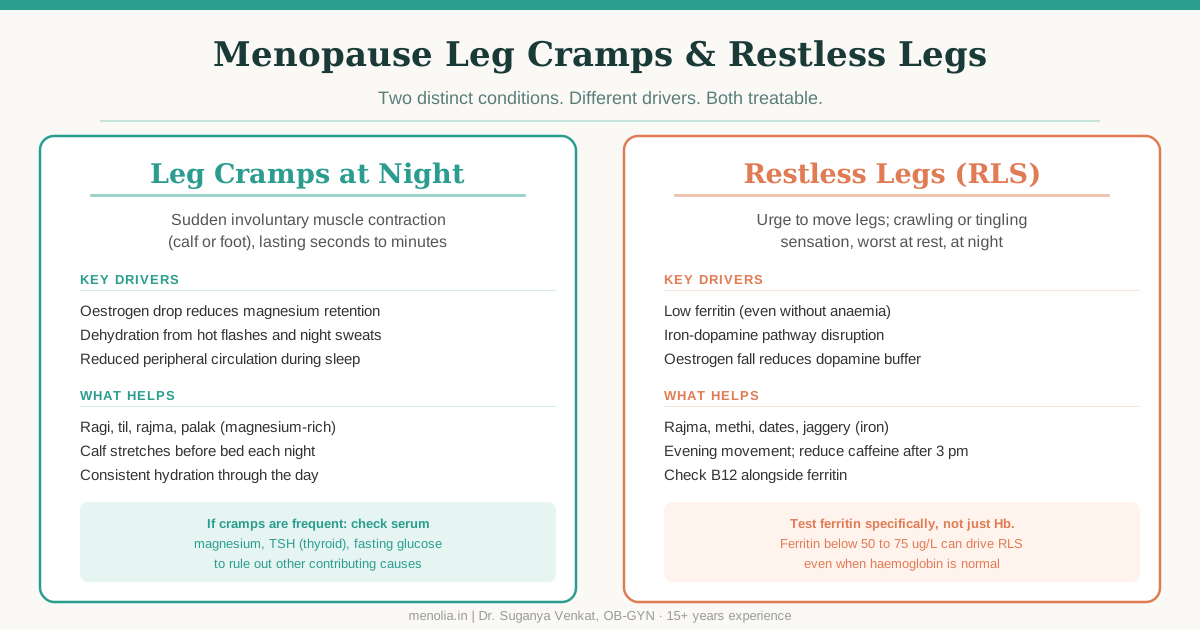
Nocturnal leg cramps are sudden, involuntary muscle contractions, most often in the calf or the arch of the foot. They come on without warning, usually at night or during rest, and last anywhere from a few seconds to several minutes. The muscle feels hard and knotted under your hand. When the cramp releases, there may be tenderness in that area for hours afterward.
Restless legs syndrome is not a cramp. It is an urge to move the legs, often accompanied by a crawling, tingling, aching, or prickling sensation in the lower legs. The urge is strongest at rest and at night, and is temporarily relieved by movement: getting up to walk, stretching, or rubbing the legs. Unlike a cramp, the muscles themselves are not contracting involuntarily. The discomfort comes from the sensation itself.
If what wakes you is a hard, painful spasm that needs stretching to release, that is a leg cramp. If what prevents sleep is a relentless need to move your legs because they feel uncomfortable at rest, that is more consistent with RLS.
Both conditions can be present in the same person. Knowing which is which helps you address the right driver.
Why Menopause Triggers Leg Cramps
The exact mechanism of nocturnal leg cramps is not fully understood even in the broader population. But several factors directly affected by the hormonal changes of menopause are known to raise the risk.
Magnesium and calcium shifts. Oestrogen plays a role in regulating how the body absorbs and retains magnesium. As oestrogen drops in perimenopause, magnesium excretion through the kidneys can increase, gradually reducing magnesium availability in muscle tissue. Magnesium is essential for muscle relaxation: it acts as a physiological counterbalance to calcium, which triggers muscle contraction. When this ratio shifts, muscles become more prone to spontaneous contraction at night. That is the mechanism. The evidence that taking magnesium fixes the cramps is a different matter, and it is worth being honest about. The crossover randomised trial by Frusso et al. (J Fam Pract, 1999, PMID 10907623) found no significant difference between magnesium citrate and placebo on cramp frequency, duration or severity, and the Cochrane review (Garrison et al., 2012) concluded that magnesium is unlikely to provide meaningful cramp prophylaxis in older adults. The one place the evidence is more open is pregnancy, where results have been mixed. So: correcting a genuine deficiency is worth doing, but magnesium is not a reliable cure for night cramps, and anyone promising you that is going beyond the data.
Dehydration from hot flashes. Many women in perimenopause are mildly but persistently dehydrated, partly because night sweats and hot flashes cause ongoing fluid loss that is not always replaced. Dehydration alters the electrolyte balance that governs how muscle fibres contract and relax, and is one of the most consistent triggers for nocturnal cramps.
For more on this, read our guide on Menopause Night Sweats. Circulation changes. Oestrogen has vasodilatory effects: it helps maintain blood vessel flexibility and blood flow to peripheral tissues, including the leg muscles. As oestrogen levels drop, peripheral circulation can slow, particularly during the relative inactivity of sleep, and this contributes to cramping.
Reduced daytime movement. Many women notice their overall activity decreasing in this phase of life, whether from fatigue, joint discomfort, or demanding schedules. Less regular walking means leg muscles arrive at bedtime in a slightly shortened, tighter state, making them more prone to cramping during sleep.
Why Menopause Makes Restless Legs Worse
RLS is a neurological condition, and its worsening in menopause follows a different pathway.
The iron-dopamine connection. RLS is strongly linked to low iron stores, specifically low ferritin. This connection works through the dopamine pathway. Iron is a required cofactor for the enzyme that synthesises dopamine in the brain. The basal ganglia, the region that regulates movement impulses, is particularly sensitive to iron availability. When ferritin is low, dopamine signalling in this region is disrupted, and the involuntary movement urges that characterise RLS become more likely.
What makes this clinically important: the threshold is not anaemia. A woman can have a normal haemoglobin and still have a ferritin level low enough to trigger RLS. Research from Johns Hopkins (Connor et al., Neurology, 2003) identified impaired brain iron acquisition as a consistent finding in RLS patients, separate from systemic iron deficiency. Studies consistently identify serum ferritin below 50 to 75 micrograms per litre as associated with RLS symptoms even when haemoglobin is in the normal range. This is why testing ferritin specifically, not just a standard blood count, matters.
The oestrogen-dopamine link. Oestrogen modulates dopaminergic transmission in the brain. In the premenopausal years, this provides some buffer against the movement-urge dysregulation of RLS. As oestrogen falls in perimenopause and menopause, that buffer reduces. This is consistent with population data: RLS prevalence is significantly higher in women than men and increases with age (Berger et al., Arch Intern Med, 2004).
Heavy perimenopausal bleeding. Many women in perimenopause experience heavier or more frequent periods before cycles eventually stop. This can deplete iron stores and lower ferritin, directly contributing to RLS symptoms. If RLS started or worsened in the same period when periods became heavier, this connection is worth investigating.
B12 and peripheral nerve involvement. Low B12, which becomes more common after 40 due to reduced gastric acid affecting absorption, contributes to peripheral nerve symptoms that can overlap with or worsen RLS-type sensations. If B12 has not been checked recently, it is worth including in any bloodwork. More detail in our Menopause and Vitamin B12 Deficiency guide.
If you want to talk through your symptoms and understand which driver is most relevant in your case, Dr. Suganya offers online consultations across India by video call.
What to Check When Symptoms Are Significant
Not every woman who has occasional leg cramps needs a blood panel. But if cramps are waking you more than twice a week, or if RLS is disrupting your sleep regularly, these tests give you useful information.
| Test | Why it matters |
|---|---|
| Serum ferritin | Low ferritin (below 50 to 75 ug/L) is a direct RLS driver even without anaemia. A standard blood count misses this. |
| Serum B12 | Low B12 contributes to peripheral nerve symptoms that worsen leg restlessness. Common after 40. |
| Thyroid function (TSH) | Hypothyroidism can cause muscle cramps, fatigue, and cold sensitivity that overlap with menopause symptoms. |
| Fasting blood glucose | Peripheral neuropathy from prediabetes or undiagnosed diabetes can mimic or worsen both conditions. |
| Serum magnesium | Less reliable than other tests (most magnesium is inside cells), but flagrant deficiency shows up. |
| Haemoglobin | Rules out overt anaemia, though ferritin is the more sensitive marker for RLS specifically. |
These are standard investigations your regular gynaecologist or GP can order together. If ferritin comes back below 50, addressing it is the most direct intervention for RLS.
Foods That Help: Magnesium and Iron From Your Kitchen
Both magnesium (for cramps) and iron (for RLS) are available in abundance in an everyday South Indian kitchen. You do not need supplements as a first step for mild to moderate symptoms.
For Leg Cramps: Magnesium-Rich Indian Foods
| Food | Magnesium (per 100g) | How to use |
|---|---|---|
| Ragi (finger millet) | ~137 mg | Ragi kanji, ragi dosa, ragi mudde |
| Kaddu ke beej (pumpkin seeds) | ~535 mg (dried) | Small handful added to rice, dal, or as a snack |
| Til (sesame seeds) | ~351 mg | Til chutney, til rice, til laddoo |
| Rajma (kidney beans) | ~138 mg (cooked) | Rajma chawal, rajma curry |
| Palak (spinach) | ~79 mg | Palak dal, palak sabzi, palak raita |
A daily ragi kanji or ragi dosa, a small portion of til in a chutney or laddoo, and dal with rajma a few times a week goes a significant distance toward meeting magnesium needs without supplements for most women.
Calcium also plays a role in the magnesium-calcium balance that governs muscle relaxation. Dahi, paneer, ragi, and til are good calcium sources. See our Menopause Calcium and Vitamin D guide for the full picture.
For Restless Legs: Iron-Rich Indian Foods
| Food | Iron (per 100g) | Absorption tip |
|---|---|---|
| Rajma | ~8.2 mg (cooked) | Pair with tomato or amla (vitamin C) to improve absorption |
| Palak | ~2.7 mg | Cooked form is better absorbed; avoid tea/coffee within an hour |
| Methi (fenugreek leaves) | ~13.1 mg (raw) | Methi dal, methi thepla, methi sabzi |
| Dates (khajoor) | ~1.0 mg per fruit | 3 to 4 dates as a daily snack |
| Jaggery (gur) | ~11 mg per 100g | Small amount in kanji or porridge |
| Til | ~14.6 mg | Sesame chutney, til laddoo |
If ferritin comes back low, iron-rich foods are the starting point. Your doctor may also recommend a short course of iron supplementation depending on the level. Do not self-supplement iron without a test first: excess iron is harmful, and it is easy to overshoot without knowing your baseline.
Habits That Help Prevent Night Cramps
Alongside what you eat, what you do in the hours before bed significantly affects whether cramps wake you.
Stretch your calves before bed. This is the most consistently useful lifestyle measure for nocturnal leg cramps. A standing calf stretch held for 30 to 60 seconds on each side, done just before getting into bed, lengthens the muscle fibres and reduces their tendency to contract during sleep. Simple version: stand at arm’s length from a wall, step one foot back, press the heel flat, hold for 30 seconds, switch sides.
Stay hydrated through the day. Many women drink water reactively, only when thirsty. In menopause, when fluid loss from hot flashes is higher, aim to be ahead of thirst. Starting the day with a glass of water and keeping a bottle nearby through the morning makes a meaningful difference. See also our Exercise During Menopause guide, which covers hydration and movement together.
Avoid prolonged sitting in the evenings. Blood pools in the lower legs during sitting. Even a 10-minute walk after the evening meal keeps circulation active in the legs before sleep.
Reduce caffeine in the evenings. Caffeine is a documented trigger for RLS in many women. Tea or coffee after 3 pm can worsen the restless sensation in the legs at night. Replacing the evening cup with warm milk with haldi (turmeric), or adrak (ginger) chai, is a reasonable swap.
For RLS specifically: move at the onset. RLS is temporarily but reliably relieved by movement. If you feel the restless sensation starting, getting up and walking for a few minutes, or doing some light leg stretches, provides genuine relief, even if it does not address the underlying driver. The sensation typically returns after 20 to 30 minutes of stillness, which is why correcting ferritin is the more durable intervention.
For the sleep disruption side of both conditions, our Menopause Sleep Problems guide covers the broader sleep picture.
When to See a Doctor
Most leg cramps and mild RLS respond to the measures above within a few weeks. See your doctor sooner if:
For more on this, read our guide on Menopause Breast Tenderness.
- Cramps are nightly and consistently waking you (this degree of disruption warrants a clinical review and labs)
- Cramps occur during walking, not only at rest (this pattern, called exertional claudication, can indicate peripheral artery disease and needs a vascular assessment)
- You have numbness, tingling, or burning in your feet alongside the leg symptoms (this raises the possibility of peripheral neuropathy, which has different management)
- You have confirmed low ferritin and RLS does not improve after 8 to 12 weeks of addressing iron intake
- The restlessness is severe enough that you are consistently getting fewer than 5 hours of unbroken sleep (this warrants treatment, potentially including medication alongside lifestyle changes)
Your regular gynaecologist or GP can order the tests listed above and refer you to a neurologist for confirmed, treatment-resistant RLS if needed.
If you are not sure which condition you have, or you want help interpreting your test results and building a plan, an online consultation is a practical first step.
Related Reading
- Menopause Body Aches: Why Everything Hurts After 45
- Menopause Joint Pain: Why It Happens After 40
- Menopause Sleep Problems: What Helps
- Menopause Vitamin B12 Deficiency After 40
- Menopause Calcium and Vitamin D: How Much You Need
- Exercise During Menopause: What Helps
Frequently Asked Questions
Why do I suddenly have leg cramps now that my periods have stopped?
The drop in oestrogen that accompanies menopause affects magnesium retention, peripheral circulation, and blood vessel elasticity, all of which contribute to nocturnal leg cramps. Many women who have never had cramps before find they start in perimenopause or in the first years after the last period. Adding magnesium-rich foods (ragi, til, rajma, palak) and a calf stretch before bed usually produces a noticeable improvement within two to three weeks for mild to moderate cramps.
What is the difference between leg cramps and restless legs? How do I know which I have?
A leg cramp is a hard, painful muscle contraction: the calf or foot seizes up involuntarily, you can feel the muscle knotting under your hand, and stretching or walking it off is what releases it. Restless legs syndrome is not a muscle contraction. It is a sensation, often described as creeping, crawling, aching, or tingling, with a strong and specific urge to move. Moving provides immediate but temporary relief. If you have an actual spasm, that is a cramp. If the discomfort is a feeling that compels movement even though the muscle is not contracting, that is more consistent with RLS.
Can low iron cause restless legs, and how do I find out if that is my issue?
Yes. Low ferritin, the protein that stores iron, is one of the most documented triggers for RLS. The connection runs through the dopamine pathway: iron is needed to synthesise dopamine in the basal ganglia, the brain region that governs movement impulses. A ferritin below about 50 to 75 micrograms per litre is associated with RLS even when haemoglobin is normal. A standard blood count is not sufficient: you need ferritin tested separately. If ferritin comes back low, addressing it with iron-rich foods and, if needed, a supplement course under medical guidance, typically improves RLS within 8 to 12 weeks.
Is it safe to take magnesium for leg cramps without a prescription?
Magnesium supplements are generally well tolerated. Common forms such as magnesium glycinate or magnesium citrate at around 300 to 400 mg daily are considered safe for most healthy adults. The most common side effect at higher doses is loose stools. Starting with dietary magnesium, through ragi, til, rajma, palak, and pumpkin seeds, is a reasonable first step for mild to moderate cramps, and it has the advantage of providing calcium alongside magnesium in proportions that support the balance. If symptoms are frequent or severe, discussing a supplement with your doctor is appropriate. Women with kidney conditions should not supplement magnesium without medical clearance.
My blood tests show normal results but I am still getting frequent cramps. What else could be causing them?
Serum magnesium is not a reliable indicator of magnesium status at the muscle level, because most magnesium lives inside cells rather than in the blood. A normal result does not rule out magnesium’s role. Other factors worth discussing with your doctor: persistent mild dehydration (common with hot flashes), medications (diuretics, statins, and some blood pressure medications can increase cramp frequency), hypothyroidism, and fasting blood glucose if neuropathy is a possibility. A medication review is often a productive place to start when bloodwork appears normal.
Will HRT help with leg cramps or restless legs?
Some women find that HRT reduces leg cramps, which is plausible given oestrogen’s role in magnesium retention and peripheral circulation. The clinical trial evidence for HRT specifically targeting leg cramps is limited (most HRT trials focus on vasomotor symptoms and bone health), but it is consistent with the underlying mechanism. For RLS, HRT does not directly address low ferritin, which needs to be corrected separately. If you are already considering HRT for other menopause symptoms, it is worth discussing with your gynaecologist whether the evidence supports using it for your full symptom picture.
When should leg cramps or restless legs prompt a specialist referral?
See your doctor promptly if cramps occur during walking rather than rest (this warrants a vascular assessment for peripheral artery disease), or if you have numbness or tingling in your feet. A neurologist can evaluate confirmed RLS that does not respond to iron supplementation and lifestyle changes, and there are effective medical treatments for severe RLS, including dopamine agonists and alpha-2-delta ligands, which a specialist can consider. For most women, the combination of dietary adjustment, hydration, stretching, and addressing ferritin if low resolves or significantly reduces symptoms without specialist input.