You typed “menopause meaning in Hindi” or “rajonivritti kya hota hai” into a search bar. Or perhaps your doctor used the word menopause and it felt clinical and borrowed, a term that belongs to medical textbooks rather than to the language you think in at home.
For more on this, read our guide on Menopause Symptoms in Hindi. This post is for you. Whether your inner voice speaks Hindi, Tamil, or Telugu, the experience of menopause is the same. The vocabulary just needs to follow you home.
Below you will find the word for menopause in all three languages, the common phrases used in everyday conversation, a plain-language explanation of what actually happens in the body, and the specific reason why Indian women reach menopause earlier than the global figures you may have read about.
What this post covers
- The word for menopause in Hindi, Tamil, and Telugu, with pronunciation guides
- What menopause actually means medically, in plain language
- Why the average menopause age in India is 46 to 48 years, not 51
- The three stages: perimenopause, menopause, post-menopause
- Common symptoms to recognise
- Practical steps you can take now
Menopause meaning in Hindi: Rajonivritti (रजोनिवृत्ति)
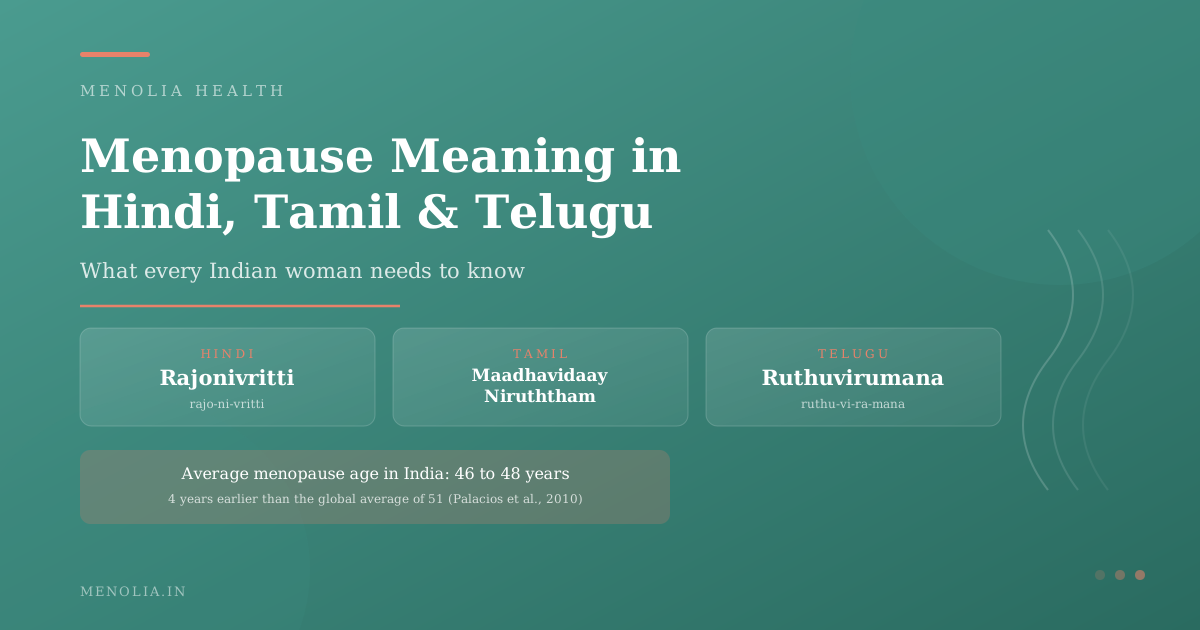
In Hindi, menopause is called rajonivritti (pronounced: RA-jo-ni-VRITTI).
The word comes from Sanskrit. “Raj” (रज) refers to the menstrual cycle. “Nivritti” (निवृत्ति) means withdrawal or cessation. Together, rajonivritti means the withdrawal of menstruation.
You may also see or hear these related terms in Hindi:
- Masik dharm band hona (मासिक धर्म बंद होना): periods stopping, used in everyday conversation
- Mahavaari band hona (माहवारी बंद होना): another commonly used phrase for periods ending
- Rajonivritti se pahle (रजोनिवृत्ति से पहले): before menopause, which describes the perimenopause phase
- Rajonivritti ke baad (रजोनिवृत्ति के बाद): after menopause, referring to post-menopause
When a woman in a Hindi-speaking household says “meri mahavaari band ho gayi hai,” she is describing the same physiological event that a doctor would call menopause. Both descriptions are correct. Neither is more accurate than the other.
Menopause meaning in Tamil: Maadhavidaay Niruththam (மாதவிடாய் நிறுத்தம்)
In Tamil, menopause is called maadhavidaay niruththam (pronounced: MAA-dha-vi-DAAY ni-RUTH-tham).
For more on this, read our guide on Menopause Symptoms in Tamil. Breaking it down: “Maadhavidaay” (மாதவிடாய்) is the Tamil word for menstruation. “Niruththam” (நிறுத்தம்) means stopping or cessation. Together, the phrase means the stopping of menstruation.
Related terms you may encounter in Tamil:
- Maadhavidaay niruttha nilai (மாதவிடாய் நிறுத்த நிலை): the phase or state of menopause
- Maadhavidaay niruttha mundhaiya nilai (மாதவிடாய் நிறுத்த முந்தைய நிலை): perimenopause, the transition phase before periods stop
- Ruthunivarthi (ருதுநிவர்த்தி): a Sanskrit-derived term used in older or more formal Tamil medical texts
In Tamil Nadu, where many of my patients come from, menopause is often discussed in hushed tones or not at all. Cultural silence around this transition is part of why women arrive at a clinic only after months of symptoms that have already disrupted their sleep, their mood, and their confidence at work. Knowing the word in your own language is the first step toward asking the right questions.
Menopause meaning in Telugu: Ruthuvirumana (రుతువిరమణ)
In Telugu, menopause is called ruthuvirumana (pronounced: RU-thu-vi-RA-ma-na).
“Ruthu” (రుతు) refers to the menstrual cycle. “Viramana” (విరమణ) means stopping or retirement. Together, ruthuvirumana means the cessation of the menstrual cycle.
Related Telugu terms:
- Rajonivrutti (రజోనివృత్తి): the Sanskrit-derived form used in Telugu medical literature and some clinical settings
- Ruthu nilupu (రుతు నిలుపు): more conversational, meaning periods stopping
- Ruthuvirumana mundhu (రుతువిరమణ ముందు): before menopause, referring to the perimenopause phase
What menopause actually means, in plain language
Regardless of the word your language uses, menopause refers to one specific moment: twelve consecutive months without a menstrual period, not caused by pregnancy, breastfeeding, or any medical condition.
That single point in time is confirmed only in retrospect. You cannot know you have crossed it until twelve months have passed without a period. Everything leading up to that point is perimenopause. Everything after is post-menopause.
The root cause is the gradual decline in oestrogen produced by the ovaries. Oestrogen is not just a reproductive hormone. It regulates body temperature, bone density, the lining of blood vessels, sleep architecture, skin collagen, and mood chemistry. When it falls, all of these systems feel the difference.
This is why menopause is not simply about periods stopping. It is a full-body hormonal transition, and the effects unfold across years, not weeks.
Why the menopause age in India is 46 to 48 years, not 51
If you have read global health articles, you will have seen the figure 51 cited as the average age of menopause. That number comes primarily from studies conducted in Western countries, particularly the United States and Western Europe.
In India, the picture is different. Research published by Palacios et al. in 2010 (Climacteric) found that Indian women reach menopause approximately four years earlier than their Western counterparts, with the average falling between 46 and 48 years. The Indian Menopause Society’s pan-India survey found a mean age of 46.2 years (Ahuja M, J Midlife Health 2016, PMID 27721640).
Why the timing is earlier is not fully settled. A West Bengal study by Dasgupta and Ray (Am J Hum Biol 2015, PMID 25754515) found that age at menarche, age at first pregnancy and the duration of breastfeeding distinguished women who reached menopause earlier from those who reached it later. Several other factors are commonly discussed, with less direct evidence:
Lower body mass index: Body fat stores and produces a form of oestrogen called oestrone. Women with lower fat stores may have a smaller reserve when ovarian oestrogen production declines, which can accelerate the transition.
Higher parity: Evidence suggests some association between having more pregnancies and the timing of menopause, linked to the cumulative hormonal fluctuations of pregnancy and lactation across a lifetime.
Dietary factors: Lower lifetime intake of dairy, phytoestrogens, and certain micronutrients may influence the pace of ovarian ageing for some women.
Physical and socioeconomic factors: Active physical labour from an early age, combined with nutritional constraints in some populations, appears to influence the trajectory in studies on Indian cohorts.
What this means in practice: if you are 44 or 45 and your periods have become irregular, you are not too young for perimenopause. You are right on time for the Indian average.
It also means that advice written for “a menopausal woman in her early 50s” may not reflect your experience. Indian women are often navigating this transition while managing active careers, teenagers or young adults at home, and ageing parents at the same time. The timing is different, and the support should account for that.
If your periods have changed and you are not certain whether this is perimenopause, or if you have symptoms you cannot explain, a clinical assessment is the clearest way forward. Start a conversation with Dr. Suganya Venkat on WhatsApp. She works with women across all three stages of this transition and can help you understand what is happening and what to do about it.
The three stages, explained simply
Perimenopause: the transition phase
Perimenopause begins when the ovaries start producing oestrogen inconsistently. Your periods may arrive earlier or later than usual, may be heavier or lighter than they have been for years, and may skip a month or two before returning.
This stage typically lasts four to six years, though it can be shorter or longer for any individual woman. Common signs include hot flashes, sleep disruption, mood changes, difficulty concentrating, joint stiffness, and irregular cycles.
In Hindi: rajonivritti se pahle ka samay (रजोनिवृत्ति से पहले का समय).
For a complete picture of what to expect during this phase, read Perimenopause Symptoms: What to Expect.
Menopause: the confirmed moment
Menopause is not a long phase. It is a single point: the day you can look back at your calendar and confirm that twelve consecutive months have passed without a period.
Most women in India will reach this point between 44 and 50 years of age. The experience of menopause itself, the symptoms, the changes, the transition, all belong to the perimenopause period leading up to it. Once menopause is confirmed, many of the most disruptive symptoms begin to ease.
For a complete understanding of what this transition involves, What Is Menopause? A Complete Guide covers the full picture from beginning to end.
Post-menopause: the years after
Post-menopause begins the day after menopause is confirmed and continues for the rest of your life. Oestrogen levels stabilise at a new, lower level. Many of the acute transitional symptoms from perimenopause settle. New considerations emerge over time: bone density, cardiovascular health, and metabolic changes become more important to monitor.
Post-Menopause: What to Expect explains what changes and what to watch for in the years after menopause.
Common symptoms across all three stages
The hormonal changes of perimenopause and menopause produce a wide range of symptoms. Knowing the terms in your own language helps you describe what you are experiencing clearly to a doctor, a spouse, or a daughter who wants to understand.
Hot flashes (in Hindi: galat garam lagana, ubal aana; in Tamil: soodurudal; in Telugu: vedi taranngaalu): sudden waves of heat in the upper body and face, lasting two to five minutes, often followed by sweating and a rapid chill.
Mood changes (in Hindi: manodasha mein badlav; in Tamil: mananaila maatrram; in Telugu: manasikatthiti maarpullu): irritability, low mood, or heightened anxiety that arrives without an obvious external cause, driven by oestrogen’s role in serotonin regulation.
Sleep disruption (in Hindi: neend ki samasya; in Tamil: thoonga pidikkaama irukkum; in Telugu: nidra samasyalu): difficulty falling asleep, early waking before 4 or 5 AM, or night sweats that interrupt sleep repeatedly.
Joint stiffness (in Hindi: jodon mein akarahat; in Tamil: meendum vali; in Telugu: meendu noppulu): morning stiffness and aching in knees, hips, shoulders, and fingers, driven by oestrogen’s anti-inflammatory role in joint tissue.
Brain fog (in Hindi: dimag ki samasya, dhyan lagaane mein dikkat; in Tamil: mathimandhamai unarvu; in Telugu: mededu manda gatilladam): difficulty concentrating, forgetting words mid-sentence, or feeling mentally slower than usual.
You do not need to know all of these terms to speak to a doctor. Describing your experience in your own words, in your own language, is entirely enough. A good clinician will meet you where you are.
Practical steps you can take now
Eat to support the transition
Certain everyday Indian foods provide phytoestrogens (plant compounds that mildly interact with oestrogen receptors in the body) and key nutrients that matter during perimenopause and beyond.
Alsi (flaxseeds): One tablespoon per day, ground, is one of the richest dietary sources of lignans, a class of phytoestrogen. Add to roti dough, to a glass of warm water in the morning, or stir into dahi.
Til (sesame seeds): 30 grams (roughly three tablespoons) provides approximately 350 mg of calcium. Use in chutney, in laddoos, or as a garnish on rice.
Dahi (yoghurt): 200 g provides roughly 240 mg of calcium and supports the gut bacteria involved in oestrogen metabolism. Chaas (buttermilk) is a lighter alternative for daily use.
Ragi: 100 g provides 364 mg of calcium, making it one of the highest-calcium grains available in Indian cooking. Ragi mudde, ragi roti, and ragi porridge are practical daily inclusions.
Haldi (turmeric): A quarter teaspoon added to dals, sabzis, or warm milk. Curcumin, turmeric’s active compound, has been studied for its role in reducing inflammatory markers (Mishra and Palanivelu, 2008, Annals of Indian Academy of Neurology).
Rajma and chana: Both provide plant-based protein at a level that helps maintain muscle mass during a phase when muscle loss accelerates.
Move your body
Strength training twice a week, even with bodyweight exercises, slows the bone density loss and muscle loss that accelerate after oestrogen declines. Walking, yoga, and swimming all support mood and sleep quality in ways that are well-documented in the literature. For what the evidence says about exercise during this phase, read Exercise During Menopause: What Actually Helps.
Name what you are experiencing
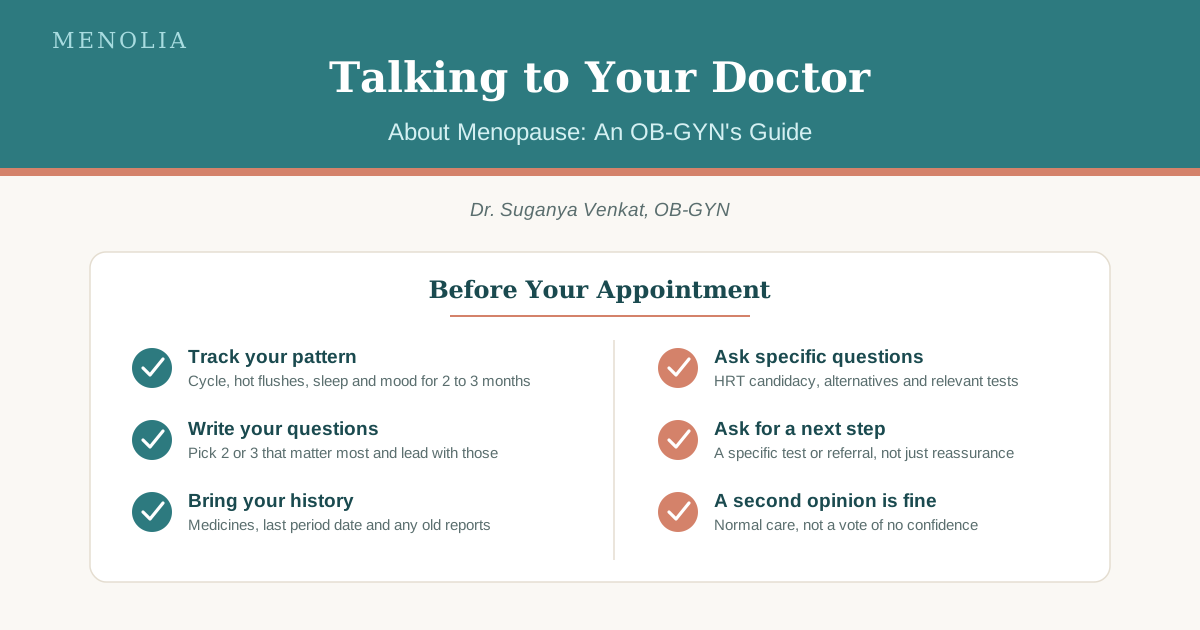
You do not need medical terminology to start a conversation with a doctor. “Meri mahavaari irregular ho rahi hai aur mujhe raat ko bahut paseena aata hai” (My periods are becoming irregular and I sweat a lot at night) gives an OB-GYN exactly what she needs.
“Ennaku maadhavidaay eppodhavadhu varudhu, eppodhavadhu varavillaiy” (My periods come sometimes and sometimes they don’t) in Tamil communicates the same thing clearly.
“Naaku ruthuvu erratic ga vastundi” (My periods are coming erratically) in Telugu does the same.
Language is not a barrier to getting good care. Describing your experience honestly, in whatever words feel natural, is always the right starting point.
Frequently asked questions
At what age does menopause happen in India?
In India, menopause typically occurs between 44 and 50 years of age, with the average around 46 to 48 years (Palacios S et al., Climacteric 2010, PMID 20690868) (Ahuja M, J Midlife Health 2016, PMID 27721640). This is approximately four years earlier than the global average of 51. If you are in your mid-40s and your periods have become irregular, you are in the expected window for perimenopause in India.
What are the early signs of menopause in Hindi (rajonivritti ke lakshan)?
The early signs belong to the perimenopause phase and include: irregular periods (mahavaari ka irregular hona), heavy or light bleeding, hot flashes (galat garam lagana), sleep problems, mood changes, and joint stiffness. A full list with clinical detail is at Perimenopause Symptoms: What to Expect.
Is there a difference between rajonivritti and menopause?
No. Rajonivritti is the Hindi word for menopause. They describe exactly the same physiological event: twelve consecutive months without a menstrual period, caused by the natural decline of oestrogen from the ovaries. One is Hindi, one is English. The underlying biology is identical.
Why do Indian women reach menopause earlier than Western women?
The reasons are not fully settled. Reproductive-history factors such as age at menarche, age at first pregnancy and breastfeeding duration have been linked to menopausal timing in Indian women (Dasgupta and Ray, Am J Hum Biol 2015, PMID 25754515); lower average body weight, dietary differences and socioeconomic factors are also commonly discussed. The difference is approximately four years on average, placing the Indian median around 46 to 48 rather than 51.
What happens to the body after menopause?
After menopause, oestrogen stabilises at a lower level. The most significant long-term changes to monitor are bone density (osteoporosis risk rises by approximately 2% per year in the first decade after menopause), cardiovascular health (LDL cholesterol tends to rise as oestrogen’s protective effect on blood vessels declines), and metabolic function (insulin sensitivity can fall). Post-Menopause: What to Expect covers what to watch for and what to do.
Can menopause symptoms be managed without medication?
For many women, yes, significantly. Lifestyle changes including strength training twice a week, consistent sleep hygiene, reducing alcohol and caffeine in the evening, and eating India-specific phytoestrogen-rich foods (alsi, til, dahi, soya-based foods where tolerated) can meaningfully reduce the frequency and intensity of hot flashes, mood changes, and sleep disruption. Hormone therapy is an option for women with severe symptoms and no contraindications; that decision is individual and best made in consultation with an OB-GYN who knows your health history.
How do I know if my symptoms are perimenopause and not something else?
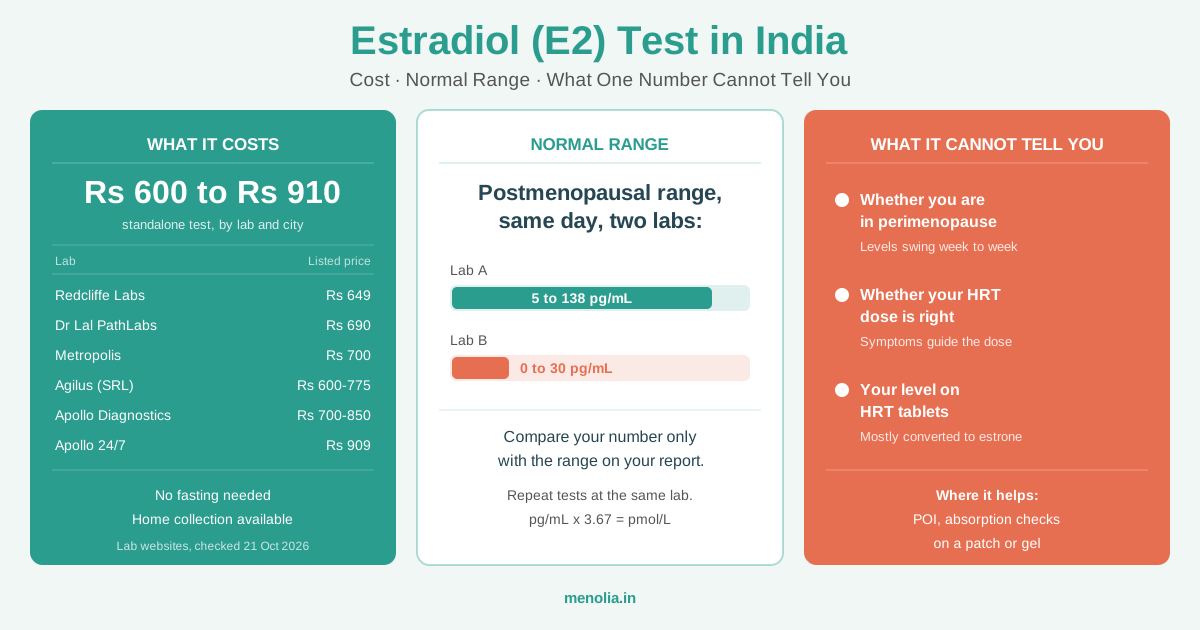
Thyroid disorders, anaemia, and vitamin D deficiency are all common in Indian women in their 40s and can produce symptoms that overlap with perimenopause: fatigue, mood changes, sleep disruption, and weight gain. A blood test panel (FSH, LH, oestradiol, TSH, CBC, vitamin D) combined with a clinical assessment gives the clearest picture. For guidance on which tests matter and what the results mean, read Perimenopause Test: How to Know.
The most useful thing you can take from this post is permission to talk about what you are experiencing in the language that comes naturally to you. Rajonivritti, maadhavidaay niruththam, ruthuvirumana: these are not translations of menopause. They are menopause, expressed in the languages millions of Indian women actually think in.
If you are navigating this transition and want guidance specific to your symptoms, your age, and your health history, start a conversation with Dr. Suganya Venkat on WhatsApp. She works with women in all three stages of this transition every week, and the conversation can be in Tamil, Hindi, English, or whatever mix feels right.