A woman I saw recently had done everything right. She had reviewed her calcium intake, corrected a vitamin D deficiency, and started strength training twice a week. Her DEXA scan still came back with a T-score of -2.8 at the hip. She looked almost betrayed by the number. “I thought the food and the exercise were supposed to fix this,” she said.
They help, but for a T-score in that range, food and exercise alone were never going to be enough on their own. That is the point at which medication enters the conversation, and it is a conversation many women approach with more anxiety than the decision deserves, usually because a relative once mentioned “jaw problems” or a news article once used the word “atypical fracture” without explaining how rare that actually is.
This post is about the medicines themselves: what bisphosphonates and denosumab actually do in the body, how they are taken, how well they work, what the real (small) risks are, and what they cost in India. Our prevention guide covers calcium, vitamin D and exercise. This post picks up from where that one stops: the point where your clinician has said medication is worth discussing.
When Does Medication Actually Get Recommended?
Not every osteopenia or osteoporosis diagnosis needs a prescription. The Bone Health and Osteoporosis Foundation’s 2022 clinician’s guide sets out when pharmacologic treatment for fracture prevention is generally considered in postmenopausal women (LeBoff et al., Osteoporosis International, 2022, PMID 35478046):
- A T-score of -2.5 or lower at the hip or spine. This is the diagnostic threshold for osteoporosis itself.
- Osteopenia (T-score between -1.0 and -2.5) combined with a raised FRAX fracture-risk score: a 10-year hip fracture probability of 3% or more, or a 10-year major osteoporotic fracture probability of 20% or more.
- A prior hip or spine fracture, regardless of what the T-score shows. A fragility fracture is itself evidence that current bone strength is not adequate, whatever the scan number says.
If you fall into none of these categories, your clinician may reasonably recommend continuing calcium, vitamin D, exercise and monitoring rather than starting a drug. This is not a judgement that your bones are fine, it is a judgement that the current evidence does not support medication yet. See our osteopenia guide for what osteopenia specifically means and how it differs from osteoporosis.
Oral Bisphosphonates: Alendronate and Risedronate
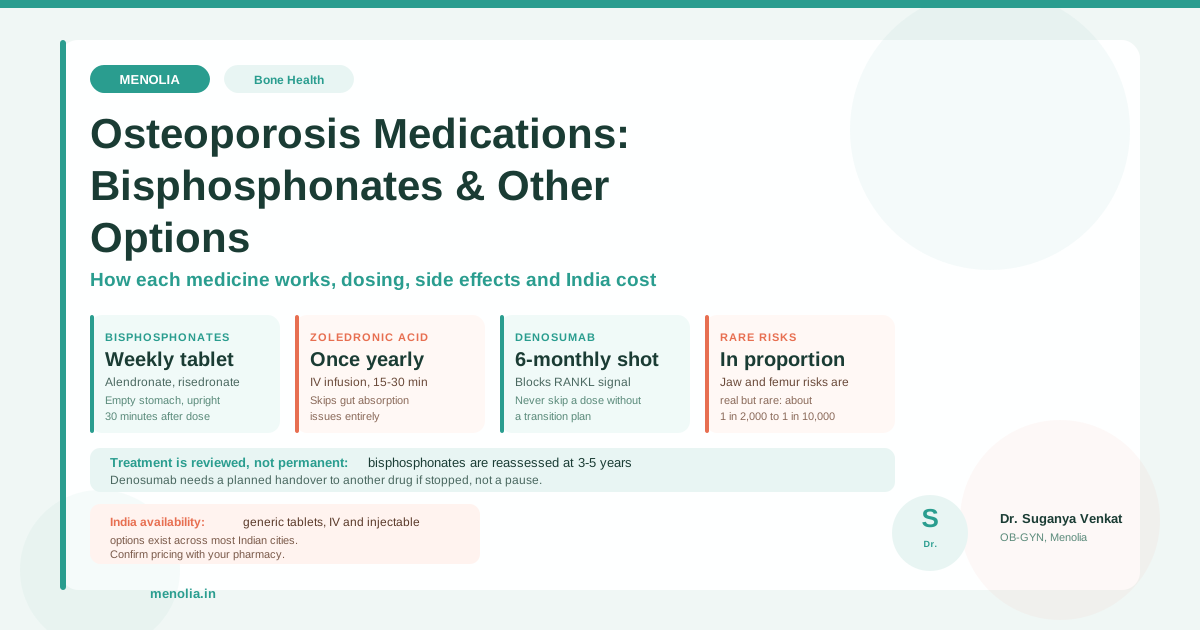
Bisphosphonates are the most commonly prescribed class of osteoporosis medication worldwide, and alendronate and risedronate are the two oral options used most often in India. Both work by attaching to bone surfaces and slowing down osteoclasts, the cells that break down old bone. Since bone is constantly being broken down and rebuilt, slowing the breakdown side allows density to stabilise and often improve over the following one to two years (Black and Rosen, New England Journal of Medicine, 2016, PMID 26789873).
How they are taken, and why the instructions matter
Both drugs are usually prescribed as a once-weekly tablet: alendronate 70 mg or risedronate 35 mg. Absorption from the gut is very poor even under ideal conditions, so the administration rule exists to protect what little absorption you do get, and to protect your oesophagus:
- Take the tablet first thing in the morning, before any food, drink or other medicine, with a full glass of plain water only. Tea, coffee, milk, juice and mineral water all interfere with absorption.
- Stay upright, sitting or standing, for at least 30 minutes afterwards. Do not go back to bed.
- Wait at least 30 minutes before breakfast, coffee, or any other tablet, including calcium or iron supplements.
Skipping this sequence is not a minor lapse. Calcium, iron and magnesium bind to the drug in the gut and stop it being absorbed at all, and lying down too soon raises the risk of the tablet irritating the food pipe on the way down. If Monday mornings genuinely never work for this routine, say so; your clinician has other options rather than a medicine you are likely to take incorrectly.
What the evidence shows
Alendronate has been studied for longer than any other osteoporosis drug, including a long-term extension trial that followed women for a full decade of use. One important finding from that trial, the FLEX study, is directly relevant to how long treatment continues: women who stopped alendronate after five years did not have a significantly higher rate of non-vertebral fractures over the next five years compared with those who continued, though continuing did reduce clinical vertebral fractures specifically (Black et al., JAMA, 2006, PMID 17190893). This is the evidence behind the “bisphosphonate holiday” idea you may have read about: for many women at moderate risk, a pause after five years of oral treatment is reasonable, while women at higher risk (a prior spine fracture, very low hip density) usually benefit from continuing.
Cost in India
Generic alendronate and risedronate are widely available and inexpensive compared with the originator brands. As a rough monthly guide (four weekly doses, prices vary by brand, city and pharmacy, and should be confirmed at the time of purchase): generic alendronate 70 mg runs from roughly ₹70 to ₹355 for four tablets, and generic risedronate 35 mg from roughly ₹320 to ₹420 for four tablets. Originator-brand risedronate can run several times higher. Ask your pharmacist which generic manufacturer they stock before assuming the branded price is your only option.
Intravenous Zoledronic Acid: The Once-Yearly Option
For women who cannot tolerate oral bisphosphonates, who have swallowing or reflux problems, or who struggle to follow the upright-30-minutes routine reliably, zoledronic acid is a bisphosphonate given as a single yearly intravenous infusion in a hospital or day-care setting, rather than a weekly tablet. It works through the same mechanism as the oral drugs, delivered directly into the bloodstream instead of through the gut, which sidesteps the absorption and oesophageal issues entirely.
The infusion itself takes around 15 to 30 minutes. A short flu-like reaction of fever, body aches and fatigue in the day or two after the first dose is common and usually does not recur with subsequent yearly infusions; paracetamol can help if your clinician agrees it is appropriate for you. Kidney function and calcium and vitamin D levels are checked before each infusion, since the drug is processed by the kidneys.
In India, generic zoledronic acid 5 mg infusions typically cost in the range of ₹3,000 to ₹6,000 for the medicine itself, with total day-care costs (infusion chair, nursing, pre-infusion blood tests) bringing a full year’s treatment closer to ₹5,000 to ₹15,000 depending on the hospital. Branded Aclasta costs considerably more. Confirm the all-inclusive quote, not just the vial price, before booking.
Denosumab: A Different Mechanism, an Injection Every Six Months
Denosumab works differently from bisphosphonates. Rather than attaching to bone, it is a biologic injection that blocks a signal called RANKL, which osteoclasts need in order to form and stay active. It is given as a single subcutaneous injection once every six months, usually in a clinic setting.
In the pivotal FREEDOM trial, denosumab reduced new vertebral fractures by 68%, hip fractures by 40%, and other (non-vertebral) fractures by 20% compared with placebo over three years, in postmenopausal women with osteoporosis (Cummings et al., New England Journal of Medicine, 2009, PMID 19671655).
The one rule that matters more than any other with denosumab: do not stop without a plan
This is the single most important safety point in this entire post, and it is specific to denosumab rather than a general osteoporosis caution.
Unlike bisphosphonates, denosumab’s effect does not linger in bone once dosing stops. If an injection is delayed well past six months or discontinued altogether without a follow-on treatment, bone turnover can rebound sharply, and bone density can fall back close to pre-treatment levels within about a year. A post-hoc analysis of the FREEDOM trial and its extension found that the vertebral fracture rate rose from 1.2 to 7.1 per 100 participant-years after women stopped denosumab, and multiple vertebral fractures were more common in that group than after stopping placebo (Cummings et al., Journal of Bone and Mineral Research, 2018, PMID 29105841).
In practice this means: if you are on denosumab and need to stop for any reason, including a scheduling gap, a house move, travel, or a decision to switch treatments, tell your prescribing doctor before the gap happens, not after. She will usually plan a bisphosphonate to bridge the transition and protect the bone density the denosumab built. This is not a reason to avoid denosumab, it is a reason to treat the injection schedule as fixed rather than flexible.
Cost in India
Denosumab (brand name Prolia, with generic alternatives also available) requires refrigerated cold-chain storage and a valid prescription; it is not something to buy from an informal seller. Listed prices run from roughly ₹14,800 to ₹19,700 per injection, meaning a full year of treatment (two injections) costs approximately ₹30,000 to ₹40,000 for the medicine alone, before consultation and any required blood tests. Confirm the invoice, cold-chain handling and expiry with a licensed hospital or specialty pharmacy.
The Side Effects You’ve Heard About, in Proportion
Two rare complications get disproportionate attention online relative to how often they actually occur: osteonecrosis of the jaw and atypical femoral fracture. Both deserve honest explanation, not dismissal and not alarm.
Osteonecrosis of the jaw (a section of jawbone failing to heal, usually after a dental extraction) is genuinely rare at osteoporosis-treatment doses. The American Association of Oral and Maxillofacial Surgeons’ 2022 position paper puts the risk at roughly 0.02% to 0.05% for osteoporosis-dose bisphosphonates, and somewhat higher, around 0.3%, for denosumab at osteoporosis dosing (Ruggiero et al., Journal of Oral and Maxillofacial Surgery, 2022, PMID 35300956). These figures are for osteoporosis treatment specifically; the much higher rates sometimes quoted online refer to the far more intensive, more frequent dosing used in cancer care, which is a different clinical situation entirely. The practical takeaway is straightforward: have any planned dental extractions or implants done, or at least discussed with your dentist, before or soon after starting treatment, and mention your osteoporosis medication to your dentist at every visit.
Atypical femoral fracture is rarer still, and its risk is strongly tied to how many years you have been on treatment. A 2020 study of nearly 200,000 women on bisphosphonates found the absolute risk rose from about 0.07 per 10,000 person-years with under three months of use to about 13.1 per 10,000 person-years after eight or more years of continuous use (Black et al., New England Journal of Medicine, 2020, PMID 32813950). The same study found Asian women had a somewhat higher atypical fracture rate than White women in the cohort, which is one reason Indian women on long-term bisphosphonates should have their treatment duration actively reviewed rather than continued indefinitely by default. This is exactly why the “bisphosphonate holiday” discussed above exists: reassessing treatment after five years of oral use, or three years of IV zoledronic acid, is standard practice, not a sign that something has gone wrong.
New or persistent thigh or groin pain during long-term bisphosphonate treatment should always be mentioned to your doctor promptly. It is an early warning sign worth checking, not something to wait out.
Set against these numbers: the same body of evidence that established these rare risks is the evidence that shows these medications meaningfully reduce hip and spine fractures, which are common, disabling, and in the case of hip fracture, carry a real mortality risk in the year after they occur. The task is weighing a well-characterised, substantial benefit against a risk measured in single or double digits per 10,000 people over years, not against zero risk.
How Long Does Treatment Usually Continue?
There is no single answer that applies to every woman, and it depends on the drug:
- Oral or IV bisphosphonates: typically reviewed after 3 to 5 years. Many women at moderate risk can pause (“drug holiday”) at that point; women with a prior vertebral fracture or very low hip density often continue, sometimes with a switch to a different agent.
- Denosumab: has no built-in holiday. As above, stopping requires a planned transition, usually to a bisphosphonate, to prevent rebound bone loss.
This decision belongs with your treating doctor, made against your specific scan results, fracture history and risk factors, not against a fixed calendar date.
Working With Your Treating Doctor
Bone medication decisions are usually made by an orthopaedician, endocrinologist, rheumatologist or your gynaecologist, often together. If Dr. Suganya Venkat is reviewing your bone health as part of your menopause care at Menolia, she works alongside whichever specialist has prescribed or is considering prescribing your medication rather than in place of them; the goal is a coordinated plan, not a second opinion that contradicts the first. Bring your DEXA report, any FRAX calculation, your fracture history and a full medicine list, including calcium and vitamin D supplements, to that conversation.
Frequently Asked Questions
Is bisphosphonate treatment permanent once I start?
No. Oral and IV bisphosphonates are typically reviewed after three to five years, and many women pause treatment for a period based on their ongoing fracture risk. Denosumab is different: stopping it needs a planned transition rather than a simple pause, because its effect does not persist once dosing stops.
Can I switch from alendronate to denosumab, or the other way around?
Yes, switching between osteoporosis medications is common and is managed by your prescribing doctor, particularly if side effects, absorption problems, or changing risk factors make a different drug more suitable. The transition, especially away from denosumab, needs to be planned rather than left as a gap.
Will I need to stop bisphosphonates before a tooth extraction?
Discuss any planned extraction or implant with both your dentist and your prescribing doctor. For most women on osteoporosis-dose bisphosphonates, the risk of jaw complications is very low, but your dentist should know about your medication regardless, since the management approach can differ by individual risk factors.
Do these medications work as well for Indian women as in Western trial populations?
The major trials for these drugs included women across multiple countries and ethnic groups, and the mechanism of action does not differ by ethnicity. What does differ, based on available data, is background fracture risk and specific side-effect rates in some populations, which is one more reason treatment decisions should be individualised with your own clinician rather than generalised from any single population’s average.
What happens if I miss a denosumab injection appointment?
Contact your prescribing doctor as soon as you realise, rather than waiting for the next scheduled date. A missed or significantly delayed injection needs medical attention because of the rebound bone loss risk described above, not simply a rescheduled appointment.
Are these medications safe to take long-term alongside calcium and vitamin D?
Yes, calcium and vitamin D supplementation (when your levels indicate it is needed) is generally recommended alongside these medications, not instead of them. Confirm your specific targets with your doctor rather than adding high-dose supplements independently.
Can I stop taking medication once my T-score improves?
Not on your own. A T-score improvement is a good sign, but the decision to pause or continue treatment depends on your full risk profile, not the number alone. This is exactly the conversation to have at your next review rather than a decision to make unilaterally.
If you have a T-score result and are trying to decide whether medication makes sense for you, Dr. Suganya Venkat offers online video consultations, pan-India, to review your report alongside your broader menopause care. Ask about a bone-medication consultation on WhatsApp
Calcium, vitamin D and strength work remain part of the plan alongside any medication. See our prevention guide and calcium and vitamin D food guide for that side of the picture, and our bone density test guide if you have not yet had a DEXA scan.
Already on treatment and unsure about your next steps? Message Dr. Suganya on WhatsApp to talk through your specific medication and timeline in an online consultation.