“My Doctor Said It’s Just Menopause”
A woman in her early fifties described this on a video call: dry eyes that no eye drop seems to fix, a mouth so dry she keeps a bottle of water by the bed, and a dentist who has mentioned, twice now, that she has more cavities than she used to. She has already been told, more than once, that this is menopause. And often, menopause is part of the picture. Dry eyes are a well-recognised menopausal symptom; dry mouth can occur too, but it is not as clearly caused by oestrogen loss as tear-film change, and both have other common causes.
But sometimes, dryness this severe, this persistent, and this resistant to ordinary lubricants is not menopause alone. It is Sjogren’s syndrome, an autoimmune condition where the immune system attacks the glands that make tears and saliva, and it is most often recognised in women at almost exactly the same point in life as menopause. The two conditions share the same symptom and arrive in the same decade, and a Sjogren’s diagnosis, when it comes, often comes late: in one Taiwanese cohort, the median gap between the first dryness symptoms and diagnosis was about two years.
This post is not about creating worry over ordinary dry eyes. Dryness after 45 is commonly multifactorial: menopause may contribute, and so can medications, ocular-surface disease, diabetes, thyroid disease, salivary-gland disorders, and Sjogren’s. Age alone cannot make menopause the presumed cause. It is about the specific pattern that is worth raising with a doctor rather than filing away as “just menopause” indefinitely.
What This Post Covers
- Why Sjogren’s syndrome is so often diagnosed around the same age as menopause, and why that timing works against early diagnosis
- What Sjogren’s is, beyond dry eyes and dry mouth
- The symptoms beyond dryness that most women do not connect to the same condition
- How to tell when dryness is worth an autoimmune workup, and what that workup involves
- How this differs from the RA and lupus overlap I have written about separately
Why Menopause Is the Age Sjogren’s Gets Missed
Sjogren’s syndrome overwhelmingly affects women. Across a pooled analysis of studies from around the world, the female-to-male ratio in newly diagnosed cases was about 9 to 1, and in existing cases it was closer to 11 to 1. The same analysis put the mean age of people living with Sjogren’s, that is, prevalent cases in the studies it pooled, at 56.16 years (Qin et al. 2015, Annals of the Rheumatic Diseases, PMID 24938285). That is not the age of symptom onset or of diagnosis, and for most Indian women 56 is postmenopausal rather than perimenopausal. The overlap with midlife still matters clinically, because dryness in this decade is so often attributed to menopause alone.
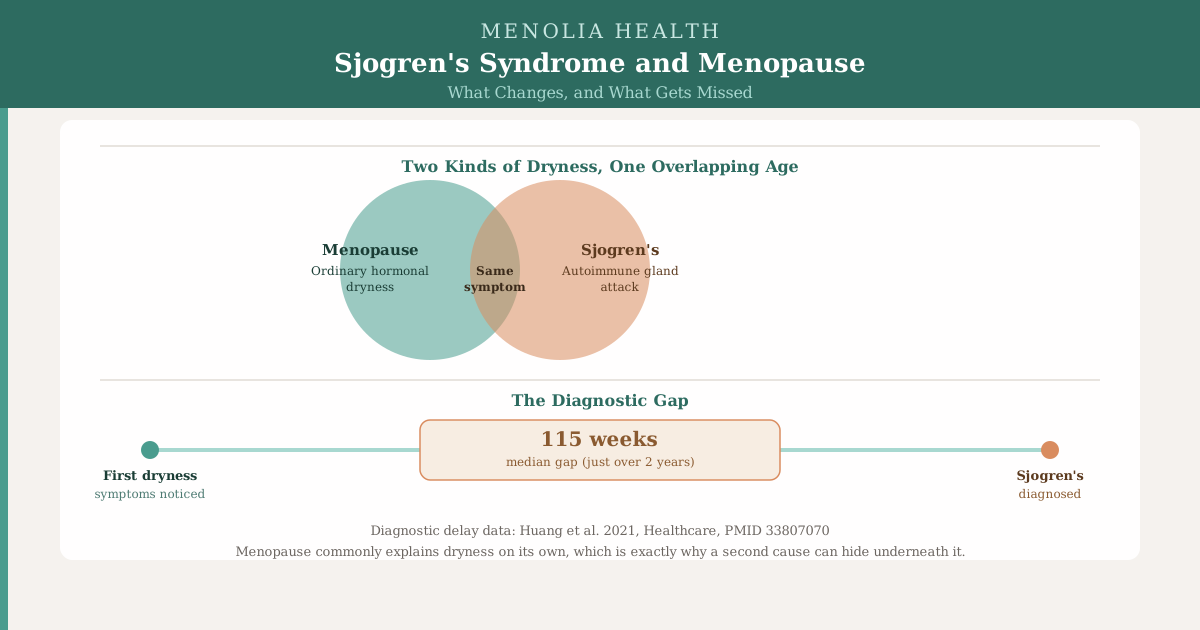
That overlap is not a coincidence of biology alone. It is a diagnostic trap. When a 52-year-old woman reports dry eyes and a dry mouth, both she and her doctor have an obvious, common, correct-sounding explanation already sitting on the table: menopause. Oestrogen genuinely does support tear film and salivary gland function (I have written separately about menopause and dry eyes and menopause and dry mouth, and both are real, common, hormone-driven symptoms on their own). The explanation is so plausible that it becomes the only explanation offered, and the possibility of a second, autoimmune cause underneath it never comes up.
A population-based cohort study from Taiwan that traced patients backward from their eventual Sjogren’s diagnosis found the median time lag between the first sicca symptoms, the clinical term for eye and mouth dryness, and an actual diagnosis was 115 weeks, just over two years, with a substantial number of patients waiting considerably longer (Huang et al. 2021, Healthcare, PMID 33807070). During that lag, the same study found patients averaged three separate outpatient visits before anyone connected the dots. Two years of dry eyes, evaluated three separate times, before the diagnosis was made. That is not a story about inattentive women or careless doctors. It is what happens when a real autoimmune disease shares its main symptom with an extremely common, unrelated life stage.
What Sjogren’s Syndrome Is
Sjogren’s syndrome is an autoimmune condition in which the immune system mistakenly targets the exocrine glands, mainly the tear glands and salivary glands, along with other moisture-producing tissue in the body. It can occur on its own, called primary Sjogren’s, or alongside another autoimmune condition such as rheumatoid arthritis or lupus, called secondary Sjogren’s. (If you already carry an RA or lupus diagnosis and are noticing changes around menopause, that specific overlap, including how Sjogren’s dryness compounds with menopausal dryness in that group, is covered in menopause and autoimmune disease: RA, lupus and Sjogren’s. This post is about Sjogren’s as a standalone diagnosis, most often in women with no prior autoimmune history.)
The hallmark symptoms are dryness of the eyes and mouth, but Sjogren’s is a systemic disease, meaning it can affect tissue well beyond the eyes and mouth: joints, skin, lungs, kidneys, and nerves, in some women. This is the part that gets lost when the whole conversation stays focused on dry eyes and dry mouth alone.
The Symptoms Beyond Dryness That Rarely Get Connected
Fatigue that does not match ordinary tiredness
Fatigue is one of the most common and most under-recognised features of Sjogren’s, and it is also one of the most common features of ordinary menopause (see menopause fatigue: why you’re always tired after 45). The overlap makes fatigue almost useless as a standalone clue. What is worth noticing is fatigue that feels disproportionate: a level of exhaustion that does not track with your sleep, your workload, or how you would ordinarily expect to feel, especially alongside dryness and joint symptoms.
Joint pain, without swelling
Joint aches are common in ordinary menopause too (see menopause joint pain: why it happens after 40), driven by oestrogen’s effect on cartilage and connective tissue. Sjogren’s-related joint pain tends to involve the small joints of the hands and wrists, is often symmetrical, and can come with morning stiffness. It usually does not cause the dramatic joint swelling seen in rheumatoid arthritis, which is part of why it is easy to dismiss as “just getting older” rather than flag for an autoimmune workup.
Dental decay that accelerates for no obvious reason
This is one of the most practical, tangible clues, and it often shows up in a dentist’s chair before it shows up anywhere else. Saliva does more than keep the mouth comfortable. It buffers acid, clears food debris, and contains minerals that help protect enamel. When saliva production drops sharply, as it does in Sjogren’s, cavities and gum disease can accelerate noticeably. A meta-analysis pooling 21 studies and more than 3,700 participants found that people with Sjogren’s disease had significantly more missing teeth than people without it, a difference the researchers attributed largely to the disease’s impact on saliva and oral health (Souza et al. 2025, Journal of Dentistry, PMID 40441287). If your dentist has commented on a sudden increase in cavities, especially alongside dry mouth, that observation is worth bringing into the conversation with your doctor, not filing away as bad luck.
Swollen salivary glands, dry skin, and vaginal dryness
Some women notice visible or palpable swelling of the parotid glands, just in front of the ears, which does not happen with ordinary menopausal dryness. Skin dryness and vaginal dryness can occur too, though both are also extremely common with menopause alone, so on their own they add little to the picture. It is the combination and the severity that matter, not any single symptom in isolation.
Rarer, more serious involvement
In a smaller subset of women, Sjogren’s can affect the lungs, kidneys, peripheral nerves (causing numbness or tingling), or, in a small percentage of cases over many years, raise the risk of a specific type of lymphoma. I am not raising this to alarm anyone reading this over ordinary dry eyes. This level of involvement is uncommon and is exactly why an actual diagnosis matters: once Sjogren’s is identified, it is monitored properly by a rheumatologist, who watches for these possibilities in a structured way, rather than each new symptom being treated as an isolated, unrelated complaint.
If dryness, fatigue, and joint aches have all shown up together since perimenopause started, and none of it is responding the way ordinary menopause symptoms usually do, WhatsApp Dr. Suganya at wa.me/919940270499. We talk through what’s worth raising with a rheumatologist, and we coordinate around that relationship rather than replace it.
When Dryness Is Worth an Autoimmune Workup
Dry eyes and dry mouth after 45 often do turn out to be menopause, but they have other common causes too, including medications, ocular surface disease, diabetes, thyroid disease, and salivary gland problems. Not every case needs antibody testing, but persistent dryness deserves a proper look at the cause rather than an assumption based on age alone. The pattern below is what shifts dryness from ordinary self-care to “worth asking about Sjogren’s”:
- Severity that persists despite basic measures. Artificial tears, sipping water, and standard dry-mouth products ease symptoms for many women whatever the underlying cause, so how well they work does not separate menopausal dryness from Sjogren’s. What matters is dryness that is persistent and severe enough to interfere with daily life or to show up on eye or dental examination, which is worth investigating rather than managing indefinitely with lubricants alone.
- Dryness plus at least one other symptom from this post. Dryness alone, even severe dryness, is common with menopause. Dryness together with unusual fatigue, small-joint pain, or a sudden jump in cavities is a different picture.
- A family history of autoimmune disease. Sjogren’s, like other autoimmune conditions, has a genetic component. A close relative with Sjogren’s, lupus, or rheumatoid arthritis raises the relevance of testing if you are symptomatic.
- Symptoms that started earlier than typical menopausal dryness, or that are unusually asymmetric or severe for your stage of the transition.
What the workup involves
The current classification approach relies on a combination of features rather than one single test, formalised in the 2016 American College of Rheumatology and European League Against Rheumatism criteria (Shiboski et al. 2017, Arthritis & Rheumatology, PMID 27785888). In practice, a doctor working through possible Sjogren’s typically looks at:
- Anti-Ro (SSA) and anti-La (SSB) antibody blood tests. Anti-Ro (SSA) is the antibody that carries diagnostic weight in the 2016 criteria; anti-La (SSB) on its own was dropped from those criteria because it was not specific enough. A meaningful number of women with Sjogren’s test negative, so a negative result does not fully rule it out if the clinical picture still fits, and antibody results are read alongside the objective tear and saliva findings rather than on their own.
- An objective measure of tear and saliva production, such as a Schirmer’s test for tears, done by an ophthalmologist.
- In some cases, a minor salivary gland biopsy, usually taken from the inner lip, which looks for the specific pattern of immune-cell infiltration that characterises Sjogren’s.
- A general autoimmune screen, such as ANA and rheumatoid factor, since Sjogren’s can occur alongside other autoimmune conditions.
None of this needs to happen at your gynaecologist’s desk, and none of it should feel like a race toward a frightening diagnosis. It usually starts with a conversation and a blood test, not a biopsy on day one. The point of raising it early is simply to close the two-year gap the Taiwan cohort data describes, not to rush anyone into invasive testing for ordinary dryness.
How This Differs From the RA and Lupus Overlap
If you already carry a diagnosis of rheumatoid arthritis or lupus, and you are noticing your dryness or joint symptoms shifting around menopause, that is a related but distinct situation, covered in detail in menopause and autoimmune disease: RA, lupus and Sjogren’s, including how existing Sjogren’s dryness compounds with ordinary menopausal dryness, and why hormone therapy is not a treatment for Sjogren’s-driven symptoms.
This post is aimed at a different, more common situation: no prior autoimmune diagnosis, dryness and a cluster of other symptoms that have crept in gradually, and a reasonable question about whether all of it really is menopause. For most women reading this, it will be. For a smaller group, raising the pattern with a doctor now, rather than in another year or two, is what closes that diagnostic gap.
Frequently Asked Questions
Q: I have dry eyes and dry mouth. Does that mean I have Sjogren’s?
On their own, they do not diagnose Sjogren’s, and they do not let you rule it out either. Dryness after 45 has several common causes, menopause among them, and persistent objective ocular or oral dryness may warrant assessment even without fatigue, joint pain, or dental decay. Dry eyes are a well-recognised menopausal symptom; dry mouth is less clearly an oestrogen-loss effect. Sjogren’s becomes more worth considering when dryness is unusually severe or persistent, or accompanied by other symptoms like unexplained fatigue, small-joint pain, or a sudden rise in dental cavities.
Q: Why does Sjogren’s get diagnosed so late?
A population-based study from Taiwan found a median gap of 115 weeks, just over two years, between the first dryness symptoms and an eventual diagnosis, with patients averaging three outpatient visits in between. A major reason is timing: Sjogren’s most commonly appears around the same age menopause typically occurs, and menopause already explains dryness convincingly, so a second, autoimmune cause underneath it is often not considered.
Q: What blood test checks for Sjogren’s?
The most commonly used markers are anti-Ro (SSA) and anti-La (SSB) antibodies, usually alongside a general autoimmune screen like ANA and rheumatoid factor. A meaningful minority of women with Sjogren’s test negative for these antibodies, so a negative result does not completely rule it out if the rest of the clinical picture still fits, which is why this is a conversation with a doctor rather than a single test result read in isolation.
Q: Can Sjogren’s cause joint pain without swelling?
Yes. Sjogren’s-related joint pain often affects the small joints of the hands and wrists, tends to be symmetrical, and frequently comes without the visible swelling seen in rheumatoid arthritis. This is part of why it is easy to dismiss as ordinary age-related or menopausal joint aches rather than flag for further testing.
Q: My dentist says I have more cavities than I used to. Could that be related to menopause?
It is worth mentioning to your doctor rather than assuming it is unrelated. A sharp increase in cavities or gum problems can reflect reduced saliva flow, which happens with ordinary menopause but can be considerably more pronounced with Sjogren’s. A meta-analysis found people with Sjogren’s had significantly more missing teeth than people without the condition, largely attributed to the impact of reduced saliva on oral health.
Q: Is Sjogren’s dangerous?
For most women, Sjogren’s is a manageable chronic condition once identified, treated mainly with symptom control (lubricating drops, saliva substitutes, dental protection) and monitoring. A small subset of women develop more serious involvement of the lungs, kidneys, nerves, or, rarely, a related lymphoma over the long term, which is exactly why an actual diagnosis and ongoing rheumatology follow-up matter more than simply treating each symptom as it appears.
Q: Do I need to see a rheumatologist, or can my gynaecologist manage this?
If Sjogren’s is confirmed or strongly suspected, a rheumatologist should lead the diagnosis and ongoing management, since it is a systemic autoimmune condition that needs monitoring beyond dryness alone. Your gynaecologist’s role is to help you sort out what is likely ordinary menopause, flag what is not, and coordinate the menopause-specific side of your care, HRT decisions, GSM treatment, bone health, alongside that relationship, not instead of it.
The Question Worth Asking
If dryness this year looks like dryness you have simply lived with for a while, that duration does not tell you the cause. Sjogren’s commonly develops gradually and can go unrecognised for years, so longstanding dryness is not a reason to assume menopause and treat empirically first. Comfort measures for dry eyes and dry mouth are still worth using. If dryness has arrived alongside fatigue that does not add up, small joints that ache without swelling, or a dentist who keeps mentioning new cavities, name that whole pattern out loud to a doctor rather than letting each piece get explained away on its own.
At Menolia, this is part of what Dr. Suganya Venkat and the team help women sort through: separating ordinary menopause symptoms from the smaller number of cases where something else is layered underneath, and pointing toward the right specialist rather than guessing. If this pattern sounds like where you are, WhatsApp Dr. Suganya at wa.me/919940270499 to talk it through.