Every week in clinic, I hear some version of the same question.
“Doctor, I have been eating soy and flaxseed every day. My estrogen is going up now, right?”
The women who ask this have genuinely been working at it. Soya chunks in the sabzi, ground alsi in the roti dough, til chutney at every meal. The intention is right. The expectation needs adjusting, because food does not raise your circulating oestradiol the way HRT does, and I would rather explain this clearly than let the disappointment arrive when nothing changes on a blood test.
What those foods do provide is real. The mechanism is just different from what most people imagine.
What the Term “Estrogen-Rich” Means
The phrase “estrogen-rich foods” is a shorthand for foods that contain phytoestrogens: plant compounds whose molecular structure is close enough to the body’s own oestradiol that they can weakly bind to oestrogen receptors.
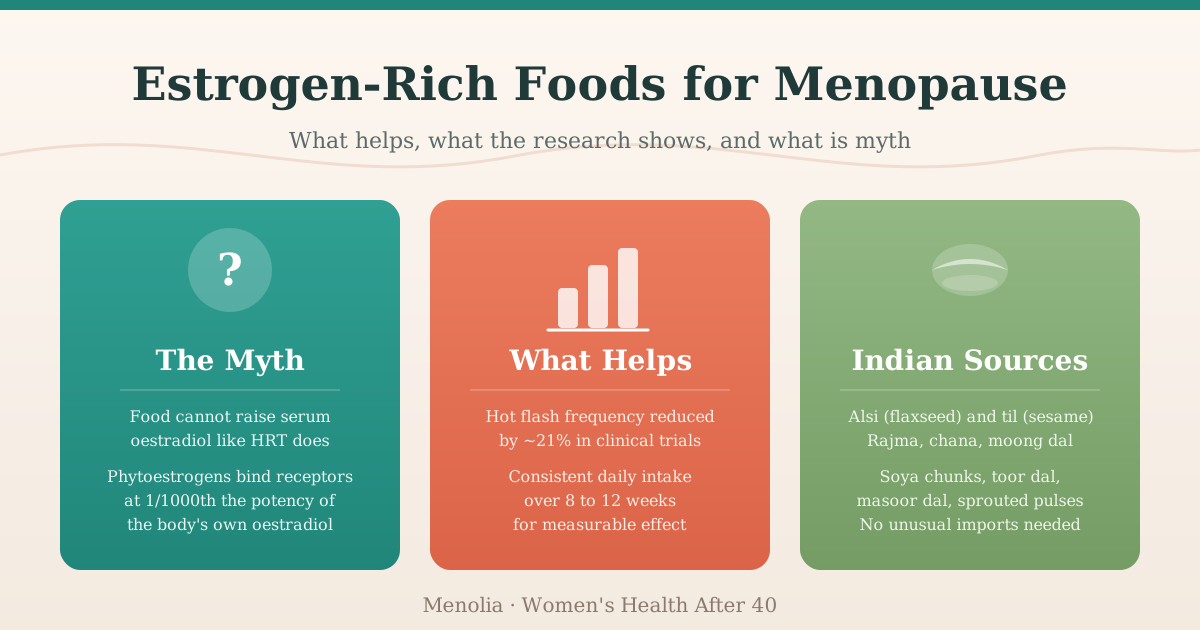
The word “weakly” is the most important one in that sentence. Phytoestrogens bind at roughly 1/1000th to 1/10,000th the potency of endogenous oestradiol, depending on the tissue and receptor subtype. This means they do not raise your serum oestradiol level measurably on a blood test. They do not restore pre-menopausal hormone levels.
What they do is provide a gentle signal at oestrogen receptor sites, particularly in the hypothalamus (where hot flashes originate), the gut lining, bone, and the vaginal mucosa. For some women, that gentle signal is enough to reduce symptom frequency noticeably. For others, especially those with severe symptoms, it helps at the margins but is not sufficient on its own.
The Phytoestrogens for Menopause: Evidence and Indian Sources post on this site covers the biochemistry in detail, including the three phytoestrogen classes and how each behaves. This post focuses on the practical side: which foods matter, how much, and what you can and cannot reasonably expect.
The Myth Worth Correcting
“Foods to boost estrogen” and “foods that increase estrogen” are extremely common searches. The framing behind them is understandable: women want a food-based, non-medical way to address what feels like a hormone problem.
Food cannot bring oestrogen levels back to where they were before menopause. That is not a failure of diet, it is just biology. The ovaries produce roughly 90% of circulating oestradiol in premenopausal women, and no food replaces that volume or potency.
A 2007 Cochrane review by Lethaby and colleagues (Lethaby A et al., Cochrane Database of Systematic Reviews, 2007, PMID 17943751) examined phytoestrogen interventions across 30 trials and found consistent but modest reductions in vasomotor symptoms, particularly hot flash frequency. The word “modest” appears throughout this literature because that is what the data honestly show. A real effect, not a transformative one.
This does not make food irrelevant. It means the expectation needs to match the evidence. If you have mild to moderate hot flashes disrupting sleep two or three times a week, a consistent phytoestrogen-rich Indian diet, maintained over weeks, can genuinely reduce that frequency. If you are having 10 to 15 hot flashes a day that affect your ability to work or sleep, food is a supporting layer, not the solution by itself.
What Phytoestrogens Can Do
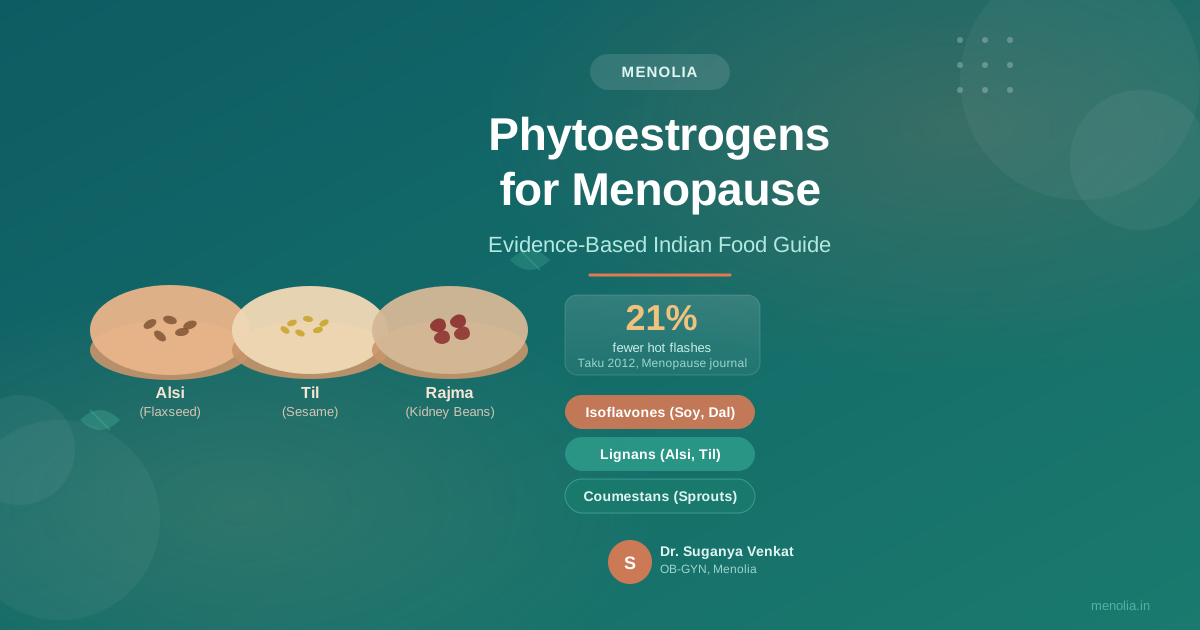
Randomised trials, including a 2012 analysis of 17 studies referenced in our phytoestrogens evidence post, have found soy isoflavones reduce hot flash frequency by approximately 21% compared to placebo. That is meaningful if you are having daily hot flashes; it is the difference between, say, five a day and four.
Beyond hot flashes, consistent phytoestrogen intake is associated with:
Modest bone support. Soy isoflavones have shown small but significant effects on lumbar spine bone density in meta-analyses of supplementation trials. Food-level intake provides smaller doses than supplements, so the bone effect from diet alone is limited but worth noting, particularly for women watching their bone health post-menopause.
Possible cardiovascular benefit. Observational data from Japanese populations, where dietary soy intake is high, suggests a favourable cardiovascular pattern. The direction of evidence is generally positive, though the effect size from food-level intake is modest.
Some benefit for vaginal and urinary symptoms. The evidence here is weaker than for hot flashes, but phytoestrogens do bind receptors in vaginal and urinary tract tissue. Women with genitourinary symptoms should also read the vaginal oestrogen post for the more targeted intervention that directly addresses those symptoms.
The summary: phytoestrogen-rich foods are a genuine, evidence-supported lifestyle layer for menopause symptom management. They work best when eaten consistently over months, not as a short course, and when combined with a broader approach to sleep, activity, and stress.
Indian Foods With the Highest Phytoestrogen Content
The good news for Indian women is that the traditional kitchen is already well stocked. These are everyday foods, not expensive imports or unusual supplements.
| Food | Local Name | Phytoestrogen Class | Practical Daily Use |
|---|---|---|---|
| Flaxseed (ground) | Alsi (Hindi), agasi (Tamil) | Lignans | 1-2 tsp ground in roti dough, dahi, or porridge |
| Sesame seeds | Til (Hindi), ellu (Tamil) | Lignans | Til chutney, til laddoo, sprinkled on sabzi or dal |
| Soybeans / soy nuggets | Soya | Isoflavones | Soya chunks in curries, tofu, soy milk |
| Kidney beans | Rajma | Isoflavones | Rajma curry, rajma rice |
| Chickpeas | Chana, kabuli chana | Isoflavones | Chana masala, sprouted chana salad, chana dal |
| Mung beans | Moong | Isoflavones | Dal tadka, sprouted moong, moong chilla |
| Red lentils | Masoor dal | Isoflavones | Dal, sambar, rasam |
| Yellow lentils | Toor dal | Isoflavones | Everyday dal, sambar, kootu |
A note on flaxseeds: whole flaxseeds pass through the gut largely undigested. Grind 1 to 2 teaspoons and stir into dahi, add to roti dough, or mix into upma. Ground alsi keeps fresh for a week in an airtight container in the fridge.
A note on soy: soya chunks or granules are the most convenient and affordable source of soy isoflavones in India. A portion of 30 to 40 grams dry weight (about a quarter to a third of a standard pack) three or four times a week is a reasonable starting point. Tofu and soy milk are alternatives.
Questions about managing menopause symptoms with diet and lifestyle? Dr. Suganya Venkat offers online consultations for women across India. Reach her on WhatsApp to get started.
What Does Not Work
Several foods and supplements are widely marketed as “estrogen boosters” or “hormone-balancing” options without clinical evidence to match the claims.
Pomegranate (anar). Pomegranate contains plant compounds with mild hormonal activity, including oestrone-like activity detected in rind extracts in laboratory studies. The evidence that eating ordinary amounts of pomegranate fruit or juice meaningfully reduces menopause symptoms in women is very limited. Pomegranate is a nutritious fruit, rich in antioxidants, and worth including in a varied diet. It is not an estrogen booster in any clinically useful sense.
“Hormone-balancing” herbal blends. Many supplement products combine several herbal extracts, often including shatavari, maca, wild yam, or red clover, under labels promising to “boost estrogen naturally.” The evidence base for most of these products is weak, and dosing is often inconsistent between batches. The Menopause Supplements: Evidence-Based Guide covers which herbal options have some credible trial data and which are primarily marketing. The herbal supplements post on Shatavari, Black Cohosh and Phytoestrogens also covers the distinctions between these categories.
Dates, papaya, and similar fruits. These are genuinely nutritious foods and have a place in a healthy diet. They are not meaningful phytoestrogen sources and the suggestion that they “boost estrogen” comes from traditional association rather than clinical data.
Very high-dose soy supplementation. There is a meaningful difference between consuming soy as part of a regular Indian diet and taking 100mg or more of concentrated soy isoflavone capsules daily. The food-level intake picture is clear and safe for most women. The high-dose supplement picture carries more uncertainty, particularly for women with a history of oestrogen-receptor-positive breast cancer. The phytoestrogens post covers this distinction in detail.
Putting It Into a Day’s Eating
This does not require a special protocol. The goal is to include two or three phytoestrogen-rich foods each day, spread across meals rather than concentrated in one sitting.
A practical day might look like this:
Morning: a bowl of dahi with one teaspoon of ground alsi stirred in, and a small handful of sprouted moong alongside.
Lunch: rajma curry, or chana masala, or toor dal with a ladleful of sambar. Til chutney on the side, or sesame seeds sprinkled over rice.
Evening: soya chunks added to a stir-fry or made into a dry sabzi. Or a tofu bhurji if that is easier.
Night: a serving of dal, any variety, masoor, moong, or toor.
Consistency over months matters more than any single high dose in one meal. The clinical trials that found measurable effects on hot flash frequency used consistent daily intake over 8 to 12 weeks. This is not a short-term intervention; it is a dietary pattern built over time.
Women with a personal history of oestrogen-receptor-positive breast cancer should discuss phytoestrogen intake with their oncologist before making significant changes to their diet. Food-level intake is generally considered safe, but their specific situation warrants a conversation.
When Diet Is Not Enough
Dietary phytoestrogens are one layer. They tend to work best alongside consistent physical activity, good sleep habits, and stress management. The Menopause: What to Eat After 45 post covers the full dietary picture, including calcium, protein, and anti-inflammatory eating patterns that matter beyond phytoestrogens.
If symptoms are significantly affecting sleep, concentration, mood, or daily function, a doctor’s assessment is the right next step. There are more effective options for severe symptoms, including non-hormonal medications and HRT, and the decision about which is appropriate depends on your individual history and severity. Diet can support but cannot substitute for that conversation.
If you would like to talk through your menopause symptoms, your diet, or your options for managing the transition, Dr. Suganya Venkat sees women from across India for perimenopause and menopause concerns. The consultation is online, so geography is not a barrier. Send a WhatsApp message to arrange a time.
Frequently Asked Questions
Can eating estrogen-rich foods replace HRT? No. Phytoestrogens from food weakly activate oestrogen receptors but do not raise circulating oestradiol levels measurably on a blood test. For mild to moderate symptoms, a consistent phytoestrogen-rich diet can reduce hot flash frequency over weeks. For severe symptoms, significant bone loss risk, or genitourinary symptoms that affect quality of life, HRT assessed by a doctor remains more effective.
Which Indian foods have the most phytoestrogens? Ground alsi (flaxseed), til (sesame), soya chunks, rajma, chana, moong dal, masoor dal, and toor dal are the best everyday sources available in Indian kitchens. No unusual imports are needed. Traditional Indian dal-based eating already provides meaningful phytoestrogen intake.
Does soy increase oestrogen levels on a blood test? No. Soy isoflavones do not raise serum oestradiol measurably. They bind to oestrogen receptors at much lower potency than endogenous oestradiol. Large population studies from Japan, where dietary soy intake is high, have not found increased breast cancer risk from food-level soy consumption in the general population. Women with a personal history of oestrogen-receptor-positive breast cancer should check with their oncologist.
Is it safe to eat phytoestrogen-rich foods every day? For most women, yes. Dal, rajma, til, alsi, and soy have been eaten consistently across Asia for generations. The safety concerns that arise in the medical literature relate primarily to high-dose concentrated supplements at 80 to 100mg isoflavones per day, not to ordinary dietary intake. Food-level intake carries far less risk uncertainty than high-dose concentrated supplements.
How long before these foods make a difference? Most clinical trials showing effects on hot flash frequency ran for 8 to 12 weeks of consistent daily intake. This is not a quick fix. Think of it as a dietary pattern built over months rather than a supplement taken for a few weeks and abandoned. Consistency across weeks matters more than any single large serving.
What about pomegranate for menopause? I have seen it called an estrogen food. Pomegranate contains some plant compounds with mild hormonal activity in laboratory studies. The clinical evidence that eating ordinary amounts of pomegranate fruit or juice meaningfully reduces menopause symptoms in women is very limited. It is a nutritious fruit worth including. The “estrogen-boosting” claim is not well supported by clinical data.
Kya khane se menopause ke lakshan kam ho sakte hain? (Can food reduce menopause symptoms?) Yes, to a modest extent. Phytoestrogen-rich foods like alsi, til, rajma, and soy can reduce hot flash frequency with consistent daily intake over weeks. They work best as part of a broader approach that includes activity, sleep, and stress management. For significant symptoms, a doctor’s assessment is the right step.