It happens at 2 AM sometimes. You cannot sleep, you are too warm, and you find yourself scrolling through a health website or an Amazon India page looking at a supplement that promises to “balance hormones naturally.”
You are not alone in doing this. And the question you are asking is completely reasonable.
Herbal and Ayurvedic supplements are a deeply familiar part of health in India. Many of my patients trust them before they trust any prescription, and I understand why. Generations of Indian women managed their health with plant-based preparations. The question is not whether plant-based approaches have value (many do). The question is which ones actually have evidence behind them for menopause, which are probably harmless but unlikely to help much, and which carry real risks you should know about before spending your money.
This post covers herbal and botanical supplements specifically. For vitamins, minerals, and foundational supplements (Vitamin D, Calcium, Omega-3, Magnesium), read our complete supplement guide. Those are often a more important starting point.
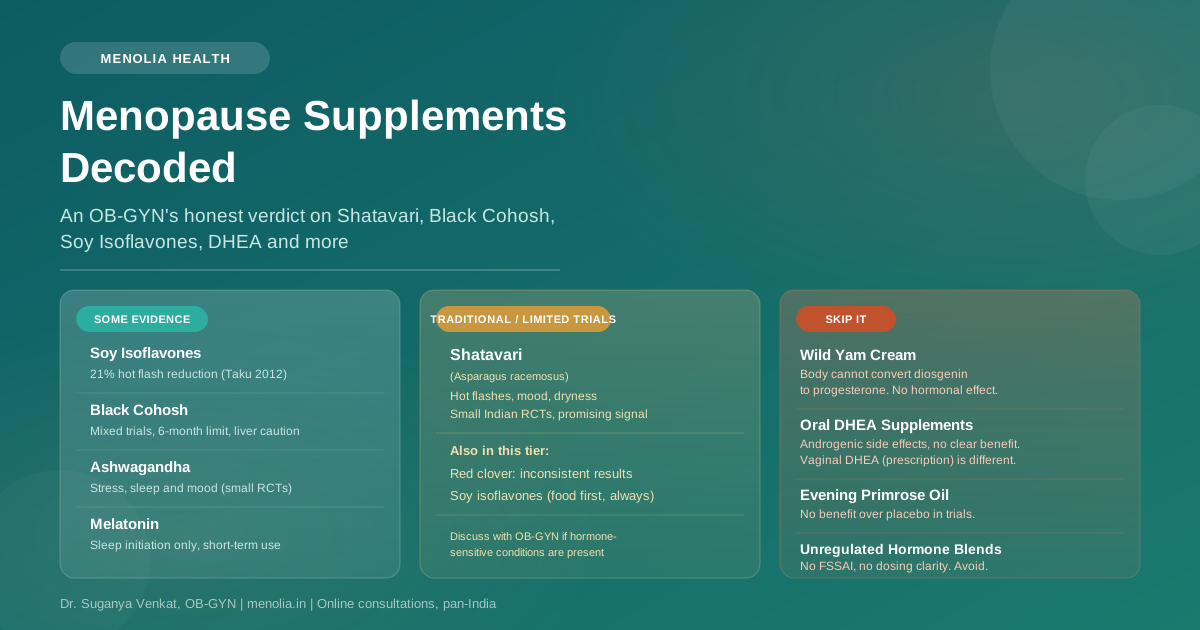
The Three Tiers I Use
Some evidence: There are human clinical trials, ideally more than one, showing measurable benefit. Not always large trials, but credible enough to say “this may help.”
Traditional use, limited trials: Widely used in Ayurveda or traditional medicine, generally safe at standard doses, but human trial evidence is small or early. I do not dismiss these, but I am honest about what the data shows.
Skip it: No meaningful evidence, or the risk-benefit picture does not make sense, or the product is actively misleading.
Shatavari: What Indian Women Try First
Shatavari (Asparagus racemosus, or “thanneervittaan kizhangu” in Tamil, “shatamull” in Bengali, “shatavar” in Marathi and Hindi) is probably the herbal supplement my patients mention most often when they come in asking about “something natural” for menopause.
It has been used in Ayurvedic medicine for centuries for what traditional texts describe as support across the female reproductive lifespan, from menstrual irregularities through to the menopausal transition. That cultural familiarity is part of why it comes up so often.
What it contains: Shatavari root contains steroidal saponins, including shatavarin and asparagamin, that are thought to have mild oestrogen-modulating activity. It also has adaptogenic properties that may support the adrenal stress response.
What the evidence shows: The human clinical trial data for shatavari specifically in perimenopause and menopause is limited but growing. Most early evidence came from preclinical studies and small trials using combination Ayurvedic preparations rather than shatavari alone. A systematic review of Ayurvedic formulations for menopause found promising signals but noted that trial quality was generally low by current standards.
More recent small Indian trials using standardised shatavari extract have found reductions in hot flash frequency, improvement in anxiety and mood scores, and improvements in vaginal comfort measures compared to placebo at doses of 500 mg twice daily over 12 weeks. The sample sizes are small (typically under 60 participants), but the direction of effect is consistent.
Safety: Shatavari is generally considered safe at standard doses. Precautions to know: women with hormone-sensitive conditions, including oestrogen-receptor-positive breast cancer history, fibroids, or endometriosis, should discuss with their oncologist or OB-GYN before use, given the mild oestrogenic activity. Rare allergic reactions have been reported, and women with known asparagus allergy should avoid it.
Forms available in India: Shatavari churna (powder), Shatavari Kalpa (granule form), and standardised capsule extracts. Quality varies significantly. Standardised extract capsules (where the label specifies the percentage of active saponins) are more reliable than raw churna.
My assessment: Traditional use, limited trials. A reasonable option to explore alongside foundational nutrition and lifestyle changes, particularly for hot flashes, mood changes, and dryness. Talk to your OB-GYN first if you have any hormone-sensitive health history.
Soy Isoflavones: The Supplement Form
If you have read our post on food-based phytoestrogens and Indian sources, you already know that alsi (flaxseed), til (sesame), rajma, chana, and moong dal provide these compounds naturally. The supplement form concentrates soy isoflavones, primarily genistein and daidzein, into capsule form.
The evidence: A 2012 meta-analysis of 17 randomised controlled trials found that soy isoflavone supplements reduce hot flash frequency by roughly 21% compared to placebo (Taku et al., Menopause, 2012). That is a real, measurable effect. It is not dramatic, and it takes 8 to 12 weeks to become apparent, but it is consistent across multiple well-conducted trials.
Who responds more: Around 30 to 50% of people produce equol, a gut-metabolised form of daidzein that is more bioactive than the parent compound. Women who are equol producers tend to get more benefit from isoflavone supplements. Asian populations generally have higher equol-production rates, which may be relevant for many Indian women.
Dose: 40 to 80 mg of isoflavones daily from standardised soy extract.
Safety note: Safe for most women, including breast cancer survivors at moderate dietary levels. Concentrated isoflavone supplements above 80 mg daily in women with a history of oestrogen-receptor-positive breast cancer should be discussed with an oncologist first.
My assessment: Some evidence. A reasonable supplement option if you want to consistently augment your dietary phytoestrogen intake. Food-first is always preferable, but the supplement form is legitimate when food intake is irregular.
Black Cohosh: An Honest Assessment
Black cohosh (Actaea racemosa) is sold in Indian pharmacies and online, often marketed specifically for hot flashes. It has a longer Western evidence base than most herbal supplements in this space.
The evidence: Mixed. A Cochrane systematic review examined 16 trials and found black cohosh may reduce hot flash frequency, but results were inconsistent across studies. The reviewers concluded the evidence was insufficient for a clear recommendation, though individual trials did show benefit particularly for hot flash severity.
The liver concern: There are documented cases of hepatotoxicity (liver toxicity) associated with black cohosh supplements. European regulatory agencies and others have required liver-warning labels on these products. Most cases involved use above recommended doses or for longer than recommended periods, but not all. This is a genuine safety concern I cannot gloss over.
My recommendation: If you try black cohosh, limit use to 6 months maximum. Standard dose is 40 to 80 mg of standardised extract daily. Stop immediately if you develop unexplained fatigue, yellowing of the skin or eyes, or abdominal pain. Do not combine with other medications that are processed by the liver without checking with your doctor first. A baseline liver function test is reasonable if you are already on multiple medications.
My assessment: Some evidence, with a specific and real safety concern. Use with awareness rather than avoiding entirely, but inform your OB-GYN that you are taking it.
Ashwagandha: Stress, Sleep, and the HPA Axis
Ashwagandha (Withania somnifera) is one of the most researched Ayurvedic adaptogens and is particularly relevant for the stress amplification that perimenopause triggers.
A randomised controlled trial published in the Journal of Obstetrics and Gynaecology Research (Gopal et al., 2021) found that ashwagandha root extract at 300 mg twice daily significantly improved menopause-related symptoms including mood, sleep quality, and general wellbeing over 8 weeks compared to placebo. The trial was small but well-designed.
Ashwagandha does not act on oestrogen. It works through the HPA axis, reducing cortisol reactivity and supporting adrenal function. This makes it more relevant for the stress component, sleep disruption, and anxiety of perimenopause than for hot flashes specifically.
Safety: Generally well-tolerated. Avoid during pregnancy. Use with caution in thyroid autoimmune conditions (Hashimoto’s thyroiditis), as some evidence suggests mild thyroid-stimulating activity. Avoid if you are on immunosuppressants or sedatives without checking interactions. Use standardised extracts (KSM-66 or Sensoril are the best-studied forms).
My assessment: Some evidence, particularly for stress, mood, and sleep. A reasonable addition when these are the predominant concerns.
Melatonin: Narrow but Useful for Sleep
Melatonin is not a herbal supplement in the Ayurvedic tradition, but it appears frequently in menopause supplement searches. Menopause is associated with declining pineal melatonin output, contributing to sleep initiation difficulties.
Low-dose melatonin (0.5 to 3 mg, 30 to 60 minutes before sleep) can be helpful for falling asleep. What melatonin does not do: reduce hot flashes, support bone density, or address the underlying hormonal changes of menopause. Its use is appropriate and sensible for sleep specifically, but short-term.
My assessment: Narrow indication. Reasonable for sleep initiation on an occasional or short-term basis. Not a menopause treatment in the broader sense.
Not sure which supplements fit your specific situation? Dr. Suganya consults online via video call, pan-India. Bring your symptom list and current medications and she can advise on what is worth trying and what to skip. WhatsApp: +91 99402 70499
What to Skip
Wild Yam Cream and “Bioidentical Hormone” Creams
This is the one I feel most strongly about. Wild yam (Dioscorea villosa) creams are widely sold online, including on Indian e-commerce platforms, with claims of “natural progesterone” or “bioidentical hormones.”
The core problem: your body cannot convert the compound in wild yam (diosgenin) into progesterone. That conversion requires laboratory chemical processing. It does not happen in human tissue. Studies that measured blood progesterone levels in women using wild yam cream found no change. The cream provides no hormonal effect.
The additional concern: some products labelled as “natural progesterone cream” or “bioidentical progesterone” do contain pharmaceutical-grade progesterone added by the manufacturer. That means you could be absorbing a hormone without medical supervision, known dosing, appropriate safety monitoring, or knowledge of interactions with your other medications.
If you need progesterone as part of menopause management, regulated pharmaceutical options are available with proper prescribing and monitoring. Talk to your OB-GYN.
Oral DHEA Supplements
Oral DHEA (dehydroepiandrosterone) supplements are available online and marketed for libido, energy, and menopause symptom relief. The evidence for oral DHEA in menopause symptoms is inconsistent, and androgenic side effects including acne, facial hair growth, and voice changes are a documented concern at higher doses.
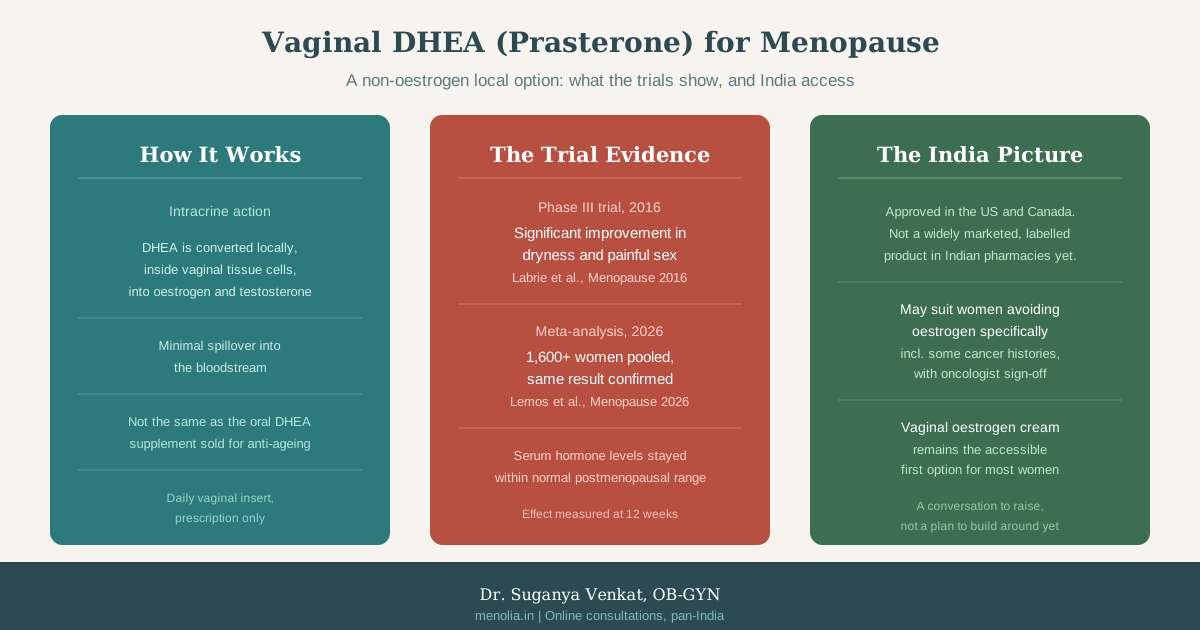
One important distinction: vaginal DHEA (prasterone), available by prescription, has strong evidence for genitourinary atrophy and is not in the same category as over-the-counter oral supplements. That is a medical preparation with appropriate dosing. Oral DHEA supplements sold online are not the same thing.
Skip oral DHEA unless specifically prescribed and monitored by an endocrinologist or gynaecologist.
Evening Primrose Oil
Widely marketed for hot flashes. A systematic review found no significant benefit over placebo for menopausal symptoms. It is generally safe, but paying for something that does not work is still not a good use of your money or your health attention.
Unregulated “Menopause Support Stacks”
A growing category of products, often promoted through Instagram or YouTube, combines 8 to 12 ingredients in a single “hormone balancing” or “menopause relief” product. These are concerning for several reasons: you cannot verify the dose of each ingredient, combinations of phytoestrogen-active compounds may interact unpredictably, individual ingredients may interact with your medications, and the marketing targets women who are genuinely struggling, without offering anything that will actually help.
Drug Interactions: The Information That Is Usually Missing
Multiple commonly used herbal supplements interact with medications many women in their 40s and 50s are already taking. This is the conversation that usually does not happen at the pharmacy counter.
| Supplement | Key interaction concerns |
|---|---|
| St. John’s Wort (in some “menopause blend” products) | Antidepressants (serotonin syndrome), tamoxifen (significantly reduces its effectiveness), thyroid medications, blood thinners, hormonal contraceptives |
| Ginkgo biloba (in brain-fog or memory supplements) | Blood thinners (warfarin, aspirin), antiplatelet drugs, NSAIDs |
| Kava (sold for anxiety relief) | Liver toxicity risk, dangerous combination with alcohol and benzodiazepines, potentiates sedatives |
| Black cohosh | Liver-processed medications; specific caution with tamoxifen |
| Shatavari | Mild diuretic effect; preliminary evidence of interaction with lithium |
| Ashwagandha | Thyroid medications (may increase thyroid hormone levels, requiring dose adjustment), immunosuppressants, sedatives |
If you are on levothyroxine, antidepressants, tamoxifen, blood pressure medication, or blood thinners, share your full supplement list with your OB-GYN or pharmacist before starting anything new. This is not optional.
Reading an Indian Supplement Label
Two things to check before purchasing any herbal supplement:
FSSAI number: Every supplement sold legally in India must have a Food Safety and Standards Authority of India registration number on the label. No FSSAI number is a clear signal not to buy.
Standardised extract vs raw powder: For herbal supplements, “standardised extract” (for example, “5% ashwagandha withanolides”) means active compounds are present in consistent, measurable amounts. Raw herb powder has variable potency batch to batch. Standardised extracts are significantly more reliable for consistent dosing.
For a conversation about whether HRT is appropriate for your symptom severity, read our complete guide to HRT in India. Herbal supplements address symptoms modestly at best. If symptoms are significantly affecting your quality of life, that is the conversation worth having directly.
Book a video consultation to review your symptoms, blood work, and which supplements genuinely make sense for you. Most women leave with a 2 to 3 supplement plan rather than the 8-product stack they found online. WhatsApp Dr. Suganya: +91 99402 70499
Frequently Asked Questions
Is shatavari safe for women with thyroid conditions?
There is preliminary evidence that shatavari may have mild thyroid-stimulating activity. Women on levothyroxine should discuss with their doctor before starting shatavari, as it could potentially affect thyroid hormone levels and require medication adjustment. Women with hypothyroidism not yet on medication should also check with their OB-GYN first. The risk is small and the evidence is early, but the interaction is worth knowing about.
Can I take black cohosh and soy isoflavones at the same time?
There is no documented serious interaction between the two. However, combining multiple compounds with oestrogen-modulating activity is not something I recommend starting simultaneously, particularly if you have a personal or family history of hormone-sensitive cancers. Start one, give it 8 to 12 weeks, assess whether it is helping, then consider adding the other. That way you also know which one is working.
Does shatavari actually raise oestrogen levels in the blood?
No, not in the way pharmaceutical oestrogen does. Shatavari’s saponins may modulate oestrogen receptor activity at a mild level, but they do not meaningfully raise serum oestradiol on standard blood tests. This is why it is described as “oestrogen-modulating” rather than “oestrogenic,” and why it is generally considered safer than taking an actual oestrogen preparation without prescription.
I have heard that black cohosh causes liver damage. How worried should I be?
The liver concern is real but should be kept in proportion. Serious liver toxicity from black cohosh is rare, typically associated with doses above the recommended range or use beyond 6 months. At standard doses (40 to 80 mg daily) for up to 6 months, the risk is low for most healthy women. If you have existing liver disease, avoid it entirely. If you are on other medications processed by the liver, discuss with your doctor first. Stop and seek medical review immediately if you develop unexplained fatigue, jaundice, or right upper abdominal discomfort.
Can herbal supplements replace HRT if my symptoms are severe?
No. The most honest answer I can give is that herbal supplements provide modest, symptom-level relief for mild to moderate symptoms. For severe hot flashes, significant sleep disruption, or moderate-to-severe genitourinary symptoms, HRT remains the most effective treatment. Herbal supplements can complement lifestyle changes, but they are not a replacement for medical treatment when that is genuinely indicated. That conversation is worth having with your OB-GYN directly.
What Ayurvedic preparation is most commonly used for menopause in India?
Shatavari preparations (Shatavari Kalpa, shatavari churna) are most commonly used. Ashokarishta (an Ayurvedic tonic) is also traditional, though evidence specifically for menopause is limited. Chandraprabha Vati is sometimes recommended. If you prefer Ayurvedic preparations, choose brands with GMP (Good Manufacturing Practice) certification, look for standardised preparations where possible, and let your OB-GYN know what you are taking. Quality control across Ayurvedic manufacturers varies significantly, and this matters more than the specific product chosen.