Vaginal dryness, discomfort during sex, a persistent burning sensation when urinating, recurrent urinary tract infections. These are symptoms that many women in their late 40s and 50s quietly live with for years, often assuming they are simply part of getting older and nothing can be done.
Your gynaecologist may have written a prescription for a vaginal cream. Or you may have heard the term and want to understand it before asking. This guide covers what vaginal oestrogen cream is, the forms available in India, how to use it correctly, what it costs, and what the safety picture looks like.
Why Vaginal Tissue Changes After Menopause
During the reproductive years, oestrogen maintains the vaginal lining. It keeps the tissue thick, moist, and elastic. It supports healthy blood flow and keeps the local environment acidic (pH around 4.0 to 4.5), which discourages bacterial and yeast overgrowth.
When oestrogen falls through the perimenopause transition and after the final period, the vaginal lining becomes thinner and more fragile. Natural lubrication reduces. The pH rises, which makes infections more likely. The tissues lose elasticity and become easier to injure.
This cluster of changes has a clinical name: genitourinary syndrome of menopause, or GSM. It is the reason behind vaginal dryness, pain during sex, burning, and recurrent UTIs in women after menopause. Depending on how the question is asked, surveys find anywhere from about a quarter to more than three-quarters of postmenopausal women have at least one symptom of GSM (NAMS 2020 GSM position statement, Menopause, PMID 32852449), and most live with it for years without knowing that treatment exists.
Vaginal oestrogen cream delivers a small, controlled amount of oestrogen directly to the vaginal tissue. The difference from systemic HRT tablets or patches is that it acts locally. Some oestrogen is absorbed in the first few weeks, while the tissue is thin; as it recovers, absorption falls substantially, and at maintenance doses blood oestrogen levels generally stay within the postmenopausal range.
Read about the full picture of GSM and why all four symptoms are connected.
The Three Forms Available in India
When your doctor prescribes vaginal oestrogen, she will usually specify one of three types.
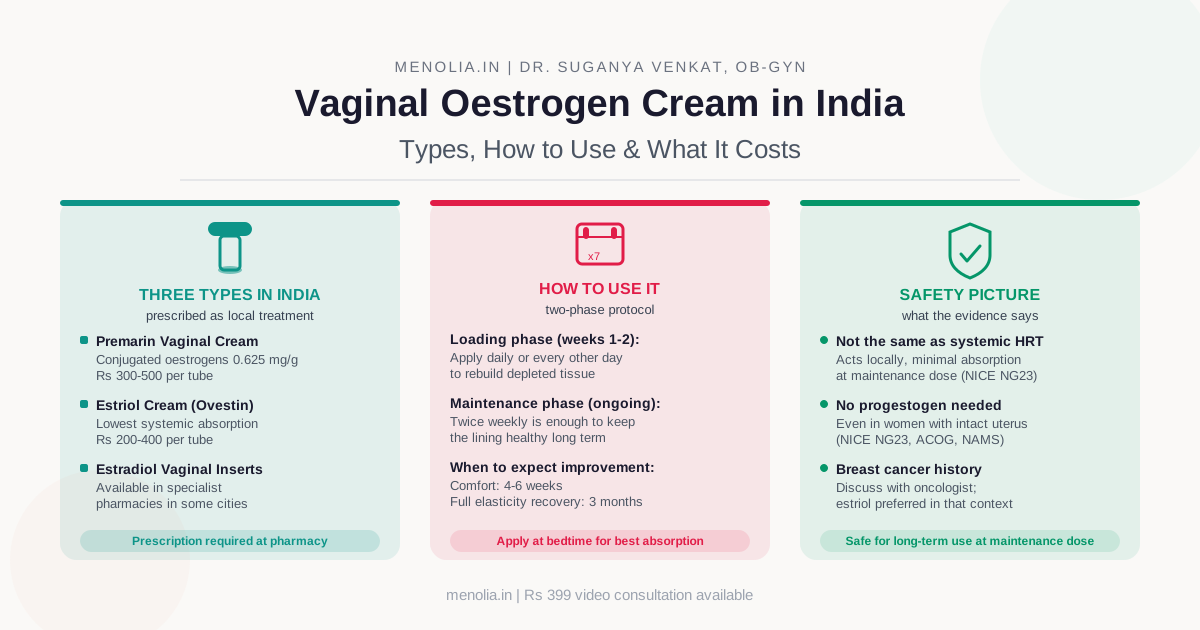
Conjugated Equine Oestrogen Cream (Premarin Vaginal Cream)
This is the best-known vaginal oestrogen product in India. The active ingredient is conjugated equine oestrogens at 0.625 mg per gram of cream. The standard tube is 14 grams and comes with a calibrated plastic applicator.
Premarin cream has the longest clinical history behind it. It is effective for vaginal atrophy and GSM, and the prescribing pattern in India follows international guidelines. Of the three forms, conjugated equine oestrogen cream is the one with the highest measured systemic absorption, which is one reason the dose is kept low and the frequency drops to twice weekly once the tissue has recovered. Approximate cost, from online pharmacy listings checked when this post was last updated (September 2026): Rs 300 to 540 for a 14 g tube. Confirm the current price with your pharmacist, as pharmaceutical pricing varies by region and changes over time.
Estriol Cream (Evalon, Ovestin)
Estriol is the weakest of the three naturally occurring oestrogens. Unlike estradiol, which carries out most of the hormonal work during the reproductive years, estriol has a shorter binding time at the oestrogen receptor and very limited systemic uptake. This makes it a preferred choice for women who want the local benefit with the least possible systemic exposure, and for women in specific clinical situations (discussed in the breast cancer section below).
The estriol cream Indian pharmacists actually stock is Evalon (Torrent Pharmaceuticals), estriol 1 mg per gram, in a 15 g tube with an applicator; online pharmacy listings checked at the September 2026 update put it at roughly Rs 450 to 580. Ovestin, the original Organon brand with the same strength, is the name you will see in international guidance, but in India it is an imported product that most pharmacies do not carry, so if your prescription says Ovestin and the pharmacist offers Evalon, that is the same medicine at the same strength.
Estradiol Vaginal Formulations
Estradiol is available in vaginal tablet form in other countries (Vagifem, for example, is a small tablet delivered via an applicator). In India, estradiol is more widely available as a transdermal gel for systemic use (Oestrogel) than as a dedicated vaginal-only cream. Vaginal tablet formats may be available through specialist pharmacies in some cities. Your gynaecologist will know what is accessible in your area.
For practical purposes, most vaginal oestrogen prescriptions in India are for Premarin cream or an estriol-based product.
How to Use Vaginal Oestrogen Cream
Using an applicator for the first time feels unfamiliar. It is not complicated once you understand the steps.
What you need: the tube of cream, the applicator included in the box, and a few minutes of privacy.
Step 1: Fill the applicator. Screw the applicator onto the tip of the tube. Squeeze the tube gently while the plunger draws back to the dose line your prescription specifies. The amount per dose is product-specific and applicators are graduated differently between brands, so the number on your prescription, not a general guide, is the one to follow. Remove the applicator from the tube.
Step 2: Find a comfortable position. Lie on your back with knees bent, or stand with one foot raised on the edge of the bath or toilet seat. Either works.
Step 3: Insert and deliver. Gently slide the applicator as far back as is comfortable. Press the plunger slowly to deposit the cream. Withdraw the applicator.
Step 4: Clean the applicator. Pull the plunger out of the barrel. Wash both parts with mild soap and warm water, dry them, and store them together in a clean place.
Timing: Apply at bedtime to begin with. This reduces the chance of the cream being absorbed by clothing, and many women find lying down more comfortable afterwards.
The Two Phases
Initial phase (weeks 1 and 2): Most protocols start with daily or every-other-day application for one to two weeks. This loading phase allows the depleted tissue to begin recovering.
Maintenance phase: After the first two weeks, the frequency drops to twice weekly. This maintenance dose is sufficient to keep the tissue healthy, and most women continue at this frequency long term. Your gynaecologist may adjust the dose or frequency based on how your symptoms respond.
This is the general pattern, not a prescription. Some regimens differ (Premarin cream, for example, is sometimes prescribed in a 21-days-on, 7-days-off cycle), and the schedule written on your prescription overrides anything in this section.
When to Stop and Call Your Doctor
Vaginal oestrogen is a treatment you manage at home for months, so it matters to know the few things that should interrupt it. Any bleeding or spotting after menopause, whether it starts before you begin the cream or while you are using it, needs to be assessed by a gynaecologist before treatment continues; it is usually benign, but it is never something to wait out. The same applies to persistent pelvic pain that does not settle in the first few weeks, or any new breast lump. Mild stinging in the first week of use is common and settles as the tissue heals; if it does not, mention it at your next review rather than stopping quietly.
When to Expect Improvement
Most women notice some change in moisture and comfort within four to six weeks. Full tissue recovery, with improved elasticity and reduced pain during sex, takes around three months. Improvement continues gradually over the first year of use.
If you still have significant symptoms after three months at the correct dose, speak to your doctor. The dose, product, or combination of treatments may need review.
If you are uncertain about which cream is right for you, or have tried one and found it uncomfortable, I am happy to talk through your situation.
Send me a WhatsApp message and we can go through your options.
Is This the Same as HRT?
Systemic HRT, taken as a tablet, absorbed through a patch or gel, enters the bloodstream and acts across the body. It affects the brain, reducing hot flushes. It supports bone density. It has implications for cardiovascular health and breast tissue. The benefits, risks, and prescribing guidelines for systemic HRT are all about that whole-body exposure.
Vaginal oestrogen cream works differently. When the vaginal wall is thinned and atrophic, some oestrogen is absorbed in the first few weeks of treatment. As the tissue recovers and thickens, absorption falls substantially, and at maintenance doses serum oestrogen generally stays within the postmenopausal range. It does not reach zero, and it differs between products: estriol has the lowest measured systemic uptake and conjugated equine oestrogen cream the highest of the three, which is why dose and frequency are kept to the minimum that controls symptoms.
This distinction is specifically addressed in the NICE NG23 menopause guideline (nice.org.uk/guidance/ng23, most recently updated November 2024), which recommends offering vaginal oestrogen for genitourinary symptoms, including to women already on systemic HRT, and advises clinicians to explain that systemic absorption is minimal and serious adverse effects are very rare. Vaginal oestrogen does not require the addition of progestogen, even in women with an intact uterus, and does not need to be stopped or monitored the way systemic HRT does.
This means vaginal oestrogen cream is an option for a wider group of women than systemic HRT. Women who cannot use systemic HRT for medical reasons, women with no vasomotor symptoms but significant vaginal symptoms, and women who want the simplest possible intervention can all use vaginal oestrogen if their gynaecologist agrees it is appropriate.
For the full picture on systemic HRT in India, including who it suits and who it does not. For the breast cancer risk discussion specific to systemic HRT.
The Breast Cancer Question
Many women hold this question back. It deserves a direct answer.
For women who have not had breast cancer, vaginal oestrogen cream used at standard low doses for GSM is considered safe by all major menopause organisations, including NAMS (North American Menopause Society), ACOG (American College of Obstetricians and Gynaecologists), and the British Menopause Society. The minimal systemic absorption at maintenance doses means blood oestrogen levels are not meaningfully raised.
For women who have had breast cancer, particularly hormone-receptor-positive breast cancer, the picture is more nuanced and requires a conversation between the oncologist and the patient. The concern is whether any oestrogen, even absorbed locally in small amounts, could affect hormone-sensitive cells.
The position of the major bodies is consistent. ACOG Committee Opinion No. 659 (Obstetrics and Gynecology, 2016, PMID 26901334) states that non-hormonal approaches are first-line for women with a history of breast cancer, that vaginal oestrogen should be reserved for those who do not respond to them, and that the decision may be made in coordination with the woman’s oncologist.
The NAMS 2020 GSM position statement (Menopause, PMID 32852449) says management in breast cancer survivors should consider the woman’s needs and her oncologist’s recommendations, and the NICE NG23 update of November 2024 makes the same point, noting that this use is off-label.
EMAS’s clinical guide on topical oestrogens for vulvovaginal atrophy (Hirschberg et al., Maturitas, 2021, PMID 33896654) says non-hormonal lubricants and moisturisers should be first-line for women on adjuvant endocrine therapy for hormone-dependent cancers, while noting that for women in general the long-term safety data on low-dose topical oestrogen are reassuring. Estriol, with its lower receptor binding and the lowest systemic absorption of the three forms, is often the preferred product in this specific situation.
If you have a history of breast cancer and are dealing with vaginal symptoms, the right path is for your oncologist and gynaecologist to make this decision together. A Menolia consultation can help you understand the evidence and prepare the right questions for both of them.
The estradiol patch guide and the tibolone guide cover other formulation options if vaginal oestrogen is not the right fit for your situation.
Practical Guide for India
You need a prescription. Vaginal oestrogen cream is a prescription-only medicine in India. Your gynaecologist writes it. Bring the tube to your follow-up appointment so she can confirm you are using it correctly and adjust the dose if needed.
Where to buy it. Most well-stocked city pharmacies carry Premarin Vaginal Cream and Evalon. Ovestin itself is an import that few pharmacies keep. If your local pharmacy does not stock it, ask them to order it, or try a medical store near a gynaecology hospital.
Approximate costs (online pharmacy listings at the September 2026 update; confirm with your pharmacist at purchase):
- Premarin Vaginal Cream (14 g): Rs 300 to 540 per tube
- Evalon estriol cream (15 g): Rs 450 to 580 per tube
How long a tube lasts depends on the per-dose amount on your prescription. At a half-gram dose twice a week, a 14 or 15 g tube lasts around three months; at a one-gram dose, roughly half that.
Storage. Store at room temperature below 25°C in a dry place. Do not refrigerate. Keep away from children.
Using alongside other treatments. Vaginal oestrogen cream works well alongside vaginal moisturisers, which are used daily, and lubricants, which are used as needed during sex. The cream rebuilds the tissue; moisturisers manage day-to-day comfort; lubricants reduce friction. Most women benefit from all three layers of support working together.
For women dealing with vaginal symptoms alongside pain during sex, the painful intercourse guide covers the full range of treatment options. For non-hormonal approaches to vaginal dryness, read the vaginal dryness guide.
Frequently Asked Questions
Is vaginal oestrogen cream safe to use long term?
Yes. Long-term use of vaginal oestrogen cream at the maintenance dose is supported by NAMS, ACOG, and NICE. GSM tends to worsen if treatment is stopped, because the underlying oestrogen deficiency continues. Many women use vaginal oestrogen for years. Periodic review with your gynaecologist is good practice, but this is different from the more careful reassessment schedule that systemic HRT requires.
I felt a burning sensation when I first applied it. Is that normal?
A mild, temporary burning or stinging in the first one to two weeks is common. The tissue is very fragile and dry at the start of treatment, and the cream itself can cause a brief irritation. It generally settles as the lining begins to recover. If the discomfort is severe or continues beyond two weeks, let your doctor know. The product or dose may need adjustment.
My doctor told me I cannot use HRT. Can I still use vaginal oestrogen cream?
In many cases, yes. Vaginal oestrogen cream has a different risk profile from systemic HRT because it works locally. Women who cannot use systemic HRT because of a history of blood clots, certain cardiovascular conditions, or other medical reasons may still be suitable for vaginal oestrogen. Discuss this specifically with your gynaecologist, and mention the NICE NG23 guidance on local vaginal oestrogen, which addresses this distinction directly.
I had breast cancer. Can I use vaginal oestrogen cream?
This depends on the type of breast cancer and your current treatment. For hormone-receptor-negative breast cancer, vaginal oestrogen is generally considered safe. For hormone-receptor-positive breast cancer, particularly if you are on an aromatase inhibitor, your oncologist needs to be part of this decision. Estriol cream, which has the lowest systemic absorption, is often the preferred option in this context. Do not use any oestrogen without your oncologist’s agreement.
How long before I notice a difference?
Most women notice an improvement in moisture and comfort within four to six weeks. The full benefit, including improved elasticity and reduced pain during sex, takes around three months. Improvement continues gradually over the first year of treatment.
Premarin is made from horse oestrogen. Is there a plant-based alternative?
Yes. Estriol cream (Ovestin and generics) contains estriol, a naturally occurring human oestrogen produced from plant sources. Many women and doctors prefer it for this reason. Both Premarin and estriol are effective for GSM; the choice depends on your preference, your doctor’s recommendation, and your individual medical history.
Can I use vaginal oestrogen cream if I am still in perimenopause and having periods?
Yes, if your gynaecologist prescribes it. GSM-type symptoms can begin in perimenopause, even before the final period. Vaginal oestrogen is not a contraceptive, so if pregnancy is not wanted, use reliable contraception alongside it. For the question of whether pregnancy is still possible in perimenopause, read this guide.
Vaginal oestrogen cream is one of the most consistently effective and most under-used treatments available to women after menopause in India. If vaginal dryness, discomfort during sex, recurrent UTIs, or a persistent burning sensation are affecting your day-to-day life, this is worth asking your gynaecologist about.
A Rs 399 video call with me gives you time to go through your symptoms, understand the options, and come away with a clear plan. Because this is a treatment you stay on for years rather than weeks, it sits naturally inside the Menolia Menopause program, where the review and adjustment happen alongside everything else that changes in this decade.
Send me a WhatsApp to book your consultation and I will come back to you shortly.