A woman who had a hysterectomy with both ovaries removed for severe endometriosis in her late thirties asked me a question that surprised her own gynaecologist a few years earlier: why was she being started on oestrogen combined with a progestogen, when she had been told for years that “no uterus means oestrogen alone”? She was not wrong about the general rule. She just had not been told that endometriosis is the specific exception to it.
This matters for more Indian women than the topic gets credit for. A meaningful number of women reaching perimenopause or surgical menopause carry a prior endometriosis diagnosis, often with a hysterectomy and oophorectomy already behind them. For most post-hysterectomy women, oestrogen-only HRT is the standard, simpler regimen. For a woman with an endometriosis history, that standard rule needs one adjustment, and this post explains exactly why.
What This Post Covers
- Why “no uterus means oestrogen-only” does not automatically apply after endometriosis
- What residual disease means in practical terms, and why it changes the regimen
- What the evidence on recurrence and safety actually shows, including where it is still limited
- The regimen most guidelines now favour, and why
- Symptoms that would prompt a review while on HRT
- Why this is not a reason to avoid HRT
The Rule Most Women Are Told, and Why Endometriosis Changes It
The general principle in menopause care is straightforward: progestogen is added to oestrogen in HRT to protect the lining of the uterus from the proliferative effect of unopposed oestrogen. If a woman has had a hysterectomy and no longer has a uterus, there is nothing left for progestogen to protect, so oestrogen alone becomes the simpler, standard regimen. Our surgical menopause guide explains this general rule in more depth.
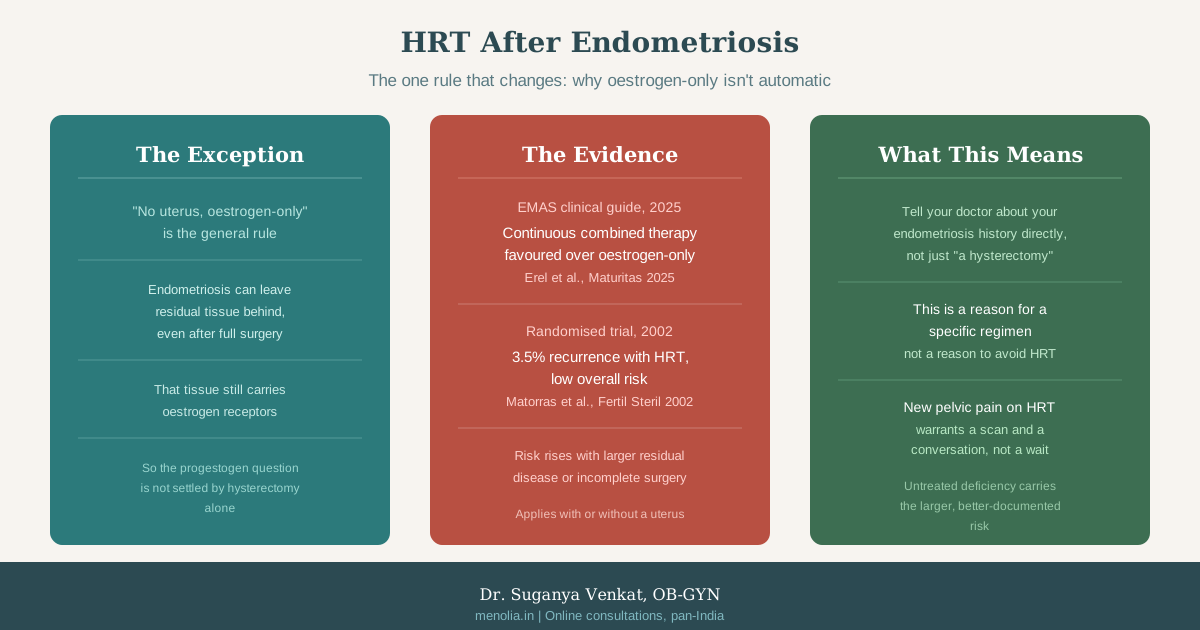
Endometriosis breaks that logic in one specific way. Endometriosis is tissue similar to the uterine lining growing outside the uterus, commonly on the ovaries, the peritoneum, and other pelvic structures. Even with a thorough hysterectomy and removal of both ovaries, it is not always possible to remove every fragment of endometriotic tissue, particularly with deep infiltrating disease or when a surgeon deliberately preserves some ovarian tissue in a younger woman. That leftover tissue is called residual disease, and it still carries the same oestrogen receptors that made the original endometriosis respond to your reproductive hormones for years. Give it oestrogen with nothing to balance it, and in a small proportion of women, that residual tissue can reactivate: causing pain to return, and in rare, well-documented case reports, undergoing malignant transformation.
This is why an endometriosis history changes the calculation of “does this woman need a progestogen”, even when there is no uterus to protect.
What the Evidence Shows
The most current, systematic guidance on this comes from the European Menopause and Andropause Society’s 2025 clinical guide on endometriosis and menopausal health, an evidence review and expert consensus. Its summary position is direct: continuous combined hormone therapy, oestrogen with a progestogen taken together every day, may be safer than other regimens in both hysterectomised and non-hysterectomised women with endometriosis, because it may reduce the risk of recurrence and malignant transformation of residual disease, and it recommends that oestrogen-only therapy be avoided even in women who have had a hysterectomy (Erel CT et al., Maturitas, 2025, PMID 40907339). This is the direct successor to an earlier EMAS position statement that reached a similar conclusion in 2010: continuous combined regimens or tibolone are probably safer than oestrogen alone in this specific group (Moen MH et al., Maturitas, 2010, PMID 20627430).
The underlying trial data is smaller than either statement’s confidence might suggest, and that gap is worth stating plainly rather than overselling certainty. A prospective randomised trial of 172 women who had bilateral ovary removal for endometriosis (91.8 percent also had a total hysterectomy) found no recurrence at all among women who did not take HRT, against a 3.5 percent recurrence rate over an average follow-up of 45 months among women who did take it, a rate the authors described as low enough to call HRT “a reasonable option” for most women in this situation. The same trial identified two specific risk factors that raised recurrence risk sharply: peritoneal disease larger than 3cm at the time of surgery, and surgery that had been incomplete (Matorras R et al., Fertility and Sterility, 2002, PMID 11821087). A separate retrospective cohort of 330 women followed for a median of six years found no significant difference in recurrence between oestrogen-only and combined regimens, and no cases of malignant transformation at all during that follow-up period, which is genuinely reassuring on its own terms even though the oestrogen-only group in that study was much larger than the combined-therapy group, making a real difference harder to detect statistically (Tanmahasamut P et al., Climacteric, 2022, PMID 34783284).
Sitting alongside the trial data is a smaller, rarer category: individual case reports of malignant transformation of residual endometriosis, including one published as recently as 2024 describing a tumour found in the bowel three decades after a hysterectomy, in a woman who had been on oestrogen-only therapy (Elsaadany S et al., Cureus, 2024, PMID 39588531). Case reports like this cannot tell you how common this is, they only confirm that it happens, which is precisely why the guidance leans toward the more cautious regimen even though large controlled trials proving the point are limited.
Put together, this is what the evidence adds up to: the absolute risk of recurrence or transformation is low either way, the trial evidence directly comparing regimens is smaller and less definitive than the guideline wording implies, and the professional consensus has still moved toward recommending the more protective regimen as the safer default while that evidence base continues to build.
The Regimen Most Guidelines Now Recommend
For a woman with an endometriosis history, whether or not she still has a uterus, the regimen most current guidance favours is continuous combined therapy: oestrogen and a progestogen taken together every day, without a break, rather than oestrogen on its own. Tibolone, a single synthetic hormone with oestrogenic, progestogenic and mild androgenic activity, has also been suggested as an alternative option by earlier EMAS guidance. Our tibolone guide covers how it works and who it typically suits.
This is a meaningful departure from the general post-hysterectomy rule, and it is worth saying plainly: your gynaecologist needs to know about your endometriosis history specifically when planning HRT, not just that you had “a hysterectomy” as a general fact. If your notes from the original surgery describe the extent of disease, whether the ovaries were fully or partially removed, or whether any tissue was intentionally left behind, that detail belongs in the conversation about which HRT regimen to start.
If you have a history of endometriosis and are weighing up HRT for menopause symptoms, this decision benefits from a conversation that takes your specific surgical history into account. I’m Dr. Suganya Venkat, an OB-GYN with over 15 years of experience, and this is exactly the kind of nuance I go through with women at Menolia on a video consultation.
Ask Dr. Suganya on WhatsApp about HRT after endometriosis
Symptoms That Would Prompt a Review
Most women with an endometriosis history who go on to take the recommended regimen do well and never notice a problem. A small number of symptoms are worth knowing about specifically, because they are exactly the pattern a recurrence or reactivation would produce:
New or returning pelvic pain after starting HRT, particularly if it echoes the character of pain you had before your surgery, deserves a call to your gynaecologist rather than a wait-and-see approach.
Pain that develops with a cyclical pattern, even though you no longer have periods, since residual disease can sometimes still respond in a rhythm-like way to hormone exposure.
Any new pelvic mass or unexplained bowel or bladder symptom, since residual endometriosis can occasionally involve structures outside the reproductive organs, as the case-report literature above illustrates.
None of these symptoms mean something is definitely wrong. They mean it is worth a scan and a conversation, the same way any new symptom on a treatment deserves a check rather than either panic or dismissal.
Choosing the Right Regimen, Not Avoiding HRT Altogether
The single most important message in this entire topic is the one that is easiest to miss: an endometriosis history calls for choosing the right regimen deliberately with your doctor, the same way a history of migraine changes which route of oestrogen is preferred, or a clotting history changes which oestrogen route is used at all. If you had bilateral oophorectomy at a younger age because of endometriosis, you are still losing the protective effects of oestrogen years or decades earlier than nature intended, with the same downstream implications for bone density and cardiovascular health that we cover in the surgical menopause guide. Avoiding HRT altogether out of an unspecified worry about “endometriosis and hormones” trades a small, well-managed risk for a much larger and better-documented one.
For the general framework of what HRT does, the routes available in India, and who should not take it for reasons unrelated to endometriosis, see our HRT in India guide.
Practical Takeaways
- If you have had a hysterectomy for endometriosis, “no uterus means oestrogen-only” does not automatically apply to you the way it does for most other post-hysterectomy women.
- Residual endometriotic tissue, left behind even after thorough surgery, still carries oestrogen receptors and can respond to unopposed oestrogen.
- Current EMAS guidance (2025) recommends continuous combined therapy over oestrogen-only in both hysterectomised and non-hysterectomised women with an endometriosis history, based on the available evidence and expert consensus.
- The underlying trial evidence shows recurrence risk with HRT is low overall, and is concentrated in women with specific risk factors: larger residual peritoneal disease and incomplete surgery.
- New or returning pelvic pain after starting HRT deserves prompt evaluation, not reassurance alone.
- This is a reason to choose the right regimen with your doctor, not a reason to avoid HRT and carry the risks of untreated oestrogen deficiency instead.
Frequently Asked Questions
I had a hysterectomy and both ovaries removed for endometriosis. Why is my doctor recommending combined HRT instead of oestrogen-only? Because endometriosis can leave behind microscopic residual tissue even after thorough surgery, and that tissue still has oestrogen receptors. Current guidance from the European Menopause and Andropause Society recommends continuous combined therapy (oestrogen with a progestogen) over oestrogen-only in women with an endometriosis history, specifically to reduce the theoretical risk of that residual tissue reactivating, even though there is no uterus left to protect from the usual progestogen indication.
How common is it for endometriosis to come back or transform after HRT? Based on the largest available trial, the recurrence rate among women taking HRT after complete surgery for endometriosis was about 3.5 percent over an average follow-up of nearly four years, compared with no recurrence among women who did not take HRT. Malignant transformation is documented in individual case reports rather than large trials, which means it happens, but there is not enough data to state a precise rate. The overall risk is low, and it rises specifically in women who had larger residual disease or incomplete surgery.
Can I take HRT at all if I have an endometriosis history? Yes. An endometriosis history calls for a specific regimen, continuous combined therapy rather than oestrogen alone, chosen with your gynaecologist based on your surgical history. Avoiding HRT altogether means accepting the health effects of untreated oestrogen deficiency, including bone density loss and cardiovascular changes, particularly if your ovaries were removed before the natural age of menopause.
What is “residual disease” and how would I know if I have it? Residual disease means fragments of endometriotic tissue that were not removed during surgery, whether because they were microscopic, in a location that was difficult to access safely, or because some ovarian tissue was deliberately preserved. Most women do not know with certainty whether residual disease is present. Your original operative notes, if available, may describe the extent of disease found and what was or was not removed, and sharing those details with the doctor managing your menopause care is genuinely useful.
What symptoms should make me contact my doctor while on HRT after endometriosis? New or returning pelvic pain, particularly if it resembles pain you had before your original surgery, any pain that seems to follow a rhythm even without periods, or any new pelvic mass or unexplained bowel or bladder symptom. These warrant a scan and a conversation, not necessarily stopping HRT immediately, but they should not be waited out.
Is tibolone a safer option than standard combined HRT after endometriosis? Earlier guidance from the European Menopause and Andropause Society suggested tibolone as an alternative to continuous combined therapy in women with an endometriosis history, based on its combined hormonal activity. It is one option among a small set your doctor may discuss with you, alongside continuous combined oestrogen and progestogen. Our tibolone guide explains how it works.
Does this apply to me if I still have my uterus and have not had a hysterectomy? Yes. The continuous combined recommendation in current guidance applies to both hysterectomised and non-hysterectomised women with an endometriosis history. If you still have your uterus, you already need a progestogen for endometrial protection regardless of your endometriosis history; the difference is that the endometriosis history reinforces the choice of a continuous combined regimen specifically, rather than a cyclical one, as part of the same protective logic.
Endometriosis does not disappear from your medical history once your periods stop. If you are approaching menopause, or are already there, with an endometriosis history behind you, that history is worth bringing into the HRT conversation explicitly, not as an afterthought. I see women across India for exactly this kind of decision on a video consultation at Menolia.
Message Dr. Suganya on WhatsApp about your endometriosis history and HRT