Most women who go through menopause naturally have years of warning. Periods become irregular, hot flashes appear sporadically, sleep begins to shift. The body adjusts in increments. By the time the last period arrives, the hormonal landscape has been changing for anywhere from two to seven years.
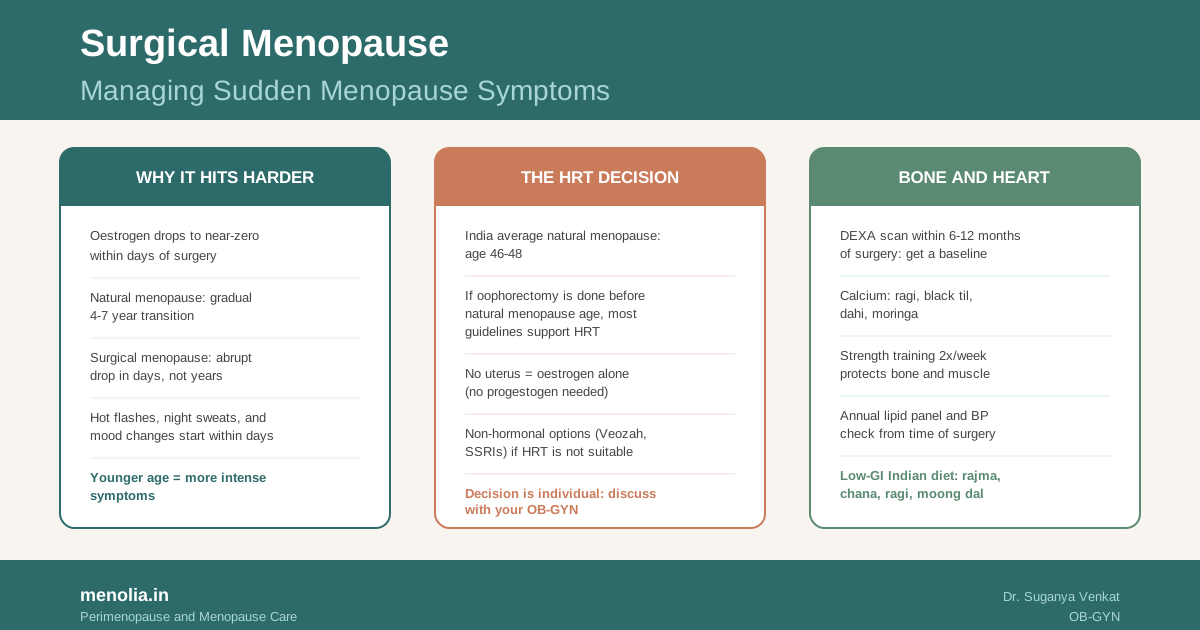
Surgical menopause, which occurs when both ovaries are removed (bilateral oophorectomy), works differently. You go into the operating theatre with functioning ovaries and come out without them. Oestrogen and progesterone, which the ovaries produce, drop to near-zero within days. The hypothalamus, which had been calibrated to a particular hormonal environment, receives an abrupt signal change. There is no gradual transition.
This is why surgical menopause deserves a separate conversation from natural menopause. The symptoms overlap, but the onset, the intensity, and the long-term health picture all differ in ways that affect the decisions you and your doctor need to make.
This post covers what to expect in the weeks after oophorectomy, why symptoms tend to be more severe than in natural menopause, the HRT question, and the longer-term considerations for bone and cardiovascular health.
If you have had a hysterectomy but your ovaries were kept, the hormonal picture is different and is covered in Menopause After Hysterectomy: Ovaries In or Out. If you are currently recovering from the surgery itself, Hysterectomy Recovery: Week-by-Week & What to Expect addresses the physical recovery in detail.
Why surgical menopause is more abrupt
In natural menopause, the ovaries do not switch off overnight. Oestrogen production becomes irregular and gradually falls over the perimenopausal years. The body has time to adapt, incompletely but incrementally. Even this gradual transition causes symptoms that many women find significant.
After bilateral oophorectomy, the decline happens in days rather than years. Studies of women who have undergone bilateral oophorectomy before the natural menopause age document higher rates of vasomotor symptoms (hot flashes, night sweats), more sleep disruption, and greater mood impact compared with women who reached menopause naturally (Shuster LT, Rhodes DJ, Gostout BS, Grossardt BR, Rocca WA. Maturitas. 2010;65(2):161-6. PMID 19733988).
The severity varies by individual, by age at surgery, and by whether the surgery was planned or emergency. Women who are younger at the time of oophorectomy tend to experience more intense vasomotor symptoms because the gap between their pre-surgical oestrogen levels and the post-surgical near-zero levels is larger. Women who were already in late perimenopause before surgery may notice a smaller step change.
What the first weeks feel like
The timeline is typically faster than most women expect. Hot flashes and night sweats can begin within days to a week of surgery. They tend to be frequent, sometimes occurring every 30 to 60 minutes, and more intense than the gradual vasomotor symptoms described in natural perimenopause.
Sleep disruption follows closely. Night sweats interrupt sleep architecture at multiple points. The tiredness that comes with surgical recovery compounds this, so the post-operative weeks are often marked by a level of exhaustion that feels disproportionate to the surgery itself.
Mood changes, including low mood, irritability, and a flattened emotional register, are common in the first few weeks. These are partly hormonal (oestrogen modulates serotonin and GABA pathways in the brain) and partly a response to a significant life event. Both contribute, and both are real.
Vaginal dryness may not be immediately apparent because it develops over weeks to months as oestrogen-dependent tissue gradually changes. By 6 to 12 weeks post-surgery, many women begin to notice vaginal dryness, reduced lubrication, and sometimes discomfort. This is part of genitourinary syndrome of menopause (GSM). Our GSM guide covers the symptoms and the management options in full.
For a broader look at the symptoms that fall from low oestrogen, see Low Oestrogen Symptoms: What Happens When Your Hormones Drop.
The HRT question in surgical menopause
Hormone replacement therapy is worth discussing more directly for surgical menopause than for natural menopause, for one clear reason: the oestrogen deficiency has arrived earlier than biology intended.
India’s average age of natural menopause is 46 to 48 years (Palacios S et al., Climacteric 2010, PMID 20690868) (Ahuja M, J Midlife Health 2016, PMID 27721640). If you are having bilateral oophorectomy at 35, 40, or 44, you are removing your ovaries at a stage when they would naturally still be producing oestrogen for several more years. The health effects of oestrogen deficiency across those extra years are documented: higher rates of cardiovascular disease, accelerated bone density loss, and greater cognitive change compared with women whose ovaries were conserved (Shuster et al., Maturitas 2010, PMID 19733988).
For this reason, most clinical guidelines, including those from the British Menopause Society and the North American Menopause Society, recommend considering HRT for women who have undergone bilateral oophorectomy before the natural menopause age, with the aim of continuing until at least the age when natural menopause would have occurred. This is not the same as HRT for natural menopause, where the risk-benefit calculus is more individual. For surgical menopause before the natural age, HRT is largely filling the gap left by ovarian removal.
There is one practical simplification that comes with surgical menopause: if the uterus has also been removed (which is the case for many women having bilateral oophorectomy for conditions such as endometriosis), there is no need for progestogen alongside oestrogen. Progestogen in combined HRT is needed to protect the uterine lining from the proliferative effect of unopposed oestrogen. Without a uterus, oestrogen alone is the regimen. This makes the hormonal management simpler.
If the uterus was kept, combined oestrogen and progestogen is still needed.
For a full breakdown of the HRT options available in India, including patches, gels, and tablets, see our HRT in India guide.
If you have recently had a bilateral oophorectomy and are not sure whether HRT is right for you, I can go through the decision with you on a video call. Reach me on WhatsApp at +91 99402 70499.
Bone health after bilateral oophorectomy
Oestrogen plays a central role in maintaining bone density. It slows the natural breakdown of bone by reducing the activity of osteoclasts (the cells that resorb bone tissue). After natural menopause, bone density loss accelerates to roughly 1 to 2 percent per year in the first several post-menopausal years. After surgical menopause, especially at a younger age, this loss can be more pronounced because the protective effect of oestrogen is removed over a longer period of time.
The practical steps are:
A baseline DEXA scan. Arrange this within 6 to 12 months of surgery. It gives you a starting point for monitoring. If bone density is already lower than expected, the conversation about HRT and any additional bone protection becomes more concrete. The Bone Density Test in India guide explains what the test involves, what your T-score means, and where to get it done.
Calcium and vitamin D. Post-menopausal requirements are 1,000 to 1,200 mg calcium per day and 600 to 800 IU vitamin D. Indian food sources that are reliably calcium-dense include ragi (364 mg per 100 g, the highest of any commonly eaten Indian grain), black til (around 350 mg per 30 g), dahi (approximately 240 mg per 200 g cup), and moringa leaves (drumstick / murungakeerai, approximately 220 mg per 50 g cooked). Vitamin D from dietary sources alone is difficult to reach; sunlight remains the primary source, and supplementation is often practical given the deficiency rates in Indian women.
Resistance training. Strength-based exercise twice a week is the single most evidence-supported lifestyle intervention for slowing bone density loss after menopause. Even 30 to 40 minutes of bodyweight or light weight training protects bone structure and improves muscle mass, both of which matter for long-term skeletal health.
For a full plan, see How to Prevent Osteoporosis: An OB-GYN’s Action Plan.
Cardiovascular health
Oestrogen has several cardioprotective effects, including favourable effects on lipid profiles, vascular tone, and endothelial function. Women who retain functioning ovaries have lower cardiovascular risk than those who do not, up until the age of natural menopause (when the two groups converge).
After surgical menopause, especially before 45, the cardiovascular risk profile begins to shift. Women can expect changes to their LDL cholesterol and triglycerides, and gradual changes to blood pressure regulation. This is not a reason for alarm, but it is a reason to monitor.
Practical steps:
- Check a fasting lipid panel (total cholesterol, LDL, HDL, triglycerides) and blood pressure annually, starting from the time of surgery
- Keep dietary sodium and refined carbohydrate intake in check: reduce processed packaged snacks, white bread, and refined grains; favour rajma, chana, moong dal, and low-GI staples
- The post on Menopause and Blood Pressure: The Oestrogen Connection covers the vascular side in more depth
If HRT is being used and started within 10 years of surgical menopause or before the age of 60, current evidence suggests a cardiovascular neutral or favourable effect, particularly with transdermal oestrogen (which bypasses the liver’s first-pass metabolism and avoids the VTE risk associated with oral oestrogen).
When HRT is not an option
Some women cannot take systemic oestrogen because of a personal or family history of certain hormone-receptor-positive breast cancers, blood clotting disorders, or other clinical contraindications.
Non-hormonal options for vasomotor symptoms have expanded meaningfully in recent years:
Fezolinetant (Veozah) is a non-hormonal neurokinin receptor antagonist that specifically targets the hypothalamic thermoregulation pathway that drives hot flashes. It was approved by the FDA in 2023 and is now available in India. Unlike older non-hormonal options, it is specifically designed for hot flash management. Our guide Fezolinetant (Veozah): The New Non-Hormonal Hot Flash Drug covers how it works, who it is suitable for, and what to expect.
SSRIs and SNRIs at low doses (specifically venlafaxine, paroxetine, and escitalopram) reduce hot flash frequency and severity. These are not licensed for hot flash management in India, but they are used off-label by clinical guidance from gynaecologists and psychiatrists. Non-Hormonal Hot Flash Treatment: SSRIs, Gabapentin & More covers the evidence and options.
Gabapentin can help with sleep disruption related to night sweats, particularly when taken in the evening.
For bone protection specifically, if HRT cannot be used, the conversation about bisphosphonates or other bone-protective agents becomes relevant earlier than it would for a woman who had natural menopause. This is a discussion to have with your gynaecologist or endocrinologist based on your DEXA findings.
On the lifestyle side, reducing caffeine and alcohol, keeping the bedroom cooler, and wearing lightweight cotton at night all reduce hot flash frequency. Pranayama (controlled breathing), particularly slow diaphragmatic breathing in 4-count inhale and 6-count exhale cycles, is supported by reasonable evidence for reducing vasomotor symptom burden.
If you have questions about what is appropriate for your individual situation after bilateral oophorectomy, I see women across India on a video call. WhatsApp me at +91 99402 70499.
FAQ
What is the difference between surgical menopause and natural menopause?
Natural menopause happens when the ovaries gradually reduce oestrogen production over several years of perimenopause, culminating in 12 consecutive months without a period. Surgical menopause happens when both ovaries are removed (bilateral oophorectomy). Oestrogen and progesterone drop to near-zero within days of surgery rather than declining gradually. The abruptness of the change is the main reason surgical menopause tends to cause more intense symptoms.
Does a hysterectomy cause surgical menopause?
Not automatically. A hysterectomy removes the uterus. Whether it causes menopause depends on whether the ovaries are also removed. If both ovaries are kept, menopause still arrives at the natural time (though possibly 1 to 2 years earlier because of reduced ovarian blood supply). If both ovaries are removed, surgical menopause begins immediately. If one ovary is kept, it can continue producing oestrogen and natural menopause follows later. This is covered in full in Menopause After Hysterectomy: Ovaries In or Out.
Should I take HRT after bilateral oophorectomy?
For most women who have bilateral oophorectomy before the natural menopause age (approximately 46 to 48 in India), clinical guidelines support considering HRT to replace the oestrogen the ovaries would have continued to produce. The decision is individual and depends on your medical history, particularly any history of hormone-receptor-positive breast cancer or clotting disorders. HRT for surgical menopause before the natural age is generally viewed differently from HRT for symptoms of natural menopause, because it is restoring an oestrogen level that would otherwise be present for several more years.
How soon do symptoms start after bilateral oophorectomy?
Hot flashes and night sweats typically begin within days to a week of surgery. Sleep disruption and mood changes often follow within the first 2 to 3 weeks. Vaginal dryness usually develops more gradually over 6 to 12 weeks as the oestrogen-dependent tissue of the vaginal walls gradually changes. The pace varies between individuals.
Do I still need bone protection if I take HRT after surgical menopause?
HRT is the primary bone-protective measure for women with surgical menopause before the natural age. Alongside it, adequate calcium and vitamin D, and resistance training twice a week, are practical additions. A baseline DEXA scan within 6 to 12 months of surgery gives you a reference point. If HRT is not being used, the timeline for considering bisphosphonates or other bone-protective agents is earlier than it would be for natural menopause.
Is surgical menopause linked to higher long-term health risks?
Research has documented that women who undergo bilateral oophorectomy before the natural menopause age have higher rates of cardiovascular events, bone density loss, and some cognitive changes compared with women whose ovaries were conserved (Shuster et al., Maturitas 2010, PMID 19733988). Many of these risks are significantly reduced by HRT. This is one of the reasons the clinical guidance for surgical menopause before the natural age is more direct about recommending hormone replacement than the guidance for natural menopause.
What if I am already post-menopausal when I have bilateral oophorectomy?
If you have already passed the natural menopause age before the surgery, the ovaries were already producing very little oestrogen. Surgical menopause will still cause an acute drop (the ovaries continue to produce small amounts of androgens and some oestrogen even after natural menopause), but the transition is less dramatic than in a younger woman. Vasomotor symptoms can still worsen transiently. The HRT calculus follows the same framework as for natural menopause management.