The itching has been there for two years. Some months it eases off; other months it is relentless, worse at night, disrupting sleep, making everyday life quietly uncomfortable. The prescription is always the same: an antifungal cream, sometimes combined with a mild steroid. A few weeks of relief, then it returns.
This is a story I hear often from women in post-menopause. The condition is lichen sclerosus, a chronic inflammatory skin condition of the vulva. The diagnosis is regularly delayed by years, not because women are failing to seek help, but because the symptoms are easy to mistake for more familiar conditions: thrush, vaginal dryness, general irritation.
This post covers what lichen sclerosus is, how to recognise it, why it is so frequently missed, and what the treatment looks like.
What Is Lichen Sclerosus?
Lichen sclerosus (LS) is a chronic inflammatory skin condition that affects the vulva and, in some women, the perianal skin. It is not an infection, not an oestrogen-deficiency condition in the way vaginal atrophy is, and not caused by poor hygiene. It is a condition where the immune system creates ongoing inflammation in the vulvar skin, leading to characteristic changes in texture, colour, and over time, structure.
The condition follows a bimodal age pattern: it occurs in pre-pubertal girls and then peaks sharply in post-menopausal women. The reasons for this distribution are not fully established, but the hormonal shifts at both ends of reproductive life appear to be a contributing factor (Fistarol SK, Itin PH. Am J Clin Dermatol. 2013;14(1):27-47).
Prevalence estimates from published studies range from approximately 1-3% in the general female population, with higher rates observed in post-menopausal gynaecology and dermatology clinic settings. Because the average time from symptom onset to correct diagnosis is measured in years, the true prevalence is likely higher than these figures capture.
Recognising the Symptoms
Lichen sclerosus has a recognisable pattern, and the three features that define it are worth knowing.
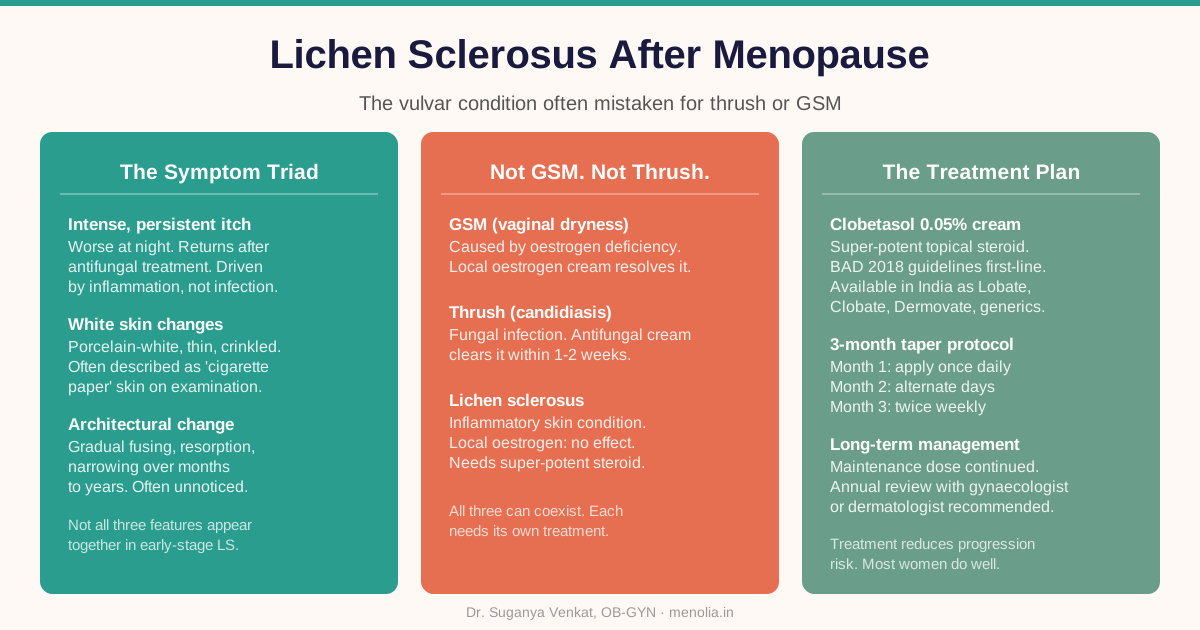
Intense, persistent itch (pruritus). The itch in LS is a defining feature: persistent, often worse at night, and unresponsive to antifungal treatment. It is driven by active inflammation in the skin, not by fungal overgrowth. This is why antifungal creams provide no lasting relief.
White skin changes. The affected skin becomes pale, thin, and fragile. The description most often used clinically is “porcelain white” or “cigarette paper” skin: crinkled in texture, with a loss of normal thickness and elasticity. In early LS, the white patches may be subtle and patchy. In established cases, they can cover most of the vulvar skin.
Architectural change. Over months and years, chronic inflammation leads to structural changes in the vulva. The skin over the clitoris (the clitoral hood) may fuse and adhere, partially obscuring it. The labia minora may gradually resorb, reducing in size or disappearing. The vaginal opening can narrow. These changes are slow and are often not noticed until they are well advanced. Some women notice pain during sex, difficulty with penetration, or a change in the appearance of the vulva they cannot explain.
Not every woman presents with all three features at once. Early LS may show only itch and initial pallor, without visible architectural change. This partial presentation is one reason it is missed.
Why the Diagnosis Is Often Delayed
Several factors account for the diagnostic gap.
The symptoms overlap with other common conditions. Vulvar itch, white skin changes, and soreness are also features of vulvovaginal candidiasis (thrush) and of genitourinary syndrome of menopause (GSM), the oestrogen-deficiency thinning that is extremely common after menopause. When a post-menopausal woman presents with vulvar symptoms, thrush and GSM are natural first considerations, and both are common enough to justify an empirical trial of treatment.
Combination steroid-antifungal creams provide temporary improvement. The corticosteroid component in many combined creams (the kind frequently prescribed for vulvar symptoms in India) can dampen LS inflammation for weeks, creating the impression that the original diagnosis was correct. When the itch returns, the same cream is prescribed again. The underlying condition is never directly assessed.
A visual examination is not always done. Diagnosing LS requires looking at the vulvar skin. If the consultation is conducted on the basis of symptoms alone, or if examination is limited, the characteristic white skin changes and any architectural distortion will not be seen.
Cultural factors reduce the likelihood of detailed discussion. For many women in India, persistent vulvar symptoms carry a layer of embarrassment that makes it difficult to describe them clearly, to ask follow-up questions, or to press for a more thorough assessment. A woman may accept a repeated prescription rather than raise the question of why the problem keeps coming back.
The practical consequence is that lichen sclerosus goes undiagnosed for an average of several years in most published case series. This matters, because LS is progressive: the architectural changes it causes are largely irreversible once established, and an untreated condition carries a small but real additional risk that a treated condition does not.
Lichen Sclerosus, GSM, and Thrush: The Differences Worth Knowing
Because these three conditions can present similarly in post-menopausal women, it helps to understand where they differ.
GSM (genitourinary syndrome of menopause) is caused by falling oestrogen levels. The vaginal and vulvar tissues become thinner, drier, and more fragile because oestrogen normally maintains them. The treatment is local oestrogen (cream, pessary, or ring), which restores the tissue environment. Local oestrogen is effective for GSM and resolves the symptoms.
Lichen sclerosus is an inflammatory skin condition. Its mechanism is separate from oestrogen deficiency. Local oestrogen applied to lichen sclerosus has no effect on the underlying inflammation and does not reverse the white skin changes or the itch. This is why a woman who has been correctly treated for GSM with local oestrogen may find her dryness improves but the itch, pallor, and architectural distortion do not.
The two conditions can coexist. A post-menopausal woman can have both GSM and LS simultaneously. In that situation, both conditions need treatment, but they need different treatments, and one does not substitute for the other.
Thrush (vulvovaginal candidiasis) typically presents with itch, discharge (often cottage-cheese in appearance), and redness. It responds to antifungal treatment within one to two weeks. A recurrence within weeks of treatment, or an absence of the characteristic discharge, or a lack of full response, should prompt reassessment rather than another antifungal course.
If you have vaginal dryness or pain during sex that has responded only partially to local oestrogen, or vulvar itch that keeps returning after antifungal treatment, lichen sclerosus is worth considering.
If any of this sounds like your experience, a conversation is a sensible starting point. Message Dr. Suganya on WhatsApp.
Diagnosis: What the Doctor Looks For
Lichen sclerosus is a clinical diagnosis in the first instance. An experienced gynaecologist or dermatologist can usually recognise the characteristic appearance on examination: the ivory-white, crinkled skin; the typical distribution (often in a figure-of-eight pattern around the vulva and perianal skin); the presence and degree of any architectural changes.
A biopsy is not always required to make the diagnosis and start treatment. However, biopsy is recommended in several situations:
- Where the diagnosis is uncertain from clinical appearance alone
- Where there are thickened, raised, ulcerated, or warty areas that require histological assessment to exclude vulvar intraepithelial neoplasia (VIN)
- Where the condition is not responding to treatment as expected
- Where there is any suspicion of early malignant change
The histological picture of LS is characteristic: vacuolar interface change with homogeneous collagenisation of the papillary dermis, together with a lichenoid lymphocytic inflammatory infiltrate below it. These are the features that confirm the diagnosis when clinical appearances are uncertain.
Treatment: The Clobetasol Protocol
The first-line treatment for lichen sclerosus is a super-potent topical corticosteroid. The British Association of Dermatology (BAD) 2018 guidelines (Lewis FM et al. Br J Dermatol. 2018;178(4):839-853, PMID 29313888) and the International Society for the Study of Vulvovaginal Disease (ISSVD) both recommend clobetasol propionate 0.05% cream as the first-line treatment for vulvar LS.
The standard initial protocol runs over approximately three months:
- Month 1: apply clobetasol propionate 0.05% once daily
- Month 2: apply once on alternate days
- Month 3: apply twice weekly
After the initial course, most women continue with a maintenance regimen, typically twice weekly or once weekly long-term, because LS is a chronic condition that does not permanently resolve. Stopping treatment entirely leads, in most cases, to a return of symptoms over the following weeks to months.
Clobetasol propionate 0.05% cream is available in India (brand names include Lobate, Clobate, Dermovate, and generics). The cream is applied as a thin layer to the affected vulvar skin only. Your gynaecologist or dermatologist will guide the application technique and confirm the correct areas to treat.
Several points are worth addressing directly:
- Topical corticosteroids on the vulva, used at the frequencies described above, do not cause significant systemic effects.
- Concern about skin thinning from steroids is understandable. Over-application can cause thinning, but the correctly used dose and frequency, as set out by the BAD guidelines, carry a strongly positive benefit-risk balance. The untreated, actively inflamed skin of LS causes more structural damage than adequately applied treatment does.
- Evidence from longer-term follow-up studies shows that adequate treatment with potent topical corticosteroids reduces disease progression and architectural change (Cooper SM, Gao XH, Powell JJ, Wojnarowska F. Arch Dermatol. 2004;140(6):702-6).
- If clobetasol does not achieve adequate symptom control, your dermatologist or gynaecologist may consider other topical agents, including tacrolimus (a calcineurin inhibitor used in some cases of refractory LS) or mometasone furoate.
The Surveillance Question
Lichen sclerosus carries a small but real risk of progression to vulvar squamous cell carcinoma (SCC). The BAD 2018 guidelines place this cumulative risk at approximately 2-5% over the course of the condition in reported series.
That number needs context. The majority of women with LS do not develop SCC. The elevated risk is concentrated in cases that are untreated, inadequately controlled, or complicated by persistent vulvar intraepithelial neoplasia. Women who receive a correct diagnosis, maintain adequate treatment, and attend for regular review have a substantially lower risk than the figures from untreated or unmonitored populations suggest.
What this means practically is that women with confirmed lichen sclerosus should have a regular annual review with their gynaecologist or dermatologist. The purpose is not surveillance in an alarming sense, but a regular clinical check: one pair of expert eyes on the vulvar skin each year, to confirm that the response to treatment is adequate and to identify any area that merits closer attention.
Women should also know what to look for themselves. A new lump on the vulva, a sore that is not healing, an area that is thickening or changing quickly, or any unexplained bleeding from the vulvar skin warrants a prompt appointment. Knowing what to watch for means you can act early if anything changes, and early action is when it is most straightforward.
These overlap with the general menopause red flags worth being aware of.
Comfort During Sex
Active, untreated lichen sclerosus can make sex painful. The itch, the fragility of the skin, and any narrowing of the vaginal opening all contribute to discomfort. With correct treatment, itch and inflammation resolve in most women over the first weeks to months, and comfort during sex improves as the skin stabilises.
If architectural changes such as narrowing of the vaginal introitus are already established, additional support from a pelvic floor physiotherapist trained in vulvar pain conditions can help alongside the steroid treatment. Graded exercises to restore vaginal capacity, lubrication guidance, and, where relevant, topical oestrogen for any concurrent GSM, are the practical layers that help women return to comfortable intimacy.
Do not assume that pain with sex after menopause is inevitable or untreatable. In women with LS, the correct diagnosis and treatment regularly makes a significant difference.
If you have vulvar symptoms that have not been properly examined, or a diagnosis of lichen sclerosus that needs a management plan, Dr. Suganya’s consultation is a practical next step. Start a conversation here.
Frequently Asked Questions
What is the difference between lichen sclerosus and vaginal dryness after menopause?
Vaginal dryness after menopause is usually caused by falling oestrogen levels, a condition called GSM. It responds to local oestrogen cream or pessaries. Lichen sclerosus is an inflammatory skin condition of the vulva with a different underlying mechanism. It does not respond to local oestrogen. It requires a potent topical corticosteroid (clobetasol propionate 0.05%) as its primary treatment. The two conditions can occur together in the same woman and both can then be treated simultaneously, using oestrogen for the dryness and clobetasol for the LS, but they are separate diagnoses that need separate treatments.
Can lichen sclerosus go away on its own?
In adult women, lichen sclerosus does not resolve without treatment. It is a chronic condition that will persist and may progress if left untreated. With correct treatment (super-potent topical corticosteroid on the protocol above), the itch and inflammation can be well controlled, further architectural damage can be prevented, and for most women the condition becomes a manageable, low-background-noise part of life. The goal is control, not cure.
Is lichen sclerosus contagious or sexually transmitted?
No. Lichen sclerosus is not an infection and cannot be transmitted to a sexual partner. It is an inflammatory condition involving immune dysregulation, possibly with a genetic predisposition, and exacerbated by hormonal and local skin factors. It has nothing to do with sexual activity or hygiene.
Will long-term use of clobetasol cream damage the vulvar skin?
This is a concern many women raise. The important distinction is between over-application (more cream, more often than prescribed) and correctly-prescribed use. At the frequencies set out by the BAD guidelines (tapering to a twice-weekly maintenance dose), clobetasol on vulvar skin does not cause problematic thinning. In fact, the ongoing inflammation of untreated LS causes more structural damage than appropriately dosed treatment does. Your prescribing doctor will review your skin at follow-up to confirm the response is as expected.
Does lichen sclerosus affect sex?
Active, untreated LS can make sex painful, due to the fragility of the inflamed skin and, in established cases, narrowing of the vaginal opening. With treatment, itch and skin fragility improve significantly in most women over the first few months. If architectural narrowing is already present, pelvic floor physiotherapy can help gradually, alongside the topical steroid treatment.
Do I need a biopsy for lichen sclerosus to be diagnosed?
Not always. An experienced gynaecologist or dermatologist can often diagnose LS from the clinical appearance at examination. A biopsy is recommended when the diagnosis is uncertain, when any area looks atypical or suspicious, when the condition is not responding to treatment, or when there is any concern about vulvar intraepithelial neoplasia or early malignant change.
What is the cancer risk with lichen sclerosus?
The cumulative lifetime risk of vulvar squamous cell carcinoma in women with lichen sclerosus is approximately 2-5%, based on the BAD 2018 guidelines and population studies. This risk is concentrated in women whose LS is untreated or inadequately controlled, and is substantially reduced in women who maintain adequate treatment and attend for annual review. Regular follow-up does not mean expecting a bad outcome; it means making sure any early change is seen and acted on promptly if needed.