A woman in her early fifties wakes up with her big toe swollen, red, and too painful to put a slipper on. Her first thought is not gout. Gout is what her father had, or her husband’s uncle, the “rich man’s disease” that came from eating too much meat. She waits it out for two days, assuming it is a sprain or a spider bite, before someone suggests a blood test that comes back with a uric acid level well above normal.
This mix-up is common, and it has a real reason behind it. Gout has long been studied and written about as a condition of men, and the standard health messaging that most women hear reflects that. What gets left out is that a woman’s risk of gout rises specifically after menopause, and the reason is hormonal, not just dietary. This post covers why uric acid climbs after 45, why the shift catches so many women off guard, how a gout flare is different from ordinary joint pain, and what genuinely helps.
Why uric acid rises after menopause
Uric acid is a normal waste product, made when the body breaks down purines, compounds found in your own cells and in certain foods. Most of it is filtered out by the kidneys and passed in urine. Gout happens when uric acid builds up in the blood faster than the kidneys can clear it, eventually forming sharp, needle-like crystals that settle in a joint and trigger a sudden, intense inflammatory response.
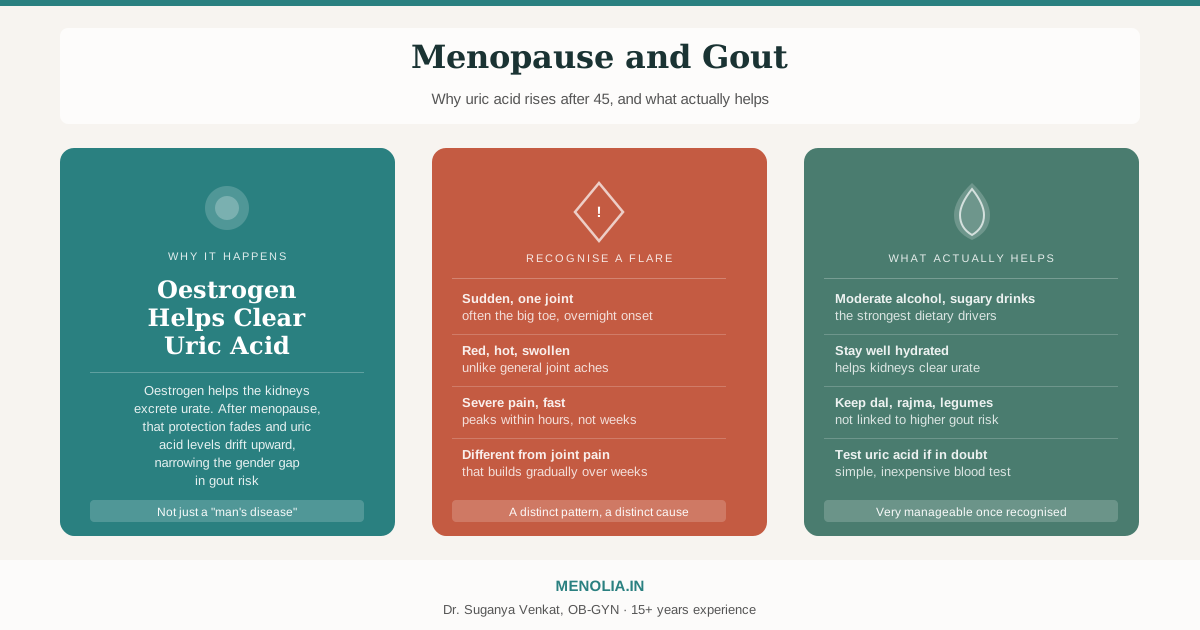
For most of a woman’s reproductive life, oestrogen keeps this system tilted in her favour. Oestrogen has a uricosuric effect, meaning it helps the kidneys excrete urate more efficiently, and it also appears to reduce urate production itself. This is a large part of why gout is so much more common in men at every age until midlife: premenopausal women simply clear uric acid better.
A study using data from the Third National Health and Nutrition Examination Survey found that menopause was independently associated with higher serum uric acid levels: women with natural menopause had uric acid levels 0.34 mg/dl higher than premenopausal women after adjusting for other factors, and current use of postmenopausal hormone therapy was linked to lower uric acid levels among postmenopausal women (Hak & Choi, Arthritis Research & Therapy, 2008, PMID 18822120). When oestrogen falls at menopause, that protective effect fades, and uric acid drifts upward.
The Nurses’ Health Study, following over 92,000 women for sixteen years, found the same pattern play out in actual gout diagnoses rather than blood levels alone. The incidence of gout rose from 0.6 per 1,000 person-years in women under 45 to 2.5 per 1,000 person-years in women 75 and older. Postmenopausal women had a 26% higher risk of incident gout compared with premenopausal women, and women who reached natural menopause before 45 had a 62% higher risk than women who reached it between 50 and 54 (Hak, Curhan, Grodstein & Choi, Annals of the Rheumatic Diseases, 2010, PMID 19592386). Earlier menopause meant more years without oestrogen’s protective effect on urate, and a correspondingly higher risk.
This is why gout, which narrows the gap between men and women’s risk as both age, is genuinely a menopause-relevant condition, and not simply something that happens to men who eat too much meat and drink too much beer.
Why it goes under-recognised in women
A few things compound to keep this connection quiet in everyday practice.
Gout is coded, culturally and clinically, as a male condition. Textbook images and public health messaging default to a man’s swollen toe. A woman describing the same symptom is more often worked up for a fracture, an infection, or “just” a middle-age ache before gout enters the conversation.
The presentation can look different. Postmenopausal women with gout are more likely than younger male patients to have multiple joints involved, including hands and knees rather than only the classic big toe, and to be on medications like diuretics for blood pressure that independently raise uric acid. This can make the picture look less textbook and delay the right test being ordered.
Uric acid is not part of routine screening. Unlike cholesterol or blood sugar, uric acid is not typically checked unless someone specifically asks for it or a joint problem prompts it. A woman can carry an elevated level for years with no flare, and no one flags it, until the day a joint suddenly does.
Other conditions compete for the diagnosis. In a woman over 45, unexplained joint pain is reasonably assumed to be general menopause-related joint pain, which is diffuse and affects several joints gradually. A sudden, one-joint flare is a different pattern and deserves a different look, but the overlap in age and general complaint of “joint pain” means gout can be filed under the wrong heading.
At Fertilia and Menolia, I’m Dr. Suganya Venkat, and this is one of the connections I make a point of raising with women in their menopause consultations even when they have not asked about it, precisely because it is the kind of thing that gets missed until a flare forces the issue.
Ask Dr. Suganya Venkat about unusual joint symptoms after menopause
How a gout flare is different from ordinary joint pain
This distinction matters because the two need different management.
| Feature | Gout flare | Menopause-related joint pain |
|---|---|---|
| Onset | Sudden, often overnight | Gradual, builds over weeks |
| Number of joints | Usually one joint at a time | Multiple joints, comes and goes |
| Appearance | Red, hot, visibly swollen | Mild swelling or none |
| Classic location | Big toe (podagra), also ankle, knee, fingers | Knees, hands, shoulders, lower back |
| Pain intensity | Severe, often described as the worst pain experienced, even bedsheets touching the toe can hurt | Aching, stiff, tolerable most days |
| Duration untreated | Peaks within 24 hours, settles over 1-2 weeks | Persistent, low-grade, ongoing |
| Trigger pattern | Often follows a rich meal, alcohol, dehydration, or illness | No specific single trigger |
If a joint goes from completely normal to red, hot, and severely swollen within a matter of hours, that pattern points toward gout rather than the general hormone-driven ache covered in our guide to menopause joint pain. The two can certainly coexist in the same woman, but they are managed differently: general joint pain responds to anti-inflammatory movement and diet over weeks, while an acute gout flare needs specific anti-inflammatory treatment and, longer term, a uric acid-lowering strategy if flares recur.
Dietary triggers, stated fairly
Diet genuinely affects uric acid, but the details matter more than the usual blanket warnings, and a few commonly feared Indian staples are not the real problem.
A meta-analysis pooling nineteen prospective and cross-sectional studies found that red meat (odds ratio 1.29), seafood (odds ratio 1.31), alcohol (odds ratio 2.58), and fructose-sweetened drinks (odds ratio 2.14) were all positively associated with gout risk. Dairy products (odds ratio 0.56) and soy foods (odds ratio 0.85) were associated with lower gout risk, and high-purine vegetables showed no positive association with gout at all, if anything a slightly protective one (Li, Yu & Li, Asia Pacific Journal of Clinical Nutrition, 2018, PMID 30485934).
That last finding is worth sitting with, because it runs against a common assumption. Dal, rajma, and other legumes are frequently blamed for high uric acid because they are technically classified as purine-containing, but the evidence does not support restricting them. The foods that actually move the needle on gout risk are alcohol, sugary drinks, red meat, and organ meat, not the lentils and beans that form the backbone of most Indian vegetarian diets. If you already eat dal daily, this is not something to give up out of caution.
Practical, India-relevant adjustments that the evidence does support:
- Alcohol, particularly beer, is one of the strongest dietary drivers of gout risk. If flares have started, this is the single food-related change worth prioritising.
- Sugary drinks and excess fruit juice raise uric acid through fructose, independent of calories. Nimbu pani without added sugar is a reasonable substitute.
- Red meat and organ meat (liver, kidney) in large or frequent portions contribute meaningfully; occasional, moderate portions are a different matter than daily heavy intake.
- Hydration matters the same way it does for the kidney stone risk that also rises after menopause: concentrated urine makes it harder for the kidneys to clear uric acid efficiently.
- Dal, rajma, chana, and other legumes can stay in the diet as usual. So can most vegetables, including the ones sometimes flagged as high-purine, like spinach and mushrooms.
- Weight in the healthy range helps, since higher body weight is independently linked to higher uric acid, though this is a long-term pattern rather than something to chase during an active flare.
HRT and gout: a more complicated picture than it first appears
Given that oestrogen protects against uric acid buildup, it would be reasonable to assume HRT straightforwardly lowers gout risk. The evidence is more nuanced than that.
The US-based Nurses’ Health Study found that postmenopausal hormone users had a modestly reduced risk of gout compared with non-users (relative risk 0.82). But a large South Korean cohort study of just over one million postmenopausal women found the opposite association for hormone use: both oral contraceptive use earlier in life and postmenopausal hormone therapy were linked to a higher risk of gout, while a shorter total reproductive span (later menarche, earlier menopause) was the factor most consistently tied to increased risk (Eun, Kim, Han & Lee, Arthritis Research & Therapy, 2021, PMID 34915918).
These two large studies do not agree on the direction of the HRT effect, which tells us the relationship is not settled and likely depends on factors like the specific hormone formulation, dose, route of administration, and population studied. What both studies agree on is the underlying principle: a longer duration of a woman’s own natural oestrogen exposure across her lifetime tracks with lower gout risk. Whether adding back hormone therapy after menopause replicates that same protection is genuinely unresolved.
The practical takeaway is not to start or avoid HRT specifically for gout, in either direction. If you already have gout or a strong family history of it, it is a reasonable detail to mention as part of the broader conversation about HRT and what it does or doesn’t address for you, alongside the other factors your doctor already weighs.
Talk to Dr. Suganya Venkat about your menopause symptoms and any joint concerns
When to test, and what the numbers mean
Uric acid is checked with a simple blood test, widely available at diagnostic labs across India for roughly Rs 150 to 350 depending on the lab and city, sometimes bundled into a broader health check-up panel (verified against current listings, September 2026).
It is worth testing if you have:
- A sudden, severe, single-joint flare, especially in the big toe, ankle, or knee
- A family history of gout
- Diuretic use for blood pressure, which independently raises uric acid
- Kidney stones, since uric acid and calcium stone risk share overlapping mechanisms after menopause
- Ongoing joint symptoms that do not fit the gradual pattern of general menopause joint pain
A single elevated reading does not automatically mean gout: some people carry higher uric acid for years without ever having a flare, and levels can even look deceptively normal during an acute attack. Diagnosis is made from the whole picture: symptoms, pattern, and sometimes joint fluid analysis, not the number alone. This is a conversation to have with your doctor rather than a DIY interpretation of a lab report.
What to do if you’ve had a flare
The reassuring part of this story is that gout, once recognised, is one of the more manageable conditions in this space.
An acute flare is treated with anti-inflammatory medication in the short term to bring down the pain and swelling quickly; your doctor will advise on the right option based on your other health conditions. This is separate from the longer-term question of whether urate-lowering medication is needed, which is usually only considered after recurrent flares or a very high uric acid level, not after a single isolated episode.
Alongside any medication your doctor recommends, the lifestyle measures above (moderating alcohol and sugary drinks, staying well-hydrated, keeping weight in a healthy range) genuinely reduce the frequency of future flares. None of this requires giving up dal, rajma, or the vegetarian staples of a typical Indian kitchen.
If you’ve had one flare and are wondering whether it will happen again, it can, but the factors that make a repeat flare more or less likely are largely within reach, and a doctor can help you build a plan around them rather than leaving you to wait and see.
Frequently Asked Questions
Can menopause cause gout in women who never had it before?
Yes. Oestrogen has a uricosuric effect, helping the kidneys clear uric acid efficiently, and this protection fades after menopause. Research using US national health survey data found menopause was independently associated with higher uric acid levels, and a sixteen-year study of over 92,000 women found postmenopausal women had a 26% higher risk of a first gout diagnosis compared with premenopausal women. Women who reach menopause earlier than average carry a higher risk still, since they lose the protective effect sooner.
Is gout really more common in women after 45, or is it still mainly a male condition?
Gout remains more common in men at every age, but the gap narrows sharply after menopause. Before menopause, women are substantially protected by oestrogen; after it, that protection fades and a woman’s uric acid handling starts to resemble a man’s more closely. This is why gout in postmenopausal women is real and worth recognising, even though it is still statistically less common than in men of the same age.
What does a gout flare feel like compared to ordinary menopause joint pain?
A gout flare comes on suddenly, usually in a single joint (classically the big toe, though ankles, knees, and fingers can also be affected), and the joint becomes red, hot, and severely swollen within hours. General menopause-related joint pain builds gradually, affects several joints on and off, and is a milder, more diffuse ache. If a joint goes from fine to severely painful overnight, that pattern points toward gout rather than the usual hormonal joint ache.
Do I need to stop eating dal and rajma if my uric acid is high?
No. This is one of the most persistent myths around gout. A meta-analysis of nineteen studies found that high-purine vegetables and legumes showed no positive association with gout risk, and soy foods were actually linked to lower risk. The dietary factors that meaningfully raise gout risk are alcohol, sugary drinks, red meat, and organ meat, not dal, rajma, or chana. These can stay in your diet as usual.
Does HRT help or worsen gout risk after menopause?
The evidence is mixed rather than settled. One large US study found postmenopausal hormone users had a modestly lower gout risk, while a larger South Korean cohort study found hormone use associated with higher risk. Both agree that a longer duration of a woman’s own natural oestrogen exposure over her lifetime is linked to lower gout risk, but whether hormone therapy after menopause replicates that protection is not yet clear. This is worth mentioning to your doctor as one factor among several, not a reason to start or avoid HRT on its own.
How much does a uric acid test cost in India, and when should I get one?
A standalone serum uric acid blood test typically costs between Rs 150 and 350 at major diagnostic labs across India, sometimes less as part of a promotional or bundled panel, checked as of September 2026. It’s worth testing if you’ve had a sudden, severe, single-joint flare, have a family history of gout, take diuretics for blood pressure, or have a history of kidney stones, since the two conditions share some of the same underlying risk factors after menopause.
Is gout dangerous, or is it just painful?
An individual flare is intensely painful but not dangerous in itself, and it settles within one to two weeks even without treatment, faster with it. Left completely unaddressed over years, however, recurrent gout can damage joints and is linked to kidney stones and other metabolic changes worth monitoring. The reassuring news is that gout is one of the most treatable conditions in this category: once recognised, both flares and future risk are very manageable with the right combination of medical treatment and lifestyle changes.
Uric acid rising after 45 is a real, hormonally-driven change, not a personal dietary failing, and once it’s recognised for what it is, it responds well to the right combination of medical guidance and everyday changes. If you’ve had unexplained joint flares, or simply want your post-menopause health checked properly, message Dr. Suganya Venkat on WhatsApp to talk it through. She consults online, pan-India, via video call.