A woman in her late forties comes to see a pulmonologist for the first time. She has had mild asthma since her thirties, well controlled with one inhaler. In the past year, she has been reaching for her rescue inhaler almost every week. Nothing obvious has changed at home or at work. Her spirometry is worse than it was two years ago. The pulmonologist adjusts her medication. Nobody asks about her periods, which stopped ten months ago.
That gap in the consultation happens more often than it should.
Breathing difficulties and menopause rarely appear in the same sentence. Respiratory physicians look for triggers in the air; gynaecologists focus on hormones. The two rarely meet. But the menopausal transition is a real inflection point for airway health in women, and understanding why can make a meaningful difference to how it is managed.
I am Dr. Suganya Venkat, an OB-GYN with fifteen years of clinical experience working with women through perimenopause, menopause, and beyond, through online consultations at Menolia. This post covers the hormone side of the breathing story, so that when you sit in your pulmonologist’s consultation room, you have the full picture.
Why asthma clusters around the menopausal transition
If asthma were purely about allergens and air quality, you would expect men and women to develop it at similar rates throughout life. The data show something different.
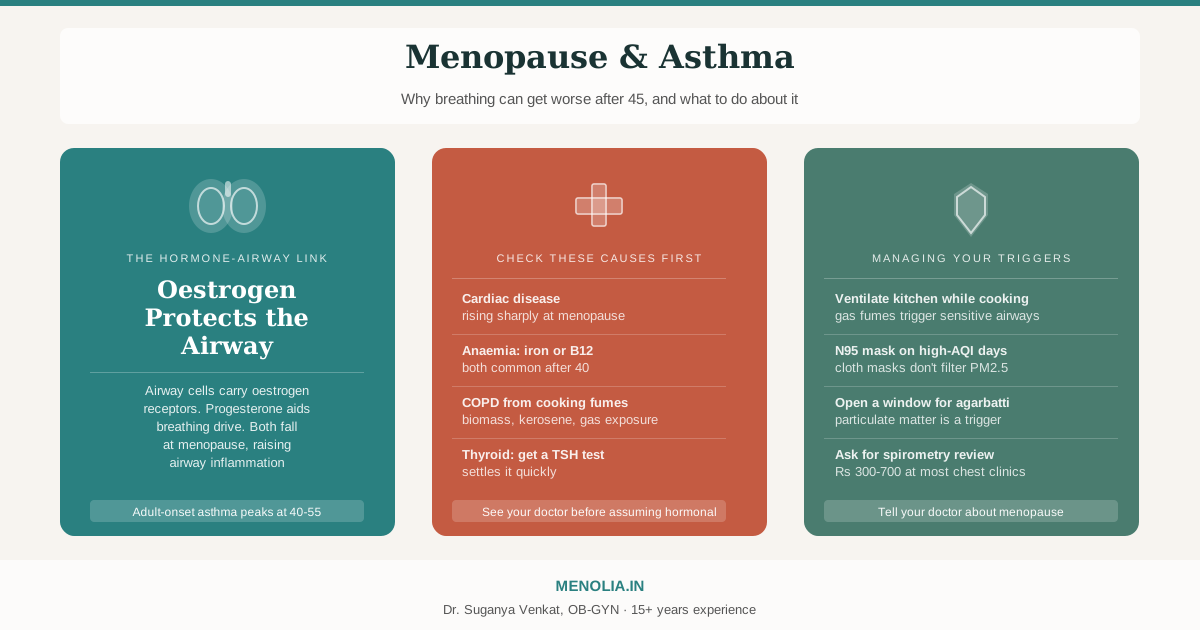
Before puberty, asthma is more common in boys. After puberty, the pattern reverses: women develop asthma at higher rates than men, and this difference is most pronounced in the adult-onset category, meaning asthma that starts in adulthood rather than childhood. Adult-onset asthma in women peaks in the perimenopausal and early postmenopausal years, roughly between 40 and 55.
That pattern across puberty and menopause is not incidental. It mirrors the rise and fall of female sex hormones. Researchers studying asthma epidemiology across the life span have documented this trajectory in cohort data from Europe, North America, and Asia, and the consistent picture is that oestrogen and progesterone modulate airway behaviour. Women are more vulnerable to airway inflammation when these hormones fluctuate sharply or fall permanently.
How oestrogen and progesterone affect your airways
Oestrogen receptors sit on the cells that make up the airway wall, including airway smooth muscle cells, mast cells (the cells that release histamine in response to triggers), and the epithelial lining of the bronchi. When oestrogen levels are stable, it tends to exert an anti-inflammatory effect on the airway, dampening the inflammatory response that leads to swelling, mucus production, and airway narrowing.
Progesterone has a different but equally relevant role. It is a known respiratory stimulant, which is why pregnant women breathe more deeply and maintain a slightly higher ventilatory drive even at rest. Progesterone also has mild bronchodilatory properties, meaning it helps keep airways open.
During the perimenopausal years, both hormones begin to fluctuate before eventually settling at their lower postmenopausal baseline. The fluctuations themselves appear to matter, not only the eventual low level. Some women notice that their asthma is worst in the week before their period, when oestrogen drops sharply after the mid-luteal peak. Others find that the erratic cycle pattern of perimenopause, with months of unusually high oestrogen followed by months of near-absence, makes their airway symptoms less predictable than they were before.
Once periods have stopped entirely and oestrogen settles at its postmenopausal level, the anti-inflammatory and bronchodilatory effects of both hormones are lost. For a woman with existing asthma, that means the hormonal buffer quietly supporting her airway for years is gone. For a woman who never had asthma, it can mean that airway inflammation she was always just below the threshold of tips into a clinical condition.
The histamine and sensitivity connection
Mast cells in the airway lining are sensitive to oestrogen. During the hormonal swings of perimenopause, mast cells can become more reactive, releasing histamine in response to triggers that never bothered the airway before. This is part of why many women in their late forties and fifties develop new food intolerances, new sensitivities to perfumes and cleaning products, and heightened reactions to environmental allergens they tolerated without difficulty for decades.
In the airway specifically, this heightened mast cell reactivity can translate into increased bronchial sensitivity to cold air, dust, pollution, or inhaled irritants. A woman who used to walk through a smoky kitchen or a dusty construction zone without a second thought may find that the same air now triggers tightening in her chest and a dry cough.
The connection between menopause, mast cell behaviour, and new sensitivities is covered in more depth in Menopause & Allergies: New Sensitivities After 45. The airway version of that story operates through the same underlying biology.
Breathlessness after 45 is not automatically a hormone problem
New breathlessness in a woman over 45 has several possible causes, and most of them need to be evaluated by a doctor before the hormonal contribution can even be considered. A pulmonologist, a general physician, and sometimes a cardiologist need to be part of this picture.
Cardiac causes. The menopausal transition coincides with rising cardiovascular risk in women. As oestrogen falls, rates of coronary artery disease, hypertension, and other cardiac conditions increase. Breathlessness, particularly on exertion, is one of the ways cardiac disease presents in women, and it often does not look like the textbook male picture of chest pain. Any woman in her late forties or fifties with new breathlessness on walking or climbing stairs needs a cardiac evaluation. Menopause & Heart Health covers the broader picture, and Menopause & Heart Palpitations is relevant for the rhythm-related symptoms that can accompany breathlessness.
Anaemia. Heavy perimenopausal bleeding causes iron-deficiency anaemia in a significant number of women, and low haemoglobin reduces the blood’s oxygen-carrying capacity, causing breathlessness. Vitamin B12 deficiency, which becomes more common after 40, causes breathlessness through a similar reduction in red cell function. Both are diagnosable with a blood test and both are treatable. Menopause & Vitamin B12 Deficiency covers how B12 deficiency presents and why it is missed.
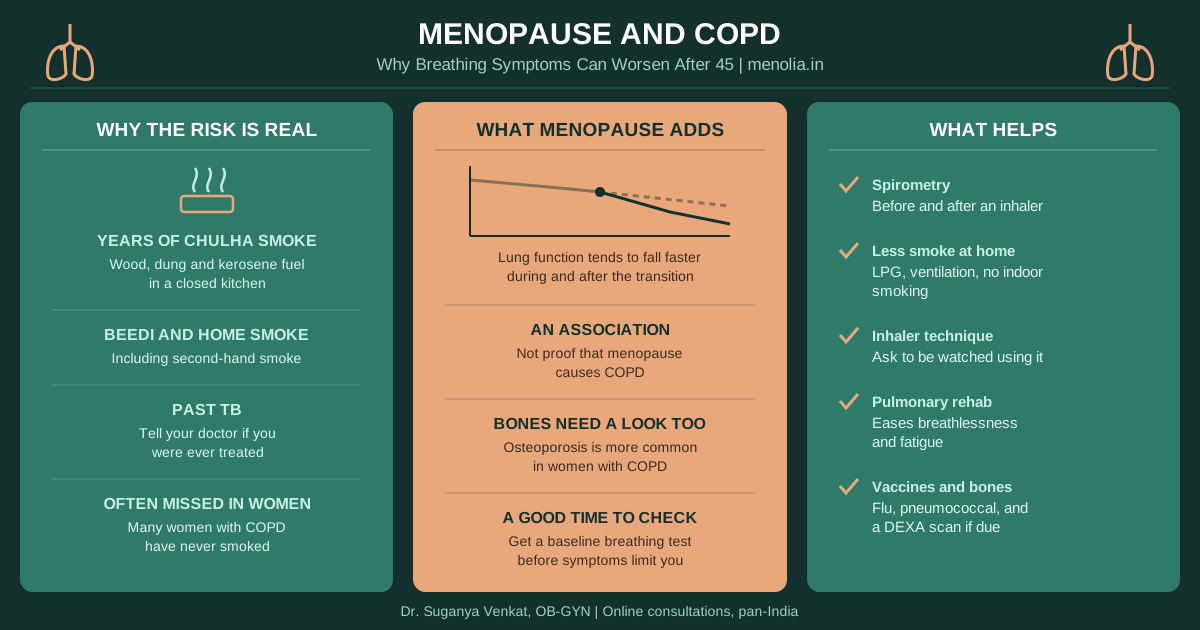
COPD. Women who have spent years cooking over gas stoves, biomass fuel, or kerosene in enclosed kitchens carry a real risk of chronic obstructive pulmonary disease. COPD and asthma can coexist, and the two have different treatment approaches. If there is any history of prolonged indoor smoke exposure, this needs to be part of the evaluation.
Thyroid. Hypothyroidism causes breathlessness alongside fatigue and weight gain, and its symptoms overlap substantially with menopause. A TSH test settles this quickly and is worth including in any breathlessness workup.
Any woman with new or significantly worsened breathlessness after 45 should see her doctor and ask for an ECG, a complete blood count (for anaemia), a TSH (for thyroid), and a spirometry test. Once cardiac, haematological, and pulmonary causes have been assessed, the hormonal contribution can be discussed in that context.
If your breathing has changed and you are not sure how to connect it to your hormonal stage, a video consultation with Dr. Suganya Venkat at Menolia can help you frame the right questions for your pulmonologist and physician. Message on WhatsApp. Online, pan-India.
Your inhaler needs may have changed
For women who already carry an asthma diagnosis, the menopausal transition is worth raising specifically with their respiratory physician.
Asthma control is assessed by symptom frequency, rescue inhaler use, and spirometry results. If you have been on the same controller inhaler regimen for years and find that your rescue inhaler use is increasing, or that cold air, cooking fumes, and dust are triggering symptoms more readily than before, the hormonal shift is a plausible contributing factor. Not the only factor, but one the prescribing physician may not have considered.
Weight gain around the menopause transition also affects breathing independently of airway disease. Central fat accumulation around the abdomen and chest reduces the space the diaphragm has to move with each breath, restricting tidal volume and causing breathlessness on exertion. A woman who gains abdominal weight at menopause may notice more effort in climbing stairs even without any worsening of her asthma, and this can compound the clinical picture.
Sleep disruption is a third overlapping factor. Asthma is often worse at night, driven by circadian changes in airway calibre and cortisol. Menopause disrupts sleep through hot flashes and night sweats. A woman whose sleep is already fragmented may find her nocturnal asthma control worsens at the same time. Addressing the sleep disruption is part of the overall management, not a separate concern.
None of this means adjusting your inhaler yourself. It means bringing this context to your respiratory physician so the medication review reflects your hormonal stage as well as your spirometry results.
What HRT means for asthma (and what it does not)
Some women who read about oestrogen’s effects on the airway ask whether starting HRT would improve their breathing. HRT has not been studied or approved as an asthma treatment, and the evidence is more complicated than the hormone-airway link might suggest.
Observational data on oestrogen and the airway are mixed. Some analyses have found that oestrogen-alone HRT, prescribed to women who have had a hysterectomy and do not need a progestogen, is associated with slightly better asthma control. Other analyses, particularly from large trials using combined HRT (oestrogen plus a synthetic progestogen), have found an association with increased asthma incidence. The progestogen component may counteract some of oestrogen’s airway benefits, which is a reason the combined versus oestrogen-alone distinction could matter for women with airway disease, though this remains an area of ongoing research rather than settled guidance.
The implication is that this is a specialist-level conversation, not a DIY decision. A woman with both asthma and menopausal symptoms should make sure her gynaecologist and her respiratory physician are aware of each other’s involvement in her care, so that any HRT decision accounts for her full clinical picture.
For the broader HRT discussion, HRT for Menopause in India: Benefits, Risks & When to Start is a useful starting point.
Practical steps for Indian women
If your asthma or airway sensitivity has changed around the menopause transition, an audit of your immediate environment is useful alongside any medical review.
Agarbatti and dhoop. Incense is used daily in millions of Indian homes as part of prayer and ritual, and the particulate matter from burning incense is a documented respiratory irritant. Women who have become more sensitive may find that burning incense near an open window, or reducing the duration, makes a noticeable difference.
Cooking fumes. Gas cooking produces nitrogen dioxide and fine particles; biomass and kerosene stoves produce substantially more. A kitchen exhaust fan, an open window during cooking, or reducing time over a flame during high-smoke frying (tadka, deep frying) reduces the particulate load your airway absorbs daily.
Construction dust and outdoor air. PM2.5 levels in many Indian cities frequently exceed safe limits. An N95 mask (not a cloth or surgical mask, which do not filter fine particles effectively) when walking outdoors on high-AQI days is appropriate for anyone with airway disease.
Seasonal patterns. Cold winter mornings in North and Central India are a common asthma trigger. Monsoon moulds are another. Knowing your personal seasonal pattern is worth noting, so you can anticipate the months when you need closer monitoring.
Spirometry. A spirometry test, which measures lung function objectively, is available at chest physician clinics, hospital pulmonology departments, and many diagnostic centres in India. Cost is typically Rs 300 to 700 for a standard spirometry. If you have not had a baseline reading in the past two years and your breathing symptoms have changed, a fresh measurement gives your doctor the numbers to work with rather than symptoms alone.
What asthma and breathlessness are called in other Indian languages
| Language | Word for asthma | Word for breathlessness |
|---|---|---|
| Hindi | Dama (दमा) | Saans lene mein takleef (सांस लेने में तकलीफ) |
| Tamil | Astma (common usage) | Moochu thinaRal (Roman; script to be confirmed) |
| Telugu | Daama (common usage) | Swaasa sikattu (Roman; script to be confirmed) |
| Kannada | Dama (common usage) | Ushvaasa teejane (Roman; script to be confirmed) |
| Malayalam | Astma (common usage) | Moochu mudakkam (Roman) |
If you have been searching in your native language and landing on pages about menopause symptoms that say nothing about the airway, this post is specifically for you.
Frequently asked questions
Can menopause actually cause asthma for the first time, in a woman who never had it before? Yes. Adult-onset asthma, meaning asthma that develops in adulthood rather than childhood, is more common in women than men and peaks in the perimenopausal and early postmenopausal years. While worsening of existing asthma is the more common picture, new-onset asthma at this life stage is a real and documented pattern. The hormonal shift is one of the contributing factors, alongside the rising sensitivity to triggers that many women notice around this time.
My inhaler has worked well for years. Why is it not controlling my symptoms as well now? Asthma control depends partly on the underlying level of airway inflammation, and oestrogen has been shown to have anti-inflammatory effects on airway tissue. When oestrogen falls at menopause, the inflammatory baseline in the airway can shift, making the same dose of controller medication less effective than it was. Bring this timeline to your pulmonologist or chest physician. A spirometry review and a step-up in therapy, if needed, are clinical decisions for the prescribing physician.
How do I know if my breathlessness is asthma, or something else? You cannot reliably distinguish the causes from symptoms alone, which is why any new breathlessness after 45 needs a doctor’s evaluation. Cardiac breathlessness tends to be worse on exertion and may come with ankle swelling or fatigue out of proportion to activity. Asthmatic breathlessness is typically more variable, triggered by specific exposures, and often accompanied by wheeze or cough. But these patterns overlap, and the right approach is a cardiac evaluation (ECG at minimum), a blood count (for anaemia), and a spirometry test, not choosing between them.
Will HRT help my asthma? HRT has not been approved or studied as an asthma treatment. Observational data on oestrogen and the airway are mixed, and the decision about whether to use HRT is made on entirely different grounds, your menopausal symptoms, bone health, cardiovascular profile, and personal health history. If you have both asthma and menopausal symptoms that are affecting your quality of life, ensure that your gynaecologist and your respiratory physician are in communication about your overall care.
I have been using agarbatti every morning for decades. Could that be making my breathing worse now? Yes, it can. Fine particulate matter from burning incense is a documented respiratory irritant. Women who were not bothered by it in their thirties and forties sometimes find that the same exposure triggers coughing and chest tightness in their late forties and fifties. This is consistent with the heightened airway sensitivity that can accompany the menopausal transition. Burning incense near an open window, or reducing the quantity, is worth trying while you also discuss the broader picture with your physician.
Dama menopause mein kyun badh jaata hai? Oestrogen aur progesterone dono hi airway mein anti-inflammatory kaam karte hain. Menopause ke baad jab yeh hormones kum ho jaate hain, toh airway mein inflammation ka baseline badh sakta hai aur airways common triggers ke liye zyada sensitive ho jaati hain. Pehle se jo asthma controlled tha, woh zyada unbhog kar sakta hai. Apne chest physician ko menopause ke baare mein zaroor batayein taki woh puri clinical tasveer samjh sakein.
My doctor keeps adjusting my medication but nothing is holding. What else should I bring up? Ask your physician specifically whether the timing of your symptom change corresponds with any change in your menstrual cycles or the onset of other menopausal symptoms such as hot flashes, sleep disruption, or mood changes. If the worsening of asthma control coincides with the perimenopausal or menopausal transition, that is a clinical data point worth recording. At the same time, ensure that cardiac causes, anaemia, and thyroid function have been evaluated, since these can produce breathlessness that looks like worsening asthma but follows a different treatment path.
Menopause affects many systems that are not usually part of the conversation, including the airway. If you want to understand how your hormonal stage might be contributing to breathing changes, reach Dr. Suganya Venkat on WhatsApp. She consults online, pan-India, via video call.
This post is for information and context. New or worsening breathlessness needs a medical evaluation, not a self-diagnosis. Please see your doctor.