You have been eating rajma your entire adult life without a second thought. Or tomato-based curries, or dahi, or a rare glass of wine on a long weekend. But now, at 48, your skin flushes an hour after dinner. You wake with a stuffy nose that was not there when you went to sleep. A glass of wine gives you a headache before you are halfway through. Your skin itches in places with no visible rash.
Your GP has not found anything obviously wrong. Your bloodwork is mostly normal. But something has changed, and the timing, your late 40s, is not a coincidence.
What is happening here connects more directly to your changing hormones than most women are told.
What Histamine Does in the Body
Histamine is a chemical messenger produced primarily by mast cells and basophils. It is released in response to perceived threats (allergens, infections, injury) and drives the symptoms most people associate with allergic reactions: itching, sneezing, runny nose, skin flushing, hives, and gut discomfort.
Histamine is also produced in smaller quantities in the gut, and food is a significant source. Fermented foods, leftovers, and some fresh foods contain preformed histamine. Other foods trigger the body to release its own histamine even without containing much themselves.
The body has two main enzymes for clearing histamine: DAO (diamine oxidase), which works in the gut to break down ingested histamine, and HNMT (histamine N-methyltransferase), which handles histamine inside cells. When these enzymes are working well, histamine is cleared efficiently. When capacity is reduced (whether genetically or due to other factors), histamine can accumulate and produce symptoms that seem out of proportion to the trigger.
This accumulation is sometimes called histamine intolerance, a condition distinct from true allergy. A comprehensive review published in the American Journal of Clinical Nutrition described the enzyme capacity, dietary triggers, and symptom patterns in detail (Maintz L, Novak N. Am J Clin Nutr. 2007;85(5):1185-1196. PMID 17490952).
The Oestrogen Connection
Here is where this becomes relevant to women in their 40s and 50s.
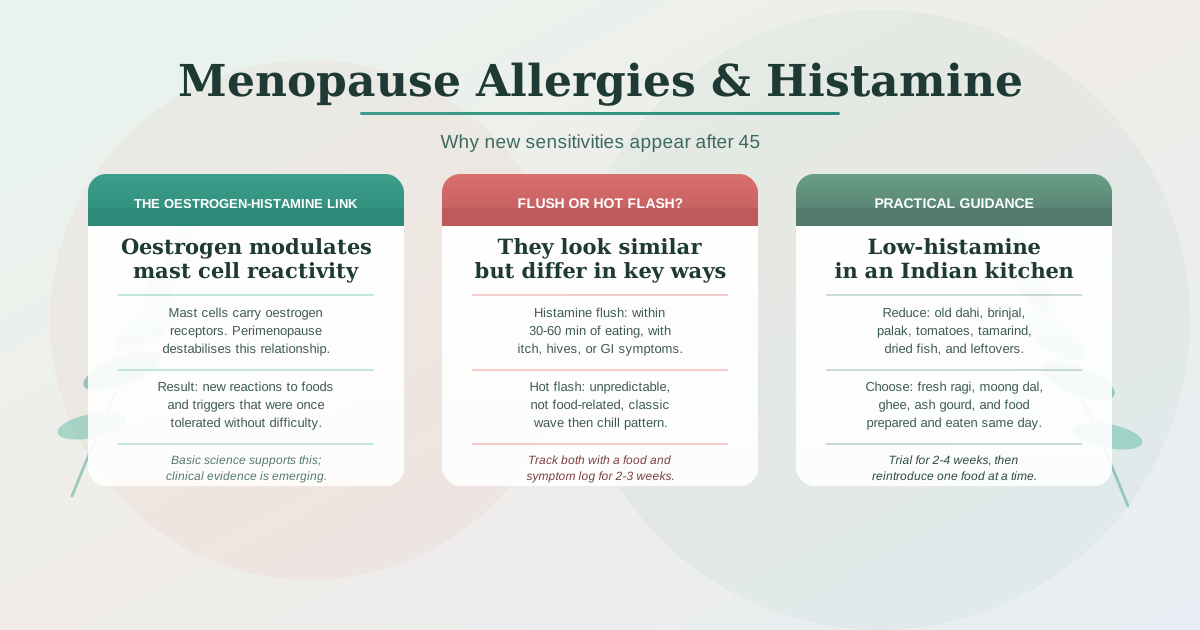
Mast cells carry oestrogen receptors. Research has shown that oestradiol, the primary form of oestrogen, can activate mast cells and stimulate histamine release through these receptors (Zaitsu M et al. J Allergy Clin Immunol. 2007;120(3):529-537. ). There is also a bidirectional relationship: histamine can stimulate oestrogen release from the ovaries, creating a feedback loop.
This loop matters because of what oestrogen does during perimenopause. Oestrogen does not fall steadily in the years before your last period. It fluctuates, often unpredictably, with surges followed by sharp drops, before eventually declining overall. These swings can destabilise the oestrogen-mast cell relationship your body has relied on for decades.
For some women, the result is increased mast cell reactivity. Not classical allergy in most cases, but a lower threshold for histamine symptoms: reactions to foods or triggers that previously caused no problem, flushing from smaller amounts of wine, skin responses that seem disproportionate.
The evidence base needs stating clearly. Much of the research connecting oestrogen and mast cell behaviour has come from animal models and in vitro studies. Well-controlled clinical trials specifically in perimenopausal women are limited. What basic science and clinical pattern both suggest is that the connection is real, and that symptoms emerging in this hormonal window deserve to be taken seriously, even as we continue building the clinical picture.
What is well-established: women are more affected by allergic conditions, asthma, and food sensitivities in adulthood than men. Research published in Current Allergy and Asthma Reports confirms that hormonal factors, including oestrogen and progesterone, contribute meaningfully to these sex differences in allergic disease (Zein JG, Erzurum SC. Curr Allergy Asthma Rep. 2015;15(6):28. PMID 26141573). Perimenopause, with its hormonal upheaval, appears to be a window where this susceptibility increases for some women.
Histamine Flushing vs. a Hot Flash
This is one of the most clinically useful distinctions to understand, because the two can look nearly identical in the moment.
Both histamine-related flushing and hot flashes cause a wave of heat and redness, often across the face, neck, and chest. Both can cause sweating. If you experience either, you may not know in real time which is which.
Here are the features that help distinguish them.
Hot flash pattern: Comes on suddenly, often in waves throughout the day and night. Lasts 2 to 4 minutes typically, followed by chills. Not usually accompanied by itching, hives, or GI symptoms. Does not reliably follow eating or drinking.
Histamine flush pattern: Typically triggered by a specific food or drink, appearing within 15 to 60 minutes of eating. May be accompanied by itching, tingling, or a stuffy nose. Can come with GI symptoms: bloating, cramping, or loose stools. Hives or visible skin redness may appear. Improves with an antihistamine.
If your flushing almost always follows a meal or specific foods, and especially if other symptoms accompany it, a histamine or food reaction is worth considering separately from your hot flashes. The two can overlap and coexist in the same woman, which is why keeping a simple log for two to three weeks, noting what you ate, when symptoms appeared, and what accompanied them, can reveal patterns that are otherwise difficult to see.
True Allergy, Histamine Intolerance, or Something Else
These are different conditions with overlapping symptoms, and understanding which you are dealing with shapes what to do next.
True allergy (IgE-mediated): The immune system produces IgE antibodies to a specific allergen. On re-exposure, mast cells degranulate rapidly. Symptoms are typically rapid (within minutes), often severe, and consistent: the same food causes a reaction every single time. True allergy can cause anaphylaxis in serious cases. Diagnosis is by skin prick testing or specific IgE blood tests. An allergist is the right person to evaluate this.
Histamine intolerance: The issue is not the immune system identifying a threat, but the body’s reduced capacity to clear histamine. Symptoms are dose-dependent and variable: a small amount of wine may be fine, a larger amount causes a flush. The same food can cause symptoms on one day but not another, depending on your overall histamine load from all sources. Reactions typically appear within 30 to 60 minutes of eating and resolve over a few hours. There is no definitive diagnostic blood test for histamine intolerance, which is partly why it is underdiagnosed.
Other mimics: Some reactions that feel allergic are neither allergy nor histamine intolerance. Rosacea flushes with wine, spicy food, and heat. The dryness-related itching of perimenopause has nothing to do with histamine: it comes from the skin barrier thinning as oestrogen falls. A reaction to a new soap or detergent is contact irritation, not an allergy. Stress and cortisol dysregulation, also common in perimenopause, can lower the threshold for skin reactivity through a completely separate pathway: the cortisol changes of midlife are worth understanding alongside histamine reactivity.
If reactions are severe or include throat tightening, difficulty breathing, or face swelling, seek urgent medical care. For a persistent but milder pattern that came on in your 40s, a GP evaluation is the right starting point. Allergy testing is appropriate if a single consistent trigger is suspected. If the pattern is more diffuse and food-related without one clear culprit, a dietary trial is more informative than testing at this stage.
If new sensitivities appeared in your 40s and you are wondering how much of it connects to your hormones, Dr. Suganya Venkat consults with women from across India online via video call. You can reach her on WhatsApp: wa.me/919940270499. Working through whether your reactions fit the histamine picture, a different hormonal pattern, or something else worth investigating can save months of trial and error.
Indian Food and Histamine: A Practical Guide
The question I am asked often is whether low-histamine eating means giving up curd, or dosa, or tamarind. The answer is nuanced.
A low-histamine approach is a tool for identifying which foods are contributing to your symptoms, and to what degree. Many women find that reducing the highest-histamine exposures significantly reduces symptoms, without eliminating everything. The goal is finding your personal threshold, not adopting a permanent restrictive diet.
Higher-histamine foods common in Indian kitchens:
Fermented foods carry significant histamine, and the histamine content increases the longer fermentation continues. Idli and dosa batter that has been fermenting beyond 10 to 12 hours, dahi that has been refrigerating for several days, and older buttermilk (mor kept overnight) all have substantially higher histamine than their freshly made equivalents.
Tomatoes (tamatar) are both high in histamine and histamine-releasing (they trigger mast cells to release their own histamine independently). Cooked tomatoes have a similar load to raw ones. This matters because tomatoes are in so many everyday curries.
Brinjal (kathrikkai / baingan) is among the higher-histamine vegetables and is worth reducing during a trial. Spinach (palak) is another: it contains histamine and has histamine-releasing properties, which surprises women who assume green vegetables are always safe.
Tamarind (imli / puli) is common in south Indian cooking and is a meaningful histamine source. Dried and preserved fish carry substantially more histamine than fresh fish: dried prawns (chemmeen), salted mackerel, and Maldive fish chips all have concentrations many times higher than freshly purchased fresh fish cooked the same day.
Finally, leftover and reheated food. Histamine increases as cooked food sits, even under refrigeration. Freshly cooked rice has minimal histamine. The same rice reheated the next morning has measurably more.
Lower-histamine choices:
Freshly cooked rice, freshly cooked millets (ragi, bajra, jowar), and freshly made dal (toor, moong, or masoor prepared and eaten the same day) are all reliably low-histamine. Coconut (fresh), ghee, ash gourd (white pumpkin), raw banana, beans, bottle gourd (lauki / dudhi), and fresh chicken or mutton cooked the same day sit comfortably in the lower range. Most fresh vegetables that are not nightshades (tomato, brinjal, spinach) and not tamarind-based are fine.
Foods that release histamine without containing much themselves: Tomatoes, papaya, ripe mango, pineapple, and citrus (nimboo) can trigger mast cells even though their histamine content may not be extreme. These are generally healthy foods. For women with identified histamine reactivity, reducing portion sizes during the trial phase is usually more practical than complete elimination.
A structured starting point: For two to four weeks, eat freshly prepared food wherever possible. Reduce your highest-histamine items (especially tomatoes, brinjal, spinach, old fermented foods, preserved fish, and leftovers). Keep the food log. After the trial, reintroduce one food at a time over four to five days each, and track what happens. This reveals your personal pattern, which varies considerably between individuals. Some women react strongly to fermented foods but handle fresh tomatoes well. Others find the opposite.
What Else Helps
A dietary trial is one lever. There are others that work on the same underlying reactivity.
Address your hormonal context. If your histamine sensitivity came on in your mid-to-late 40s alongside other perimenopausal symptoms, having a hormonal evaluation (FSH, LH, oestradiol) alongside your allergy assessment makes sense. For some women, stabilising the hormonal environment, whether through lifestyle-based approaches or, in some cases, hormone therapy discussed with your doctor, reduces mast cell reactivity. This is a decision to make with your medical team, not something to manage independently.
Support your gut. DAO enzyme is produced in the gut lining. A gut microbiome that is not well-supported produces more histamine from food and may clear it less efficiently. Freshly made dahi (same-day, not refrigerated for days), kanji without prolonged fermentation, and a varied whole-food diet support the gut environment that DAO depends on.
Manage stress and cortisol load. Stress activates mast cells through pathways independent of the hormonal one. The immune and inflammatory shifts of perimenopause, which already change how your body responds to triggers, are compounded by high cortisol. Sleep, movement appropriate to your energy levels, and reducing the cognitive load of midlife are relevant here, not as vague “wellness” advice, but because they directly modulate the immune environment.
Antihistamines for acute management. If you have a significant histamine reaction, an oral antihistamine (cetirizine, loratadine, or fexofenadine, all available in India without prescription) provides symptomatic relief within 30 to 60 minutes. These are appropriate for managing acute symptoms while you investigate the underlying pattern. They are not a long-term substitute for identifying what is driving the reactivity.
When to see an allergist specifically: If you have had a severe reaction (throat tightening, difficulty breathing, swelling of the face or tongue, loss of consciousness), seek urgent care. Allergy testing is appropriate if a single consistent trigger is suspected, if reactions are worsening, or if your GP recommends it. An allergist can do challenge testing to distinguish true food allergy from intolerance.
Frequently Asked Questions
Can menopause cause new allergies to develop?
True IgE-mediated allergies can develop at any age, though they are most common in childhood and early adulthood. What perimenopause specifically appears to do is lower the threshold for histamine-related symptoms, making reactions to previously tolerated triggers more pronounced as oestrogen fluctuates. Whether this constitutes a “new allergy” or a change in how the body handles histamine depends on the specific pattern. Testing with an allergist can clarify which is more likely.
My skin keeps reacting to things that never bothered me before. Could this be hormonal?
Yes, this is a recognised pattern in perimenopause. Declining oestrogen reduces the skin barrier function, increases mast cell reactivity, and stress hormones lower the threshold for skin reactions through a parallel pathway. A skin reaction to a new soap or detergent is most likely contact irritation. Widespread, diffuse skin reactivity without a clear contact trigger is more likely to be hormonal. See the separate post on itchy skin and menopause for the skin-barrier piece specifically.
How do I know if it is a hot flash or a histamine flush?
Timing relative to food is the most useful first test. If flushing consistently appears 15 to 60 minutes after eating or drinking, especially after wine, tomato-based dishes, or fermented foods, a histamine flush is more likely. If flushing is unpredictable, not reliably food-related, and follows the classic wave-and-chill pattern at different times of day, hot flashes are more likely. Many women have both, which is why tracking them together for a few weeks is more useful than trying to decide in the moment.
Is histamine intolerance a real diagnosis?
It is a real phenomenon, though underdiagnosed and sometimes over-attributed. The basic science is well-established: DAO enzyme capacity varies between individuals, histamine accumulates when clearance is inadequate, and symptoms follow a dose-dependent pattern. The absence of a definitive diagnostic test makes it easy to misattribute reactions or overdiagnose. In practice, a dietary trial with clear symptom tracking is the most reliable way to determine whether histamine is a significant contributor for your specific situation.
Can I still eat curd (dahi) and idli if I am histamine-sensitive?
Freshly made dahi (same day, not refrigerated for three or four days) has substantially less histamine than older dahi. Idli made from batter that fermented for the standard 8 hours has moderate histamine; the same batter at 24 hours has considerably more. During a low-histamine trial, try freshly made versions of these foods and track whether they contribute to symptoms. Many women find that the age of the fermented food matters more than the food itself. The goal is not to permanently give up idli and dahi, but to understand your threshold.
Should I take antihistamines every day for this?
Daily antihistamines are not a long-term solution if the underlying driver is perimenopause-related mast cell reactivity and dietary histamine load. They are helpful for managing acute reactions and providing relief while you investigate the pattern. For some women with confirmed allergic conditions, daily antihistamines are medically appropriate under a doctor’s guidance. But relying on them continuously without addressing diet, stress, gut health, and hormonal context is managing the symptom without addressing what is generating it.
Will histamine sensitivity improve after menopause is complete?
For many women, the most reactive period is perimenopause itself, when oestrogen is fluctuating rather than simply low. Once oestrogen stabilises at its lower post-menopausal baseline, mast cell behaviour often stabilises with it, and histamine reactivity reduces. This is not universal: women who have reduced DAO capacity independent of hormones (whether genetic or gut-related) will continue to benefit from dietary management. But the pattern of “everything changed in my mid-40s” often does gradually shift once the menopausal transition is complete.
If you have been experiencing new sensitivities, flushing, or unexplained reactions that appeared in your 40s, Dr. Suganya Venkat is available for online consultations from anywhere in India via video call. You can reach her on WhatsApp: wa.me/919940270499. A single conversation covering your full hormonal picture alongside your reaction pattern is often the most clarifying thing you can do.