A woman in her early fifties comes in for an unrelated check-up. An ultrasound is ordered. The report comes back: small calculi in the left kidney. She is surprised, because she has no symptoms yet. She asks her doctor whether this has anything to do with menopause. The doctor says probably not.
In my experience of fifteen years as an OB-GYN, I am Dr. Suganya Venkat, and that connection is the one that most often gets missed. Kidney stones in women over 45 are not a coincidence or just a matter of dehydration. Falling oestrogen has a direct and measurable effect on how the kidneys handle calcium and citrate, the two factors that most determine whether stones form. Understanding that connection matters, because many of the things that reduce stone risk in this age group are the same things that support bone and metabolic health more broadly.
This post covers how oestrogen normally protects against kidney stones, what changes at menopause, what compounds the risk further, and what you can do.
How oestrogen normally protects against kidney stones
The kidneys are not just a filtration system. They make continuous, active decisions about which substances to keep in the body and which to release in urine. Oestrogen plays a quiet but important role in two of those decisions, and both point toward stone prevention.
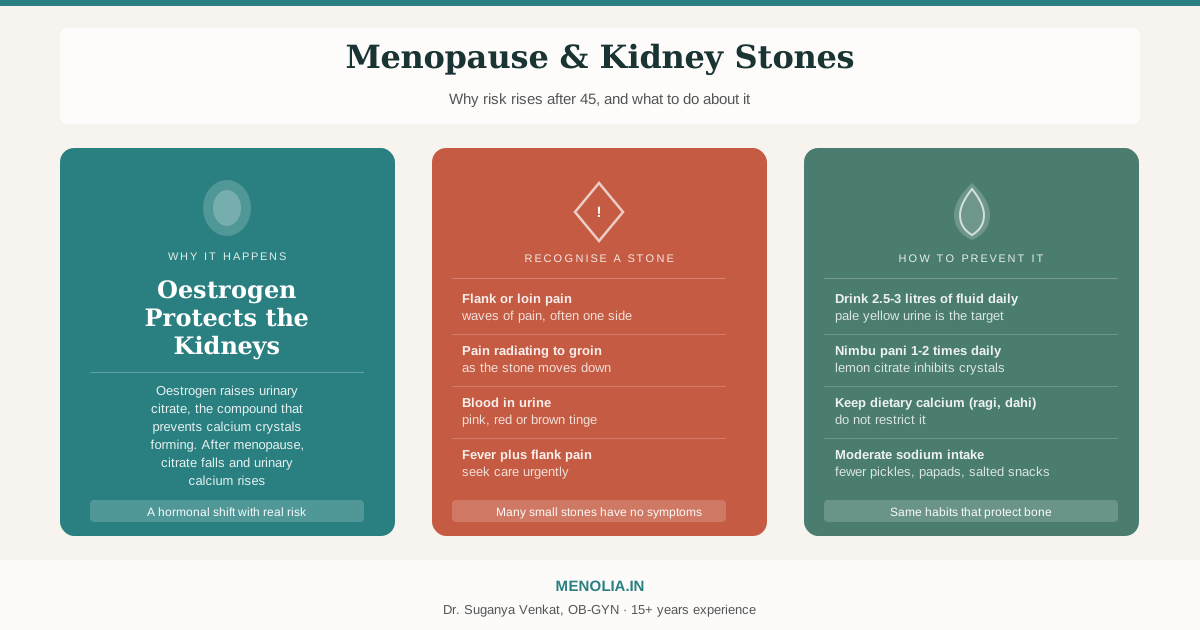
The first is citrate. Citrate is a naturally occurring compound in urine that inhibits the formation of calcium crystals. Think of it as a buffer: when urinary citrate is adequate, calcium and oxalate particles that might otherwise come together into a crystal are kept in solution. Oestrogen stimulates the kidneys to produce and retain citrate. Premenopausal women typically have higher urinary citrate levels than men of the same age, and this is part of the reason that women in their reproductive years form kidney stones less often than men.
The second is calcium excretion. Oestrogen helps the kidneys reabsorb calcium from the filtrate, reducing how much calcium is lost in urine. Less calcium in the urine means less calcium available to form crystals.
These two mechanisms together explain a consistent finding in nephrology: before menopause, women are substantially protected against kidney stone formation compared to men. The female sex is itself a protective factor, and it is a hormonally mediated one.
What falls away at menopause
When oestrogen levels fall, both mechanisms weaken at the same time.
Urinary citrate drops. This happens because the kidney’s citrate-producing machinery loses the hormonal signal that was driving it. The result is urine that is less well-buffered against crystal formation.
Urinary calcium rises. With less oestrogen signalling tubular reabsorption, more calcium passes through into the urine. This matters especially because the same bone metabolism changes that drive osteoporosis and bone thinning after menopause release calcium from bone into the circulation. Some of that calcium is filtered through the kidneys and adds to the urinary calcium load. The bone and kidney sides of this story are linked by the same physiology.
The outcome is that urinary chemistry in postmenopausal women shifts in two simultaneous directions: less of the inhibitor (citrate), more of the substrate (calcium). Stone-forming conditions improve.
Research in urinary biochemistry consistently shows that this shift in citrate and calcium excretion tracks with the menopause transition, and that postmenopausal women’s stone risk approaches that of men over time. The protective sex difference seen in reproductive years narrows significantly after menopause.
What else compounds the risk at this age
The hormonal shift is not the only factor. Several other changes converge around the mid-forties and fifties that add to stone risk.
Fluid intake often drops. Thirst perception can become less reliable with age, and many women in this life stage are managing full work and family demands that push hydration to the background. Concentrated urine is one of the most consistent findings in women with their first kidney stone in this age group.
Dietary calcium is sometimes incorrectly restricted. There is a widespread but incorrect belief that reducing calcium intake will prevent calcium kidney stones. The opposite is usually true: dietary calcium binds oxalate in the gut before it reaches the kidneys, so a low-calcium diet actually raises urinary oxalate and increases stone risk. Many women at this age are reducing dairy for weight management without realising this effect, at precisely the age when bone health also calls for adequate calcium intake.
Sodium intake and stone risk. High dietary sodium increases urinary calcium. A diet high in pickles, papads, salted snacks, and processed food pushes more calcium into the urine and contributes to stone risk over time.
High oxalate foods in concentration. Spinach (palak), nuts in large quantities, and strong tea all contain oxalate. For women who already form calcium oxalate stones, large amounts of high-oxalate foods without adequate dietary calcium to bind them can add to risk. Moderation rather than elimination is the guidance, particularly if dietary calcium is adequate.
What kidney stones feel like
Small stones often cause no symptoms at all and are found on imaging done for another reason, like the woman I described at the start.
Larger stones that pass into the ureter typically cause renal colic, one of the more severe pains in clinical practice. It tends to be felt as a sharp or cramping pain starting in the back or flank on one side, often radiating toward the lower abdomen and groin as the stone moves. The pain comes in waves and is usually worsened by any movement. Nausea and vomiting are common. Blood in the urine (haematuria) may turn the urine pink, red, or brown. Burning with urination may occur if a stone is low in the ureter.
Kidney stone pain and urinary tract infection pain can sometimes be confused, but a UTI tends to produce burning throughout urination and frequent urge to go, while kidney stone pain is typically positional and comes in waves.
If you have flank pain with fever, that combination warrants urgent medical attention. Fever alongside a ureteric stone suggests the stone has caused a blockage with infection upstream of it, which is a medical emergency. Do not manage this with pain relief at home and wait.
If you have noticed kidney symptoms, unexplained back pain, or want to understand whether your urinary health needs review, message Dr. Suganya Venkat on WhatsApp. She consults online, pan-India, via video call.
What you can do
Most of what reduces kidney stone risk at this age is genuinely within reach.
Drink more water than you think you need. The target is 2.5 to 3 litres of total fluid daily. Pale yellow urine is the practical marker. Indian summer heat, travel, and poorly air-conditioned offices all increase fluid loss. Staying well-hydrated is the single most evidence-based intervention for stone prevention, and it is free.
Nimbu pani (lemon water) is genuinely useful here. Lemon juice is rich in citrate, the same compound that urinary oestrogen was helping maintain. Squeezing half a nimbu into a glass of water and drinking it once or twice a day provides a dietary citrate source. This is not folk medicine; citrate drinks have been studied specifically for stone prevention and perform comparably to citrate supplementation for many people. Coconut water (nariyal pani) is another good option, as it contributes potassium, which also reduces urinary calcium.
Keep dietary calcium, do not restrict it. Ragi is one of the best sources of dietary calcium in the Indian diet; dahi, milk, til (sesame), and rajma also contribute. Eating these alongside oxalate-containing foods (spinach in a ragi-based dal, for example) allows dietary calcium to bind oxalate in the gut rather than letting it reach the kidneys in excess. Calcium supplements are a different matter: supplements taken without food can raise urinary calcium without the same gut-binding benefit, so if you take a supplement, take it with a meal.
Moderate your sodium. You do not need to eliminate pickles and papads, but if your diet is consistently high in sodium (more than a few portions of salted snacks or preserved foods daily), reducing it is a straightforward way to lower urinary calcium without any other dietary change.
Protein in balance. Very high animal protein intake increases both urinary calcium and urinary uric acid, contributing to two stone types. Most Indian diets at this age are plant-forward enough that this is not the main concern, but if you have significantly increased red meat or egg intake, moderating it is a reasonable step.
Bone and stone share the same foundation. The lifestyle measures that support bone health after menopause (adequate dietary calcium, vitamin D, limiting sodium, keeping physically active) overlap substantially with the measures that reduce stone risk. Managing them together makes sense, and it is a conversation worth having as part of any post-menopause health review.
HRT and kidney stones: the nuanced picture
Women on HRT sometimes ask whether hormone therapy protects against kidney stones. The relationship is not straightforward, and it depends on the route of administration.
Oral oestrogen preparations pass through the liver before reaching systemic circulation. The hepatic first-pass effect increases intestinal calcium absorption when oestrogen is taken by mouth, which can raise rather than lower urinary calcium. Large population studies on oral combined HRT found a slight increase in stone risk rather than a protective effect, counter to what the basic mechanism might suggest.
Transdermal oestrogen (patches, gels) avoids this first-pass effect and likely has a more neutral or potentially protective impact on urinary calcium, though the stone-specific data on transdermal routes is less comprehensive than for oral preparations.
The takeaway: if you have a history of kidney stones and are considering HRT, the route of administration is worth discussing with your doctor. The standard HRT guidance for menopause is already personalised by cardiovascular, bone, and breast risk; kidney stone history adds one more factor to that conversation, not a reason to avoid HRT altogether.
When to see a doctor
Go to a doctor promptly if you have:
- Severe flank or loin pain, particularly if it is radiating toward the groin
- Flank pain accompanied by fever (urgent, do not wait)
- Blood in the urine
- Nausea and vomiting alongside back pain
- Pain that does not ease with movement or positioning
If a stone has already been diagnosed on imaging and is sitting in the kidney without symptoms, you do not need to panic. Many small stones pass on their own with adequate hydration. Your doctor will advise on whether the size and position require active management or watchful waiting. If you have had more than one stone, a 24-hour urine collection test can identify whether you have a specific metabolic tendency toward stone formation, which changes what you target in prevention.
If you are not sure whether your back pain or urinary symptoms need investigation, that is a reasonable question to raise. The standard first-line test is an ultrasound of the kidney, ureter, and bladder (KUB), which is widely available at diagnostic labs across India (typically Rs 800 to 2,000 depending on the centre) and involves no radiation. A urine microscopy and culture rules out infection at the same time.
Kidney stones at this age are more common than many women realise, and more preventable than they seem at first. The hormonal shift that sets up the risk is not reversible, but the downstream factors that tip stones into forming are almost all modifiable.
If you have questions about your urinary health, stone risk, or how menopause is affecting systems beyond the ones usually discussed, speak with Dr. Suganya Venkat on WhatsApp. She consults online, pan-India, via video call.
What kidney stones are called in other languages
| Language | Common term |
|---|---|
| Hindi | gurde ki pathri (गुर्दे की पथरी) |
| Tamil (Roman) | siruneeraga kal |
| Telugu (Roman) | moothrapindapu ralla |
| Kannada (Roman) | mutra pinda kallugalu |
The condition is widely known in Hindi as “pathri” and searches for “gurde ki pathri menopause mein” or “40 ke baad kidney stone kyon hota hai” are common. If you have searched in Hindi or Tamil and landed here, the post above applies equally to you.
Frequently Asked Questions
Why do women get more kidney stones after menopause? Oestrogen has a direct protective effect on urinary chemistry: it stimulates the kidneys to produce citrate (which keeps calcium in solution and prevents crystal formation) and reduces urinary calcium excretion. When oestrogen falls at menopause, both of these protections weaken simultaneously. Urinary citrate drops and urinary calcium rises, creating conditions more likely to lead to stone formation. The risk particularly climbs in the first several years after menopause.
Are kidney stones common in Indian women after 40? Kidney stones are more common in India overall than in many other countries, partly because of the hot climate (which increases fluid loss) and dietary patterns (higher oxalate-rich vegetables, variable fluid intake). For Indian women specifically, the post-menopausal period, combined with the ambient heat, makes adequate hydration especially important. Routine ultrasound screenings in women over 45 do turn up silent kidney stones fairly often at diagnostic labs.
Does HRT protect against kidney stones after menopause? It depends on the type of HRT. Oral oestrogen preparations increase intestinal calcium absorption through the liver’s first-pass processing, which can raise urinary calcium rather than lower it. Large studies on oral combined HRT have found a slight increase rather than a decrease in stone risk. Transdermal preparations (patches, gels) avoid this effect and are likely more neutral. If you have a stone history, discuss the specific HRT preparation with your doctor rather than making a decision based on HRT in general.
What is the best drink for preventing kidney stones during menopause? Water is the most important: 2.5 to 3 litres daily, adjusted upward in summer heat or physical activity. Nimbu pani (lemon water, half a lemon squeezed into a glass) provides dietary citrate, which is the same stone-inhibiting compound that oestrogen was helping the kidneys produce. Coconut water (nariyal pani) contributes potassium, which reduces urinary calcium. Avoid very concentrated urine; the colour check (pale yellow) is the simplest practical guide.
Should I reduce calcium in my diet to prevent calcium kidney stones? No. Reducing dietary calcium usually worsens calcium oxalate stone risk rather than reducing it. Dietary calcium binds oxalate in the gut, preventing it from reaching the kidneys in excess. A low-calcium diet allows more oxalate to be absorbed and then excreted in urine. The research on this is consistent and counterintuitive. Keep food sources of calcium (ragi, dahi, milk, til, rajma) in your diet. Calcium supplements taken away from meals behave differently and can raise urinary calcium, so take them with food if you use them.
Kya menopause mein kidney stone ka risk badh jata hai? (Does kidney stone risk increase during menopause?) Haan, oestrogen ke ghatne se gurde ki pathri ka risk badh sakta hai. Oestrogen kidney mein citrate banata hai jo pathri ko rokta hai, aur urinary calcium ko bhi kam karta hai. Menopause ke baad yeh dono protections kamzor ho jate hain. Roz 2.5-3 litre pani pina, nimbu pani lena, aur khane mein calcium banaye rakhna (ragi, dahi, rajma) is risk ko kam karne mein madad karta hai.
When should I see a doctor about kidney stone symptoms? Seek medical attention for: severe back or flank pain, especially radiating toward the groin; flank pain with fever (go urgently, this can indicate infection with obstruction); blood in the urine; nausea and vomiting with back pain. If you have been told a stone is present but you have no symptoms, discuss with your doctor whether the size and position require any intervention or monitoring. A first ultrasound KUB at a diagnostic lab is the standard starting investigation and is widely available across India.