A woman in her late forties messaged me a photo of her cheeks and asked if it was “just the hot flashes finally showing on her face.” Her cheeks and nose had a deep, persistent redness that did not come and go with the flushes. It had been there for weeks, and lately, small bumps had started to appear too. It was not a hot flash. It was rosacea, likely present in a mild form for years, now stepping forward as her oestrogen declined.
This is a mix-up I see often at this age. A woman notices new facial redness around 45 to 55, assumes it is simply another version of the flushing that comes with hot flashes, and does not think to mention it separately at a consultation. The two are related but genuinely different, and telling them apart changes what actually helps.
This post covers what rosacea is, why it can newly appear or worsen around perimenopause and menopause, how to tell it apart from ordinary hot-flash flushing, what makes it harder to spot on Indian skin, and what treatment options exist. Rosacea is a distinct, chronic condition, separate from the episodic flushing, puffiness, and pigmentation covered in the menopause face changes guide, and separate from the daily-routine advice in the menopause skin care guide.
What rosacea is
Rosacea is a chronic inflammatory skin condition, not a passing flush. The National Rosacea Society’s diagnostic framework, used in the research behind this post, groups its features into four broad patterns: persistent facial redness with visible blood vessels (erythematotelangiectatic rosacea, the most common type), small red bumps and pus-filled spots that resemble acne (papulopustular rosacea), thickened skin most often on the nose (phymatous rosacea), and eye involvement with grittiness or redness (ocular rosacea). Many women have some overlap between the first two.
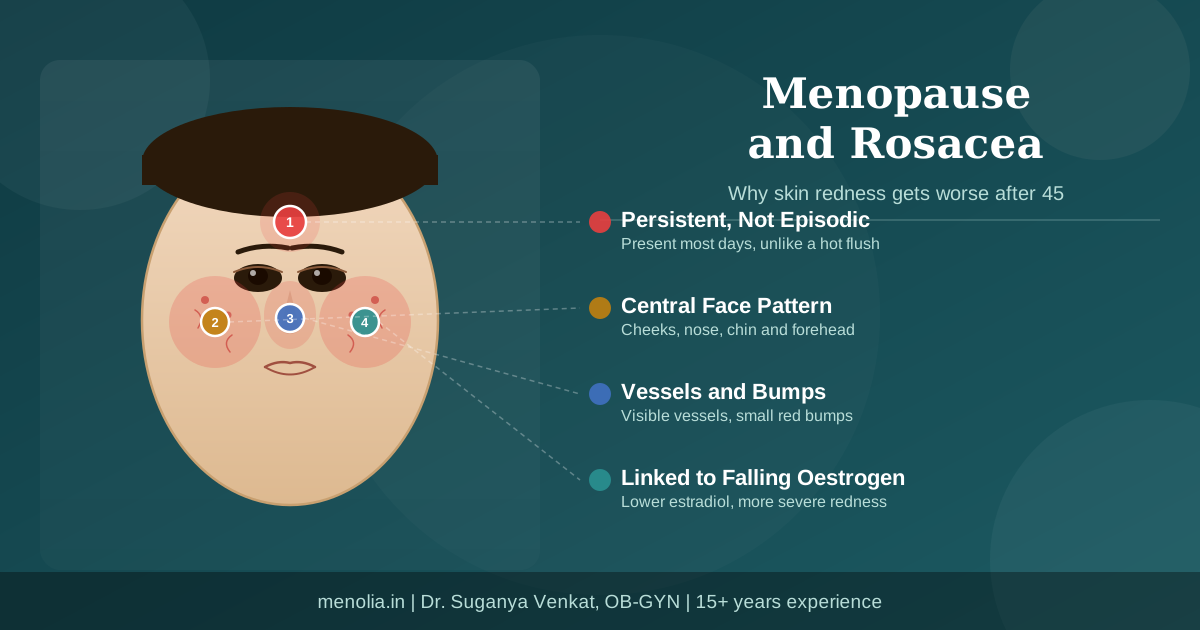
The defining feature that separates rosacea from ordinary flushing is persistence. A hot flash brings sudden redness that builds over a minute or two and fades within twenty minutes to an hour, tied to the vasomotor event itself. Rosacea’s redness sits on the skin as a baseline, present most days regardless of whether a flush is happening, and it does not fully fade between episodes. Over time, small blood vessels near the surface become permanently visible, and some women develop bumps that look like adult acne but do not respond to acne treatment the way acne does.
Why perimenopause and menopause change this
Rosacea already tends to appear or worsen in women between 40 and 60, and a Chinese study of 59 women in the perimenopausal stage, all diagnosed with rosacea, found a clear pattern: the lower a woman’s estradiol level, the more severe her erythematotelangiectatic rosacea tended to be, a statistically significant association (Yang F et al., Skin Res Technol, 2024, PMID: 38221784). Estradiol was also lower in the women who had the bumpy, papulopustular pattern compared with those who did not.
The proposed mechanism, sometimes called the estradiol protective hypothesis, is that oestrogen normally helps maintain the skin barrier, supports antioxidant activity in skin cells, and calms an inflammatory pathway called NF-kappaB. As oestrogen falls during perimenopause, this protective effect weakens, which may explain why rosacea often becomes more visible or more severe in this window rather than staying stable.
Here is where the picture becomes more nuanced, and worth being upfront about rather than smoothing over. A separate 2025 laboratory study found that applying oestrogen directly to inflamed skin in a mouse model of rosacea made the inflammation worse, working through a specific oestrogen receptor in skin cells, and the same study found that women using oral contraceptives or hormone replacement therapy in a large UK health database had a higher rate of rosacea than women who were not (Tang J et al., J Dermatol Sci, 2025, PMID: 40670220). A 2026 systematic review pooling the existing research on menopause and skin conditions reached a similar conclusion: rosacea generally improved after full menopause, once oestrogen had settled at its new lower baseline, while starting hormone therapy was linked to a higher rosacea risk (Roster K et al., Am J Clin Dermatol, 2026, PMID: 41331233).
Put plainly: the falling, fluctuating oestrogen of the perimenopausal transition itself appears linked to worse rosacea, but this does not mean that taking oestrogen back through HRT reliably improves it, and some evidence points the other way. This is not a reason to avoid HRT if you and Dr. Suganya have decided it is right for your overall symptom picture. It does mean rosacea should be raised as its own item in that conversation, not assumed to quietly resolve as a side effect of treating hot flashes.
Rosacea versus hot-flash flushing: how to tell them apart
Both can happen to the same woman, at the same time, which is exactly what makes this confusing.
Timing. A hot flash flush arrives suddenly, peaks within a couple of minutes, and clears within an hour, often with sweating or a racing heartbeat alongside it. Rosacea redness is there most of the time, flaring and calming but never fully absent.
Location. Hot flashes typically flush the face, neck, and chest together, sometimes spreading further. Rosacea concentrates on the central face, the cheeks, nose, chin, and forehead, and rarely involves the neck or chest in the same way.
Extra features. Rosacea often comes with visible thread-like blood vessels, a burning or stinging sensation on the skin, small red bumps, and sometimes gritty or irritated eyes. A hot flash flush usually clears without leaving any of these behind.
What triggers it. Both share several triggers, which is part of the overlap: heat, spicy food, and alcohol can set off a hot flash and can also flare rosacea on the same evening. Rosacea has some additional triggers that are not linked to vasomotor symptoms at all, including sun exposure, certain skincare ingredients, and emotional stress.
If you are not sure which you are dealing with, that uncertainty itself is a reasonable reason to get it looked at rather than guess.
Ask Dr. Suganya whether this sounds like rosacea or hot-flash flushing
Why rosacea is often missed on Indian skin
Most of the classic teaching on rosacea, including the bright pink flush most people picture, was described on lighter skin. On medium to deep skin tones, the same redness reads as a duskier, brownish, or violet discolouration rather than pink, which makes it far easier to miss or dismiss as sun damage, an allergic reaction, or simply “skin getting darker with age.” A dermatology review on acne and rosacea in skin of colour notes that rosacea is reported less often in these skin tones, and that this likely reflects delayed diagnosis rather than the condition genuinely being rarer, because the classic erythema is harder to discern against a deeper baseline skin tone (Maruthappu T, Taylor M, Clin Exp Dermatol, 2022, PMID: 34709676). Visible blood vessels and the small bumps of papulopustular rosacea tend to remain clear clues even when the background redness itself is subtle, so a dermatologist examining closely can usually still make the diagnosis.
If your skin has a persistent warmth, a dusky flush, or small bumps across the cheeks and nose that will not settle, worth raising it even if it does not look like the bright red rosacea photos you may have seen online.
What helps
Rosacea does not resolve on its own once it starts, and self-treating with random skincare products, especially harsh exfoliants or strong actives aimed at acne, tends to make it worse rather than better. A dermatologist can confirm the diagnosis and build a plan, which typically includes some combination of:
- Daily sunscreen, non-negotiable. Sun exposure is one of the most consistent rosacea triggers, and this single habit does more for a flaring face than almost anything else.
- A gentle skincare routine. Fragrance-free cleansers and moisturisers, avoiding the harsh scrubs, alcohol-based toners, or strong acids commonly used for acne, which irritate rosacea-prone skin.
- Topical treatments. Azelaic acid and topical metronidazole are commonly prescribed first-line options that reduce redness and bumps over several weeks.
- Oral treatment for more persistent cases. Low-dose doxycycline, prescribed specifically for its anti-inflammatory effect rather than as an antibiotic course, is a standard option for moderate to severe rosacea.
- Trigger tracking. Noting which combinations of heat, spice, alcohol, and sun exposure reliably bring on a flare helps you manage day to day life without waiting on treatment alone.
- Treating the menopause symptoms alongside it, not instead of it. Managing hot flashes through the usual lifestyle and medical approaches can reduce one trigger overlap, but it is a support to rosacea treatment, not a replacement for it.
None of this needs to happen all at once, and a dermatologist will typically start with the simplest layer, sunscreen plus a gentle routine plus a topical, before adding anything further. Alcohol is a shared trigger worth a closer look on its own, since it can flare rosacea and worsen several other menopause symptoms at the same time, covered in the menopause and alcohol guide. If HRT is part of your broader symptom plan, the HRT in India guide covers benefits, risks, and how to start that conversation with Dr. Suganya, and is worth reading alongside this one given the mixed evidence on HRT and rosacea above.
Talk to Dr. Suganya about your skin and menopause symptoms together
When to see a dermatologist
Book a dermatology appointment rather than waiting it out if you notice:
- Facial redness that has been present most days for more than a few weeks, rather than coming and going with clear hot flashes
- Small red or pus-filled bumps on the cheeks, nose, chin, or forehead that are not responding to ordinary acne products
- Visible thread-like blood vessels on the nose or cheeks
- Burning, stinging, or gritty, irritated eyes alongside facial redness
- Thickening or texture change on the nose
None of these mean something is seriously wrong. Rosacea is a common, manageable condition, and the earlier it is correctly identified rather than treated as ordinary sensitivity or ageing skin, the more straightforward it usually is to bring under control.
Frequently Asked Questions
Is facial redness after 45 always rosacea?
No. It can be hot-flash flushing, sun damage, an allergic or irritant reaction to a skincare product, or rosacea. The clearest distinguishing feature of rosacea is that the redness is present most days rather than only during a flush, and it is often accompanied by visible blood vessels or small bumps. A dermatologist can confirm which one you are dealing with.
Can menopause cause rosacea to appear for the first time, or does it only worsen existing rosacea?
Both patterns happen. Some women develop their first rosacea symptoms during perimenopause, while others had mild rosacea for years that becomes more visible or severe as oestrogen declines. A study of perimenopausal women with rosacea found that lower oestradiol levels were linked to more severe redness and visible vessels.
Does HRT make rosacea better or worse?
The evidence here is genuinely mixed, and it is worth saying that plainly rather than promising an outcome. Falling oestrogen during the perimenopausal transition itself appears linked to worse rosacea, but research on hormone replacement therapy specifically has found an association between HRT use and higher rosacea rates in some population data, and a laboratory study found oestrogen applied to skin worsened rosacea-like inflammation in an animal model. If you are on HRT or considering it, mention your rosacea as its own topic in that conversation rather than assuming it will resolve as a side effect.
How is rosacea different from ordinary sensitive skin or an allergic reaction?
A one-off allergic or irritant reaction usually appears suddenly after a specific product or exposure and settles once the trigger is removed. Rosacea is a chronic, ongoing pattern that persists over weeks and months, often with visible blood vessels, bumps, or a burning sensation that a simple skincare change does not resolve. If redness lasts more than a few weeks despite switching products, it is worth having it examined.
Why is rosacea sometimes missed on Indian skin?
The classic bright pink flush most rosacea education is built around was described on lighter skin tones. On medium to deep skin, the same underlying redness often reads as a duskier or brownish flush that is easy to mistake for sun damage or general skin darkening with age. This can delay diagnosis. Visible blood vessels and small bumps remain useful clues even when background redness is subtle, so a dermatologist examining closely can usually still identify it.
What triggers rosacea flares in India specifically?
Heat and humidity, spicy food, sun exposure, and alcohol are common triggers, several of which overlap with hot-flash triggers, which is part of why the two conditions get confused. Strong exfoliants, harsh soaps, and some ayurvedic or herbal preparations marketed for “glowing skin” can also irritate rosacea-prone skin rather than help it.
Can I use my regular acne treatment on rosacea bumps?
It is best not to without a dermatologist’s guidance. The bumps of papulopustular rosacea can resemble acne, but standard acne treatments, particularly strong exfoliating acids or benzoyl peroxide, often irritate rosacea-prone skin and worsen the redness underneath. Rosacea has its own first-line topical treatments, such as azelaic acid and metronidazole, that work differently from typical acne products.
I’m Dr. Suganya Venkat, an OB-GYN with over 15 years of experience, and I see this mix-up often enough in my video consultations that I now ask specifically about facial redness alongside the usual hot-flash and sleep questions, because most women do not think to mention it as a separate symptom. If your face has looked different lately in a way that does not quite match your hot flashes, it is worth a proper look rather than a guess.