She stood in front of her bathroom mirror at 47 and noticed it again: a warmth spreading across her cheeks after a cup of chai, lingering for 20 minutes after the tea was long finished. A puffiness around her eyes that had appeared over the past year, worse on some mornings than others. And the shadow on her upper lip. Faint at first, now impossible to ignore.
She had not changed her skincare routine. She was not under unusual stress. But her face looked different, and she could not explain why.
The reason is oestrogen.
The face is one of the most visible places where menopause leaves its mark. Hormonal changes during perimenopause and menopause affect facial blood vessels, fluid retention, melanin production, and skin collagen in ways that feel sudden but follow a clear biological pattern. Understanding what is happening makes these changes far less alarming and far more manageable.
This post covers four specific face changes caused by falling oestrogen, why Indian skin has a particular set of considerations, and what actually works.
Why Does Menopause Affect the Face Specifically?
Your face has a high density of oestrogen receptors, particularly in the dermis and in the blood vessels and oil glands that serve facial skin. Research published by Thornton in the Journal of Investigative Dermatology (2002) confirmed the presence of functional ERa and ERb receptors throughout facial skin tissue. This means the face responds directly and visibly to hormonal changes in a way that other areas of the body do not to the same degree.
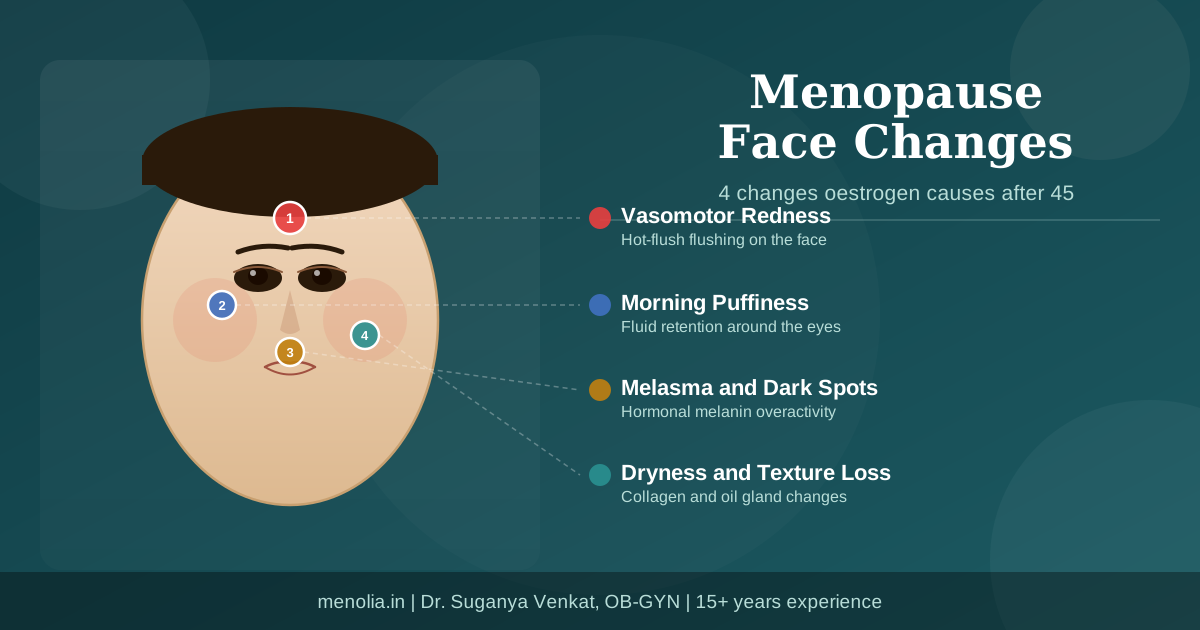
For more on this, read our guide on Menopause Body Odour. When oestrogen levels fall and fluctuate during perimenopause, four things change on the face, often at the same time:
- The blood vessels lose some of their stable regulatory control, leading to flushing and persistent redness
- Fluid balance in facial tissue shifts, producing puffiness
- Melanocyte activity increases unpredictably, resulting in dark spots and melasma
- Collagen and oil production slow, speeding up dryness and texture changes
Each follows a different mechanism and benefits from a different approach.
1. Facial Redness and Flushing: The Vasomotor Face
Hot flashes are the signature symptom of menopause. What many women do not realise is that the face takes the brunt of them, and the redness does not always disappear when the flush passes.
During a hot flash, the hypothalamus triggers sudden peripheral vasodilation. For the face, this means a rapid surge of blood to facial vessels, producing the characteristic red flush. Research by Freedman and colleagues (Climacteric, 2014) described how the thermoregulatory zone in menopause narrows significantly, meaning even small triggers can set off this response repeatedly through the day and night. You can read more about the underlying mechanism in our post on what hot flashes actually are and how to manage them.
For some women, repeated vasodilation from frequent hot flashes leads to persistent facial redness that resembles early rosacea. The vessels become more reactive over time. A cup of chai, a warm room, a moment of stress: any of these can trigger a flush that leaves the face red for 20 to 30 minutes, even when the original hot flash has passed.
What helps for flushing and facial redness:
- Trigger identification: The most common triggers are spicy food, hot liquids, alcohol, warm environments, and sudden stress. A simple two-week trigger diary often reveals clear patterns that are very individual.
- Cooling strategies: A small desk fan directed at the face, a cooling facial mist (plain water in a spray bottle works well), or a cold-water splash when a flush begins.
- Gentle, barrier-supportive skincare: Barrier creams with ceramides work far better than harsh toners or astringents, which strip the skin and worsen reactivity.
- For severe or frequent flushing: Menopausal hormone therapy is the most effective intervention because it addresses the root cause directly. See our comprehensive guide on hot flash treatment options and discuss with your OB-GYN whether it is appropriate for your situation.
2. Facial Puffiness: Why Your Face Looks Swollen in the Morning
Periorbital puffiness (that under-eye and cheek swelling worst when you wake up) is one of the less discussed face changes of menopause, but it is extremely common among women in their mid-to-late 40s.
The mechanism overlaps with the broader water retention that oestrogen fluctuations cause, which we cover in depth in our post on menopause water retention. Here is the face-specific picture.
Oestrogen influences the renin-angiotensin-aldosterone system (RAAS), which regulates sodium and fluid balance across all body tissue. During perimenopause, when oestrogen fluctuates widely, sodium retention increases. Facial tissue, with its fine capillaries and relatively limited lymphatic drainage compared to the legs, tends to hold fluid overnight. You wake with a puffy face that gradually resolves through the morning as gravity and movement help drain the fluid.
Progesterone normally counteracts aldosterone’s fluid-retaining effect. As progesterone falls in early perimenopause (often before oestrogen falls significantly), that counterbalance is lost, and fluid shifts more easily into extracellular spaces, including the face.
Cortisol also plays a role. Oestrogen had been moderating the hypothalamic-pituitary-adrenal axis. As it falls, cortisol reactivity increases, and cortisol promotes fluid retention in peripheral tissue including the face.
What helps for morning facial puffiness:
- Elevating the head slightly during sleep (an extra firm pillow)
- Reducing sodium in the evening, particularly from packaged food: namkeens, papad, achar, processed snacks
- Drinking water consistently through the day: adequate hydration paradoxically reduces the body’s tendency to retain water
- Cold compresses in the morning: a clean cloth soaked in cold water, applied gently for 5 minutes
- Light lymphatic drainage massage: gentle upward strokes from the jawline toward the ears and temples for 2 to 3 minutes each morning
- Reducing alcohol, which directly worsens next-morning facial puffiness
If puffiness is accompanied by swelling in the legs, ankles, or hands and is not improving over several weeks, consult your doctor to rule out thyroid, kidney, or cardiovascular causes.
3. Melasma and Dark Spots: The Hormonal Pigmentation Link
The dark patches that appear on the upper lip, cheeks, and forehead during perimenopause are not imagined, and they are not simply age spots. For many women they are melasma: a condition driven specifically by hormonal changes in melanocyte (pigment cell) activity.
Oestrogen and progesterone receptors are present on melanocytes. When these hormone levels fluctuate erratically, as they do during perimenopause, melanocytes can become dysregulated, producing more melanin in irregular patches. This is the same mechanism that causes the “pregnancy mask” (chloasma) in pregnant women and melasma in women on hormonal contraceptives. Perimenopause creates a comparable hormonal fluctuation, particularly in the first two to three years of the transition when oestrogen surges and crashes repeatedly before settling at a lower baseline. Melasma in the context of hormonal transitions is extensively described in the dermatological literature, including the comprehensive review by Sheth and Pandya in the Journal of the American Academy of Dermatology (2011).
Melasma presents as:
- Brown or greyish-brown patches on the upper lip, cheeks, forehead, and chin
- Symmetrical distribution on both sides of the face
- Patches that darken with sun exposure and lighten somewhat in winter or with consistent sun protection
It is distinct from the isolated brown spots (solar lentigines) that appear with cumulative sun exposure. Melasma is deeper, more diffuse, and directly tied to hormonal status rather than to sun exposure alone. And if what you are noticing on the upper lip or chin is new coarse hair rather than pigment, that has its own hormonal driver, covered in our guide to menopause facial hair.
A note on Indian skin: Indian women predominantly have Fitzpatrick skin types IV to VI, meaning a higher baseline melanin content. This provides some natural UV protection, but it also means that any inflammatory or hormonal trigger is more likely to result in post-inflammatory hyperpigmentation, and melasma, once established, tends to be more visible and more persistent in darker skin. The condition is not more medically serious, but it does require consistent management to fade, and it responds less predictably to treatments designed for lighter skin types.
If you would like to discuss your specific face changes with Dr. Suganya, she is available on WhatsApp to talk through what you are experiencing.
WhatsApp Dr. Suganya on +91 99402 70499
4. Dryness, Fine Lines, and Texture Changes
Oestrogen’s role in maintaining facial collagen, oil production, and hydration is well-established. As covered in our detailed post on menopause skin dryness and collagen loss, oestrogen directly stimulates fibroblasts (collagen-producing cells) and sebaceous glands. When oestrogen falls, facial skin loses roughly 30% of its collagen in the first five years post-menopause (Brincat et al., 1987), and oil glands produce less sebum.
For the face this shows up as:
- Dryness and tightness, especially along the jawline and around the eyes
- Fine lines appearing or deepening more quickly than in previous years
- A change in skin texture: the smooth quality of younger skin is partly maintained by hyaluronic acid (glycosaminoglycan production), which also depends on oestrogen
- Skin that now reacts to products it previously tolerated, such as alcohol-based toners, fragranced creams, or physical exfoliants, because the barrier is thinner
For a fuller picture of this fourth change, our menopause skin care guide covers what the skin needs at this stage and how to adapt a routine. The short version: switch to gentle, barrier-supportive products, prioritise hydration, and protect the skin from UV exposure every day.
What Actually Helps: A Practical Guide for Indian Women
Daily SPF 30+ Is Non-Negotiable for Dark Spots
This is the single most impactful step for hormonal pigmentation. UV radiation is the primary trigger for melanocyte overactivity. Without daily broad-spectrum SPF 30 or higher applied every morning, no other treatment for melasma or dark spots will work well, because sun exposure continuously reactivates the patches.
Many Indian women are reluctant to use sunscreen daily because of texture concerns or the belief that Indian skin does not burn. Burning is not required for melasma to worsen. UV-A (the longer wavelength that penetrates glass and clouds) is the primary driver of melanocyte overstimulation, not UV-B (the burning wavelength). This means daily sunscreen is needed even on overcast days, even indoors near a window, even during the monsoon. A lightweight gel or serum-type SPF tends to suit the Indian climate better than heavy creams.
Topical Niacinamide at 4% to 5%
Niacinamide (vitamin B3) is one of the most studied topical ingredients for reducing pigmentation. It works by interrupting the transfer of melanin from melanocytes to surface keratinocytes, which fades existing patches without bleaching the skin. It also strengthens the skin barrier, reduces redness, and improves texture. Crucially, it is well-tolerated by sensitive, post-menopausal skin, unlike some stronger actives. Available widely in India as serums, look for formulations that list niacinamide in the first five ingredients.
India-Relevant Foods for Skin Support From Inside
Amla (Indian gooseberry): Contains approximately 600mg of vitamin C per 100g, one of the highest natural concentrations in any food. Vitamin C is a required cofactor for the enzyme that stabilises collagen fibers (prolyl and lysyl hydroxylase), and it is a powerful antioxidant that reduces oxidative damage to melanocytes. One to two fresh amla daily, amla murabbha, or amla powder stirred into water each morning all provide a useful amount.
Haldi (turmeric): Curcumin in turmeric has well-documented anti-inflammatory properties, described by Mishra and Palanivelu (Annals of the Indian Academy of Neurology, 2008). Systemic inflammation worsens both facial redness and pigmentation, and the daily amount of haldi in a normal Indian diet (dal, sabzi, haldi milk) supports the anti-inflammatory environment the skin needs.
Dahi (plain curd): Traditionally applied as a face pack in Indian households. The lactic acid in dahi is a gentle alpha-hydroxy acid that helps to softly exfoliate the surface skin layer, improving texture and gradually fading mild pigmentation. Applied as a face pack for 15 minutes once or twice a week and then washed off gently, it is a safe approach for menopausal skin, which is too sensitive for harsh scrubs or strong chemical peels without professional guidance.
Til (sesame seeds): Rich in zinc and selenium, both of which support skin cell repair and reduce oxidative stress. One tablespoon of til daily on food provides a practical amount.
Dal, rajma, chana, moong: Adequate daily protein supports skin structural repair. The dermis is primarily protein (collagen and elastin), and post-menopausal women need at least 1.0 to 1.2 grams of protein per kilogram of body weight daily per the PROT-AGE recommendations (Bauer et al. 2013, PMID 23867520). Dal-based Indian meals are an excellent and convenient source.
Chaas and nariyal pani for hydration: Facial puffiness, dryness, and a dull complexion all worsen with mild dehydration. Consistent fluid intake through the day (chaas, nariyal pani, plain dal, rasam, water) helps maintain healthy skin hydration. Reduce caffeine after 2 PM, as it is a mild diuretic.
Sleep and Evening Routine Adjustments
For puffiness: sleep on your back if possible, or use a slightly elevated head position. A clean cotton pillowcase changed at least weekly reduces friction-based skin irritation on thinner menopausal skin.
For the evening routine, simplicity and gentleness work better than elaborate 10-step routines at this stage. A gentle oil-based or micellar cleanser, an alcohol-free hydrating toner or plain rose water, a niacinamide serum, and a ceramide-based moisturiser is a routine that consistently supports barrier repair.
When to See a Dermatologist
Consider a dermatologist consultation if:
- Melasma patches are darkening despite three months of consistent SPF use
- You want to explore prescription options suited to Indian skin (azelaic acid 15 to 20%, topical retinoids, or chemical peels formulated for Fitzpatrick IV-VI skin)
- Any pigmented patch has irregular borders, is growing rapidly, or bleeds (these need prompt evaluation to rule out other causes)
- Persistent facial redness is not improving after 8 to 12 weeks of trigger avoidance and barrier repair
For the hormonal root cause, your OB-GYN is the right partner alongside the dermatologist. Some women find that menopausal hormone therapy significantly reduces both flushing and hormonal melasma by stabilising the hormonal fluctuations that drive both. This is a nuanced conversation that depends on your full symptom picture, your medical history, and how much the face changes are affecting your quality of life. It is always worth raising.
You can also look at our guide to 9 Indian foods that specifically support hot flash management for complementary nutritional strategies, and our itchy skin post if skin sensitivity is part of your picture alongside these changes.
Frequently Asked Questions
Does everyone get face changes in menopause? Not at the same intensity. Women with frequent hot flashes are more likely to notice significant flushing and redness. Women with a personal or family history of melasma during pregnancy or on hormonal contraception are more likely to develop hormonal melasma in perimenopause. Some degree of change in skin texture and hydration is nearly universal as oestrogen falls, but the timing and intensity vary considerably.
My dark spots appeared at the same time as my periods became irregular. Is that a coincidence? Very likely not. Melanocyte activity responds directly to oestrogen and progesterone fluctuations. The erratic hormonal swings of early perimenopause, when cycles become irregular but have not stopped, can trigger or worsen melasma. Women who developed chloasma (pregnancy mask) in a previous pregnancy have a higher baseline susceptibility and may notice melasma appearing again during this transition.
I have always used the same moisturiser and now it makes my face sting. Why? Menopausal skin has a thinner, more permeable barrier than premenopausal skin. Ingredients that were previously tolerated (certain fragrances, alcohol-based toners, synthetic dyes, some chemical sunscreen filters, physical scrubs) can now trigger irritation and redness. Switch to a fragrance-free routine using barrier-supportive ingredients: ceramides, hyaluronic acid, niacinamide. Simpler is better at this stage.
Is applying dahi on the face actually useful or just a tradition? Both, which is not a contradiction. The lactic acid in dahi is a genuine alpha-hydroxy acid and has mild exfoliant and brightening effects on superficial skin pigmentation when applied consistently. It is gentle enough for sensitive menopausal skin, unlike stronger acids. For deep melasma, a topical dahi pack alone will not resolve the condition, but it can support texture and mild brightening as part of a broader routine that includes daily SPF.
Does sunscreen really matter if I mostly work indoors? Yes. UV-A, the wavelength that drives melasma, penetrates glass windows and cloud cover. If you sit near a window during the day, whether at a desk or in a kitchen, you are receiving a meaningful UV-A dose. For women working from home or in offices, this indoor UV-A exposure is sufficient to maintain or worsen melasma patches that would otherwise begin to fade. Broad-spectrum SPF applied every morning is relevant regardless of your indoor-outdoor ratio.
Can hormone therapy help with face changes? For flushing and redness driven by hot flashes, hormone therapy is highly effective because it targets the vasomotor root cause. For melasma, the picture is more nuanced: stabilising hormonal fluctuations can reduce the erratic swings that trigger melanocyte overactivity, but consistently elevated oestrogen levels (as with some systemic preparations) can occasionally worsen pigmentation in susceptible women. This is a discussion worth having with your OB-GYN, who can weigh your complete symptom picture and help you make an informed choice.
At what age do these face changes typically begin? For most Indian women, perimenopause begins between 42 and 46 years of age, earlier than the global average (Ahuja M, J Midlife Health 2016, PMID 27721640). Face changes, particularly flushing and early melasma, can begin during this perimenopause phase even while periods are still occurring, because oestrogen is already fluctuating significantly. By post-menopause, dryness and texture changes tend to predominate as oestrogen settles at a consistently lower level and the vasomotor surges reduce.
The changes menopause brings to the face follow a clear biological logic. They are real, they are visible, and they are understandably frustrating. But most respond well to a combination of consistent sun protection, the right topical approach, daily India-relevant nutrition, and in some cases a conversation with your OB-GYN about whether hormone management is right for you.
If you would like to talk through your specific face changes with Dr. Suganya, she responds personally on WhatsApp.