It is a story I hear regularly in my clinic, often told with a small, apologetic smile.
A woman in her late forties, three to six months without a regular period. She has been experiencing sudden bouts of coldness: a chill that comes from nowhere, goosebumps in a warm room, shivering that passes in a few minutes and then is gone. Her family assumes she is imagining it. She has started to wonder the same.
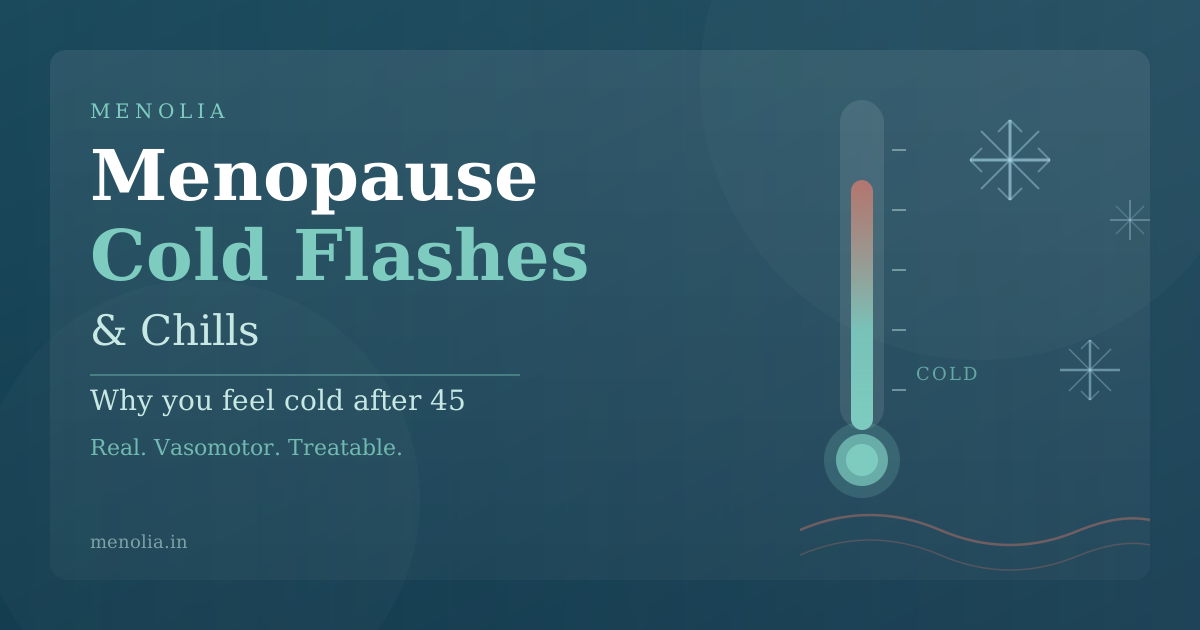
She is not imagining it. What she is experiencing has a name, and it has a clear physiological explanation. It is called a cold flash, it is a recognised vasomotor symptom of menopause, and it is far more common than most women are told.
This post is for every woman who has wondered why she is suddenly freezing when nobody else in the room is.
What a Cold Flash Is (and How It Differs from Simply Feeling Cold)
Most of what women hear about menopause and temperature is about heat: the sudden warmth rising from the chest, the face going red, the night sweat that soaks the pillow. Hot flashes are widely discussed. Cold flashes receive far less attention, which is part of why they feel so disorienting.
A cold flash is a brief, sudden episode of chilliness, shivering, goosebumps, or cold spreading through the body without a clear environmental cause. What distinguishes it from simply feeling cold:
- Onset is sudden, not gradual
- Duration is brief, usually two to five minutes
- It happens at rest, in a warm environment, without the temperature around you changing
- It may include goosebumps, shivering, cold hands or feet, or a chill that seems to move through the spine or torso
Cold flashes can occur in two distinct patterns. The first, and most common, is the overshoot pattern: this happens after a hot flash. During a hot flash, the body rapidly dilates skin blood vessels and activates sweating to cool down. Sometimes this cooling response goes too far, and within minutes of the hot flash fading, you move from feeling intensely warm to feeling cold and clammy. Many women describe this as the second, less-discussed half of the hot flash experience. The night sweat version of this pattern is well known: you wake up hot and soaking, throw off the blanket, and then wake up again shivering thirty minutes later.
The second pattern is standalone cold flashes: cold episodes that arrive without any preceding heat. In this pattern, the autonomic nervous system activates vasoconstriction (squeezing blood vessels narrow) rather than vasodilation, drawing blood away from the skin surface toward the body core. This reduces heat at the skin level and produces sudden coldness, particularly in the hands, arms, and feet.
Both patterns are menopausal in origin. Both are real.
The Science: Why the Same Thermostat Causes Both Heat and Cold
The explanation comes from the way the hypothalamus, the brain region that acts as the body’s thermostat, responds to falling oestrogen.
Research by Robert Freedman, published in the Journal of Steroid Biochemistry and Molecular Biology (2014), established that the hypothalamic thermoneutral zone narrows significantly as oestrogen declines at menopause. The thermoneutral zone is the range of internal temperatures within which the body does nothing: no sweating to cool down, no shivering to warm up. In a pre-menopausal woman, this zone is comfortably wide. As oestrogen falls, the zone narrows, sometimes dramatically.
Think of a home thermostat that normally tolerates temperatures between 22 and 26 degrees before switching anything on. If that tolerance range narrows to 23 to 24 degrees, the system starts reacting to tiny shifts. The upper edge of this narrowed zone triggers the equivalent of a hot flash: vasodilation and sweating. The lower edge triggers the equivalent of a cold flash: vasoconstriction and shivering. The same thermostat malfunction, expressed at different ends of the temperature range, produces both symptoms.
There is a second driver that amplifies this effect. As oestrogen falls, the HPA axis (the stress hormone system governing cortisol and adrenaline) becomes more reactive, a connection well described in research by Genazzani and colleagues published in Human Reproduction Update (2007). Adrenaline surges cause peripheral vasoconstriction, which is one reason cold flashes are sometimes worse in the morning (when cortisol peaks naturally) and during periods of heightened stress. The connection between menopause and cortisol is worth understanding fully if you find your cold (and hot) flashes are worse when life is demanding.
The result is this: a menopausal woman’s body has a narrowed thermal comfort zone, a more reactive stress-hormone system, and an oestrogen-depleted vascular network that shifts between dilation and constriction more readily. Cold flashes are a predictable consequence of all three.
What Cold Flashes Actually Feel Like: A Clinical Picture
Women in my clinic describe cold flashes in ways that are remarkably consistent across cases:
A chill that starts in the back and spreads outward. Arms going cold and goosebumps appearing, then fading within a few minutes. Shivering the way you do when you have a fever, but without any fever. Both hands suddenly going cold and requiring clasping together. Reaching for a cardigan right after a hot flash fades, because the cold follows immediately.
None of these are strange or excessive reactions. They are all predictable expressions of the same thermoregulatory instability that drives every other vasomotor symptom at menopause. The experience of unpredictability is real: it can disrupt sleep, interrupt a conversation, and make you feel that your body is reacting to cues you cannot read or control. This is worth naming honestly, and also worth placing in context: it does not mean something is seriously wrong, and it does respond to the same interventions that help hot flashes.
Ruling Out Other Causes First
Because cold intolerance and sudden chilliness can have several causes, it is worth a brief check before attributing persistent cold sensitivity entirely to vasomotor activity.
Hypothyroidism. The thyroid gland regulates metabolism and body temperature throughout the body. An underactive thyroid becomes more common in women after 40 and produces symptoms that overlap almost entirely with perimenopause: cold sensitivity, fatigue, hair thinning, brain fog, and weight changes. A 2013 study in the Journal of the Association of Physicians of India (Unnikrishnan et al.) estimated thyroid dysfunction in 8 to 11 percent of Indian women. If you have not had a thyroid panel (TSH, free T3, free T4) in the last one to two years, requesting one at your next doctor visit is sensible. Thyroid Changes During Menopause covers the overlap between these two conditions in detail.
Iron deficiency. Low ferritin reduces the blood’s capacity to carry oxygen to tissues, which impairs the body’s heat-production capacity. Persistent cold intolerance, particularly when accompanied by fatigue and breathlessness, can be a sign of iron deficiency anaemia. NFHS-5 data (2019-21) found anaemia in more than half of Indian women of reproductive age, and iron stores do not automatically recover at menopause. If your cold sensitivity is more constant than episodic, a serum ferritin and complete blood count are worth checking.
Peripheral vascular changes. Oestrogen supports the flexibility of blood vessel walls. As oestrogen falls, small arteries can become less responsive, sometimes reducing circulation to the extremities. Cold hands and feet that are persistent (not episodic) and associated with colour changes (white or blue-tinged fingers) deserve a cardiovascular assessment.
If your thyroid function, ferritin, and blood pressure are within normal range, and the chills follow the brief episodic pattern described in this post, menopause-driven vasomotor activity is the most likely explanation.
If you want to talk through your symptoms, including thyroid, blood tests, and vasomotor episodes together, you can reach Dr. Suganya directly on WhatsApp at +91 99402 70499. An initial consultation is available for Rs. 399 by video call.
What Actually Helps
The interventions that ease hot flashes work for cold flashes through the same mechanism: stabilising the thermoregulatory response and reducing the reactivity of the autonomic nervous system. A few are particularly useful for the cold phase specifically.
Layering for quick adjustment. The goal is not maximum insulation. A warm inner layer with a light cardigan or shawl you can add and remove within thirty seconds is more useful than a heavy sweater. Keep a light shawl at your desk and beside the bed. When a cold flash follows a hot flash, you will be able to respond to both phases without searching for clothes.
Blood sugar stability. Blood glucose swings amplify autonomic reactivity, which worsens both hot and cold vasomotor episodes. Eating regular meals that combine protein with low-GI carbohydrates reduces the adrenaline spikes that worsen vasoconstriction. Low-GI Indian staples that work well here: ragi (GI 52-55), bajra, jowar, chana, rajma, and moong dal. A bowl of ragi kanji in the morning, a meal with dal or paneer at lunch, and a light early dinner all help stabilise the internal thermal environment.
Iron-rich foods. Since iron deficiency worsens cold intolerance, prioritising iron-rich Indian foods has dual benefit: rajma, palak, chana, ragi, methi, and til are all good sources. If your ferritin is confirmed low after testing, discuss supplementation with your doctor.
Ginger and warmth during the cold phase. Adrak (ginger) supports peripheral circulation. A small cup of adrak chai or warm haldi doodh when a cold flash is underway can help the body recover from the vasoconstriction phase more quickly. This is a comfort measure that addresses experience, not the underlying mechanism, but it makes the episode more manageable.
Paced breathing during the episode. Slow diaphragmatic breathing, with the exhale twice as long as the inhale, activates the parasympathetic nervous system and reduces the adrenaline-driven component of vasoconstriction. This is the same practice that helps during hot flashes. Yoga for Menopause has a practical guide to breathing techniques and poses that support the parasympathetic response.
Vitamin B12 status. Deficiency in B12 can produce cold sensations and tingling in the extremities that closely resemble cold flashes. Indian vegetarians and women on long-term metformin are at higher risk of B12 deficiency, and the overlap with menopausal symptoms is significant. Menopause and B12 Deficiency covers testing and dietary sources.
Treating the underlying vasomotor instability. When cold flashes are frequent, severe, or combined with hot flashes that significantly disrupt sleep or daily function, the same medical treatments that address hot flashes will address cold flashes. Menopausal hormone therapy (MHT) widens the thermoregulatory zone back toward its pre-menopausal range, reducing the frequency of all vasomotor episodes. Non-hormonal options including certain SSRIs and SNRIs have also shown benefit in clinical trials. This is a conversation to have with your OB-GYN, who can weigh the options alongside your personal health history, including cardiovascular and breast cancer risk factors. Hot Flash Treatment: From Lifestyle to HRT has a complete guide to the evidence for each tier.
Frequently Asked Questions
Is a cold flash the same as a hot flash? No, though both arise from the same underlying cause: a narrowed thermoregulatory zone in the hypothalamus caused by falling oestrogen. A hot flash involves vasodilation and sweating. A cold flash involves vasoconstriction and chilling. Some women experience mostly hot flashes, some mostly cold, and many have both, sometimes in sequence.
Can you get cold flashes without ever getting hot flashes? Yes. Some women experience cold flashes as their primary vasomotor symptom. The mechanism is the same (a narrowed hypothalamic thermostat responding to oestrogen loss) but the body’s particular autonomic and vascular response pattern determines which end of the thermoregulatory range is more easily triggered.
How long does a cold flash last? Most last two to five minutes. The chill, goosebumps, and shivering come on quickly and resolve on their own. If you experience sustained cold intolerance that lasts hours rather than minutes, that points more toward hypothyroidism or anaemia than vasomotor activity, and warrants a blood test.
Do cold flashes happen more at night? They can, particularly the overshoot pattern: chilling after a night sweat. Many women wake up having thrown off their blanket during a hot flash and find themselves shivering twenty minutes later. Keeping a light layer accessible at the bedside helps manage both phases without fully waking up.
I am in my early forties and still having periods. Can I have cold flashes? Yes. Perimenopause, the transitional phase before periods stop entirely, can begin in the early to mid-forties. During this phase, oestrogen fluctuates rather than declining steadily, and the thermoregulatory zone can narrow even while cycles continue. Episodic chilling alongside irregular periods in your forties is consistent with perimenopause. The perimenopause symptoms guide has a full picture of what to expect.
My family thinks I am imagining the cold flashes. How do I explain it? Cold flashes are a documented vasomotor symptom. The same hypothalamic thermostat narrowing that causes hot flashes can also produce cold episodes when the lower thermal threshold is crossed. You are not imagining the sensation; you are experiencing a well-described physiological response to changing hormone levels. If it helps to have a clinical reference, this post exists precisely for that conversation.
When should I see a doctor about cold flashes? If cold flashes are disrupting sleep, affecting daily function, or worsening despite basic lifestyle measures, an OB-GYN appointment is a good idea. Also see a doctor if the coldness is persistent rather than episodic, if it is accompanied by unexplained weight gain, hair loss, or fatigue (thyroid check needed), or if you have not had a serum ferritin test in the last year.
Cold flashes are one of those symptoms that feel inexplicable until someone names them. Once you understand what is happening in the hypothalamus and why the same hormonal change that brings heat can also bring sudden cold, they become something you can address with practical steps rather than something that simply happens to you.
If you want to work through your full symptom picture with a specialist and get a personalised plan, WhatsApp Dr. Suganya at +91 99402 70499. An initial consultation is available by video call from anywhere in India or abroad: Rs. 399 in India, US $20 from outside India.