Hashimoto’s, hypothyroidism, and menopause can overlap after 40. An underactive thyroid can add fatigue, morning weakness, brain fog, and low mood during the menopause transition, but symptoms alone cannot reliably separate them.
The reliable way to check is a TSH plus Free T4 blood test.
If autoimmune thyroiditis is suspected, Anti-TPO testing can add context. Its role and limitations are explained in the testing section below. Persistent morning weakness or dizziness that does not lift with rest deserves a thyroid panel and a check for anaemia, rather than being written off as menopause.
You’re exhausted even after sleeping eight hours. Your weight is creeping up despite eating carefully. Your hair is thinning. Your mood swings between flat and irritable. Your skin feels dry no matter how much cream you apply.
You assume it’s menopause. Your family assumes it’s menopause. Even your doctor might assume it’s menopause.
But what if your thyroid is contributing too?
I’m Dr. Suganya Venkat, an OB-GYN with more than 15 years of clinical experience. In video consultations with women over 40, I use the symptom pattern and blood tests together instead of attributing every change to menopause.
Let me explain how the overlap happens and when testing is useful.
Can Hypothyroidism or Hashimoto’s Be Mistaken for Menopause?
If you are wondering whether your thyroid could be behind fatigue, weight change, low mood, or heat intolerance, the answer is yes, it could be contributing. Different thyroid conditions can resemble different parts of the menopause transition.
Here is the practical reality:
- Hypothyroidism (an underactive thyroid) can cause fatigue, weight gain, hair thinning, low mood, dry skin, and brain fog. Perimenopause can cause many of the same symptoms, so symptoms alone are not enough to diagnose either condition.
- Hashimoto’s thyroiditis is an autoimmune cause of hypothyroidism. The menopause years overlap with the ages at which thyroid dysfunction becomes more common, but menopause itself does not prove that Hashimoto’s is present.
- Graves’ disease causes an overactive thyroid. Heat intolerance, sweating, palpitations, anxiety, and sleep disturbance can resemble menopause symptoms. Blood tests distinguish hyperthyroidism from a hot flash pattern.
- A thyroid condition and menopause can coexist. A woman in her late 40s may be perimenopausal and have thyroid dysfunction at the same time. Testing is especially useful when symptoms are persistent, unusual for her, or accompanied by thyroid risk factors.
A TSH test, interpreted with Free T4 when indicated, is the practical starting point. The sections below explain the overlap, when Anti-TPO adds useful context, and what to discuss with your doctor.
Why Thyroid Problems Are Often Found Around Menopause
Thyroid disease and menopause are separate clinical processes, but they can influence the same symptoms and treatment decisions. Age also matters because thyroid dysfunction becomes more common as women get older (Frank-Raue & Raue, 2023).
Oestrogen and Thyroid Tests
Oestrogen is relevant in several ways:
1. Oestrogen affects thyroid-binding globulin (TBG) TBG is a blood protein that carries thyroid hormones. Oestrogen can increase TBG production, which is particularly relevant when oral oestrogen therapy is started or stopped. The body usually keeps free thyroid hormone within range, but women taking levothyroxine may need reassessment after a treatment change (Santin & Furlanetto, 2011).
2. Thyroid autoimmunity has several influences Autoimmune thyroid disease is more common in women, but it is too simple to say that falling oestrogen directly causes Hashimoto’s. Genetic susceptibility, age, immune factors, and hormonal context may all contribute. An antibody result must be interpreted with TSH, Free T4, symptoms, and examination.
3. Age can change test interpretation and treatment risk TSH results should be read in clinical context, particularly in older women and in women taking thyroid medicine or HRT. Frank-Raue and Raue (2023) emphasise the cumulative risks of thyroid dysfunction and menopause, including cardiovascular and bone considerations.
What Indian Studies Found
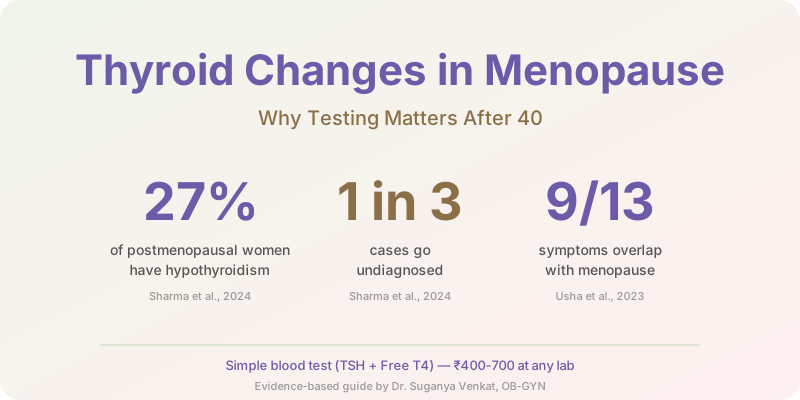
- In one cross-sectional Indian study, Sharma et al. (2024) found hypothyroidism in 27.3% of the postmenopausal women studied. The study was conducted in an urbanised village in northern India.
- Yadav et al. (2023) reported overt hypothyroidism in 13.3% and subclinical hypothyroidism in 23.3% of the premenopausal and postmenopausal women they studied.
Thyroid disorders are more common in women than in men, and thyroid problems become more common in women around and after menopause (Frank-Raue and Raue, 2023).
These Indian studies, together with Usha et al. (2022), show why thyroid disease belongs in the differential diagnosis when menopause-like symptoms persist. They were conducted in specific clinical or community settings, so their percentages should not be treated as a national prevalence estimate. Understanding when menopause typically starts in India can help you place new symptoms in context.
The Overlap: Why It’s So Easy to Miss
The shared and distinguishing symptoms are easier to compare in a shorter table:
| Symptom | Menopause pattern | Hypothyroidism pattern |
|---|---|---|
| Fatigue | Common | Common |
| Weight gain | Can occur | Can occur |
| Hair thinning | Can occur | Can occur |
| Feeling cold | Less typical | Common clue |
| Hot flashes | Common | Uncommon |
| Constipation | Less typical | Common |
| Puffy face or swelling | Less typical | Can occur |
Feeling cold, new constipation, and facial puffiness lean more towards hypothyroidism, while hot flashes lean more towards menopause. Usha et al. (2022) described how thyroid symptoms can resemble menopausal features and therefore be missed.
How I Sort Out the Overlap in a Video Consultation
I do not ask a woman to decide whether her symptoms are “thyroid” or “menopause” before she has been assessed. The pattern that makes me check the thyroid rather than assume menopause is tiredness out of proportion to everything else, weight gain despite eating the same, or dry skin and thinning hair that hot flashes alone do not explain.
I work through four practical questions:
- What changed, and when? I compare the timing of fatigue, weight change, sleep disturbance, hot flashes, and period changes. A timeline is more useful than a long symptom list.
- Is there a thyroid-leaning pattern? Cold intolerance, new constipation, persistent facial puffiness, and fatigue despite adequate rest make TSH testing more useful. Weight change alone is not enough to diagnose a thyroid condition.
- Could something else be contributing? Morning weakness or dizziness may warrant a complete blood count, particularly when heavy perimenopausal bleeding makes anaemia possible.
- What changes the test interpretation? Family history, another autoimmune condition, current levothyroxine, and oral oestrogen HRT all matter. I also use the reference range printed by that laboratory rather than applying an internet “optimal” range to every woman.
A common story I hear is a woman told for two years that her symptoms were “just menopause” when her TSH had simply never been checked. One blood test can change the whole plan.
This sequence avoids two common errors: blaming every symptom on menopause and blaming every symptom on a mildly abnormal thyroid result.
See a doctor promptly if you have:
- A very slow heart rate with weakness, dizziness, or fainting
- A rapidly enlarging neck swelling or difficulty swallowing
- Severe, unremitting fatigue with cold intolerance
These need assessment sooner rather than at a routine visit.
💬 Not sure whether your symptoms are menopause, thyroid, or both? A video consult can help you decide what to check and talk it through. Talk to Dr. Suganya on WhatsApp.
Which Thyroid Tests Help
First-Line Tests When Thyroid Disease Is Suspected
1. TSH (Thyroid-Stimulating Hormone) TSH is the usual first screening test. It is produced by the pituitary gland and signals the thyroid to make hormone. When the thyroid is underactive, TSH commonly rises. Always use the reference interval printed by your laboratory because ranges vary.
- Typical adult reference range: approximately 0.4-4.0 mIU/L, depending on the laboratory
- Subclinical hypothyroidism: a raised TSH with a normal Free T4
- Overt hypothyroidism: a raised TSH together with a low Free T4. A TSH above 10 with a normal Free T4 is technically subclinical, but most clinicians treat it because it usually progresses.
2. Free T4 (Free Thyroxine) Free T4 measures the unbound thyroxine available in the blood. It helps distinguish subclinical from overt hypothyroidism and should be interpreted with TSH and the laboratory’s reference range.
Additional Tests When the First Results Need Context
3. Anti-TPO Antibodies (Thyroid Peroxidase) A raised Anti-TPO result points to an autoimmune cause and supports the diagnosis of Hashimoto’s in the right clinical setting. A negative Anti-TPO does not completely rule out an autoimmune cause, since a minority of Hashimoto’s is antibody-negative.
4. Free T3 Free T3 is not routinely needed to diagnose hypothyroidism. A clinician may order it when an overactive thyroid is suspected or when the wider test pattern needs clarification.
5. Thyroid ultrasound An ultrasound is not a routine test for abnormal thyroid hormone levels. It is useful when examination suggests a nodule, enlargement, or another structural thyroid problem.
Who Should Be Tested and How Often
In my practice, I check TSH in women over 40 who have relevant symptoms, a family history of thyroid disease, or another autoimmune condition, because the test is inexpensive and thyroid dysfunction can otherwise be missed.
| Situation | What to discuss with your doctor |
|---|---|
| Symptoms, family history, or another autoimmune condition | TSH as the first test, with Free T4 and Anti-TPO when indicated |
| No symptoms or thyroid risk factors | Whether screening is appropriate and how often it should be repeated |
| Already taking thyroid medication | Testing after dose or treatment changes, then at an interval based on stable results |
| Starting or changing HRT | Whether thyroid tests or medication need review, especially with oral oestrogen |
Test Costs in India
At the time of writing, a thyroid test costs roughly Rs 200 to Rs 700 depending on the lab and city, and is often bundled in a thyroid panel. Prices change, so this is an approximate range rather than a fixed national price.
Hashimoto’s Thyroiditis and Menopause
Hashimoto’s thyroiditis is an autoimmune condition that can lead to hypothyroidism. It may be diagnosed during the menopause years, but the timing alone cannot establish that menopause caused it.
What Happens
In Hashimoto’s, the immune system targets thyroid tissue. Thyroid hormone production may decline gradually, so symptoms and blood-test changes do not always appear at the same time.
Why the Conditions Are Confused
- Age-related risk overlaps: thyroid dysfunction becomes more common during the same years in which women experience perimenopause and menopause.
- Symptoms overlap: fatigue, weight change, low mood, poor concentration, sleep disturbance, and hair changes can occur in either condition.
- Test results need context: TSH, Free T4, Anti-TPO results, medicines, symptoms, and examination all contribute to the diagnosis.
- Family history matters: a mother, sister, or other close relative with autoimmune thyroid disease is an important reason to discuss testing.
The Indian Context
Indian studies by Sharma et al. (2024), Yadav et al. (2023), and Usha et al. (2022) found thyroid dysfunction among peri- and postmenopausal women and documented substantial symptom overlap. These findings support case-finding when symptoms or risk factors are present. They do not mean that every menopause symptom is thyroid-related or that one study’s prevalence applies to all Indian women.
Managing Thyroid Issues During Menopause
If testing confirms a thyroid condition, management depends on the diagnosis, severity, symptoms, age, and other health risks.
For Hypothyroidism
Levothyroxine (brand names include Thyronorm and Eltroxin) is the standard replacement treatment for overt hypothyroidism. The dose is adjusted using symptoms and repeat blood tests.
Key points for menopausal women:
- Take levothyroxine on an empty stomach, 30 to 60 minutes before breakfast, with water. Keep tea, coffee, calcium and iron at least a couple of hours apart, since they reduce absorption.
- Tell your doctor if you start, stop, or change oral oestrogen HRT. Oral oestrogen can raise TBG and may change levothyroxine requirements, so repeat testing may be needed (Frank-Raue & Raue, 2023).
Nutrition for Thyroid and Menopause
Food cannot replace thyroid hormone when the gland is underactive. A balanced Indian diet can still support bone, muscle, and general health during menopause.
Useful basics:
- Use iodised salt in ordinary household amounts rather than starting an iodine supplement on your own.
- Include regular protein sources such as dal, eggs, curd, chickpeas, rajma, fish, or other foods that suit your diet.
- Add calcium-rich foods, vegetables, fruit, whole grains, nuts, and seeds for wider menopause nutrition.
- Normal cooked portions of cabbage, cauliflower, and broccoli do not need to be avoided.
If you take levothyroxine:
- Soy foods, calcium, and iron can affect absorption when taken close to the tablet. Ask your prescriber or pharmacist how to space them.
- Do not start high-dose iodine or selenium supplements unless a clinician has found a reason for them.
Lifestyle Factors
- Stress management can reduce symptom burden. Walking, yoga, pranayama, or another calming routine may help with sleep, tension, and mood even though they do not treat thyroid hormone deficiency.
- Sleep quality matters. Both thyroid symptoms and menopause can disrupt sleep. A consistent bedtime, a dark room, and less screen use before bed can help.
- Regular movement: walking 30-40 minutes daily helps with the fatigue, weight and mood symptoms of both conditions and protects bone density.
What I Want You to Take Away
If you’re over 40 and experiencing persistent fatigue, weight change, low mood, hair loss, brain fog, cold intolerance, or constipation, discuss thyroid testing with your doctor. A family history of thyroid disease or another autoimmune condition makes that conversation more important.
Start with TSH. Your doctor can add Free T4 and Anti-TPO when the history or first result calls for them. If overt hypothyroidism is diagnosed, levothyroxine is effective replacement treatment for most women, with the dose monitored over time.
In one Indian study, Sharma et al. (2024) found that 27.3% of the postmenopausal women studied had hypothyroidism, and a substantial share had not been diagnosed before. This is a reason for thoughtful case-finding, not a reason to assume every symptom has a thyroid cause.
Knowing whether menopause, thyroid dysfunction, anaemia, or more than one condition is contributing helps you and your doctor choose the right support.
Frequently Asked Questions
Can Hashimoto’s or hypothyroidism cause morning weakness and dizziness during menopause?
They can contribute. An underactive thyroid (including Hashimoto’s) commonly causes fatigue, sluggishness, and low mood. Dizziness is less directly linked to thyroid function, but it can occur with the anaemia that heavy perimenopausal periods may cause. If you wake up weak, foggy, or lightheaded and it does not improve with rest, ask whether TSH, Free T4, and a complete blood count are appropriate rather than assuming it is only menopause. Treating thyroid dysfunction or iron deficiency, when testing finds it, can improve the symptoms caused by that condition.
Can menopause cause thyroid problems, or is it just coincidence?
The two often occur in the same stage of life, but menopause is not automatically the cause of thyroid disease. Age-related thyroid risk, autoimmune susceptibility, symptom overlap, and the effects of oral oestrogen treatment all matter (Santin & Furlanetto, 2011; Frank-Raue & Raue, 2023).
I’m already on thyroid medication. Will menopause affect my dose?
Your dose may need review, particularly if you start, stop, or change oral oestrogen HRT. Do not adjust levothyroxine yourself. Your prescriber can choose the timing of repeat TSH based on the treatment change and your previous results.
Can thyroid problems cause hot flashes?
Hyperthyroidism (overactive thyroid) can cause heat intolerance and sweating that mimics hot flashes. Hypothyroidism doesn’t typically cause hot flashes, but if you have both hypothyroidism and menopause, you may experience hot flashes from menopause while also feeling unusually cold from thyroid issues, a confusing combination.
Should I see a gynaecologist or endocrinologist?
For initial screening and mild cases, your gynaecologist or general physician can manage both. If your thyroid condition is complex (Hashimoto’s with fluctuating levels, thyroid nodules, or difficulty achieving stable TSH), an endocrinologist is recommended. Many women benefit from a collaborative approach.
Are there natural ways to support thyroid function during menopause?
A balanced diet, regular movement, adequate sleep, and stress support can help how you feel and protect wider menopause health. They do not restore thyroid hormone production in clinical hypothyroidism, so they work alongside prescribed treatment rather than replacing it.
Can HRT affect my thyroid?
Yes, particularly oral oestrogen. It can raise thyroid-binding globulin and change levothyroxine requirements. Transdermal oestrogen generally has less effect on TBG. If you use thyroid medicine and start or change HRT, ask the prescribing clinician when to repeat TSH.
The Bottom Line
Menopause and thyroid disorders can cause many of the same symptoms. Blood tests are useful when symptoms, family history, another autoimmune condition, or examination findings raise suspicion.
If you’re experiencing perimenopause symptoms, ask your doctor whether TSH is appropriate for you. If you have no symptoms or risk factors, discuss screening frequency rather than assuming that annual testing is necessary for everyone.
If you have both thyroid dysfunction and menopause, identifying each condition allows your clinicians to address both and review how thyroid medicine, HRT, and wider menopause care fit together.
💜 Navigating menopause and not sure what’s causing your symptoms? Dr. Suganya’s 90-day menopause program provides online, pan-India assessment, personalised nutrition, and ongoing support. Start a conversation on WhatsApp to discuss what support would fit you.
References
- Sharma P, Verma A (2024). Prevalence of hypothyroidism among postmenopausal women in an urbanised village of northern India: A cross-sectional study. J Family Med Prim Care. PMID 39464953.
- Yadav M, Kose V, Bhalerao A (2023). Frequency of Thyroid Disorder in Pre- and Postmenopausal Women and Its Association With Menopausal Symptoms. Cureus. PMID 37492845.
- Frank-Raue K, Raue F (2023). Thyroid Dysfunction in Peri- and Postmenopausal Women: Cumulative Risks. Dtsch Arztebl Int. PMID 37013812.
- Usha SMR, Bindu CM, Chandrika N (2022). Thyroid Dysfunction: An Alternate Plausibility in Perimenopausal Women. J Midlife Health. PMID 37324792.
- Santin AP, Furlanetto TW (2011). Role of Estrogen in Thyroid Function and Growth Regulation. J Thyroid Res. PMID 21687614.