You searched for “menopause meaning in Marathi” or “menopause la Marathi madhe kay mhantaat” or perhaps “menopause Bengali meaning.” Maybe your doctor used the English word and it felt distant, like a term borrowed from a textbook that had nothing to do with the way you actually live.
This post is for you. Whether you think in Marathi, Bengali, or Kannada, the body goes through the same transition. The word just needs to find its way home.
Below you will find the word for menopause in all three languages, how each is pronounced, the phrases your grandmother or aunt probably used instead, a plain-language explanation of what is happening in the body, and the reason Indian women go through this transition earlier than the global average you may have read about.
What this post covers
- The word for menopause in Marathi, Bengali, and Kannada, with pronunciation guides
- Everyday phrases used in each language community
- Key symptom vocabulary across these three languages
- Why Indian women reach menopause at 46 to 48 years, not 51
- The three stages: perimenopause, menopause, post-menopause
- India-relevant foods that support the transition
- When to consult a doctor
Menopause meaning in Marathi: Rajonivritti (रजोनिवृत्ती)
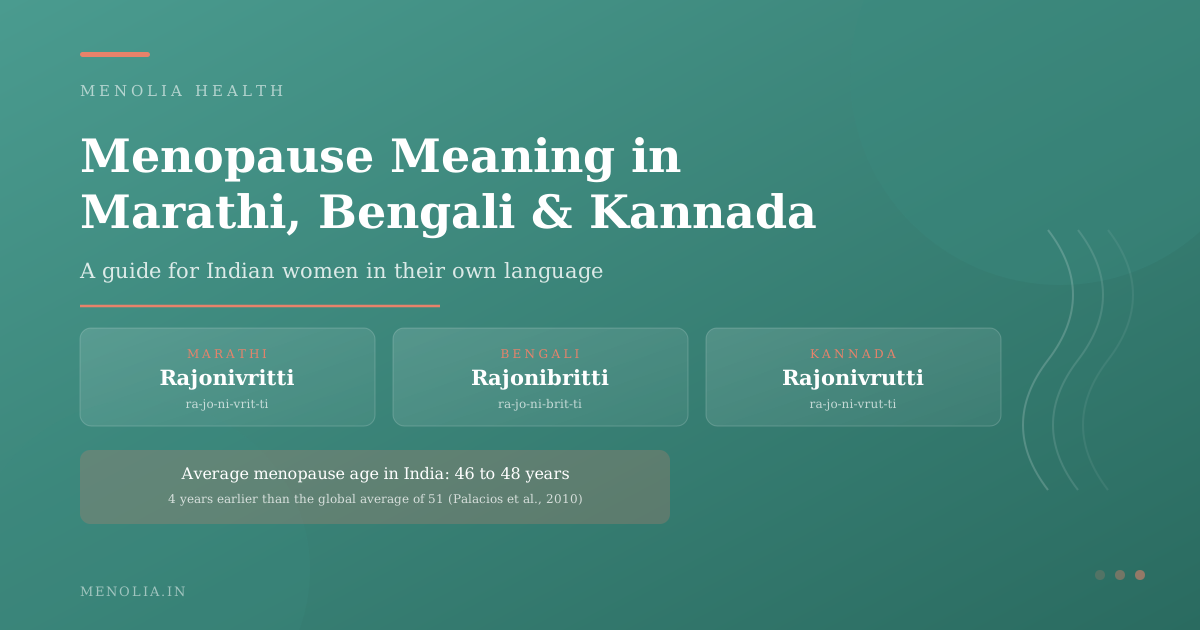
In Marathi, menopause is called rajonivritti (pronounced: RA-jo-ni-VRIT-ti).
The Marathi script writes it as रजोनिवृत्ती.
The word comes from Sanskrit. “Raj” refers to the menstrual cycle. “Nivritti” means cessation or withdrawal. Together, the word describes the ending of menstruation.
You may have heard or seen these related phrases in Marathi-speaking households:
- Masik paali thambane (मासिक पाळी थांबणे): periods stopping. This is the most common everyday phrase used in Maharashtra, Pune, Mumbai, Nashik, and across the diaspora.
- Mahinevari banda hone (महिनेवारी बंद होणे): another colloquial phrase meaning the monthly cycle has stopped.
- Rajonivrittipurva kaalavastha (रजोनिवृत्तीपूर्व कालावस्था): the time before menopause, which doctors call perimenopause.
When a Marathi-speaking woman says “mazi masik paali thambli ahe,” she is describing the same physiological event that her doctor would call menopause. Both descriptions are equally valid.
A practical note: if you are seeing a doctor in Maharashtra and want to discuss your symptoms, you can say “mala rajonivrittiche traas hote aahet” (I am having menopause-related difficulties). Most doctors in Maharashtra will understand immediately.
Menopause meaning in Bengali: Rajonibritti (রজোনিবৃত্তি)
In Bengali, menopause is called rajonibritti (pronounced: ra-jo-ni-BRIT-ti).
The Bengali script writes it as রজোনিবৃত্তি.
The same Sanskrit root applies. “Rajo” refers to the menstrual cycle. “Nibritti” means stopping or withdrawal. The word is used across West Bengal, Bangladesh, and Bengali-speaking communities worldwide.
Everyday phrases in Bengali-speaking households:
- Masik bondho howa (মাসিক বন্ধ হওয়া): periods stopping. This is the most commonly used conversational phrase in Bengali.
- Ritu bondho (ঋতু বন্ধ): another term meaning the cessation of the menstrual cycle, often heard in older or more traditional households.
- Masik niyomit na thaka (মাসিক নিয়মিত না থাকা): periods becoming irregular, which describes the perimenopause phase.
In a doctor’s appointment in Kolkata or any Bengali-speaking region, you can say “amar rajonibritti shuru hoyeche” (my menopause has begun) or simply describe your symptoms in Bengali and the doctor will understand the context.
Menopause meaning in Kannada: Rajonivrutti (ರಜೋನಿವೃತ್ತಿ)
In Kannada, menopause is called rajonivrutti (pronounced: ra-jo-ni-VRUT-ti).
The Kannada script writes it as ರಜೋನಿವೃತ್ತಿ.
The Sanskrit root is the same. “Rajo” refers to menstruation. “Nivrutti” means cessation. Kannada is spoken across Karnataka, with its major centres in Bengaluru, Mysuru, Hubballi, and Mangaluru.
Common phrases used in Kannada-speaking households:
- Tingalina sraaava nilluvaadu (ತಿಂಗಳ ಸ್ರಾವ ನಿಲ್ಲುವುದು): the monthly flow stopping. This is the most commonly understood phrase in everyday speech.
- Maasika ninthiruvaagu (ಮಾಸಿಕ ನಿಂತಿರುವಾಗ): when the monthly cycle has stopped.
- Rajonivrutti purva kaala (ರಜೋನಿವೃತ್ತಿ ಪೂರ್ವ ಕಾಲ): the time before menopause, corresponding to perimenopause.
In a Bengaluru clinic, you can say “nange rajonivrutti aaguttide” (I am going through menopause) or describe your symptoms and the doctor will guide you.
If you are unsure whether your symptoms are related to perimenopause or something else entirely, a conversation with an OB-GYN can give you clarity.
Key symptom vocabulary across these three languages
Understanding the names of common symptoms in your own language can help you describe what you are experiencing to family members or a doctor.
| Symptom | Marathi | Bengali | Kannada |
|---|---|---|---|
| Hot flashes | Angavar ushanata yene (अंगावर उष्णता येणे) | Ushno laga (উষ্ণ লাগা) | Bisi uriyuvike (ಬಿಸಿ ಉರಿಯುವಿಕೆ) |
| Night sweats | Ratri gham yene (रात्री घाम येणे) | Rater ghaam (রাতের ঘাম) | Raatri bevaru (ರಾತ್ರಿ ಬೆವರು) |
| Irregular periods | Aniyamit masik paali (अनियमित मासिक पाळी) | Aniyomit masik (অনিয়মিত মাসিক) | Aniyamita maasika (ಅನಿಯಮಿತ ಮಾಸಿಕ) |
| Mood changes | Manastithi badal (मनस्थिती बदल) | Manobhab poriborton (মনোভাব পরিবর্তন) | Manodhaatu badalaavane (ಮನೋಧಾತ್ತು ಬದಲಾವಣೆ) |
| Sleep problems | Jhop na yene (झोप न येणे) | Ghumaanor somoshya (ঘুমানোর সমস্যা) | Nidde iladiruvaadu (ನಿದ್ದೆ ಇಲ್ಲದಿರುವುದು) |
| Joint pain | Sandi dukhi (सांधे दुखी) | Gaar byatha (গাঁটের ব্যথা) | Moolagalannu novedu (ಮೂಳೆಗಳಲ್ನು ನೋವು) |
A note on these translations: these are approximate conversational equivalents, not formal medical translations. When speaking to a doctor, describing the symptom plainly in your language will always work.
You may also find it helpful to read our companion post for Hindi and Tamil speakers: Menopause Meaning in Hindi, Tamil & Telugu.
Why Indian women reach menopause at 46 to 48 years, not 51
The most commonly quoted figure for the average age of menopause is 51 years. That number comes primarily from studies conducted in Western countries.
In India, research gives a different picture. Studies by Palacios and colleagues (2010, Climacteric) and the Indian Menopause Society’s pan-India survey (Ahuja M, J Midlife Health 2016, PMID 27721640) consistently show that Indian women reach natural menopause between 46 and 48 years of age.
This means a Marathi, Bengali, or Kannada-speaking woman in her mid-forties may be well into the menopausal transition at an age when she might assume she is “too young” for it. She may be told by family members that this cannot be menopause yet, and she may accept the explanation and delay seeking care.
Several factors contribute to the earlier age in Indian women:
- Lower body weight and body mass index compared to Western populations. Body fat stores oestrogen. Lower baseline fat means the buffer against oestrogen decline is smaller.
- Parity and early childbearing. Women who have multiple pregnancies early in life may experience an earlier menopausal transition.
- Dietary factors. Lower average calcium and protein intake in some population groups affects overall hormonal health across the lifespan.
- Stress and lifestyle differences may also play a role, though this is less precisely quantified in the literature.
The practical consequence is clear. If you are a woman in Maharashtra, West Bengal, or Karnataka in your mid-to-late forties, and you are experiencing irregular periods, disrupted sleep, hot flashes, or mood changes, perimenopause or menopause is a real possibility worth discussing with an OB-GYN. You are not too young.
The three stages: what they mean in any language
Whether you call it rajonivritti, rajonibritti, or rajonivrutti, the biological journey has the same three stages.
Perimenopause is the transition period. Oestrogen levels begin to fluctuate and then decline, but the ovaries are still producing hormones intermittently. Periods may become irregular, some months skipped, some heavier than usual. Hot flashes, sleep disruption, and mood changes are common. This phase can last anywhere from two to eight years.
In Marathi, this is “rajonivrittipurva kaalavastha.” In Bengali, it is sometimes called “rajonibrittir age” (before menopause). In Kannada, it is “rajonivrutti purva kaala.”
Menopause is a single point in time, defined medically as 12 consecutive months without a menstrual period. It is only confirmed in retrospect, once the 12 months have passed.
Post-menopause covers all the years that follow. Oestrogen remains at its new lower level. Symptoms often gradually ease, though bone density, cardiovascular health, and urogenital health all require attention during this phase.
For a deeper understanding of the perimenopause phase, you may find our guide on perimenopause symptoms and what to expect helpful. And if you are also experiencing changes in your mood or energy, our post on low oestrogen symptoms explains the connection clearly.
India-relevant foods that support the transition
The following foods, which are part of everyday cooking across Maharashtra, West Bengal, and Karnataka, support bone density, hormonal balance, and energy during the menopausal transition.
Ragi (finger millet, nachni in Marathi, ragi in Kannada, nachni or kora in Bengali): One of the highest plant-based calcium sources at 364 mg per 100 g (ICMR-NIN 2017). Ragi ambil in Karnataka, ragi mudde, and ragi kanji are all practical ways to include this grain daily.
Tilgul / til (sesame seeds): Called tilgul in Maharashtra, til in Bengali, and ellu in Kannada. Black sesame seeds provide calcium and lignans, which are naturally occurring plant oestrogens. Two tablespoons daily added to chutneys, curd, or curd rice is a practical daily amount.
Rajma and chana (kidney beans and chickpeas): These legumes contain isoflavones and plant protein. Rajma curry as a staple in many North Indian-influenced Marathi and Bengali homes, and chickpea preparations (chana masala, sundal in Karnataka) serve as good daily protein sources.
Dahi (curd): Called dahi in Marathi, doi in Bengali, and mosaru in Kannada. Good for gut health and provides calcium. One katori (small bowl) of plain curd daily is a practical target.
Haldi (turmeric): Present in cooking across all three regions. Anti-inflammatory properties have been studied for general health benefits (Mishra and Palanivelu 2008, Annals of Indian Academy of Neurology). Adding haldi to dal, sabzi, and warm milk is already a household habit in most of these communities.
Moringa (drumstick leaves, shevga in Marathi, sojne in Bengali, nuggekayi in Kannada): Moringa leaves contain approximately 220 mg calcium per 50 g cooked. Drum stick leaves in sambar, dal, and stir-fry are common in Marathi and Kannada cooking. Bengali mustard-based preparations with moringa pods are also available.
When to see a doctor
Certain symptoms during the menopausal transition always warrant a consultation rather than a wait-and-see approach:
- Any bleeding that returns after 12 or more consecutive months without a period
- Hot flashes severe enough to disrupt sleep night after night
- Mood changes that feel unmanageable or are affecting your daily functioning
- Significant joint pain or bone pain
- Symptoms starting before age 40
If you are navigating these changes and want personalised guidance rather than generic advice, Dr. Suganya Venkat offers online consultations across India via video call.
Book a video call with Dr. Suganya Venkat. WhatsApp +91 99402 70499.
Frequently asked questions
What is the Marathi word for menopause? The formal Marathi word for menopause is rajonivritti, written in Devanagari script as रजोनिवृत्ती. In everyday speech, Marathi-speaking women often say “masik paali thambane” (periods stopping) instead of using the formal term. Both refer to the same experience.
What is the Bengali word for menopause? The Bengali word for menopause is rajonibritti, written in Bengali script as রজোনিবৃত্তি. Conversationally, Bengali speakers often say “masik bondho howa” (periods stopping). The word comes from the same Sanskrit root as the Hindi and Marathi equivalents.
What is the Kannada word for menopause? The Kannada word for menopause is rajonivrutti, written in Kannada script as ರಜೋನಿವೃತ್ತಿ. Everyday Kannada speakers may say “tingalina sraava nilluvaadu” (the monthly flow stopping). The Kannada term shares the same Sanskrit origin as the other Indian-language equivalents.
At what age does menopause happen for Indian women? Research by Palacios et al. (2010, Climacteric) and the Indian Menopause Society’s pan-India survey (Ahuja M, J Midlife Health 2016, PMID 27721640) shows that Indian women reach menopause on average between 46 and 48 years of age. This is 3 to 5 years earlier than the global average of approximately 51 years, which is based primarily on Western populations. If you are in your mid-to-late forties and noticing changes, speaking with an OB-GYN is worthwhile.
What are the first signs of rajonivritti or rajonivrutti in Marathi and Kannada women? The first signs are the same regardless of language or region. Most women notice that their periods become irregular before stopping entirely. Hot flashes (sudden waves of heat), disrupted sleep, changes in mood, and increased fatigue are among the early signs. These belong to the perimenopause phase, which can begin in the early to mid-forties for many Indian women.
Is there a difference between rajonivritti in Hindi and Marathi? The term sounds very similar and shares the same Sanskrit origin. In written form, Hindi uses रजोनिवृत्ति and Marathi uses रजोनिवृत्ती, reflecting a small difference in the final vowel that is characteristic of Marathi pronunciation. The meaning is identical. Both describe the natural end of menstruation.
For more on this, read our guide on Menopause Symptoms in Hindi.
What can I eat during rajonibritti or rajonivritti to feel better? Calcium-rich foods are particularly important during this transition because oestrogen loss leads to faster bone density decline. Ragi (nachni), black til (sesame), dahi (curd/mosaru/doi), paneer, and moringa leaves are all good daily sources. Including dal, rajma, and chana provides plant protein and isoflavones. Reducing packaged and processed foods, reducing caffeine in the evenings, and staying hydrated with chaas (buttermilk) and warm water are practical daily habits.