Her husband mentioned the snoring a year ago, but she waved it away. She was sleeping seven or eight hours a night, going to bed at a reasonable time, not spending the night staring at the ceiling the way some of her friends described. The problem was she woke up every morning feeling as though she had not slept at all. Brain fog by mid-morning, a deep tiredness that no amount of chai shifted, and a pattern of waking two or three times in the night to use the bathroom.
Her doctor said it was menopause. The fatigue, the restless nights, all of it folded neatly into the expected symptoms of the transition. What nobody asked about was whether her sleep was actually restorative when it was happening.
For more on this, read our guide on Menopause Fatigue. It was not. What she had was obstructive sleep apnea, a condition that has nothing to do with how many hours you spend in bed and everything to do with whether you are breathing properly while you are there.
This post is not about the insomnia, the difficulty falling asleep, or the 3 AM wake-up that comes with menopause. Those are real and I have covered them separately. This is about a different mechanism: breathing-disordered sleep, which becomes significantly more common after the menopause transition and which is under-diagnosed in women because the picture looks nothing like what most people think sleep apnea looks like.
What Sleep Apnea Is
Obstructive sleep apnea (OSA) happens when the muscles of the upper airway relax too much during sleep and the airway partially or completely collapses. Breathing pauses, called apnoeas, each lasting at least 10 seconds and sometimes 30 or more. The brain detects the oxygen drop, sends an arousal signal, the person briefly wakes (usually without knowing it), breathing resumes, and the cycle repeats. In moderate to severe OSA, this can happen 15 to 30 or more times per hour, every hour, all night long.
The result is that sleep is constantly fragmented, even though the person appears to be sleeping. They reach the lighter stages repeatedly but never settle into the deep, slow-wave stages where physical repair happens or the REM stage where cognitive processing and emotional regulation occur. Seven or eight hours in bed produces sleep that is not genuinely restorative.
This is distinct from the sleep-onset difficulty, middle-of-the-night waking, or early-morning arousal that menopause classically produces. Insomnia and sleep apnea can coexist, and in menopause they often do, which makes sorting out what is happening clinically more complicated.
Why Menopause Changes the Risk
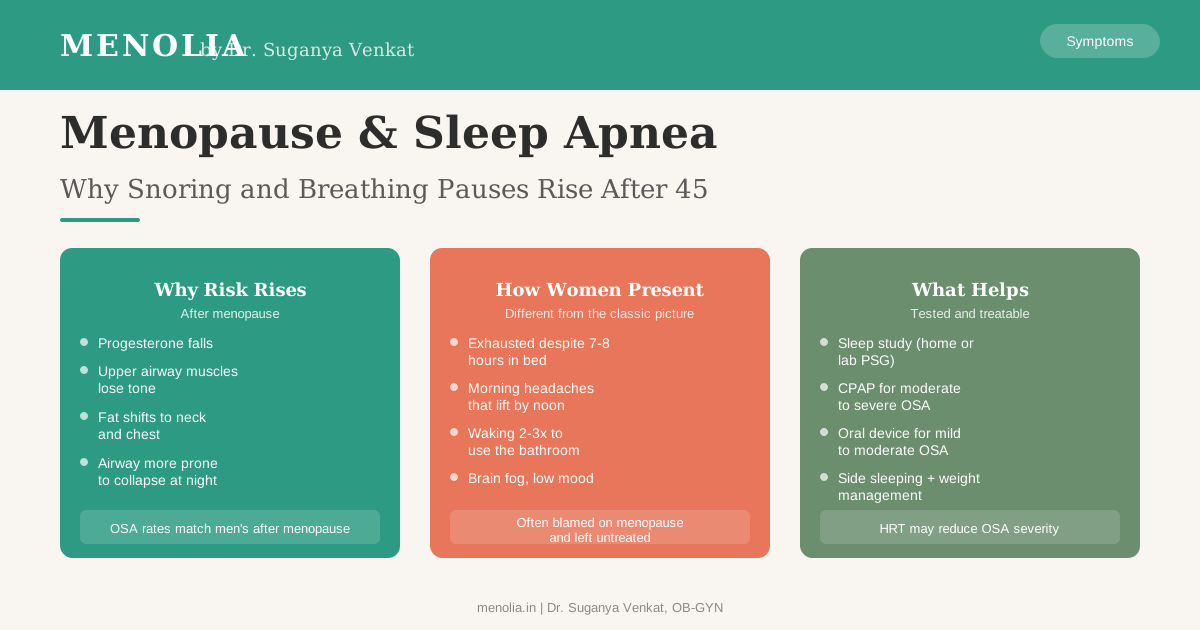
For most of the reproductive years, women have a much lower rate of sleep apnea than men. This protection is not accidental. Progesterone, the hormone that rises in the second half of every menstrual cycle, has a well-documented respiratory stimulant effect. It increases the activity of the muscles that keep the upper airway open during sleep and raises the brain’s sensitivity to carbon dioxide, prompting faster, more regular breathing.
When menopause brings progesterone to a persistently low level, that protective effect disappears. The upper airway muscles become less well-supported. The airway is more prone to narrowing and collapsing when the rest of the body relaxes into sleep.
Bixler and colleagues, publishing in the American Journal of Respiratory and Critical Care Medicine in 2001, found that postmenopausal women not using hormone therapy had OSA rates strikingly similar to men, while premenopausal women had rates roughly a quarter as high. Young and colleagues, in a large Wisconsin Sleep Cohort study published in the American Journal of Respiratory and Critical Care Medicine in 2003, confirmed that menopausal status was an independent risk factor for sleep-disordered breathing, independent of age and body mass index.
The second mechanism is fat redistribution. Menopause shifts body fat away from the hips and thighs and toward the abdominal and cervical areas, meaning the neck and throat region. A neck circumference above 35 to 36 cm is a recognised risk factor for OSA. This shift can happen even without significant overall weight gain, which is why women who are not overweight and do not think of themselves as the typical OSA patient can still develop it during the menopause transition.
Why Women Are Under-Diagnosed
The image most people carry of sleep apnea is a specific one: a heavyset man who snores loudly, pauses with an audible silence, then wakes himself with a snort or gasp. His partner describes whole minutes of no breathing followed by explosive sounds. He is drowsy at traffic lights. He falls asleep at every family gathering.
Women with OSA often look nothing like this.
Franklin and colleagues, publishing in Thorax in 2013, found that women with OSA were significantly more likely to report fatigue and insomnia as their primary symptoms, while men reported snoring and witnessed apnoeas. Women’s snoring, when present, is often quieter. Partners may not notice breathing pauses because women are lighter sleepers and self-rescue more quickly from apnoeic events. Women who sleep alone have no partner report at all.
The symptoms that women describe when they have OSA are precisely the symptoms that menopause is expected to produce:
- Waking unrefreshed despite adequate hours in bed
- Persistent daytime fatigue and cognitive slowing
- Morning headaches (these come from carbon dioxide accumulation during breathing pauses)
- Mood changes: irritability, low mood, anxiety
- Waking multiple times in the night (often attributed to nocturia or night sweats, but may be micro-arousals from apnoea events)
- Difficulty concentrating, word-finding difficulty, brain fog
The menopause label explains everything. The sleep apnea goes unasked-for and unfound.
A specific note on nocturia: waking to urinate two or three times per night in menopause is common and usually attributed to bladder changes. But apnoea events cause changes in thoracic pressure that release atrial natriuretic peptide, a hormone that tells the kidneys to produce more urine. In some women, the nocturia is primarily OSA-driven, not bladder-driven, and it resolves substantially when the apnea is treated.
The Cardiovascular and Metabolic Stakes
Untreated OSA is not merely a sleep problem. The cycles of oxygen desaturation and re-oxygenation throughout the night activate the sympathetic nervous system repeatedly, drive systemic inflammation, and accelerate a set of changes that are relevant to every woman in the menopause transition.
The established links between OSA and systemic disease include elevated blood pressure, which OSA causes through nocturnal sympathetic surges. It includes impaired insulin sensitivity, which worsens the metabolic changes menopause already sets in motion. It includes an increased risk of atrial fibrillation and other cardiac arrhythmias. It is independently associated with increased risk of stroke and cardiovascular disease.
The relevance for women in this transition is that menopause independently raises risk in all of the same domains. For the blood sugar shifts that menopause produces, see Menopause and Blood Sugar: Why Diabetes Risk Rises After 45. For the blood pressure changes, see Menopause and Blood Pressure: The Oestrogen Link. For the cardiovascular picture more broadly, see Menopause and Heart Health: What Indian Women Must Know.
When OSA coexists with menopause and neither is addressed, these risks compound through overlapping mechanisms. Identifying and treating OSA is part of protecting long-term health in the post-menopausal years, not only about better sleep.
Talk to Dr. Suganya on WhatsApp
A Symptom Checklist
The following are the signs that together suggest sleep apnea may be contributing to what you are experiencing. They are adapted from the STOP-BANG screening tool, adjusted to reflect how OSA presents in women.
Snoring or airway sounds: Any snoring, even quiet snoring, or sounds of gasping, choking, or noisy breathing during sleep. Your partner may have mentioned it, or you may have noticed it yourself.
Tired despite adequate sleep: Waking unrefreshed consistently, regardless of how many hours you slept. A heavy, unrested feeling that does not lift by mid-morning.
Observed breathing pauses: A partner or family member who has noticed you stop breathing during sleep, even briefly. Many women live alone or sleep while partners are already awake, so this may simply be unknown rather than absent.
Pressure: Newly elevated blood pressure, or a diagnosis of hypertension that arrived without other obvious cause.
Weight or neck changes: Central weight gain or an increasing neck circumference, even without large changes in overall body weight. This is the menopause-specific fat shift.
Age and hormonal status: Over 45, perimenopausal or postmenopausal, with fatigue and sleep complaints that started or worsened during the transition.
Morning headaches: A specific and underrecognised marker. A dull headache that is present on waking and clears within an hour or two of getting up.
Nocturia: Waking two or more times per night to use the bathroom, when this was not your pattern before.
Mood changes and cognitive symptoms: Irritability, low mood, difficulty concentrating, or memory complaints that are more pronounced than you would expect from menopause alone.
If three or more of these resonate, it is worth raising sleep apnea specifically with your doctor, not just fatigue and sleep quality generally. Framing it as “I may have sleep apnea” gives the conversation a direction that “I’m exhausted all the time” does not.
When to Ask for a Sleep Study
Your doctor can refer you for testing. In India, two types are available.
A home sleep apnea test (HSAT) is a simplified portable device used in your own bedroom for one or two nights. It measures airflow, respiratory effort, pulse oximetry, and body position. It is appropriate for evaluating straightforward OSA without significant comorbidities. Cost at most sleep medicine clinics and diagnostic centres in India is in the range of Rs 2,000 to 5,000, though this varies by city and centre. Verify at the time of referral, as prices change.
A full polysomnography (PSG) is performed in a dedicated sleep laboratory. In addition to breathing, it records brain waves, eye movements, muscle activity, and heart rhythm. It is the gold standard when HSAT results are inconclusive, when other sleep disorders such as restless legs or periodic limb movement are suspected, or when the home test reveals complex findings. Costs at Indian sleep centres range from approximately Rs 8,000 to Rs 25,000. Again, verify at the time of referral.
The result from either test is expressed as an AHI: the Apnea-Hypopnea Index, the number of apnoeic or hypopnoeic events per hour. An AHI of 5 to 14 is mild, 15 to 29 is moderate, and 30 or above is severe.
What Treatment Looks Like
CPAP therapy (Continuous Positive Airway Pressure) is the first-line treatment for moderate and severe OSA. A device on your bedside table delivers a gentle, steady flow of pressurised air through a mask worn during sleep. The pressure acts as a pneumatic splint, holding the airway open so that the collapses that cause apnoeas cannot happen.
CPAP machines available in India range from approximately Rs 25,000 to Rs 80,000 for home units. Many sleep clinics and equipment providers offer trial rentals, which allow people to assess tolerability before purchasing. Most people adapt to CPAP within two to four weeks. Modern devices are quieter and more compact than the equipment of a decade ago.
Mandibular advancement devices (MADs) are custom-fitted oral appliances made by a dentist trained in sleep medicine. They hold the lower jaw slightly forward during sleep, which widens the oropharyngeal airway. They are effective for mild to moderate OSA and for positional snoring. Availability in India has expanded through specialist dental and sleep medicine clinics; approximate cost is Rs 10,000 to Rs 30,000.
Positional therapy addresses OSA that occurs primarily when sleeping supine (on the back). Sleeping on the side reduces airway collapse substantially for women whose apnoeas are position-dependent. Specialised positional pillows and wearable vibrating devices that gently prompt side-sleeping are available, as is the simpler approach of sewing a pocket to a sleep shirt and placing a tennis ball in it.
Weight management is relevant when central fat accumulation is contributing. Even a 5 to 10 percent reduction in body weight reduces OSA severity measurably. The menopause-specific shift of fat to the neck and trunk means that weight management in this context is specifically relevant to airway mechanics, independent of other metabolic benefits. For the broader weight picture, see Menopause Weight Gain: Why It Happens and What Actually Works.
HRT and sleep apnea: There is observational evidence that hormone therapy may have a modest protective effect on OSA severity. Shahar and colleagues, in the Sleep Heart Health Study published in 2003, found that women using hormone therapy had lower OSA severity than those who did not. The mechanism is likely progesterone’s respiratory stimulant properties. This is not a reason to start HRT for OSA alone, but for a woman already discussing hormone therapy for hot flushes, mood changes, or other menopause symptoms, it is a relevant point to raise with her doctor. The decision remains a clinical one that weighs individual history and risks.
Supporting Sleep and Airway Health With Indian Foods
Dietary choices can support the mechanisms involved, though they do not replace treatment for established OSA.
Magnesium-rich foods support muscle function and contribute to better sleep quality. Bajra (pearl millet), rajma, kala chana, and palak are good sources. Kaddu ke beej (pumpkin seeds, petha beeji in some regional dialects) are particularly concentrated.
Anti-inflammatory foods address the low-grade inflammation that both menopause and OSA drive. Haldi (turmeric) used regularly in cooking, amla (Indian gooseberry), and adrak (ginger) all have an evidence base here.
Millets for metabolic support: Ragi, jowar, and bajra have low glycaemic indices and high fibre content, which support insulin sensitivity and help with the weight changes relevant to OSA risk.
Meal timing: Eating a large meal within two hours of sleeping raises abdominal pressure and worsens OSA. Eating the main meal in the early evening and having a lighter snack if needed is a practical adjustment.
Alcohol: Alcohol is a respiratory depressant that relaxes upper airway muscles and significantly worsens OSA. If sleep apnea is suspected or confirmed, alcohol near bedtime worsens the picture in a measurable way.
For the sleep problems that are not about breathing, the insomnia and sleep-architecture disruption that menopause independently produces, see Menopause Sleep Problems: What Actually Helps and Perimenopause Sleep Problems: Why You Can’t Sleep.
Frequently Asked Questions
Can menopause cause sleep apnea?
Menopause does not directly cause sleep apnea, but it removes a significant protection against it. Progesterone, which maintains upper airway muscle tone during the reproductive years, drops permanently after menopause. Fat redistribution to the neck and central body also increases OSA risk. Large epidemiological studies have confirmed that postmenopausal women have OSA rates comparable to men of the same age, while premenopausal women have rates roughly a quarter as high. Menopause raises the risk; it does not guarantee the outcome.
What does sleep apnea in women feel like?
Women with sleep apnea typically describe waking up exhausted despite sleeping adequate hours, persistent daytime fatigue that does not improve with more sleep, morning headaches that clear by mid-morning, brain fog or difficulty concentrating, low mood or irritability, and waking multiple times in the night (often attributed to bladder urgency or night sweats). Loud snoring and witnessed breathing pauses are less common in women than in men. The symptoms overlap substantially with menopause itself, which is why OSA in women is often unrecognised.
Is snoring after menopause normal?
Snoring becomes more common after menopause because the hormone-dependent muscle tone that supported the upper airway during the reproductive years declines. Whether it is a concern depends on what accompanies it. Quiet snoring without daytime fatigue, morning headaches, or other symptoms may be a nuisance rather than a medical problem. Snoring accompanied by unrefreshing sleep, fatigue, or any of the symptoms described in this post warrants a conversation with a doctor and, in many cases, a sleep study.
For more on this, read our guide on Can Menopause Cause Headaches & Migraines? A Doctor Explains. Can HRT help with sleep apnea in menopause?
Observational evidence, including data from the Sleep Heart Health Study, suggests that women using hormone therapy have lower OSA severity than those who do not. The biological basis is progesterone’s role as a respiratory stimulant. This is not an established indication for HRT and is not strong enough to recommend starting hormone therapy for OSA alone. However, for women already discussing HRT for menopause symptoms, it is a useful point to raise. The decision involves a conversation with a doctor who knows your individual history.
How is sleep apnea tested in India?
Two options are available. A home sleep apnea test (HSAT) is done in your own bedroom using a portable device that measures airflow, oxygen levels, respiratory effort, and body position. It is appropriate for most straightforward cases and costs approximately Rs 2,000 to 5,000 at diagnostic or sleep medicine centres (verify at the time of referral). A full polysomnography (PSG) in a sleep laboratory is the gold standard and is recommended when the home test is inconclusive or other sleep disorders are suspected. PSG costs range from approximately Rs 8,000 to Rs 25,000.
I wake up several times a night to urinate. Could this be sleep apnea?
It could be contributing. Apnoeic events produce changes in chest pressure that cause the heart to release a hormone signalling the kidneys to produce more urine. This mechanism, called apnoea-related nocturia, can drive two or three bathroom trips per night that are not primarily about bladder capacity. In women whose nocturia began or worsened around the same time as fatigue and unrefreshing sleep, sleep apnea is worth ruling out. If CPAP treatment resolves nocturia along with other symptoms, the mechanism was likely apnoeic rather than urological.
Do I need CPAP if my sleep apnea is mild?
Not necessarily, though it depends on symptoms and context. For mild OSA (AHI 5 to 14) with no significant cardiovascular risk factors and no major daytime symptoms, positional therapy, weight management, and mandibular advancement devices are often effective first steps. For mild OSA with significant fatigue, morning headaches, or elevated blood pressure, treatment is usually warranted. For moderate or severe OSA (AHI 15 or above), CPAP is generally recommended regardless of symptom severity because of the cardiovascular risks of untreated disease. These thresholds are a framework, not a prescription: the decision is made in conversation with the managing doctor.