You are 50. The question that brought most of you here is not the same one that brought women here at 45 or 47. The symptoms may still be present, some days more than others. But the question underneath has changed.
At 47, women ask: is this perimenopause? What is happening to my cycle? How long will this last?
At 50, the question is: am I through it? Is there anything still to come? And if I am on the other side, what should I do differently now?
I am Dr. Suganya Venkat, OB-GYN with over fifteen years of practice, and this shift in the question is one of the most consistent things I see in women who come to me at this age. The uncertainty has not disappeared; it has changed character. The unpredictable cycle changes that felt so disorienting at 47 have given way to something else: either a confirmed end, or a waiting to confirm one. This post is for women at 50 who are close to, at, or just past their final period, and who want to know what their symptoms mean from here and what to pay attention to going forward.
Where most Indian women are at 50
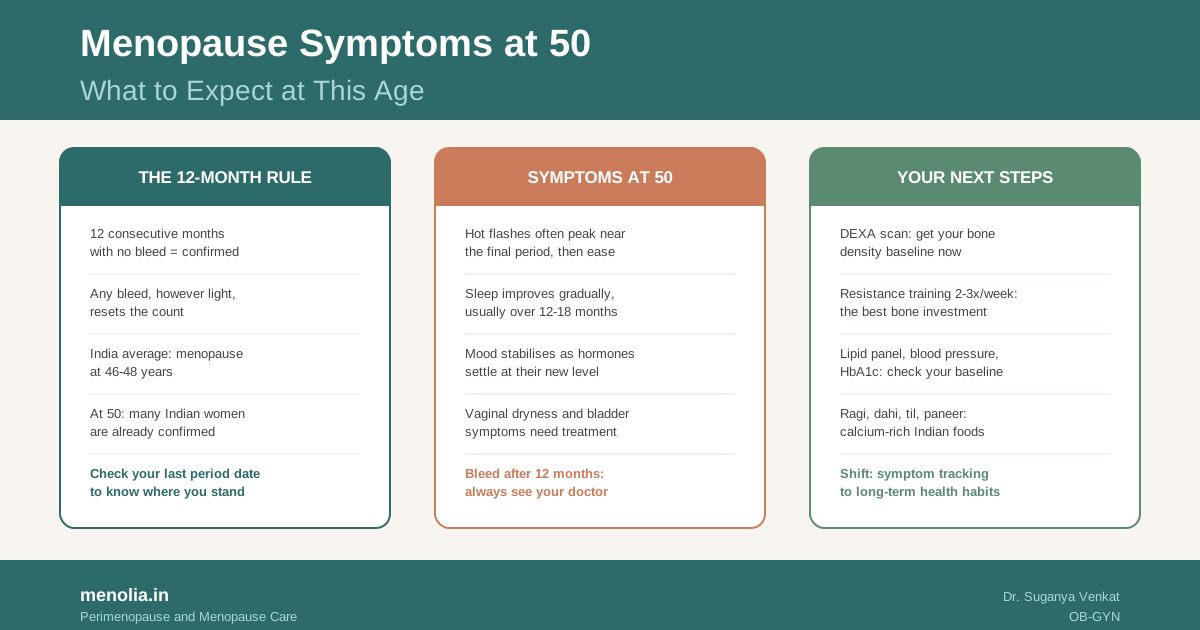
In India, the median age of natural menopause is 46 to 48 years, roughly four years earlier than the global average of 51 (Palacios S et al., Climacteric 2010, PMID 20690868) (Ahuja M, J Midlife Health 2016, PMID 27721640). If you are 50 and have been experiencing symptoms for several years, this Indian timeline places many women at or already past their menopause date, not approaching it.
At 50, women typically fall into one of two situations.
The first: you have already had your final period without knowing it was the final one. If your last bleed was 10 or 12 or 18 months ago and things have been in a different kind of hormonal quiet since then, you may already be in confirmed post-menopause. The 12-month window may already have closed.
The second: you are still in the final stage of perimenopause, with periods that have become increasingly infrequent or that stopped recently, and you are now counting toward the 12-month confirmation.
Both are normal at 50. Where you land within this depends on your ovarian reserve, your genetics, and your individual biology. What helps is knowing how to tell, and what the confirmation actually means.
For a detailed picture of how the transition unfolds and where 50 fits in the STRAW+10 staging framework, see Stages of Menopause: Perimenopause to Post-Menopause.
The 12-month rule: how to confirm menopause
The clinical definition of menopause is retrospective. It is confirmed once 12 consecutive months have passed since your last period. Not 10 months. Not a period-free stretch that “feels like about a year.” Twelve full calendar months without any bleed.
What most women do not realise: any bleed, however light, however brief, resets the count. Many women at 49 experience a three-month or four-month gap, then have a single light bleed and assume this is something unusual. It is not. It is a common late-perimenopause pattern. The 12-month count starts fresh from that last bleed.
Once 12 full months have passed from your last period, that date becomes your confirmed menopause date. Everything after is post-menopause. From that confirmed point, contraception is no longer medically required, screening timelines change, and the priorities for the years ahead come into focus.
A practical step for women who are unsure: check your last period date. If you have been tracking in an app or a diary, you can confirm this precisely. If not, think back to any bleeding, however light, in the past year or two. That date is your starting point. If 12 months have now passed from that date with no further bleeding, you are already confirmed post-menopausal.
One point that catches women off guard: contraception remains relevant until 12 consecutive months without a period are complete. Ovulation can still occur during late perimenopause even when periods are infrequent. If you are not trying to conceive, this matters practically. The contraception in perimenopause guide covers which options suit this stage and when it is safe to stop.
For comparison with the picture at 47, which focuses on late perimenopause and how to tell where you are, see Menopause Symptoms at 47: What Is Normal at This Age.
Symptoms that typically continue at 50
The menopausal transition does not end the moment the 12-month mark is reached. For most women, symptoms persist for some time after, and research suggests that hot flashes are often at their most frequent and intense in the year or two immediately surrounding the final period.
Data from the SWAN study (Study of Women’s Health Across the Nation), which followed women longitudinally over more than 17 years, found that the total duration of vasomotor symptoms averaged 7.4 years from onset, with the most intense clustering around the final menstrual period, followed by gradual decline over the years that follow (Tepper et al., 2016, Menopause). For some women this decline comes within one to two years. For others it takes longer.
What this means at 50: if your final period was recent, symptoms may continue or even briefly intensify before they ease. This is a known pattern, not a sign of an abnormal transition.
Hot flashes and night sweats. These are likely to ease over the coming one to three years, but may not fully resolve earlier. For women whose hot flashes are significantly disrupting sleep or daily function, there are well-evidenced options from lifestyle measures through to prescription treatment. The hot flash treatment guide covers the full range in practical terms.
Sleep disruption. Night sweats are the most common driver of disturbed sleep at this stage. Once core body temperature regulation stabilises after the final period, sleep typically improves gradually. This often takes 12 to 18 months from the final period rather than resolving immediately.
Joint stiffness. Morning stiffness in the hands, knees, or lower back, and a general sense that joints recover more slowly from use, continues into post-menopause for many women. Oestrogen’s anti-inflammatory role in connective tissue is part of what drives this, and it tends to settle over time.
Mood. The emotional volatility that many women experience in late perimenopause, when oestrogen levels were swinging unpredictably, typically stabilises in the 12 to 18 months after the final period as the hormonal environment settles at a new, lower level. Women who found their emotional reactivity in their late 40s uncharacteristic often notice genuine improvement by their early 50s.
Urogenital symptoms. This is one area where the pattern differs. Vaginal dryness, discomfort with intercourse, increased bladder urgency, or recurrent urinary tract infections are driven by genitourinary syndrome of menopause (GSM). Unlike vasomotor symptoms, GSM does not tend to improve on its own without treatment; the sustained low-oestrogen environment means the urogenital tissue continues to be affected. Effective local treatments exist (vaginal oestrogen, non-hormonal moisturisers) and do not require systemic hormones. These are worth discussing with your doctor if present.
If you are at 50 and want to talk through your symptoms individually with a doctor, you can speak to Dr. Suganya Venkat in a video call, online, across India. Message her on WhatsApp.
What tends to ease
The most immediate change that comes with confirmed menopause is the end of cycle unpredictability. After years of periods arriving early, late, heavy, light, or not at all, reaching the 12-month mark means that particular uncertainty is over. There is no more wondering when a period will arrive, whether the heaviness this month is a sign of something, or whether a three-month gap means it is finally done.
For most women, mood stability improves in the 12 to 18 months after the final period. The sharp oestrogen swings of late perimenopause, where levels could shift significantly within a single week, give way to a more stable hormonal environment. Women who found themselves more emotionally reactive than usual in their late 40s often describe this shift as a return to themselves.
Cognitive symptoms, particularly word-finding gaps and difficulty holding multiple things in mind simultaneously, tend to follow a similar arc. The SWAN memory study found that verbal memory and processing speed dip during the transition and generally recover once the hormonal environment settles post-menopause (Greendale et al., 2009, Neurology).
One symptom that always needs medical attention
Any vaginal bleeding that occurs after 12 consecutive months without a period is post-menopausal bleeding (PMB) and must always be evaluated medically. It cannot be assumed to be a late period or a hormonal fluctuation. PMB has several possible causes, the majority benign (atrophic endometrium, polyps, breakthrough from local oestrogen), but it is also the most common presenting symptom of endometrial cancer. Any episode of PMB, however light or brief, warrants a prompt pelvic ultrasound and, where indicated, endometrial sampling.
Do not wait to see if it happens again. Even a single episode needs a same-week appointment.
For a clear explanation of what post-menopausal bleeding means and what the evaluation involves, see the post-menopausal bleeding guide.
Shifting focus: from tracking symptoms to protecting long-term health
This is the most significant transition at 50, and one that is often not framed explicitly.
During perimenopause, attention is appropriately on symptoms: tracking cycles, managing hot flashes, understanding what is happening and when it will end. After menopause is confirmed, that focus should shift. Not dramatically, not all at once, but deliberately.
The protective role oestrogen played in bone density, cardiovascular health, and insulin sensitivity has changed permanently. This does not mean something has gone wrong. It means the preventive habits that were simply useful in your 40s become genuinely high-priority in your 50s and 60s, because the window for bone and metabolic intervention is most effective now.
Include bone health in the conversation. A meta-analysis of controlled trials in pre- and postmenopausal women reported positive effects of resistance training on lumbar-spine bone mineral density overall, and on femur and radius bone mineral density in postmenopausal women (Kelley et al., American Journal of Physical Medicine & Rehabilitation, 2001, PMID 11138958). The retrieved abstract does not establish fracture prevention, superiority over walking, or an exact weekly training schedule.
If your doctor recommends a DEXA scan, our bone density guide explains what the scan involves. The exercise finding above does not determine when you personally need screening.
Cardiovascular health. Oestrogen has a protective effect on the lipid profile and endothelial function before menopause. After menopause, LDL cholesterol tends to rise and cardiovascular risk gradually increases. A fasting lipid panel and blood pressure measurement, if you have not had one in the past year, give you your baseline. Consistent aerobic activity, a diet built around dals, vegetables, and whole grains rather than ultra-processed food, and not smoking are the interventions with the best evidence.
Blood sugar. Insulin sensitivity often decreases after menopause. Fasting glucose and HbA1c are worth checking at this point, even without symptoms, given the elevated baseline risk of type 2 diabetes in the Indian population.
For a structured checklist of all the screening tests that matter at this stage, see Post-Menopause Health Checks: Which 8 Tests Matter Most. For a complete picture of what to expect across the post-menopause years, Post-Menopause: What to Expect After Your Last Period covers the phase thoroughly.
Practical steps to take now
- Check your last period date. If 12 months have passed, your menopause is confirmed.
- Discuss starting or maintaining resistance training at a level suited to your health and fitness; the Kelley abstract does not establish a minimum weekly schedule.
- Include calcium-rich Indian foods consistently: ragi (364 mg per 100g, ICMR-NIN 2017), dahi (around 240 mg per 200g), til and paneer. These cover a meaningful portion of the 1,200 mg daily calcium target for post-menopausal women.
- Book a baseline check: lipid panel, blood pressure, fasting glucose and HbA1c, vitamin D, and if not done recently, a DEXA scan.
- If vaginal dryness or bladder urgency is present, discuss local oestrogen with your doctor. It is safe, effective, and distinct from systemic HRT.
- If you experience any bleed after your confirmed 12-month mark, see your doctor within a week.
Frequently Asked Questions
Is it normal to still have hot flashes at 50?
Yes. Hot flashes are common at 50 and can continue for several years after the final period. SWAN data found that the average total duration of vasomotor symptoms was 7.4 years from onset, with the peak period clustering around the final menstrual period. For most women, hot flashes gradually reduce in frequency and intensity in the one to three years after the final period. They are not a sign that the transition has gone abnormally; they are a feature of the post-menopausal adjustment. For women who find them significantly disruptive, evidence-based options include lifestyle adjustments, the CBT-based approach that NICE recommends, and for those who are appropriate candidates, HRT or non-hormonal prescription alternatives.
My periods stopped 8 months ago. Am I in menopause?
Not yet confirmed. The clinical definition requires 12 consecutive months without a period. At 8 months, you are within the window where a period could still return. Many women experience a gap of 8 to 10 months and then have one final light bleed. If that happens, the 12-month count restarts from that last bleed. Continue tracking your dates. If 12 full months pass from your last bleed with no further bleeding, that date becomes your confirmed menopause date.
Do hot flashes get worse right around menopause before they ease?
For many women, yes. Research indicates that vasomotor symptom frequency and severity tend to peak in the year or two immediately surrounding the final menstrual period. If you have noticed a recent increase in hot flashes or night sweats at 50, this pattern is consistent with being near or at the final period. It does not mean they will stay at this level indefinitely. Most women see a gradual reduction over the one to three years that follow.
I am confirmed post-menopausal at 50. Should I be on HRT?
Whether HRT is appropriate depends on your symptom severity, your personal and family medical history, and your own informed preferences after a proper discussion. For women with significant vasomotor symptoms in their early 50s without contraindications, HRT is effective and carries a well-characterised benefit-risk profile at this age. For women with mild or manageable symptoms, lifestyle measures are often sufficient. This is a conversation to have with a doctor who knows your individual history, not a decision for generic guidance. The HRT in India guide provides context for that conversation.
Menopause ke baad 50 saal mein kaun se symptoms rehte hain?
50 saal ki umra mein ya menopause ke baad bhi kuch symptoms continue ho sakte hain, jaise hot flashes (garmi ke daure), raat ko paseena, aur neend ki takleef. Yeh symptoms ek se teen saal mein dhire-dhire kam hote hain. Vaginal dryness (yoni mein khushki) aur bladder ki takleef aksar apne aap theek nahin hoti aur treatment se faayda milta hai. Ek achhi khabar yeh hai ki periods ki aniyamitata khatam ho jaati hai, aur mood bhi waqt ke saath stable ho jaata hai. 50 saal ke baad bone health aur heart health par dhyan dena zaroori hai, kyunki oestrogen ka protective role ab badal chuka hota hai.
When should I get a bone density (DEXA) scan?
Most guidelines recommend a baseline DEXA scan within one to two years of confirmed menopause for all women. Earlier if there are additional risk factors: family history of osteoporosis or hip fracture, low body weight, prior fracture from minor trauma, long-term corticosteroid use, or conditions that affect calcium absorption. In India, the prevalence of vitamin D deficiency is high and amplifies post-menopausal bone loss substantially, making the baseline scan particularly useful. The bone density test guide explains what a T-score means, how to read your results, and where to get the test done in India.
Can I still become pregnant at 50 if my periods are irregular?
The likelihood of natural pregnancy at 50 is very low, but technically speaking, it is not zero until 12 consecutive months without a period have passed. If you have not yet confirmed menopause by the 12-month rule and you are sexually active and do not want to become pregnant, contraception is still advisable. Once 12 months have passed, you can discontinue contraception with confidence. The contraception in perimenopause guide covers the options and timing in detail.
If you are at 50 and have questions about where you are in the transition, what your symptoms mean, or what steps to take from here, you can speak with Dr. Suganya Venkat in an online video consultation, available across India.