She had worn the same glasses for five years without a single update. Then, in her late 40s, she started struggling with night driving. The lights from oncoming cars seemed to explode into starbursts. She visited her optometrist, who found her prescription had shifted. A year later, it shifted again. Her optometrist said this was simply age. He was not wrong, but he was not giving her the complete picture either.
The menopause transition affects more parts of the body than most women, or their doctors, are told about. The eye is one of them. Oestrogen receptors are present in the cornea, the lens, the retina, and the optic nerve. When oestrogen levels fall during perimenopause and menopause, these structures are affected in ways that produce real, noticeable changes in how a woman sees the world.
This post covers why those changes happen, what they mean, what to do about them, and when a visual symptom is urgent rather than expected.
How oestrogen shapes the eye
Oestrogen is not a hormone you would typically associate with vision, but it has well-documented effects across several ocular tissues.
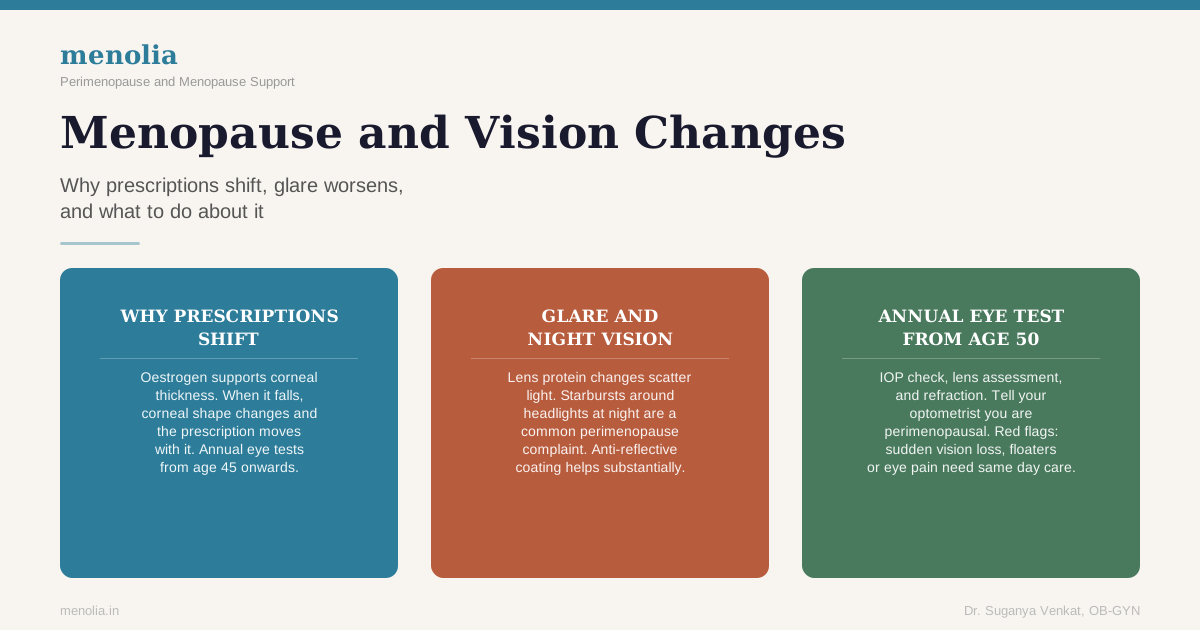
In the cornea, oestrogen supports collagen synthesis and maintains corneal thickness. The cornea is the clear dome at the front of the eye and provides most of the eye’s refractive power, about 70 to 75 percent of the total. When corneal thickness or curvature changes, even subtly, the way the eye focuses light changes with it.
In the lens, oestrogen appears to slow the accumulation of certain proteins that contribute to lens clouding. Animal and human population studies have shown that women who experience menopause earlier in life have a higher risk of earlier cataract formation, suggesting that oestrogen has a protective effect on the lens.
In the optic nerve and trabecular meshwork (the drainage tissue that regulates intraocular pressure), oestrogen receptors modulate fluid dynamics. Falling oestrogen can be associated with modest rises in intraocular pressure, which is relevant to glaucoma risk over time.
None of these effects are as dramatic as hot flashes or as immediately disruptive as mood changes. But they accumulate, and they explain why women in their late 40s and 50s often find their eyes behaving differently, even when they have had no eye problems before.
Why your prescription keeps shifting
A prescription that was stable for years and then starts moving around your mid-40s is one of the more common visual complaints of the menopause transition.
The mechanism is largely corneal. As oestrogen falls, collagen turnover in the cornea changes. Research published in ophthalmology literature over the past two decades has documented that corneal thickness decreases measurably in postmenopausal women compared with premenopausal women of similar age. Corneal curvature can also change as the structural support that oestrogen provides diminishes.
Because the cornea is responsible for most of the eye’s focusing, a change in its shape or thickness translates directly into a prescription change. The power needed in a lens to give you clear vision at any distance depends on the corneal geometry. When that geometry shifts, the old prescription no longer matches.
This does not mean the prescription will keep shifting indefinitely. For most women, the changes are gradual and eventually stabilise. What it does mean is that if your prescription has been changing more frequently since your mid-40s and nobody has asked about your menstrual or menopausal status, it is worth raising. Your optometrist cannot interpret the pattern fully if they do not know what your hormones are doing.
Annual eye tests from the age of 45 onwards are sensible for this reason alone, not just for early detection of pathology.
Glare, night vision, and light sensitivity
Glare sensitivity and difficulty with night driving are among the symptoms I hear most often from women in their late 40s and 50s in online consultations at Menolia. I am Dr. Suganya Venkat, an OB-GYN with fifteen years of clinical experience in women’s health, and this is a complaint that surprises many women because they do not connect it to their hormonal status.
Two overlapping mechanisms are at work.
First, the lens of the eye accumulates minor changes in its protein structure with age, a process that oestrogen appears to slow while it is present. As oestrogen falls, these changes can accelerate slightly. The result is a lens that scatters light rather than transmitting it cleanly. When oncoming headlights hit a lens that is scattering light, the brain perceives glare, halos, or starbursts rather than a clean point of light. The same phenomenon makes reading a menu in dim restaurant lighting harder than it used to be.
Second, the pupil’s maximum diameter decreases with age. A younger pupil dilates fully in the dark, letting in more light and allowing clear night vision. By the late 40s and 50s, the pupil does not open as wide. Less light reaches the retina, which reduces the sensitivity of night vision. This is a normal age-related change that happens independently of oestrogen, but because it coincides with the menopause transition, it often gets attributed entirely to hormones.
The practical upshot is similar regardless of which mechanism is dominant. Anti-reflective coating on glasses reduces glare substantially and costs relatively little. If night driving has become uncomfortable, it is worth asking your optometrist about updating your lenses with AR coating, even if your prescription itself has not changed recently.
Contact lens discomfort during perimenopause
If you have worn contact lenses comfortably for years and are now finding them uncomfortable, you are not alone. Contact lens intolerance is a well-recognised complaint of perimenopause, and it has two overlapping causes.
The first is tear film instability. Falling oestrogen and androgens affect the quantity and quality of tears the eye produces, leading to a tear film that breaks up faster across the lens surface. When tear film is unstable, the lens dries out, deposits accumulate faster, and what used to feel comfortable by the end of the day now feels irritating by mid-morning. This is closely related to the dry eye changes associated with menopause, which covers the tear-film side in more detail.
The second is corneal shape change. Contact lenses are manufactured to specific base curves. When the cornea changes curvature, a lens that once fitted well may now sit too steeply or too flatly, creating discomfort, blurring, or a sensation of the lens shifting on the eye.
Practical options include switching to daily disposable lenses, which start fresh each day and do not accumulate the deposits that build up on lenses worn over multiple days. Rewetting drops approved for use with contact lenses, available without prescription, can extend comfortable wear time. If neither helps adequately, an optometrist can remeasure the base curve and check whether the lens is still fitting correctly for the current corneal shape.
Cataract risk after menopause
Cataracts, the gradual clouding of the lens that leads to hazy or blurred vision, are substantially more common in postmenopausal women than in premenopausal women of similar age. The same falling-oestrogen mechanism that affects bone density and collagen in the skin also plays a role in the lens. The timing is not coincidental. Multiple population studies have found that women who undergo menopause earlier in life, whether naturally or through surgery, tend to develop cataracts earlier. Women who go through menopause later tend to develop them later.
This evidence suggests that oestrogen has a protective effect on the lens, possibly through its antioxidant properties and its role in protein homeostasis within the lens. When oestrogen falls postmenopausally, the lens becomes more vulnerable to the changes that produce cloudiness over time.
Cataract in the early stages does not affect vision significantly. In later stages, it causes progressive blurring, particularly in bright light, and a yellow-brown tinge to colours. Early-stage cataracts do not need treatment and are simply watched at regular eye tests. More advanced cataracts are treated with a straightforward surgical procedure in which the clouded lens is removed and replaced with a clear artificial one. In India, cataract surgery is performed at high volume and good outcomes across government hospital eye departments, established eye hospital networks (Aravind Eye Care, LV Prasad Eye Institute, Sankara Nethralaya), and many private ophthalmology clinics.
From your early 50s onwards, a routine eye test should include a check of the lens for early cataract changes, in addition to the standard refraction and pressure measurements.
Glaucoma and intraocular pressure
Glaucoma, which involves optic nerve damage typically associated with elevated intraocular pressure, is another condition where oestrogen appears to have a protective role. Some research suggests that oestrogen has a modest pressure-lowering effect within the eye, partly through its action on the aqueous drainage pathways. Postmenopausal women, particularly those who are several years beyond their last period, show somewhat higher intraocular pressure on average than premenopausal women of similar age in epidemiological data.
This does not mean that menopause causes glaucoma. Glaucoma is a complex disease with genetic, structural, and vascular components, and many postmenopausal women never develop it. What the evidence does suggest is that the postmenopausal period is a time to be consistent about regular intraocular pressure checks, particularly if there is a family history of glaucoma.
A standard comprehensive eye test with most optometrists includes IOP measurement using a non-contact tonometer. This is often the puff-of-air test you will have experienced at a routine eye check. Normal IOP ranges from about 10 to 21 mm Hg in most people. If your pressure is within the normal range, there is nothing to do beyond continuing annual checks. If it is elevated, you will be referred to an ophthalmologist for a more detailed assessment that includes visual field testing and optic nerve imaging.
Glaucoma that is detected early can be managed effectively with eye drops that reduce intraocular pressure. The critical factor is catching it before significant optic nerve damage has occurred, which is why regular checks matter more than reactive responses to symptoms (early glaucoma is typically painless and has no visible symptoms until vision is affected).
If you are noticing changes in your vision alongside other symptoms of the menopause transition and want to understand how they fit together, message Dr. Suganya Venkat on WhatsApp. She consults online, pan-India, via video call.
These are optometrist and ophthalmologist questions, not hormone questions alone
The changes described in this post are relevant to your optometrist and ophthalmologist. They are not, primarily, changes that your gynaecologist will manage directly. What your gynaecologist can do is help you understand whether these changes fit the hormonal picture, whether HRT is appropriate for your broader situation, and whether there are systemic factors contributing.
An ophthalmologist or optometrist who knows that you are perimenopausal or postmenopausal will interpret the pattern of your eye changes differently from one who does not. If you are also considering HRT for menopause, it is worth discussing the potential secondary eye-health effects with your gynaecologist at the same time. A shifting prescription in a woman in her late 40s is not just ageing, it has a probable hormonal component. Contact lens intolerance in a 48-year-old who has worn lenses for twenty years is not just lens-quality variation. Mentioning your menopausal status at an eye appointment is as relevant as mentioning it to any other specialist.
What this means in practice is to mention it. Many women do not, partly because the connection seems unlikely. Many optometrists and ophthalmologists do not ask, partly because the question does not appear on the standard intake form. Simply saying “I am perimenopausal and I have noticed changes in the last couple of years” gives the clinician useful context.
Just as the ear and auditory changes associated with menopause often go unexplained until someone connects them to the hormonal picture, so do visual changes. The connection exists, and it is worth making explicit.
India-relevant practical steps
Annual eye tests. Comprehensive eye tests are available at optical shops in most Indian cities for Rs 200-600 and at dedicated eye hospitals for Rs 300-1,200 for a fuller work-up including IOP measurement. If you are postmenopausal and have not had an eye test in the last year, book one.
Anti-reflective coating on glasses. If glare while driving at night has become uncomfortable, AR coating on your lenses makes a meaningful difference. Most spectacle lenses in the Rs 800-2,500 range at optical shops include it; if your current glasses do not have it, ask about replacing just the lenses in your existing frames.
Diet for eye health. Leafy greens and orange-coloured vegetables supply lutein and zeaxanthin, antioxidants concentrated in the macula (the central part of the retina). Indian sources that work well include methi (fenugreek leaves), palak (spinach), gajar (carrot), and kaddu (pumpkin). Alsi (flaxseed) and til (sesame) provide omega-3 fatty acids that support tear film stability and retinal health. These are the same foods that support overall health through the menopause transition. The Menolia evidence-based supplements guide covers omega-3 options and the evidence behind them in more detail.
Inform your eye specialist. When you go for your next eye test, mention that you are perimenopausal or postmenopausal. Ask that the test includes both an IOP check and a lens assessment, not just a refraction. This is standard at most full-service optometry practices and ophthalmology clinics.
Contact lens review if lenses are uncomfortable. Do not persist with uncomfortable lenses in the hope they will settle. Discomfort is a signal that either the fit, the lens type, or the lens care routine needs to change. A contact lens review appointment (separate from a full eye test) typically costs Rs 150-400 at optical shops.
What is called what: vision changes in other languages
| Language | Term | Notes |
|---|---|---|
| Hindi | aankhon mein badlaav (आंखों में बदलाव) | General vision changes |
| Hindi | aankhon ki roshni kamzor hona (आंखों की रोशनी कमज़ोर होना) | Eyesight weakening |
| Tamil | kan paarvaiyil maatram | Vision change (Roman) |
| Tamil | kan paarvai maaral | Shifting vision (Roman) |
| Telugu | kannu chuppu maarpulu | Vision changes (Roman) |
Red flags: when vision needs urgent care today
The gradual changes described in this post are not emergencies. These are:
- Sudden loss of vision in one eye, whether partial or complete. This is a same-day emergency regardless of whether you have other symptoms.
- A sudden shower of new floaters, especially if accompanied by flashes of light at the periphery of your vision. New floaters or photopsia (visual flashing) can indicate a retinal tear or early retinal detachment, which needs urgent ophthalmology review. Long-standing stable floaters that have been present for years are a different matter.
- Eye pain combined with redness and nausea or headache. This pattern can indicate acute angle-closure glaucoma, which can cause permanent vision loss within hours and is an ophthalmic emergency.
- Double vision that comes on suddenly. This can have neurological causes and needs prompt assessment.
- Rapid worsening of vision over a few days, as distinct from the gradual changes described above.
For these symptoms, go to an ophthalmology emergency service or a tertiary hospital eye department. Most government teaching hospitals in India and established eye hospital chains have emergency or walk-in ophthalmology services. An optical shop or general practitioner is not the right first step for these presentations.
Practical summary
- Oestrogen receptors are present in the cornea, lens, retina, and optic nerve. Falling oestrogen during perimenopause and menopause affects multiple aspects of vision.
- Prescription changes around menopause often reflect corneal thickness and curvature shifts, not just normal ageing. Mentioning your menopausal status to your optometrist helps them interpret the pattern.
- Glare and night vision difficulties are common in this age group. Anti-reflective coating on glasses is a practical and affordable first step.
- Contact lens discomfort frequently begins during perimenopause. Daily disposables and rewetting drops help; a contact lens review may be needed to check that the fit still matches your current corneal shape.
- Cataract risk increases postmenopausally. Routine eye tests from the early 50s should include a lens assessment.
- Glaucoma has a modest association with postmenopause. Annual intraocular pressure checks are sensible, especially with a family history.
- The optometrist and ophthalmologist are the key specialists here. Mentioning your hormonal status at eye appointments gives them context that changes how they interpret what they see.
Frequently asked questions
Can menopause affect eyesight? Yes. Oestrogen has a direct effect on several ocular structures, including the cornea, lens, and optic nerve. As oestrogen falls during perimenopause and menopause, women often notice prescription shifts, greater glare sensitivity, changes in contact lens comfort, and in some cases, a gradual rise in intraocular pressure. These effects are distinct from, but often simultaneous with, normal age-related eye changes.
Why does my glasses prescription keep changing after 45? The most common reason is a change in corneal shape or thickness. The cornea provides most of the eye’s focusing power, and it is maintained partly by oestrogen. As oestrogen declines during the menopause transition, collagen turnover in the cornea changes, and subtle shifts in curvature or thickness follow. This translates into a prescription that was stable for years beginning to drift. The changes are usually gradual and tend to stabilise after the transition.
Is blurred vision a symptom of menopause? It can be. Some women notice transient blurring during or just after a hot flash, caused by brief fluid shifts affecting the corneal surface. Others notice gradual changes in their baseline visual acuity that reflect a prescription change, early cataract formation, or another structural change. Sudden or severe blurring that is not tied to hot flash episodes is not a menopause symptom and needs same-day medical attention.
What is the connection between menopause and glaucoma? Oestrogen appears to have a modest pressure-lowering effect on the fluid dynamics within the eye. As oestrogen falls postmenopausally, intraocular pressure can rise slightly, and epidemiological studies suggest a modestly elevated glaucoma risk in women who are several years beyond menopause. Glaucoma is a multifactorial condition, and most postmenopausal women do not develop it, but this is a reason to include an IOP check in annual eye tests from your early 50s.
Should I tell my optometrist I am in menopause? Yes, and this is one of the most actionable things in this post. Your menopausal status is directly relevant to how an optometrist interprets changes in your corneal shape, contact lens fit, lens clarity, and intraocular pressure. Many women do not think to mention it; many optometrists do not ask. It is worth raising at any eye appointment from your mid-40s onwards.
Can HRT help with vision changes during menopause? Some research suggests that HRT, particularly oestrogen-containing preparations, may partially offset corneal and lens changes associated with falling oestrogen. The evidence is not strong enough to make HRT a recommended treatment specifically for vision changes. However, if you are already considering HRT for vasomotor symptoms, bone health, or other menopause-related reasons, the potential secondary benefits for ocular health are worth raising in your consultation. This is a conversation to have with your gynaecologist and your ophthalmologist together.
Aankhon ki roshni menopause mein kyun badal jaati hai? Menopause ke waqt oestrogen ka level kam hone se aankhon ke kai hisse prabhavit hote hain (आंखों में बदलाव menopause में). Cornea, jo aankhon ki sabse badi refractive layer hai, oestrogen ki madad se apni thickness aur shape banaye rakhti hai. Jab oestrogen ghatta hai, chashmay ka number badal sakta hai, raat ko gaadi chalate waqt glare badh sakti hai, aur contact lens pahenna uncomfortable ho sakta hai. Ye changes aahista-aahista hote hain. Saal mein ek baar aankhon ka test zaroori hai, aur apne optometrist ko batayein ki aap perimenopause ya menopause mein hain.
If you have questions about visual changes alongside other menopause symptoms, or want guidance on how hormonal changes may be affecting your overall health, speak with Dr. Suganya Venkat on WhatsApp. She consults online, pan-India, via video call.