She noticed it first at night. A faint, high-pitched ringing, like a pressure that never quite released. She slept with the fan on because the silence made it louder. During the day, with noise around her, she could mostly ignore it. But the moment the house went quiet, there it was again.
She had visited her ENT a year earlier. The hearing test came back normal. He said it might be stress, or too much caffeine, and that these things sometimes settle on their own. It was not settling. If anything, it was more noticeable than before.
What nobody had mentioned was that she was 47 and that her periods had become irregular eight months ago. Nobody had connected those two things. They are connected.
This post is about tinnitus in the perimenopause and menopause transition. Not as a rare curiosity, but as a symptom that appears in this window more often than most women are told to expect. I want to explain why oestrogen affects hearing, what else needs to be ruled out before calling it hormonal, and what actually helps.
What Tinnitus Is
Tinnitus is the perception of sound when there is no external source. It can be ringing, buzzing, hissing, whistling, or a low roar. It can be constant or intermittent. It can stay at a low level in the background or become loud enough to disrupt concentration and sleep.
It is not a disease in itself. It is a symptom, a signal that something in the auditory pathway, from the ear canal to the brain’s processing centres, is responding differently than usual.
In India, menopause arrives on average between ages 46 and 48 (Palacios S et al., Climacteric 2010, PMID 20690868) (Ahuja M, J Midlife Health 2016, PMID 27721640). The timing matters because many women in their mid-to-late 40s who develop new ear symptoms do not think to mention them at a gynaecology appointment, and their ENT may not ask about their menstrual cycle. The hormonal dimension of tinnitus falls through the gap between two specialties.
The Hormonal Link: What Oestrogen Does in the Ear
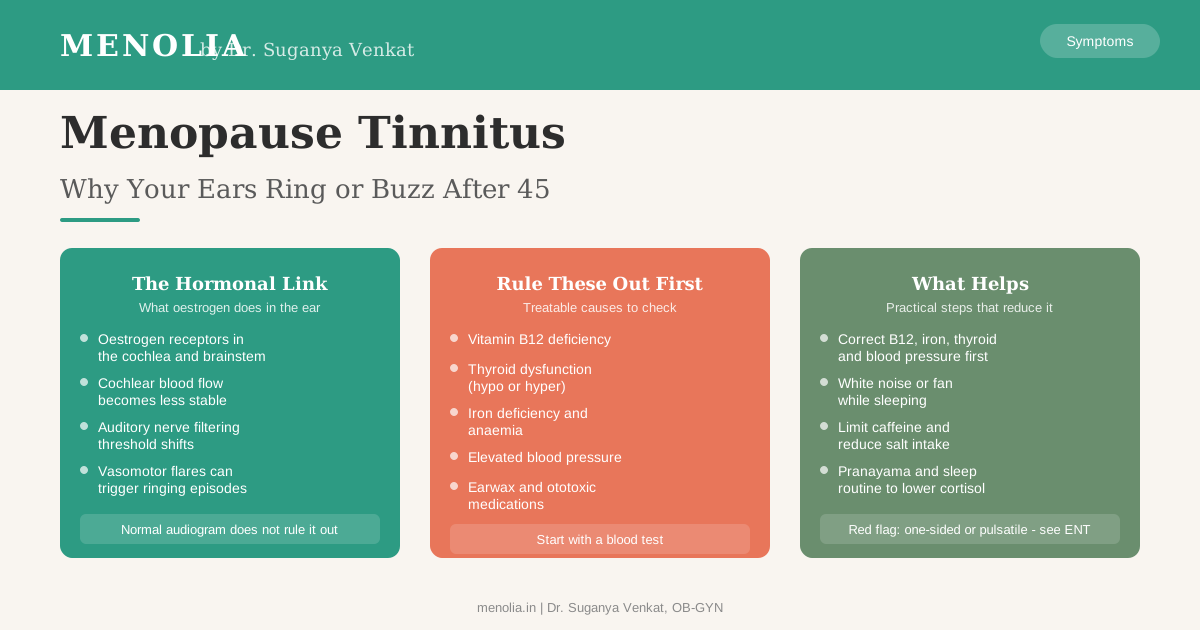
Oestrogen receptors are present throughout the inner ear, including in the cochlea (the spiral structure where sound waves become nerve signals) and in the auditory brainstem. This is well documented in the scientific literature. Oestrogen is not just a reproductive hormone; it is active in many tissues including those involved in hearing.
When oestrogen levels fall during the perimenopause transition, several things happen in the inner ear:
Cochlear blood flow changes. The cochlea has a rich blood supply and is sensitive to vascular changes. Oestrogen acts as a vasodilator in small blood vessels, and when levels drop, the blood supply to the cochlear structures becomes less stable. This is the same mechanism that produces hot flashes and is why some women notice that their tinnitus flares around the time of a hot flash or at night when vasomotor symptoms tend to peak.
Neural excitability in the auditory pathway shifts. Oestrogen has a modulatory effect on nerve signal processing. The auditory cortex and brainstem circuits that filter out background neural noise rely partly on this modulation. When oestrogen falls, the threshold for what the brain registers as sound can shift, so neural signals that were previously filtered out become consciously perceived. This is one reason tinnitus can begin in the perimenopause even in women who have perfectly normal hearing on a standard audiogram.
Antioxidant protection in cochlear hair cells decreases. The hair cells in the cochlea are delicate and vulnerable to oxidative stress. Oestrogen has antioxidant properties that help protect these cells. This protection is one of the reasons premenopausal women are less susceptible to noise-induced hearing loss than men of the same age. As oestrogen levels fall, this protection lessens.
None of this means tinnitus is inevitable or permanent after menopause. Many women find that it is intermittent, and many find that it improves once the body has stabilised at its post-menopausal baseline. The difficulty is the perimenopause transition itself, when levels are fluctuating unpredictably.
The Anxiety and Cortisol Loop
There is a well-documented bidirectional relationship between tinnitus and anxiety. Tinnitus is more noticeable when the nervous system is in a heightened state. Anxiety, in turn, is more likely when tinnitus is present. The two can reinforce each other.
During perimenopause, cortisol (the body’s primary stress hormone) is often elevated, and the stress response system is more reactive than it was before. The same neural hyperarousal that makes sleep more difficult, concentration harder, and small stressors feel larger also lowers the threshold for perceiving tinnitus. A ringing sound that would have faded into the background becomes something that the brain’s threat-detection system locks onto.
This is one reason tinnitus in perimenopause is often worse at night. The body is already in a heightened state, the room is quiet, there is no competing sensory input, and the brain has nothing else to process. The sound that was not noticeable during the day becomes impossible to ignore at midnight.
Understanding this loop is useful not because anxiety is the cause, but because managing the cortisol and arousal state is a genuine lever for reducing how much the tinnitus intrudes on daily life.
Talk to Dr. Suganya on WhatsApp
What Else Needs to Be Ruled Out
The hormonal connection is real, but tinnitus has many causes, and some of them are highly treatable. Before attributing ringing or buzzing ears to menopause, a thorough assessment should cover the following:
For more on this, read our guide on Menopause Dry Eyes. Vitamin B12 deficiency. A 1993 study published in the American Journal of Otolaryngology (Shemesh et al.) found that a significant proportion of patients with chronic tinnitus and noise-induced hearing loss had B12 deficiency, and that supplementation produced measurable improvements in the tinnitus. B12 deficiency is common in Indian women after 40, particularly in those who eat a predominantly vegetarian diet, and it is one of the most straightforward causes of tinnitus to identify and address. A simple blood test is all that is needed.
Iron deficiency and anaemia. Low haemoglobin changes the viscosity and flow of blood through small vessels, including those supplying the cochlea. Women in perimenopause who are still having periods, particularly heavy ones, are at risk. Iron deficiency can produce a low-grade, hissing or buzzing tinnitus alongside fatigue, cold hands, and poor concentration.
Thyroid dysfunction. Both an underactive and an overactive thyroid can affect hearing. Hypothyroidism is associated with cochlear oedema (fluid retention in the inner ear) and slowed nerve conduction. Hyperthyroidism increases cardiac output and can produce a pulsatile sensation in the ears. Thyroid problems become more common in the perimenopause window and their symptoms overlap substantially with menopause symptoms, making them easy to miss without a blood test.
Elevated blood pressure. Pulsatile tinnitus (a rhythmic beating or whooshing that pulses in time with your heartbeat) is particularly associated with blood pressure changes. Hypertension is more common after menopause due to the loss of oestrogen’s protective effect on blood vessel walls. If the sound you hear is rhythmic rather than a steady ringing, this needs a blood pressure check and further evaluation.
Earwax and ear infections. A blocked ear canal from wax buildup or a middle ear infection is a very common and easily treated cause of muffled hearing and ringing. An ENT or even a GP can assess and address this quickly.
Ototoxic medications. Some medications can damage or irritate the auditory pathway and produce tinnitus as a side effect. Common ones include high-dose aspirin and NSAIDs like ibuprofen, loop diuretics such as furosemide, some antibiotics (particularly aminoglycosides like gentamicin), hydroxychloroquine (used for lupus and rheumatoid arthritis), and some antidepressants. If tinnitus began or worsened around the time a new medication was started, that connection is worth exploring with the prescribing doctor.
Noise-induced hearing loss. Past exposure to loud noise, occupational or recreational, can cause gradual high-frequency hearing loss that produces tinnitus. A formal audiogram rules this in or out. The hearing test a woman may have had in her 30s is worth repeating in her late 40s as a baseline.
Red Flags: When to Go to an ENT Promptly
Most menopause-related tinnitus is bilateral (in both ears) and steady. There are patterns that warrant faster evaluation:
- Tinnitus in one ear only
- Pulsatile tinnitus (rhythmic, in time with the heartbeat)
- Tinnitus that came on suddenly
- Tinnitus accompanied by sudden hearing loss in one or both ears
- Tinnitus with recurring dizziness or vertigo lasting more than a few minutes
- Tinnitus with a feeling of fullness or pressure in one ear
These patterns can indicate conditions that need specific investigation: acoustic neuroma (a benign tumour on the auditory nerve), Meniere’s disease, vascular abnormalities, or sudden sensorineural hearing loss (which is a medical urgency). They are not reasons to panic, but they are reasons to see a specialist promptly rather than waiting.
For the tinnitus without these features, the timeline for investigation can be more measured. If it is bilateral, intermittent, and began during a known period of hormonal change, a methodical process of ruling out the treatable causes is the right starting point.
What Helps
Address the differentials first. If B12, iron, thyroid, or blood pressure are abnormal, correcting them often reduces or resolves the tinnitus. These are the most actionable starting points.
Sound therapy and white noise. Tinnitus is significantly worse in complete silence because the brain has nothing else to process. Many women find that sleeping with a fan, an air purifier, or a low-volume radio playing reduces how intrusive the ringing feels. There are also dedicated tinnitus masking apps and devices that play pink noise or nature sounds. This does not treat the underlying cause, but it substantially reduces the distress and sleep disruption that tinnitus causes, and reduced distress means the cortisol loop is less activated.
Limit caffeine, especially in the evenings. Caffeine increases neural excitability and can amplify tinnitus perception. The effect varies by individual, but cutting back on evening chai or coffee is a low-effort first step that many women find helpful. One or two cups earlier in the day is generally fine for most people.
Reduce salt intake. Excess sodium increases fluid retention in the tissues including in the inner ear. A lower-salt diet is useful for blood pressure management and may help reduce the sense of fullness or pressure some women feel alongside tinnitus.
Sleep and cortisol management. Because tinnitus and the stress response are tightly linked, the same habits that lower cortisol make tinnitus more manageable: regular sleep and wake times, limited screen use before bed, and a period of calming activity before sleep. Slow, rhythmic breathing (pranayama) in the evening has genuine evidence for lowering the cortisol response and is worth incorporating.
Hearing aids if there is hearing loss. For women who have documented hearing loss alongside tinnitus, a hearing aid is often the single most effective tinnitus intervention. By amplifying external sounds, it reduces the contrast between the ambient sound environment and the internal noise, and the brain’s tendency to amplify the tinnitus in the absence of other input is reduced.
Cognitive behavioural therapy (CBT) for chronic distress. For tinnitus that has been present for more than six months and is genuinely affecting quality of life, CBT targeted at tinnitus habituation is the most evidence-backed psychological approach. It does not make the tinnitus quieter, but it changes the way the brain responds to it, reducing the distress and the cortisol loop that maintains the symptom’s intrusiveness.
Indian Foods Worth Including
Supporting B12 and iron levels through diet is one of the most useful nutritional steps for tinnitus that may have a deficiency component.
For B12: dahi, paneer, eggs, and fish (mackerel and sardines in particular) are good sources. For vegetarians who do not eat eggs or dairy, a B12 supplement is often necessary, as plant foods contain no reliable B12.
For iron: rajma, kala chana, palak, methi, and til (sesame seeds) are iron-rich. Pairing them with an amla chutney or lemon squeezed over the meal significantly improves iron absorption, as vitamin C increases the availability of non-haem iron from plant sources.
For blood pressure and vascular health: reducing salt in everyday cooking, choosing less namkeen and processed foods, and including potassium-rich foods like coconut water and banana in the diet all support stable blood pressure, which in turn supports cochlear circulation.
Haldi and adrak in everyday cooking carry anti-inflammatory benefits and are worthwhile in the general menopause diet regardless of tinnitus.
Frequently Asked Questions
Can menopause really cause tinnitus?
Yes, this is a recognised connection, though it is not always discussed. Oestrogen receptors are present in the cochlea and auditory brainstem, and falling oestrogen during perimenopause affects cochlear blood flow and auditory nerve processing in ways that can produce or worsen tinnitus. The vasomotor instability of perimenopause, the same mechanism that causes hot flashes, can also cause changes in inner ear blood flow. That said, before attributing tinnitus to hormones alone, it is important to rule out treatable causes like B12 deficiency, thyroid dysfunction, iron deficiency, and elevated blood pressure.
Will the ringing go away once menopause is over?
For many women, tinnitus that began during perimenopause becomes less intrusive once hormonal levels have stabilised after menopause. This is not guaranteed, and it depends significantly on whether underlying deficiencies or other contributing factors have been addressed. For women whose tinnitus has a strong vasomotor component, the fluctuation tends to reduce once the transition is complete. For women whose tinnitus has an anxiety or cortisol component, working on sleep and stress in parallel helps the recovery.
What makes tinnitus worse during menopause?
Tinnitus is typically worse when cortisol is high (stress, poor sleep, anxiety), when caffeine intake is elevated, in complete silence, when B12 or iron is low, and during periods of hot flash activity. Night-time is the most difficult period for most women because all of these factors tend to converge: the room is quiet, the vasomotor system may be active, and the body’s cortisol rhythm has its early-morning peak.
Can HRT help with tinnitus?
There is some evidence that oestrogen therapy can improve cochlear function and reduce tinnitus in postmenopausal women (Hederstierna et al., 2010). However, this is not yet a primary indication for HRT, and the decision to use hormone therapy is based on the overall symptom picture and individual health profile, not tinnitus alone. If you are considering HRT for other menopausal symptoms such as hot flashes, bone protection, or sleep, and tinnitus is also a concern, this is worth discussing with your doctor. Tinnitus improvement would be a potential benefit rather than the reason to start.
What is pulsatile tinnitus and why does it need attention?
Pulsatile tinnitus is a rhythmic sound that beats in time with your pulse, described as a whooshing, thumping, or pulsing in one or both ears. It is different from the steady ringing or buzzing that most menopause tinnitus produces. Pulsatile tinnitus can be caused by elevated blood pressure, changes in blood flow near the ear, or, less commonly, vascular abnormalities. It warrants an ENT assessment and a blood pressure check, particularly if it is in one ear only or is getting louder.
Which foods help with tinnitus in menopause?
There is no single food that treats tinnitus, but addressing the nutritional deficiencies that contribute to it makes a real difference. Dahi, paneer, eggs, and fish (mackerel, sardines) support B12 levels. Rajma, kala chana, palak, methi, and til support iron levels. Pairing iron-rich foods with amla or lemon improves absorption. Reducing salt and including coconut water and banana supports blood pressure and cochlear circulation. Haldi and adrak are worthwhile in the general menopause diet for their anti-inflammatory properties.
When should I see an ENT about tinnitus?
See an ENT promptly if your tinnitus is in one ear only, if it pulses in time with your heartbeat, if it began suddenly, if it is accompanied by any change in hearing, or if you also have recurring dizziness or a feeling of fullness in one ear. These patterns need investigation beyond what a GP visit provides. For steady, bilateral tinnitus in a woman in the perimenopause window, a GP visit to check B12, iron, thyroid, and blood pressure is the right first step, with an ENT referral if the tests are normal and the symptom persists.
Dr. Suganya Venkat, DNB OB-GYN (GKNM Hospital, Coimbatore), MD Pathology (CMC Vellore), MBBS 5x Gold Medallist (SRMC). She consults online, pan-India, via video call.
Related reading: