There is a particular kind of frustration I hear from women in perimenopause who come to see me for this problem.
They started noticing pain during sex a year or two ago, around the time their periods became irregular. Their gynaecologist prescribed a local oestrogen cream. They used it faithfully. The dryness improved somewhat, but penetration is still painful or impossible. Their partner is patient. They are trying to be patient with themselves. But six months in, nothing is fully resolved, and they begin to wonder whether something else is going on.
Often, something else is going on. Not instead of GSM, but alongside it.
This post is for those women. It explains the two conditions most likely to cause pain during sex in the perimenopause years, how they interact, and how to know which one you are dealing with so that treatment can actually work.
What Changes in the Body During Perimenopause
The perimenopause transition, typically starting in the mid-to-late forties for Indian women (Palacios 2010; The Indian Menopause Society’s pan-India survey (Ahuja M, J Midlife Health 2016, PMID 27721640) put the average Indian menopause age at 46 to 48, about four years earlier than Western populations), is driven by fluctuating and eventually falling oestrogen.
Oestrogen is not only a reproductive hormone. It lines the walls of the vagina, maintains tissue elasticity, sustains lubrication, keeps vaginal pH acidic, and modulates the sensitivity of the pelvic nerves and muscles. As levels fall, all of these functions are affected, and not all at once.
Some women notice dryness and irritation first. Some notice pain only with penetration. Some notice that sex has become progressively less comfortable over a period of years, not suddenly.
The underlying condition linking these changes is called the genitourinary syndrome of menopause, or GSM. You can read the full clinical picture in the Menolia GSM guide. But GSM, left unaddressed or only partially addressed, can set off a second process: a pelvic floor condition called secondary vaginismus. Understanding both is the first step toward treating both.
What GSM Is (and Why It Is More Than Vaginal Dryness)
GSM was formally defined by Portman and Gass in 2014 in the journal Menopause, replacing older terms like vaginal atrophy and vulvovaginal atrophy. The newer name was chosen because it more accurately captures the full scope of the condition: vaginal, vulval, and urinary changes together, all caused by oestrogen deficiency. The earlier Menolia post on painful intercourse during menopause covers the GSM tissue mechanism in detail.
The VIVA survey of postmenopausal women (Nappi and Kokot-Kierepa 2012, Maturitas) found that more than 50% of women reported symptoms consistent with GSM, yet fewer than a quarter had discussed it with a doctor. This gap is especially pronounced in India, where painful sex remains under-discussed even in clinical settings.
What GSM produces in the vaginal tissues:
Thinning. The vaginal wall is normally several cell layers thick. Oestrogen signals these layers to replicate. Without oestrogen, the epithelium thins over time, becoming fragile and easily irritated. Vaginal dryness is often the first sign a woman notices.
Loss of lubrication. Natural lubrication comes from transudation through the vaginal wall and from Bartholin gland activity, both oestrogen-dependent. With less oestrogen, arousal-linked lubrication diminishes, and baseline vaginal moisture drops.
pH rise. A healthy vagina has an acidic pH of around 4.5, maintained partly by oestrogen-supported lactobacillus populations. With oestrogen loss, pH rises toward 6 or 7. This changes the microbial environment and increases sensitivity.
Reduced elasticity. Collagen and elastin in vaginal and vulval tissues are oestrogen-sensitive. Less oestrogen means less collagen turnover, a narrower vaginal introitus over time, and a loss of the stretching capacity that makes penetration comfortable.
Nerve sensitisation. The vulval skin can become hyperalgesic, meaning ordinarily tolerable touch or pressure registers as painful.
When these changes are present and sex is attempted without sufficient lubrication, the result is friction-related pain. This is GSM dyspareunia: pain caused by tissue fragility and dryness.
The treatment for GSM dyspareunia is local oestrogen. Low-dose vaginal oestrogen cream, pessaries, or rings are the gold standard, recommended by both ACOG and NAMS. They reverse the tissue changes, restore lubrication capacity, bring pH back down, and reduce pain. For women who cannot or prefer not to use oestrogen, vaginal moisturisers (used every 2 to 3 days) and lubricants during sex provide good symptomatic relief.
In most cases, local oestrogen starts making a meaningful difference within 4 to 6 weeks, with more substantial improvement by 8 to 12 weeks. If pain is mostly resolved at that point, GSM was the main driver. If tightness and spasm persist even as the tissue feels better, something more has developed.
What Secondary Vaginismus Is, and How GSM Triggers It
Vaginismus is a condition in which the muscles at the entrance of the vagina contract involuntarily when penetration is attempted or anticipated. The contraction is not voluntary. Women with vaginismus are not tightening on purpose, and being told to relax does not help.
There are two forms. Primary vaginismus has been present since the first attempt at penetration; these women have never experienced pain-free sex. Secondary vaginismus develops after a period of pain-free intercourse, triggered by a new cause of pain.
GSM is one of the most common triggers for secondary vaginismus in women over 40.
Here is the sequence: GSM causes painful sex. The woman attempts sex, experiences pain, and her nervous system registers a warning. Over subsequent attempts, the pelvic floor muscles begin contracting before penetration in anticipation of pain. The body is trying to protect itself. Eventually, the contraction becomes automatic and precedes penetration even when lubrication has improved and tissue quality has been addressed.
At that point, the woman has two overlapping problems. The GSM may be partially or fully treated, but the muscle memory has taken hold.
I will be specific about the time frame because women ask me this directly: in my clinical experience, secondary vaginismus can establish itself within a few months of untreated or inadequately treated dyspareunia. It does not require years. A woman who has been avoiding sex for six months because of pain, then resumes attempts once her oestrogen cream has started working, may find that the spasm is now the limiting problem, not the dryness.
This is not unusual. It is, in fact, a recognised pattern in the medical literature on sexual pain disorders. Lamont’s classification of vaginismus distinguishes primary and secondary types specifically because their origins and treatment approaches differ.
How to Tell Which One You Are Dealing With
This is the practical question, and the answer involves paying attention to where the pain sits and what it feels like, alongside the timing relative to treatment.
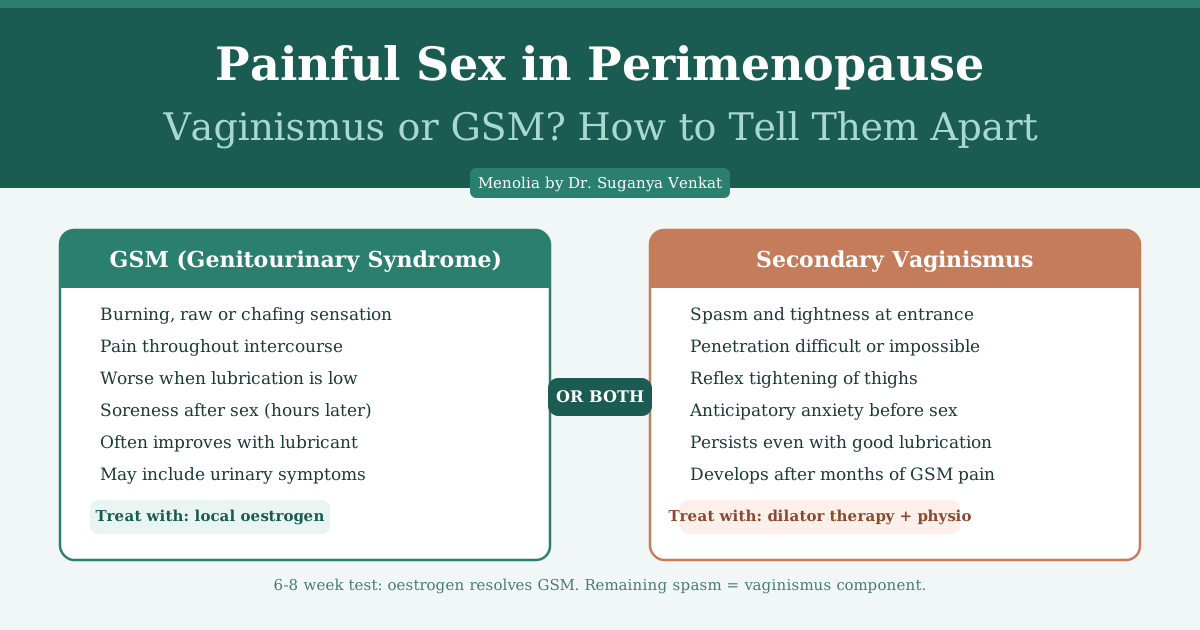
GSM dyspareunia typically:
- Feels like a burning, raw, or chafing sensation
- Is present throughout intercourse, not only at initial penetration
- Is worse when lubrication is low
- Improves significantly with a good lubricant used generously
- Has a component of vaginal soreness after sex that lasts several hours or into the next day
- May include urinary symptoms (recurrent burning, urgency) alongside the sexual pain
Secondary vaginismus typically:
- Produces tightness and spasm specifically at the vaginal entrance
- Makes initial penetration difficult or impossible even when lubrication feels adequate
- Is accompanied by a reflex tightening of the thighs and abdominal muscles
- Involves some anticipatory anxiety about the pain before penetration begins
- Does not fully resolve when dryness is addressed
The overlap region is important: many women in perimenopause have both. The vaginal tissue is thin and dry (GSM), and the pelvic floor has also begun to guard (secondary vaginismus). In this situation, treating only the GSM will improve things partially, not fully.
The 6-to-8-week test. If you have been using local oestrogen correctly and consistently for at least 6 to 8 weeks and the dryness has improved but penetration remains painful or impossible, the muscle component has almost certainly entered the picture. This is the clinical signal to broaden the approach beyond oestrogen alone.
If you are not sure which pattern fits your situation, or if treatment so far has not brought the relief you expected, a WhatsApp conversation with me is a good starting point. You do not need a formal appointment to ask a question.
Start a conversation on WhatsApp
Treatment: Addressing Each Layer
The most effective approach starts with the tissue layer and then addresses the muscle layer if it has been activated.
Step 1: Treat the GSM properly
Many women start local oestrogen and stop after a few weeks because it is inconvenient or because they are worried about long-term use. Local oestrogen is not systemically absorbed in significant amounts and does not carry the risks associated with systemic hormone therapy (NAMS 2020 position statement). It is designed for long-term use.
Use it as directed. Consistent use at the prescribed frequency, continued for at least 8 to 12 weeks, is usually needed before the full benefit is felt. A vaginal moisturiser (a product like Replens or similar) used every 2 to 3 days between doses can help in the interim.
For sex itself, a water-based lubricant used generously reduces friction and pain in the short term while the oestrogen takes effect over the longer term.
Step 2: If spasm has developed, add vaginal dilator therapy or pelvic floor physiotherapy
Once GSM is being treated, if tightness and spasm remain, the pelvic floor muscles need direct retraining. This is where dilator therapy or pelvic physiotherapy becomes the primary tool.
Dilator therapy uses a graduated series of smooth devices, starting smaller than a finger and progressively increasing in size, to help the pelvic floor muscles learn that insertion is not dangerous. The process is slow, done at the woman’s own pace, at home. It is not about stretching the vagina (the vagina is already elastic tissue); it is about retraining the involuntary muscular response. Pelvic floor work is relevant for both vaginismus and the broader urogenital changes of menopause.
Pelvic floor physiotherapy, where available, achieves the same goal with the guidance of a trained therapist. Research supports both approaches: Maseroli et al. (2018, PMID 30446469) found 79% success with a multimodal vaginismus treatment combining psychosexual support, dilator use, and physiotherapy. Zulfikaroglu et al. (2026, PMID 41148166) confirmed that dilator therapy alone achieved success in 78% of women, and physiotherapy in 85%.
For a detailed protocol on how dilator therapy works, the Fertilia guide to vaginismus treatment covers the full 12-week approach, and that guidance applies equally to secondary vaginismus in perimenopause women.
Step 3: Address the psychological dimension if present
Pain during sex, sustained over months or years, changes a woman’s relationship with intimacy. Anticipatory anxiety, self-consciousness, strain in the relationship, and a gradual avoidance pattern are all common and are not signs of a psychological problem; they are normal consequences of a physical one.
Addressing the psychological layer does not mean the pain was “all in your head.” It means that once the physical cause is being treated, some women benefit from structured support to rebuild confidence around intimacy. A pelvic health physiotherapist or a therapist who works with sexual health concerns can offer this.
The Role of Indian Foods and Lifestyle in Supporting Recovery
Food does not treat vaginismus directly. But nutritional support for the tissues and for overall hormonal health is a meaningful part of the picture.
Phytoestrogen-rich foods. Foods that contain lignans and isoflavones can provide a gentle, indirect oestrogen-like effect in tissues. They do not replace local oestrogen but can support tissue health alongside it. In Indian cooking, these are already present in everyday ingredients: ground flaxseed (alsi), sesame seeds (til), rajma, chana, and sprouted moong. Two tablespoons of ground alsi daily and regular helpings of dahi, rajma, and til in the week are a practical starting point. The Menolia phytoestrogens guide covers Indian daily portions in detail.
Calcium and vitamin D. Oestrogen loss affects bone and connective tissue throughout the body, not just in the vagina. Ragi (364 mg calcium per 100 g), black sesame (til), dahi, and paneer support skeletal and connective tissue health across this transition.
Anti-inflammatory foods. Haldi (turmeric) with black pepper, amla, and methi all carry anti-inflammatory properties that support healing in irritated tissues. A cup of warm haldi milk in the evening is not a cure but is a useful supplement to treatment.
Hydration. Vaginal tissue health is affected by systemic hydration. Nariyal pani and chaas (buttermilk) are excellent sources of hydration with an additional electrolyte contribution.
Avoiding excess alcohol and managing sleep are also relevant: alcohol disrupts hormonal balance, and sleep deprivation amplifies pain perception and pelvic floor hypertonicity.
When to See a Doctor
You should not be managing either of these conditions entirely on your own. GSM is best diagnosed by a gynaecologist who can examine the tissues, confirm the clinical picture, and recommend the right local treatment. Vaginismus is diagnosed and managed best with a clinician experienced in pelvic pain.
See a gynaecologist if:
- Pain during sex has been present for more than 2 to 3 months
- You have tried a lubricant and the pain persists
- Local oestrogen has been used consistently for 8 weeks and tightness or spasm remains
- You have bleeding after sex (this always warrants investigation, per the guidance in Menolia’s red flags post)
- You have been avoiding sex entirely because of pain, for any length of time
Both GSM and secondary vaginismus are treatable conditions. Neither resolves on its own without the right intervention, and both respond well when approached systematically. The worst outcome is silence: not mentioning it to a doctor, attributing it to ageing as something inevitable, and living with unnecessary pain.
Message Dr. Suganya on WhatsApp
Frequently Asked Questions
Is it normal for sex to become painful during perimenopause? It is common, but “common” does not mean you should accept it. GSM affects more than half of postmenopausal women and a significant proportion of women in perimenopause. The difference is that it is completely treatable. Normalising pain as “just menopause” delays treatment and allows secondary vaginismus to develop. If sex is painful, a conversation with a gynaecologist is warranted.
Can vaginismus develop at 45 or 50 even if sex was never painful before? Yes. Secondary vaginismus can develop at any age in response to a new trigger. In perimenopause, GSM is one of the most common triggers. The pelvic floor muscles are learning a new reflex based on months or years of pain; that learning process does not care how old you are when it starts.
I have been using local oestrogen for 3 months and the dryness is better, but penetration is still painful. What does that mean? It suggests that vaginismus has likely developed alongside the GSM. The tissue is recovering (that is the oestrogen working), but the muscular reflex has persisted. This is the point to add a dilator programme or see a pelvic floor physiotherapist. The two conditions need to be treated in parallel at this stage.
My doctor says there is no sign of atrophy on examination. Can I still have GSM? GSM exists on a spectrum. Early-stage GSM may not be visibly apparent on examination but can still cause symptoms. The absence of visible atrophy does not rule out oestrogen-related changes to lubrication, sensitivity, or pH. If symptoms are present, a therapeutic trial of local oestrogen is reasonable even when examination findings are subtle.
Will sex ever feel the way it did before perimenopause? For most women who treat both GSM and any associated vaginismus correctly, meaningful and comfortable sex is fully possible. A small number of women do find that sensation and arousal change somewhat during the menopause transition for reasons beyond GSM, including changes in libido covered in the Menolia post on sex and libido after menopause. The realistic goal is comfortable, pleasurable sex, even if the subjective experience is somewhat different from what it was at 35.
Can phytoestrogen foods replace local oestrogen for GSM? No. Phytoestrogen foods like alsi and til provide indirect, mild oestrogenic activity at a tissue level and are a useful complement to treatment, not a replacement. For established GSM with pain, local oestrogen is the clinically validated first-line treatment. Phytoestrogen foods support overall tissue health but do not address the vaginal changes sufficiently on their own.
Is local oestrogen safe for long-term use? Yes. Local (topical) vaginal oestrogen is absorbed at very low levels into the bloodstream and does not carry the same risk considerations as systemic hormone therapy. NAMS and ACOG both confirm it is appropriate for long-term use in women with GSM. Women with a history of hormone-sensitive breast cancer should discuss this with their oncologist, as there are options (including ospemifene and prasterone) that may be appropriate in that context.
Dr. Suganya Venkat is an OB-GYN with 15 years of clinical experience. She consults online, pan-India, via video call for women managing perimenopause, menopause, and related concerns.