A woman who had already tried moisturisers and was hesitant about hormones asked me a question I now hear fairly often: “I read that sea buckthorn oil helps with vaginal dryness. Is that actually true, or is it just something people are selling online?” It is a fair question, and one worth a straight answer rather than either dismissal or hype.
Sea buckthorn (Hippophae rhamnoides) is a hardy orange berry that grows wild across the cold desert regions of Ladakh and parts of Himachal Pradesh, and it has genuine, if modest, clinical trial evidence behind it for exactly this use. That puts it in a different category from most “natural remedy” claims you will come across, but it also does not put it in the same category as local oestrogen therapy. This post covers what sea buckthorn oil is, the trial evidence honestly stated, how it is thought to work, oral versus topical use, where to find it in India, and how it fits alongside the other treatments already available for vaginal dryness.
What sea buckthorn oil is
Sea buckthorn is a thorny shrub that produces small orange berries, prized in Ladakhi and Himachali households for generations before it became a wellness-industry ingredient elsewhere. The oil used in research and in supplements is pressed from the berry’s pulp and seeds and is unusually rich in a fatty acid called palmitoleic acid, also known as omega-7, alongside vitamin E and carotenoids. This is the fatty acid profile researchers believe is behind its effects on mucosal tissue, the same category of tissue that lines the vagina.
Unlike phytoestrogens, which work by weakly binding oestrogen receptors (covered in our phytoestrogens for menopause guide), sea buckthorn oil’s proposed mechanism is not hormonal at all. It is thought to support the lipid composition of mucous membranes directly, which is a genuinely different pathway and one reason this ingredient has its own, separate evidence base rather than being folded into the phytoestrogen story.
The trial evidence, stated honestly
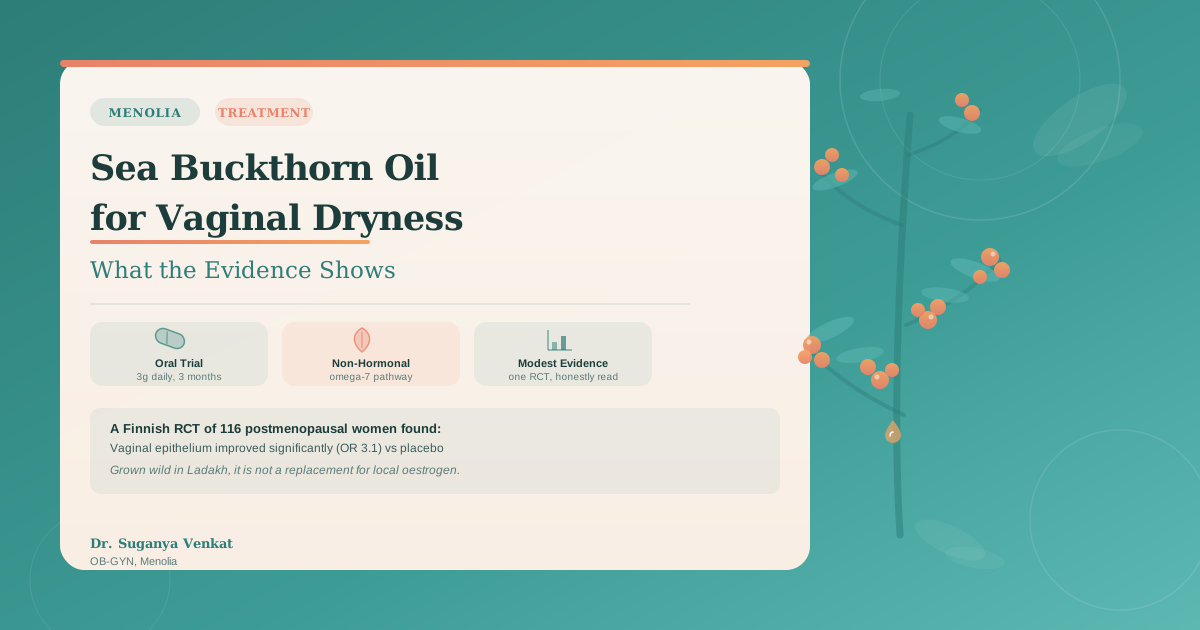
The main study behind this claim is a randomised, double-blind, placebo-controlled trial from Finland (Larmo PS, Yang B, Hyssälä J, Kallio HP, Erkkola R. Maturitas. 2014;79(3):316-321. PMID: 25104582). Researchers recruited 116 postmenopausal women reporting vaginal dryness, itching, or burning, and 98 completed the full three months of the study, taking either 3 grams of sea buckthorn oil or a placebo oil daily.
The results are worth reading precisely rather than rounding up. Compared to placebo, there was a significantly better rate of improvement in the integrity of the vaginal epithelium (the surface layer of vaginal tissue) in the sea buckthorn group, with an odds ratio of 3.1. For the overall vaginal health index, a composite score gynaecologists use to assess vaginal tissue, there was only a trend toward improvement in the sea buckthorn group that did not reach conventional statistical significance (P=0.08). In plain terms: the epithelial-integrity finding was a genuine, statistically supported result, but the broader vaginal health score improved without quite clearing the bar researchers set for calling it definitive.
This is single-trial-strength evidence. It has not yet been replicated in an independent trial of vaginal dryness specifically, which is a meaningfully different evidence tier from something like local vaginal oestrogen, which has decades of research and multiple large trials behind it. A separate, smaller trial from the same research group tested a sea buckthorn oil spray for dry eye and found it reduced symptoms compared to a reference product (Larmo P, Järvinen R, Laihia J, et al. Cont Lens Anterior Eye. 2019;42(4):428-433. PMID: 30497904). That trial is not about vaginal tissue, but it does support the same underlying idea, that sea buckthorn oil has a measurable, reproducible effect on mucous membrane symptoms in more than one part of the body.
There is also a separate line of evidence on topical use: a 2021 Italian trial tested a vaginal gel containing sea buckthorn oil alongside aloe vera, hyaluronic acid, glycyrrhetinic acid, and glycogen, and found meaningful improvement in vaginal health index and sexual function over 12 weeks (De Seta F, Caruso S, Di Lorenzo G, Romano F, Mirandola M, Nappi RE. Maturitas. 2021;147:34-40. PMID: 33832645). This is a genuinely useful data point, but it is important not to over-read it: that gel is a multi-ingredient formulation, so it cannot tell you how much of the effect, if any, came from the sea buckthorn oil component specifically rather than the aloe vera or hyaluronic acid.
Put together honestly: there is one direct, reasonably designed trial on oral sea buckthorn oil for vaginal dryness with a genuine positive signal on tissue integrity, supporting evidence from a different mucosal-tissue trial, and a topical multi-ingredient study that is suggestive but not isolating the ingredient. That is real evidence. It is not the same weight of evidence behind local oestrogen therapy, and I would not want any woman to come away thinking it is.
Talk to Dr. Suganya’s team about where sea buckthorn oil might fit for you
Oral versus topical: what the research tested
It is worth being precise about this because the two are not interchangeable based on current evidence. The main trial with the clearest positive result used an oral 3 gram daily dose taken as a supplement, not a vaginal application. The vaginal gel trial used a topical product with sea buckthorn oil as one of five active ingredients, applied directly to vaginal tissue. Neither trial tested sea buckthorn oil applied on its own, undiluted, directly to the vagina, and I would not recommend that as a first approach given the lack of safety data specifically for that use.
If you are looking to try sea buckthorn oil based on this evidence, an oral capsule or oil supplement, taken the way the Finnish trial dosed it, is the form with the most direct trial support. A multi-ingredient vaginal gel that lists sea buckthorn oil as one component (like the one used in the Italian trial) is a reasonable second option if oral supplementation is not for you, though remember its effect cannot be attributed to sea buckthorn oil alone.
Where sea buckthorn oil fits in India
This is one of the more genuinely India-relevant ingredients in the menopause conversation, since sea buckthorn grows wild in Ladakh and parts of Himachal Pradesh and has long been used locally, sometimes called Leh berry in the region. It is available in India as oil-filled capsules, pressed oil, and juice concentrate through health food retailers, Ayurvedic and wellness pharmacies, and major online marketplaces. Prices and formulations vary considerably between sellers and change often, so this is worth comparing at the time of purchase rather than relying on a number that may already be outdated by the time you read this (Rule 10: an unverifiable price is not one I will publish as fact).
Whichever product you choose, look for one that specifies the oil is cold-pressed and states its palmitoleic acid or omega-7 content, since concentration is not standardised across brands the way a pharmaceutical dose would be.
Safety notes and who should be cautious
Sea buckthorn oil was generally well tolerated in both trials described above, with no serious adverse effects reported. That said, a few sensible precautions apply, the same way they would for any new supplement:
- If you are on blood thinners (such as warfarin), mention any new supplement to your doctor, since some fatty-acid supplements can theoretically interact with clotting. This has not been specifically demonstrated for sea buckthorn oil, but it is a reasonable question to raise given the general caution around fish-oil-type supplements and anticoagulants.
- If you have a known allergy to sea buckthorn or related plants, avoid it.
- This is a supplement, not a substitute for evaluation if your vaginal dryness comes with bleeding, unusual discharge, or pain that does not fit the ordinary picture of menopausal dryness. Those symptoms need a gynaecologist’s assessment regardless of what you are trying at home.
- Pregnant or breastfeeding women were not part of either sea buckthorn trial referenced here, so there is no direct evidence to draw on for that situation, though this is largely a moot point for the postmenopausal population this ingredient is being discussed for.
Where this fits alongside your other options
Vaginal dryness at this stage of life already has a well-established treatment ladder, covered in detail in our complete guide to vaginal dryness in menopause and our guide to genitourinary syndrome of menopause (GSM), which explains why dryness often comes bundled with bladder symptoms and recurrent UTIs. Sea buckthorn oil sits alongside that existing ladder rather than replacing any step in it. It is best thought of as an additional, lower-intensity option, one you might reasonably try alongside a vaginal moisturiser, or consider if you are specifically looking for something non-hormonal before or alongside a conversation about local oestrogen.
For women who cannot or do not want to use oestrogen-based treatment, whether due to a history of hormone-sensitive breast cancer or simple personal preference, sea buckthorn oil is one of the more evidence-backed non-hormonal options available, precisely because it has an actual placebo-controlled trial behind it rather than only tradition or anecdote. That is a genuinely useful thing to know, even with the caveats above about the strength of that evidence.
I’m Dr. Suganya Venkat, and I generally suggest women think of an ingredient like this as one layer in a broader plan rather than a single answer. At Menolia, we build vaginal health into every perimenopause and menopause consultation, because it is one of the symptoms women are least likely to bring up on their own and most likely to simply live with.
Discuss your vaginal dryness treatment options with Dr. Suganya’s team
Frequently Asked Questions
Is sea buckthorn oil proven to help vaginal dryness, or is this just marketing?
There is one placebo-controlled clinical trial, not marketing copy, showing a statistically significant improvement in vaginal tissue integrity with oral sea buckthorn oil compared to placebo over three months. The broader vaginal health score improved as a trend that did not reach statistical significance. That is real, single-trial-strength evidence, meaningfully more than most “natural remedy” claims have behind them, but it is not yet confirmed by independent replication.
How much sea buckthorn oil was used in the study that showed benefit?
The trial that found improvement used 3 grams of sea buckthorn oil taken orally each day for three months. This is the dose with direct trial support; products sold in India vary in concentration, so check the label against this reference point.
Can I just apply sea buckthorn oil directly to the vagina instead of taking it orally?
The strongest trial evidence is for oral use. A separate study tested sea buckthorn oil as one ingredient in a multi-component vaginal gel with positive results, but no trial has tested sea buckthorn oil applied alone, undiluted, directly to vaginal tissue, so there is no safety or effectiveness data for that specific use.
Does sea buckthorn oil work the same way as local oestrogen therapy?
No, and this distinction matters. Local vaginal oestrogen directly restores oestrogen to vaginal tissue and has decades of trial evidence behind it as the gold-standard treatment for genitourinary syndrome of menopause. Sea buckthorn oil’s proposed mechanism is non-hormonal, supporting the fatty-acid composition of mucous membranes. It is a reasonable additional or alternative option for women who cannot or prefer not to use oestrogen, not a proven equivalent to it.
Where can I buy sea buckthorn oil in India, and is it expensive?
It is available as capsules, pressed oil, and juice concentrate through wellness pharmacies, Ayurvedic retailers, and major online marketplaces, since it is grown domestically in Ladakh and parts of Himachal Pradesh. Prices vary by brand, concentration, and format, and change often, so compare current listings rather than relying on an old figure. Look for a cold-pressed oil that states its palmitoleic acid or omega-7 content.
Are there any side effects or people who should avoid sea buckthorn oil?
Both trials referenced here reported it as generally well tolerated with no serious adverse effects. If you are on blood-thinning medication, mention any new supplement to your doctor first as a general precaution. Avoid it if you have a known allergy to sea buckthorn or related plants, and see a gynaecologist rather than self-treating if your dryness comes with bleeding, unusual discharge, or pain.
Should I try sea buckthorn oil instead of seeing my gynaecologist about vaginal dryness?
No. Vaginal dryness has an established, well-tested treatment ladder, from moisturisers to local oestrogen, and sea buckthorn oil sits alongside that ladder as an additional option. It works best once a gynaecologist has looked at what you’re dealing with, especially if your symptoms are significant or come with anything unusual.
Vaginal dryness is common, treatable, and worth discussing openly, whichever combination of options ends up working for you. Sea buckthorn oil is a genuinely evidence-backed piece of that picture for some women, especially those looking for a non-hormonal option, but it works best as part of a plan rather than tried in isolation.
Chat with Dr. Suganya’s team on WhatsApp about vaginal dryness and menopause