Noticing blood on the tissue after sex is one of those things a woman in menopause might file away quietly. She tells herself it was probably nothing, plans to mention it at the next appointment, then does not mention it.
Or she mentions it to a family member, who also reassures her it is probably nothing, and it gets filed away again.
This post is for every woman who has done that. The bleeding probably is from GSM, the genitourinary syndrome of menopause, where thinning vaginal tissue bleeds easily on contact. That is the most likely cause, and it is treatable.
But “probably” is not enough when it comes to postcoital bleeding after menopause. It always needs one proper evaluation. Not because the situation is alarming, but because the workup is simple, the reassurance it gives is real, and the causes that are not GSM are far better dealt with early.
Here is what you need to know.
Why Postcoital Bleeding Is Common in Menopause
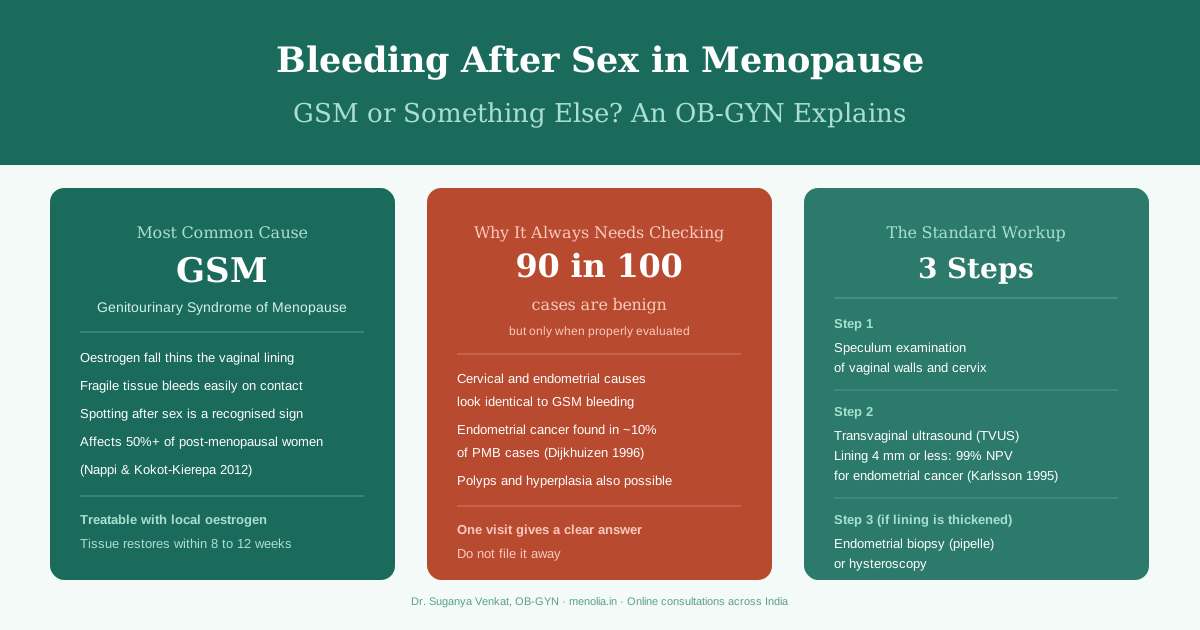
As oestrogen falls through perimenopause and into the post-menopausal years, the vaginal lining changes in a specific way. The cells that once formed a thick, well-lubricated epithelium become thinner, flatter, and more fragile. Blood flow to the vaginal wall decreases. The tissue loses its elasticity and natural acidity, and the surface becomes easily traumatised by friction that it would previously have absorbed without trouble.
This is genitourinary syndrome of menopause, or GSM, defined in 2014 by the International Society for the Study of Women’s Sexual Health and the North American Menopause Society as the collection of signs and symptoms that result from oestrogen deficiency affecting the labia, vagina, urethra, and bladder (Portman & Gass, 2014, Menopause).
The most relevant feature here: the vaginal surface becomes contact-fragile. Survey data from more than 3,000 post-menopausal women across Europe found that over 50% experience vaginal symptoms from GSM, yet fewer than half discuss them with their doctor (Nappi & Kokot-Kierepa, 2012, Maturitas). Postcoital spotting or light bleeding is one of the most common of those symptoms.
For more on this, read our guide on Abnormal & Heavy Bleeding in Perimenopause. This is usually not dramatic blood. It is typically a small amount of pink or lightly red spotting on tissue or underwear after sex. It may happen the first time or intermittently.
Read the full guide to GSM and all its symptoms
Why It Still Needs Evaluation
Here is where many reassuring conversations go wrong.
The appearance of GSM-related postcoital bleeding and postcoital bleeding from other causes can look exactly the same: a small amount of spotting after sex, nothing visible externally, no pain necessarily.
Endometrial causes, including polyps, hyperplasia, and endometrial cancer, can present with postcoital bleeding. Cervical causes, including cervicitis, cervical polyps, and less commonly cervical cancer, can also present this way. These causes require investigation. Their workup is quick and reassuring in the majority of cases. Skipping it because the bleeding “looks like GSM” is not a safe shortcut.
Postcoital bleeding after menopause falls under the same clinical category as post-menopausal bleeding (PMB), which refers to any vaginal bleeding in a woman who has been without periods for 12 consecutive months. Studies on PMB consistently show endometrial cancer in approximately 10% of women who come forward for investigation (Clarke et al., JAMA Internal Medicine, 2018, PMID 30083701). This is the figure that shapes clinical practice.
The fact that the other 90% will have a benign cause, most often atrophic GSM tissue or a polyp, is genuinely reassuring. But that number only holds because those women went for the evaluation.
Read the full guide to post-menopausal bleeding
What the Workup Involves
If you report postcoital bleeding to your gynaecologist, the starting point is a speculum examination. This allows the doctor to view the vaginal walls, inspect the cervix directly, and take a smear or biopsy from the cervix if anything looks unusual or if your last PAP smear is overdue.
Following the speculum exam, a transvaginal ultrasound (TVUS) is almost always done. The key measurement is the endometrial thickness. A post-menopausal endometrial lining of 4 mm or less on ultrasound carries a very high negative predictive value for endometrial cancer, over 99%, as established in Karlsson et al.’s landmark study in The Lancet (1995). In most women who present with postcoital bleeding from GSM, the ultrasound will show a thin, atrophic lining. That is both the expected finding and a reassuring one.
For more on this, read our guide on Endometrial Thickness After Menopause. If the lining is above 4 mm or has a heterogeneous appearance, an endometrial biopsy follows. This is often done as an outpatient pipelle biopsy or through hysteroscopy if the initial biopsy is inconclusive.
For many women, the workup ends at the speculum examination and ultrasound with a clean result. That is when treatment begins.
Treating the Underlying GSM Cause
If the evaluation confirms that the bleeding is from fragile GSM tissue, local oestrogen is the most effective treatment available.
Local vaginal oestrogen is applied directly to the vaginal tissue as a cream, pessary, or ring. Unlike systemic HRT, local oestrogen works primarily on the vaginal and urethral tissue without significantly raising blood oestrogen levels. It reverses the atrophic changes over several weeks: the epithelium thickens, blood flow improves, the natural pH becomes more acidic, and the tissue regains its resilience. Postcoital bleeding from GSM typically reduces and often stops once the tissue has had time to recover.
Local oestrogen and dyspareunia management: read more here
Women who are already on systemic HRT (oral or transdermal oestrogen) may find that vaginal atrophy persists, because systemic doses are calibrated for vasomotor symptom control rather than local tissue restoration. Adding a low-dose local oestrogen preparation alongside systemic HRT is a safe and evidence-based combination, per NAMS guidelines. It is worth discussing this with your gynaecologist if you are on systemic HRT and still experiencing postcoital bleeding.
Non-hormonal options, including long-acting vaginal moisturisers and water-based lubricants, can reduce friction and make the tissue less vulnerable to contact trauma. They do not reverse atrophic changes in the way oestrogen does, but for women who cannot use local oestrogen, they significantly reduce the likelihood of bleeding from routine contact.
Vaginal dryness and treatment options
If you have noticed postcoital bleeding and are not sure what to do next, I can help you think through whether this needs urgent evaluation and what kind of support is right for you. WhatsApp Dr. Suganya. Online consultations across India, video call or phone, ₹399.
The India Context: Why Women Wait
There is a pattern I see repeatedly. A woman notices postcoital bleeding in November. She tells herself she will mention it at the next visit. She does not go for a visit. By the time she messages me, it is March.
The delay is understandable. Postcoital bleeding touches on both menopause and sexual health, two topics that many Indian women navigate in private. Discussing sex-related symptoms with a doctor, even a gynaecologist, carries a social weight that does not exist in the same way for, say, a knee pain consultation.
What I want women to know is that a gynaecologist asking about postcoital bleeding is asking a clinical question, not a personal one. The speculum examination takes minutes. The ultrasound is the same scan you may have had dozens of times before. In most cases, the result is straightforward and the treatment is simple.
If the cultural context makes a face-to-face visit difficult to arrange, a video consultation is where we start. I can review your symptoms, understand your history, and advise whether an in-person evaluation needs to be urgent or can be scheduled at a time that works for you. The important thing is not to file it away.
The 8 menopause symptoms that should not be ignored
Distinguishing Postcoital Bleeding from Other Discharge
Postcoital bleeding is a specific symptom: blood that appears after sexual activity. It is different from a brown discharge that appears at other times (which may relate to old blood from the endometrium), a white or yellow discharge (which may suggest infection or cervicitis), or continuous spotting unrelated to sex.
If you have noticed any of these alongside or instead of postcoital spotting, the guide to post-menopausal discharge covers what different types and colours typically indicate and when each needs attention.
What to Do Right Now
One episode of postcoital bleeding after menopause is enough to warrant a consultation. You do not need to wait for it to happen again.
When you contact your gynaecologist, note when the bleeding occurred, how much there was, and whether it was associated with any pain or vaginal discomfort. This information helps narrow the assessment quickly.
The standard starting point is a speculum examination and transvaginal ultrasound. If you have not had a PAP smear in the last three to five years, this is a good moment to combine both visits.
If you are not currently on any local vaginal treatment for dryness or atrophy, ask about it at the appointment. Even if this episode was from GSM, untreated atrophy means the tissue remains fragile and the bleeding is likely to recur. Local oestrogen changes that.
Postcoital bleeding can be explained, evaluated, and treated. You do not need to manage it in silence. Message Dr. Suganya on WhatsApp to discuss your symptoms and get a clear next step, ₹399 for a full online consultation.
Frequently Asked Questions
Is it normal to bleed after sex in menopause?
It is common, particularly when GSM is present and the vaginal tissue is thin and fragile. But common does not mean it should be left without evaluation. Postcoital bleeding after menopause always warrants a gynaecological assessment to rule out cervical or endometrial causes. One episode is sufficient reason to book a consultation.
What is the most likely cause of bleeding after sex in menopause?
GSM-related tissue fragility is the most common cause. As oestrogen falls, the vaginal lining thins and loses its resilience, so it bleeds easily on contact during sex. Other causes include cervical polyps, cervicitis, endometrial polyps, endometrial hyperplasia, and, less commonly, cervical or endometrial cancer. In published studies on post-menopausal bleeding, approximately 90% of cases have a benign cause, with endometrial cancer found in roughly 10% (Clarke et al., JAMA Internal Medicine, 2018, PMID 30083701).
What tests will my doctor do?
The standard assessment is a speculum examination of the vaginal walls and cervix, followed by a transvaginal ultrasound to measure the endometrial lining. If the lining is above 4 mm or appears irregular, an endometrial biopsy follows. If there are any cervical abnormalities or if your PAP smear is overdue, a smear or cervical biopsy may also be taken.
Can postcoital bleeding resolve on its own?
Occasionally the tissue heals briefly and the bleeding stops for a few weeks. But untreated GSM means the tissue remains fragile, and the bleeding is likely to recur. Local oestrogen treatment restores the tissue over several weeks and significantly reduces the likelihood of postcoital bleeding from atrophy. The evaluation also rules out causes that will not resolve on their own.
I am on systemic HRT and still getting postcoital bleeding. Why?
Systemic HRT (oral tablets or transdermal patches and gels) is calibrated for vasomotor symptom control and does not always deliver enough oestrogen to the local vaginal tissue to reverse GSM completely. Many women on systemic HRT still benefit from adding a low-dose local vaginal oestrogen preparation. This is a safe, evidence-based combination that your gynaecologist can discuss with you.
Is local oestrogen cream safe after menopause?
Local vaginal oestrogen at recommended doses has minimal systemic absorption and is considered safe for most post-menopausal women. It does not significantly raise blood oestrogen levels. Women with a history of oestrogen-receptor-positive breast cancer should discuss this with their oncologist, as guidance varies by individual case. For most women, the benefit-to-risk ratio strongly favours treatment when GSM is causing recurrent symptoms.
How long does local oestrogen take to reduce postcoital bleeding?
Tissue response to local oestrogen typically begins within 4 to 6 weeks, with most women noticing improved vaginal comfort and reduced postcoital spotting within 8 to 12 weeks of consistent use. Local oestrogen is usually used long-term because the atrophic changes return when treatment is stopped.