If you have been living with uterine fibroids for years, heavy periods, pressure in the pelvis, the unpredictability of it all, you have probably been told at some point that menopause will bring relief. And for most women, it does. But “most” is not the same as “all”, and there is one specific exception that every woman with fibroids should know before she gets there.
This post covers what actually happens to fibroids after menopause, how long the process takes, what happens if you choose to take HRT, and the one situation where a fibroid behaving unexpectedly after menopause deserves prompt attention.
What This Post Covers
- Why fibroids grow in the first place, and what changes at menopause
- How much shrinkage to expect, and when
- The one scenario that needs evaluation
- HRT and fibroids: what the evidence shows
- When surgery after menopause is still the right conversation
- India-relevant nutrition to support your body through the transition
- Frequently asked questions
Why Fibroids Grow in the First Place
Uterine fibroids, also called leiomyomas or myomas, are benign smooth muscle tumours of the uterine wall. They are extremely common. Studies from India and globally suggest that at least 20 to 40 percent of women of reproductive age will have at least one fibroid by their late 40s, and many will have had them for years without knowing (Baird 2003, Am J Obstet Gynecol).
The key to understanding what happens at menopause is understanding what drives fibroid growth in the first place: oestrogen and progesterone. Fibroids have a higher density of hormone receptors than surrounding normal uterine tissue, which is why they respond so strongly to the reproductive-hormone environment that characterises the years from puberty to menopause (Parker 2007, Obstet Gynecol). Every month, as oestrogen and progesterone fluctuate through the cycle, fibroid cells receive those signals and the tumours grow, sometimes steadily, sometimes in spurts.
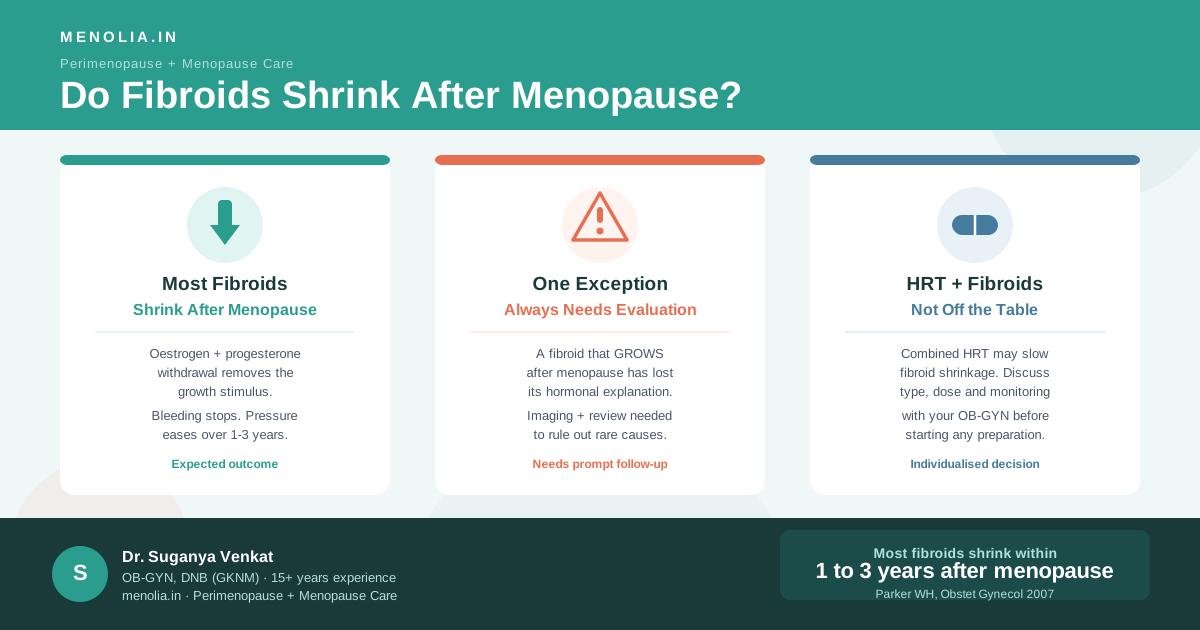
Remove the oestrogen and progesterone stimulus, and the growth stops. Take it further: as the ovaries wind down their hormone production through perimenopause and into menopause, the signal that kept fibroids growing essentially switches off.
What Happens to Fibroids After Menopause
After natural menopause, most fibroids do shrink. The process is gradual rather than sudden. Studies using serial ultrasound measurements have shown that fibroids begin to reduce in size as oestrogen levels fall, with the most significant reduction occurring in the first one to two years after menopause (Vollenhoven 1990, Clin Endocrinol). By three to five years post-menopause, fibroids are typically substantially smaller than they were during the peak reproductive years.
What “shrink” means in practice:
Symptom relief comes first. Heavy bleeding, which is often the most disruptive symptom of fibroids, tends to stop or reduce significantly once periods end. This alone is a meaningful change in quality of life for many women who have been managing flooding, clots, and the exhaustion that goes with severe anaemia for years.
Pressure symptoms take longer. A fibroid that is large enough to press on the bladder or create a sense of heaviness in the pelvis may take more time to resolve, simply because physical volume reduction is slower than the hormonal shift.
Complete disappearance is not guaranteed. Shrinkage is the rule; vanishing is not. Some fibroids reduce to a point where they become clinically insignificant. Others remain detectable on ultrasound but no longer cause symptoms. A woman who had multiple large fibroids at 48 may still have small, silent fibroids at 58, and that is perfectly acceptable.
The overall picture is genuinely encouraging. For the majority of women, reaching menopause with fibroids means reaching a turning point where the condition largely manages itself.
The One Exception That Needs Attention
Here is the piece of information that matters most: a fibroid that grows after menopause, rather than staying stable or shrinking, should not be dismissed as normal.
When a woman is no longer producing significant amounts of oestrogen and progesterone, any structure in the uterus that is actively enlarging has lost its usual explanation. The concern in this situation is that the growth could represent a uterine sarcoma, specifically a leiomyosarcoma, rather than a benign fibroid. Uterine sarcoma is rare. It is estimated to occur in roughly 0.5 per 1,000 women with uterine fibroids (ACOG Practice Bulletin No. 228). But rare does not mean zero risk, and the distinguishing characteristic is precisely the behaviour that should not happen: growth after oestrogen withdrawal.
What to watch for:
- A fibroid that was stable at your last ultrasound but is noticeably larger on a follow-up scan after menopause
- New or increasing pelvic pain that was not previously present
- Any bleeding after menopause alongside a known fibroid (post-menopausal bleeding always warrants evaluation: see Post-Menopausal Bleeding: Causes and When to See a Doctor)
If your doctor tells you a fibroid has grown after menopause, the next step is imaging, usually an MRI or TVS (transvaginal ultrasound), and possibly tissue sampling depending on the clinical picture. Most of the time, this process will confirm that what looked concerning is benign. But it should be followed up.
This is not a reason to approach your post-menopausal years with anxiety about fibroids. It is simply the one question worth asking at your routine scan.
WhatsApp Dr. Suganya if you have questions about your fibroid follow-up plan or are unsure what your last scan result means.
Perimenopause: The Years Before Menopause
The transition period before menopause, perimenopause, is often when fibroid symptoms intensify before they improve. Oestrogen levels fluctuate widely in perimenopause, sometimes spiking higher than they were earlier in reproductive life, which can temporarily stimulate fibroid growth during this window.
Women in their late 40s who had manageable fibroid symptoms through their 30s sometimes find that the perimenopausal years bring heavier flooding, more pressure, or a return of symptoms that had been stable. This is consistent with what the hormones are doing, not a sign that something has gone wrong.
For detailed guidance on managing heavy bleeding in this period, Abnormal and Heavy Bleeding in Perimenopause covers the options available during the transition years.
The key message: the discomfort of perimenopause, if fibroids are involved, does not predict what the post-menopausal years will look like. Many women who have their most difficult bleeding symptoms at 46 to 49 find that by 52 they have largely resolved.
HRT and Fibroids: What the Evidence Shows
This is the question that comes up most often in consultations with women who have fibroids and are considering hormone replacement therapy (HRT) for menopausal symptoms.
The short answer: HRT is not automatically off the table if you have fibroids, but the type, dose, and route of HRT all matter.
Oestrogen-only HRT (used in women who have had a hysterectomy) can slow fibroid shrinkage or, in some cases, maintain fibroid size. This is consistent with oestrogen’s role as a fibroid growth stimulus.
Combined HRT (oestrogen plus progestogen, used in women with a uterus) has a more complex effect. Progestogen also has fibroid-receptor activity, which means combined preparations may maintain or slightly increase fibroid size in some women (Palomba 2002, Hum Reprod). The effect varies with the specific progestogen and the dose.
Transdermal oestrogen at the lowest effective dose is generally considered the safer route when fibroids are present, for the same reason it is preferred for other HRT risk considerations: lower systemic oestrogen exposure compared to oral preparations.
What this means in practice:
- If you need HRT for symptoms like severe hot flashes, sleep disruption, or genitourinary symptoms, having a history of fibroids does not automatically exclude you
- The conversation with your doctor should include what type of HRT, what dose, and what monitoring is appropriate
- A baseline ultrasound before starting HRT and a repeat scan 6 to 12 months later is reasonable practice so that both you and your doctor have a reference point
- If a fibroid grows on HRT, that is the signal to reassess the preparation, not necessarily to stop HRT altogether
For a full overview of the HRT decision, including benefits, risks, and who is a candidate, see HRT in India: What an OB-GYN Actually Recommends.
When Surgery After Menopause Is Still Worth Discussing
For most women, reaching menopause with fibroids means the surgical question fades. The fibroids stop being the problem they were.
There are situations, however, where the conversation about surgery does continue after menopause:
Large fibroids causing persistent pressure symptoms. If a fibroid is large enough to press significantly on the bladder, bowel, or surrounding structures, it may not reduce in size quickly enough to provide relief. In this situation, the option of surgical removal can still be discussed with a gynaecologist, weighed against the reduced urgency compared to the premenopausal years.
Uterine prolapse alongside fibroids. An enlarged uterus from multiple large fibroids can contribute to pelvic organ prolapse. If prolapse is causing symptoms and surgery is being considered for that reason, the fibroid picture is part of the same surgical planning.
The growing-fibroid exception. As discussed above, a fibroid that is actively enlarging after menopause requires evaluation. Depending on what that evaluation shows, surgery may be the appropriate next step.
Persistent abnormal bleeding despite menopause. Post-menopausal bleeding with a known fibroid should be investigated. If the fibroid is identified as the cause (a submucosal fibroid, for example, can continue to cause bleeding), treatment options including hysteroscopic removal are available.
For the majority of women, none of these apply. The post-menopausal years with fibroids are genuinely quieter than the perimenopausal ones.
Supporting Your Body Through the Transition
Iron-deficiency anaemia is one of the most common consequences of years of heavy fibroid-related bleeding, and it does not automatically resolve the moment periods stop. Many women arrive at menopause with depleted iron stores that need active attention.
Indian foods rich in iron that are easy to include daily:
- Rajma and kala chana: 3 to 5 mg iron per cooked katori, best absorbed with a squeeze of nimbu
- Palak and methi: 2 to 3 mg per serving, and a good source of folate
- Ragi: 4.6 mg per 100g dry weight, and also a useful source of calcium for bone health at this stage
- Til (sesame seeds): 14.5 mg per 100g, concentrated in a small serving, good as a chutney or sprinkled on dal
- Dates (khajoor): about 1 mg per date alongside natural sugars and fibre
Pair iron-rich foods with a small amount of Vitamin C from amla or nimbu to improve absorption, and avoid drinking strong chai directly before or after iron-rich meals, as the tannins reduce absorption.
If you have been symptomatic for years and are entering menopause, it is worth asking your doctor to check a full blood count and ferritin level. Low ferritin can persist even after bleeding has stopped and contributes significantly to fatigue and poor recovery.
For broader post-menopausal health monitoring, Post-Menopause Health Checks: Which 8 Tests Matter Most outlines the screening framework worth following in the years after menopause.
When to See a Doctor
Most women with fibroids at menopause do not need urgent medical attention. The following situations are worth discussing with your doctor:
- Any bleeding after 12 months without a period (post-menopausal bleeding always warrants investigation)
- Pelvic pain that is new, worsening, or different in character from what you have known before
- A follow-up ultrasound showing a fibroid that has grown since your last scan
- Persistent anaemia symptoms (fatigue, breathlessness, palpitations) after periods have stopped
- Significant pressure symptoms on the bladder or bowel that are not improving over time
For a full list of the signs that warrant prompt gynaecological review, Menopause Red Flags: 8 Signs to See a Gynaecologist is a useful reference.
WhatsApp Dr. Suganya if you are approaching menopause with fibroids and want to think through what follow-up makes sense for your situation.
Frequently Asked Questions
Do all fibroids shrink after menopause? Most fibroids shrink after menopause as oestrogen and progesterone levels fall. The growth stimulus that maintained and enlarged fibroids during the reproductive years is removed, so gradual regression is the expected pattern. Shrinkage is not always complete: some fibroids reduce significantly while others become small and stable rather than disappearing entirely. The more important point is that symptoms, particularly heavy bleeding, typically resolve once periods stop.
How long does fibroid shrinkage take after menopause? The most active reduction tends to happen in the first one to two years after the final period, as hormone levels fall to their post-menopausal baseline. Pressure symptoms, if present, may take longer to improve than bleeding symptoms, simply because physical volume reduction is a slower process than hormonal change. By three to five years post-menopause, most women notice a clear difference from their perimenopausal baseline.
Can fibroids grow after menopause? Most fibroids do not grow after menopause. A fibroid that is enlarging after the final period has lost its usual hormonal explanation, and this needs evaluation. The concern is distinguishing a benign fibroid from a rare uterine sarcoma. Growing post-menopausal fibroids should be assessed with imaging and, if indicated, tissue sampling. This situation is uncommon, but it is the one watchpoint worth knowing.
Does HRT cause fibroids to grow after menopause? Combined HRT (oestrogen plus progestogen) can maintain fibroid size or cause mild growth in some women, because both hormones have fibroid-receptor activity. The effect varies with the specific preparation and dose. Having fibroids does not mean you cannot take HRT, but it does mean the type and dose should be discussed carefully with your doctor, and that a baseline and follow-up ultrasound is reasonable practice. Transdermal preparations at the lowest effective dose are generally preferred when fibroids are a consideration.
I have a fibroid and want to start HRT for hot flashes. Is it safe? It depends on the size and position of the fibroid, your menopausal symptoms, and the type of HRT being considered. The decision is individual: many women with fibroids take HRT without difficulty, while others prefer to wait and see whether the fibroids shrink further before starting. This is a conversation worth having with your OB-GYN or menopause specialist, ideally with a recent ultrasound as a baseline. See HRT Side Effects: What’s Normal and When to Worry for what to monitor once you start.
I had a hysterectomy for fibroids. Does this change anything about menopause? If your hysterectomy removed your uterus but kept your ovaries, your ovaries continue to produce hormones and you will go through menopause at approximately your natural age. If your ovaries were also removed, you will have experienced surgical menopause, which tends to come on more abruptly. The fibroid concern is no longer relevant once the uterus has been removed. For a full explanation of the hormonal picture after hysterectomy, see Menopause After Hysterectomy: Ovaries In or Out.
My periods stopped two years ago and I still feel pelvic pressure. Could it be the fibroids? Possibly, though there are other causes of pelvic pressure post-menopause that should also be considered. If you had large fibroids before menopause, some volume may remain even two years after your final period. An ultrasound will give you a clear picture. It would also be worth discussing with your doctor whether any post-menopausal bleeding has occurred alongside the pressure, as the combination warrants a more thorough assessment.