You start HRT after months of disrupted sleep, hot flashes through the night, and a tiredness that does not lift no matter how much you rest. A week in, the hot flashes ease a little. But now there is breast tenderness you did not expect. Some bloating. A few days of light spotting. Your first instinct is to stop.
For more on this, read our guide on How to Stop HRT Safely. Please do not stop without speaking to your doctor first.
What you are experiencing is almost certainly a normal, temporary adjustment. The body has been running low on oestrogen for months or years. Giving it back in a consistent dose takes time to calibrate. Most side effects from HRT fall into one of two categories: symptoms that commonly appear in the first few weeks and settle on their own within 8 to 12 weeks, and genuine red flags that need prompt medical review. This guide separates the two.
If you are earlier in your decision about HRT and want to understand the evidence, routes available in India, and who is a candidate, read our complete guide to HRT in India first. This post focuses on what happens after you have started.
Why Side Effects Happen
Menopausal hormone therapy introduces exogenous oestrogen and, for women who still have a uterus, a progestogen (to protect the uterine lining). Both hormones interact with receptors across the body: in breast tissue, the gut, the brain, blood vessels, and more. The adjustment period is the body recalibrating to a more consistent hormone level after a prolonged deficit.
Most side effects are dose and route dependent. If they are troublesome, the answer is usually to adjust the regimen with your prescribing doctor, not to stop abruptly.
Common Side Effects: Usually Settle Within 8-12 Weeks
Oestrogen-Related Side Effects
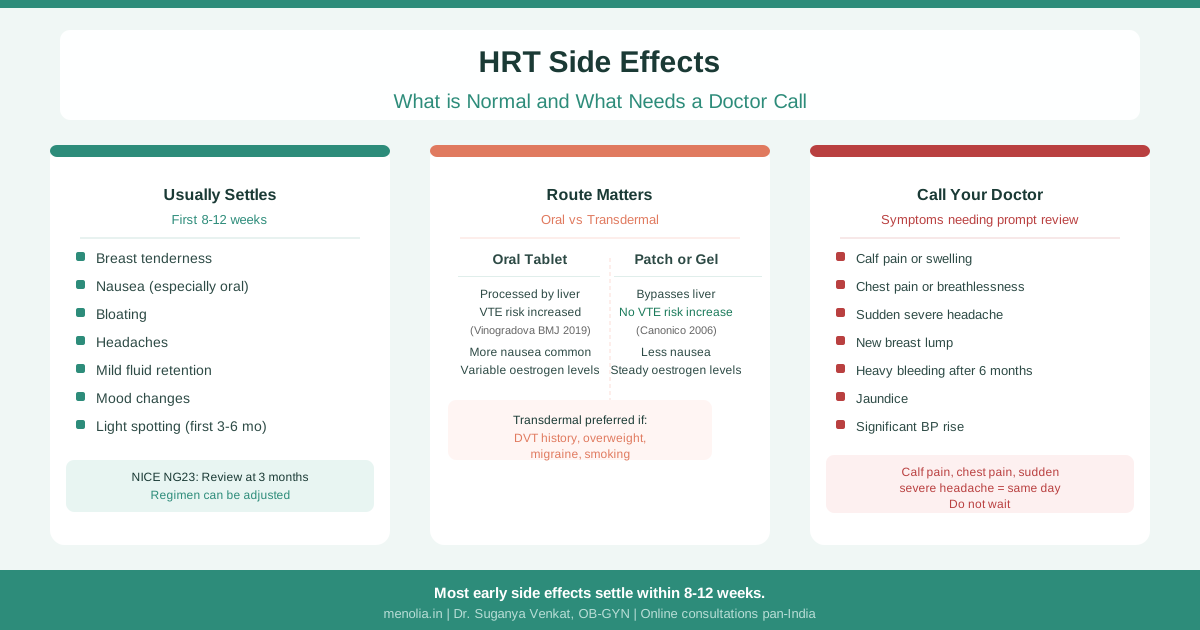
Breast tenderness and fullness: The most common early complaint. Oestrogen receptors in breast tissue respond to the new hormone exposure with increased sensitivity. This typically peaks in weeks 2 to 4 and fades as the tissue adapts. A warm compress and a well-fitted, supportive bra help during this phase.
Nausea: More common with oral HRT tablets (where oestrogen is absorbed through the gut) and less common with patches or gels (absorbed through the skin directly into the bloodstream). Taking oral HRT with food usually reduces nausea significantly.
Bloating: Fluid shifts in the early weeks can cause a sense of fullness or mild abdominal bloating. Reducing salt (packaged namkeens, papad, pickles), eating smaller meals, and drinking enough water through the day help. This usually settles within four to six weeks.
Headaches: Some women notice more frequent headaches in the first two to three weeks, often related to fluctuating oestrogen levels as the body adjusts. If you are using an oral tablet, switching to a patch or gel (which provides steadier, less fluctuating blood levels) often resolves this. Persistent severe headaches should always be reported.
Fluid retention and mild swelling: Particularly around the ankles and face in the mornings. Reducing sodium, staying active (even a 20-minute walk after meals), and elevating the legs at rest helps. Usually resolves within six to eight weeks.
Progestogen-Related Side Effects
Women who have a uterus take a progestogen alongside oestrogen to protect the uterine lining from overgrowth. The progestogen component is responsible for a different set of early side effects.
Mood changes and irritability: Synthetic progestogens (such as norethisterone, medroxyprogesterone acetate, or levonorgestrel) affect GABA receptors in the brain in a way that some women notice as low mood, irritability, or anxiety. Micronised progesterone (a body-identical progestogen, available in India as brands like Susten or Naturogest) tends to have fewer mood-related side effects and is worth discussing with your prescribing doctor if you are sensitive to this.
For more on this, read our guide on Bioidentical Hormones. Breast tenderness: Progestogen also contributes to breast sensitivity, independent of the oestrogen component. This overlaps with oestrogen-related tenderness in the early weeks.
Breakthrough bleeding and spotting: This is the most common progestogen-related concern. In the first few months, the uterine lining is adjusting to the new hormonal environment, and light, irregular spotting is expected (NICE treats unscheduled bleeding as a common side effect within the first six months of starting systemic HRT, or within three months of changing the dose or preparation). This usually settles as the endometrium stabilises. Bleeding that is heavy or prolonged, though, should be assessed promptly whatever the timing rather than waited out, as should any bleeding that continues beyond those windows or returns after a bleed-free spell.
Route Matters: Oral vs Transdermal
How HRT enters the body affects which side effects you are likely to experience and also affects certain safety parameters.
Oral HRT (tablets): Oestrogen is metabolised through the liver on first pass, which affects clotting proteins. A large UK nested case-control study by Vinogradova and colleagues published in The BMJ in 2019 (PMID 30626577) found that oral HRT preparations overall were associated with an increased risk of venous thromboembolism (adjusted odds ratio approximately 1.58, 95% CI 1.52-1.64, compared with non-users). The earlier ESTHER case-control study by Canonico and colleagues (Circulation, 2007, PMID 17309934) reported an adjusted odds ratio of about 4.2 (95% CI 1.5-11.6) for VTE in oral oestrogen users compared with non-users.
Oral HRT is still appropriate for many women, particularly younger women without clot risk factors. But if you have a history of deep vein thrombosis, are overweight, smoke, or have reduced mobility, a transdermal route is usually preferred.
Transdermal HRT (patch or gel): Absorbed through the skin, bypasses the liver’s first-pass metabolism, and in observational studies has not been associated with an increased VTE risk. The Vinogradova 2019 BMJ data found a transdermal adjusted odds ratio of approximately 0.93 (95% CI 0.87-1.01, no significant increase versus non-users). The Canonico ESTHER study found an odds ratio of about 0.9 for transdermal users (95% CI 0.4-2.1, also not statistically significant). This makes transdermal HRT the preferred route for women with raised VTE risk.
Transdermal delivery also provides steadier blood levels of oestrogen, which means fewer fluctuation-driven headaches and mood dips.
Vaginal (local) oestrogen: Used specifically for genitourinary syndrome of menopause (GSM) and does not carry the same systemic side effect profile. If your symptoms are primarily vaginal dryness, bladder urgency, or painful intercourse, local oestrogen is often the first and only step needed.
The route and formulation that suits you is a conversation with your prescribing doctor. NICE NG23 (2015) explicitly recommends reviewing at around three months to assess response, adjust the regimen, and manage any persisting side effects.
Are you managing side effects from HRT and not sure whether what you are experiencing is expected? Speaking to Dr. Suganya online can help you understand your options. She consults pan-India via video call or phone.
The Three-Month Review: Why It Matters
NICE NG23 recommends a review at approximately three months after starting HRT. This is not a box-ticking exercise. At three months:
- Most oestrogen-related side effects (breast tenderness, nausea, bloating, headaches) should have settled or be clearly improving.
- The bleeding pattern should be becoming more predictable.
- If any component is still causing significant distress, the dose can be adjusted, the route changed, or the progestogen type switched.
- It is also the right time to discuss whether symptoms are sufficiently controlled or whether the oestrogen dose needs a small increase.
If you are still experiencing significant side effects at three months and have not had a review, that conversation with your doctor is overdue.
Red Flags: When to Contact Your Doctor Promptly
The following are not expected adjustment symptoms. They need a prompt call or visit to your prescribing doctor or a hospital emergency department if severe.
Calf pain, redness, or swelling: These are symptoms of deep vein thrombosis (DVT) and must be assessed the same day. Do not wait. DVT can progress to pulmonary embolism if untreated.
Chest pain or shortness of breath: Could indicate a pulmonary embolism (blood clot in the lungs). Treat as a medical emergency.
Sudden severe headache (unlike any previous headache): Requires urgent evaluation to rule out stroke or other vascular events.
Breast lump: Any new breast lump while on HRT requires clinical assessment. HRT can cause temporary benign breast changes (fibrocystic changes, increased density), but a new discrete lump needs evaluation, not reassurance.
Heavy or prolonged bleeding, at any stage: Light, irregular spotting in the first few months of starting HRT (or within three months of a dose or preparation change) is a common settling-in effect. Bleeding that is heavy or prolonged, though, should be assessed promptly regardless of how recently you started or changed HRT, rather than waited out. So should unscheduled bleeding that continues beyond about six months, that begins after you have been bleed-free, or any bleeding after 12 months without a period, to rule out endometrial polyps, hyperplasia, or other uterine pathology. Post-menopausal bleeding always warrants investigation.
Jaundice (yellowing of skin or eyes): Rare, but oral HRT can occasionally affect liver function. Needs liver function testing.
New or worsening high blood pressure: Oestrogen can cause mild fluid retention that raises blood pressure in some women. If you notice a significant rise in your readings, contact your prescribing doctor. This is less common with transdermal preparations.
Practical Tips for the Adjustment Period
Do not stop abruptly if side effects are manageable. Stopping suddenly can bring withdrawal symptoms and the return of the hot flashes and sleep disruption you were trying to treat. Discuss any desire to stop with your doctor so the dose can be tapered if needed.
Keep a simple symptom diary. Note what you experience, how severe (1-10), and whether it is improving week to week. This is genuinely useful at your three-month review.
Timing your progestogen. Some women find that taking the progestogen tablet in the evening reduces the mood and fatigue effects, since any sedating property (particularly of micronised progesterone) then works in your favour during sleep rather than during the day.
Food and India context. There is no specific Indian diet that speeds up HRT adjustment. What does help is keeping blood sugar stable (ragi, bajra, dal, dahi, rajma, chana as base foods), staying well hydrated (coconut water, plain water, chaas), reducing packaged sodium during the fluid-retention phase, and eating adequate protein to support the muscle-protective benefit HRT provides.
Share your regimen with all treating doctors. If you are on thyroid medication, blood pressure tablets, or a statin, your doctor needs to know you are on HRT as well. Oral oestrogen, in particular, can affect the metabolism of some medications. Transdermal preparations carry fewer of these interactions.
For more on how to manage the full range of perimenopause symptoms alongside HRT, read our evidence-based perimenopause treatment guide.
When HRT Is Not Suitable
There are specific contraindications to systemic HRT that your doctor would have assessed before prescribing. These include a history of oestrogen-receptor-positive breast cancer, active or recent venous thromboembolism without anticoagulation, active liver disease, and undiagnosed vaginal bleeding. If you have any of these and have been prescribed systemic HRT, the conversation about whether the risk-benefit balance applies to your specific situation belongs with a specialist.
For more on this, read our guide on HRT & Breast Cancer Risk. The Manson 2017 JAMA long-term follow-up of the WHI trials (the large study whose 2002 headlines caused widespread HRT discontinuation) found that five to seven years of HRT was not associated with increased long-term all-cause mortality, with more favourable outcomes specifically for women aged 50 to 59 who started within 10 years of menopause. The risks associated with later initiation (after age 60 or more than 10 years post-menopause) are higher, and this is one reason prescribing decisions are individualised rather than universal.
FAQ
Q: How long do HRT side effects last?
Most early oestrogen-related side effects (breast tenderness, nausea, bloating, mild headaches) settle within 8 to 12 weeks as the body adjusts to a consistent hormone level. Bleeding irregularities related to the progestogen component can take three to six months to settle as the uterine lining stabilises. If significant side effects persist beyond three months, a review with your prescribing doctor is recommended so the dose or formulation can be adjusted.
Q: Is it normal to have spotting or bleeding after starting HRT?
Yes, light spotting or breakthrough bleeding in the first few months is expected, particularly with combined sequential HRT (where oestrogen is taken continuously and progestogen is taken cyclically). The uterine lining is adjusting to the new hormonal environment. What needs prompt assessment, whatever the timing, is bleeding that is heavy or prolonged; so does bleeding that continues beyond about six months, or any bleeding that returns after a clear period of no bleeding. If you are post-menopausal and experience any bleeding, read our guide to post-menopausal bleeding.
Q: Are the side effects different for HRT patches versus tablets?
Yes. Oral tablets are absorbed through the gut and processed by the liver, which can cause more nausea and is associated with a higher venous thromboembolism risk in women with clot risk factors (Vinogradova et al., BMJ 2019). Patches and gels are absorbed through the skin, provide steadier oestrogen levels, have not been associated with an increased VTE risk in large observational studies, and are associated with fewer headaches and less nausea. Women with a history of migraines, blood clots, raised BMI, or who smoke are generally advised to use transdermal HRT.
Q: Can HRT cause weight gain?
In my practice, worry about weight gain is one of the most common reasons women hesitate to start or continue HRT. The short answer, based on Cochrane reviews and observational data, is no: HRT is not shown to cause weight gain. The mid-life weight shift (particularly belly fat) is driven by the hormonal change itself (falling oestrogen redistributing fat to visceral stores), ageing, and muscle loss. HRT may reduce the tendency for fat to move to the abdomen that falling oestrogen drives, but it is not a weight-loss treatment. Some women retain a little fluid in the first few weeks, which can look like weight gain on the scale but is not fat tissue.
For more on this, read our guide on Does HRT Cause Weight Gain? What the Evidence Shows.
Q: What side effects are serious enough to stop HRT immediately?
Stop and seek urgent medical care if you experience calf pain, redness, or swelling (DVT), chest pain or shortness of breath (possible pulmonary embolism), or a sudden severe headache unlike your usual pattern (possible stroke). These require assessment the same day, not a scheduled appointment. Other symptoms that need a prompt (but not emergency) medical call include any new breast lump, persistently heavy bleeding beyond three to six months, jaundice, or a significant rise in blood pressure.
Q: I feel anxious and irritable since starting HRT. Is this from HRT?
Possibly, and if so, the progestogen component is the most likely cause. Synthetic progestogens (norethisterone, levonorgestrel, medroxyprogesterone acetate) can affect GABA receptors and cause mood changes, low mood, or irritability in some women. Micronised progesterone (body-identical, available in India) tends to have fewer mood-related effects. If you are experiencing significant mood changes, raise this at your next review. Switching the progestogen type often resolves the issue. Also worth checking: iron, vitamin B12, vitamin D, and thyroid function, since deficiencies in any of these contribute to mood changes and may coexist with the HRT adjustment.
Q: How soon should I feel better after starting HRT?
Most women notice some improvement in vasomotor symptoms (hot flashes, night sweats) within two to four weeks of starting HRT. Sleep often improves within the first month. Genitourinary symptoms (vaginal dryness, bladder urgency) take longer, often eight to twelve weeks. Bone and cardiovascular protection builds over months to years. If you have noticed no improvement in hot flashes or sleep by six to eight weeks, a dose review is appropriate.
Starting HRT is not a one-size-fits-all decision, and managing the adjustment period well requires knowing what to expect and what warrants a conversation with your doctor. Most side effects in the first few weeks are a sign of the body recalibrating, not a sign that HRT is wrong for you.
If you are experiencing side effects and are not sure how to interpret them, or if you are trying to decide whether HRT is right for your specific situation, Dr. Suganya offers online consultations pan-India.
For the full picture on managing the perimenopause and menopause transition, including lifestyle alongside any medication, see our perimenopause treatment guide and the Menolia red flags page for symptoms that always need prompt assessment.