The operation is done. The heavy periods, the fibroids, whatever brought you to that decision: that chapter is behind you. You expected recovery to be primarily physical. But six months later, you are having hot flashes severe enough to break your sleep, or your mood is shifting in ways that feel unfamiliar, and something hormonal seems to have gone wrong.
Or perhaps the opposite: a colleague had the same surgery and has been dealing with significant symptoms for years, and you have been completely fine.
Both experiences make sense once you understand that the words “hysterectomy” and “menopause” do not mean the same thing. What happens hormonally after your hysterectomy depends almost entirely on whether your ovaries were removed or kept.
This is the question I ask every woman who comes to me with post-hysterectomy hormonal concerns. It is also the question that surgeons should answer clearly before you leave the hospital, and far too often do not.
What This Post Covers
- The two types of hysterectomy and the completely different hormonal consequences of each
- What surgical menopause is, and why its symptoms can feel more pronounced
- What happens when your ovaries are kept after a hysterectomy
- How to find out which surgery you had
- When to discuss HRT and why the timing matters particularly for younger women
- Protecting your bones and heart in the years after the operation
- Practical steps for the months and years ahead
Two Surgeries, Two Very Different Hormonal Outcomes
A hysterectomy is the removal of the uterus. Surgeons sometimes remove the ovaries at the same time, and sometimes they do not. These are medically distinct procedures with very different hormonal consequences.
| Surgery | What Was Removed | Hormonal Impact |
|---|---|---|
| Hysterectomy with bilateral oophorectomy (BSO) | Uterus + both ovaries | Oestrogen production stops within 24-48 hours |
| Hysterectomy without oophorectomy | Uterus only (ovaries conserved) | Ovaries continue producing oestrogen as before |
| Hysterectomy with unilateral oophorectomy | Uterus + one ovary | Remaining ovary continues, though with reduced reserve |
Most women are not given this distinction clearly enough at the time of discharge. Many find out only when symptoms appear, or when someone else asks them which type of surgery they had and they realise they do not have a clear answer.
When Ovaries Are Removed: Surgical Menopause
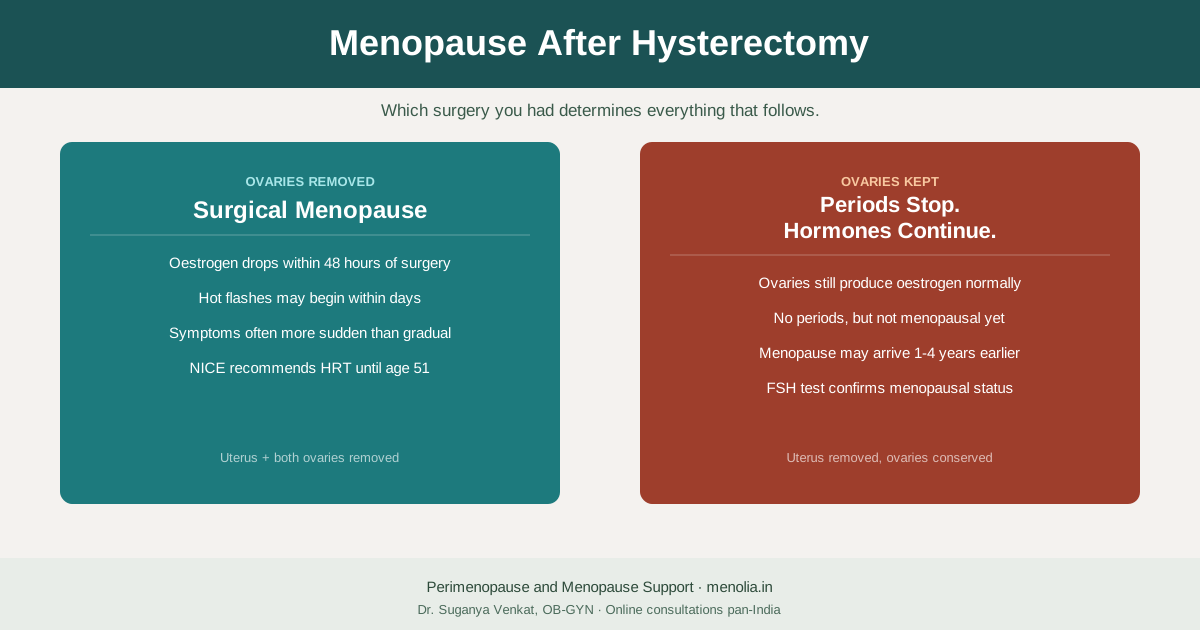
When both ovaries are removed during a hysterectomy, oestrogen production stops within hours of the operation. This is called surgical menopause.
Natural menopause happens gradually over several years. The ovaries wind down slowly, oestrogen fluctuates before declining, and the body has time to adapt. Surgical menopause is different. The hormonal change is abrupt. A woman running on normal premenopausal oestrogen levels on the morning of her surgery can be in an oestrogen-deficient state by that same evening.
This is why the symptoms of surgical menopause are often more intense than what is described for natural menopause. Hot flashes can begin within days of the operation. Night sweats can disrupt sleep before the surgical wounds have healed. Mood shifts, brain fog, and vaginal dryness can follow in the weeks that come.
For women who have this surgery in their late 30s or early 40s, the body was not expecting to lose ovarian function for another decade or more. The hormonal deficit is larger, and the transition harder, because there has been no gradual preparation.
What about women who had the surgery for cancer? The same hormonal picture applies. If both ovaries were removed, surgical menopause begins regardless of the reason for the operation. The HRT conversation may be more complex depending on the type and stage of cancer, which is why it belongs in a discussion with both the oncology and gynaecology team.
When Ovaries Are Kept: A Different Timeline
If your ovaries were conserved during the hysterectomy, you will not experience surgical menopause. Your ovaries continue to produce oestrogen and progesterone. The hormonal cycle continues.
What does change immediately is your periods. With no uterus, there is no endometrium to shed each month. Periods stop on the day of surgery. This is often the source of confusion: the absence of periods looks like menopause, but in this case it reflects the absence of the organ that produced the bleed, not the cessation of ovarian function.
You are not in menopause. You are in a post-hysterectomy state where your ovaries are still working.
Menopause will still arrive in due course. There is reasonable evidence that it may arrive somewhat earlier than it would have without the surgery. A cohort study by Farquhar and colleagues found that women who had a hysterectomy without oophorectomy reached menopause on average 1 to 2 years earlier than women who had not had the procedure. The mechanism is vascular: the ovaries receive part of their blood supply through the uterine artery as it branches upward. When the uterus is removed, that branch is no longer present. The ovaries adapt, but with a reduced vascular network, and this appears to accelerate the decline in ovarian reserve over time.
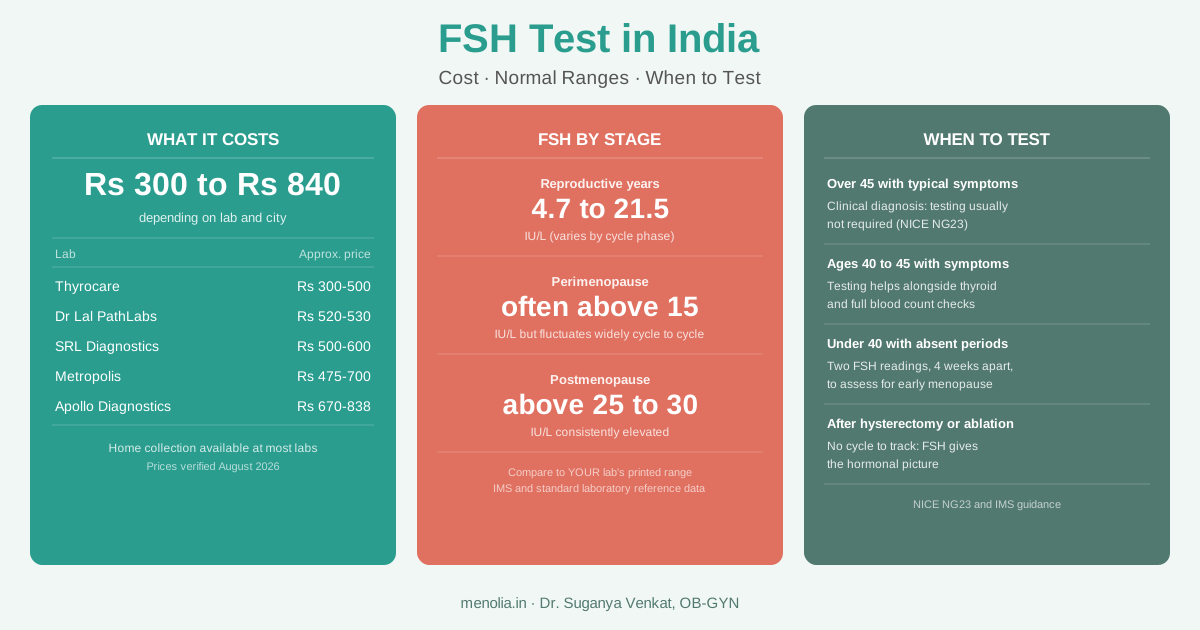
How to know when you have actually entered menopause, without periods as a guide: Your doctor can check a day 2 to 3 FSH (follicle stimulating hormone) level. When FSH rises above the menopausal range (typically above 30 to 40 IU/L, though laboratory thresholds vary), combined with symptoms, this is a reasonable indication that the transition is underway or complete. AMH (anti-Mullerian hormone) levels can also give useful information about remaining ovarian reserve.
How to Find Out Which Surgery You Had
This should have been communicated to you clearly before and after the operation. If you are unsure, the operative report is the place to look.
Check your discharge summary or operation notes. Look for:
- “Bilateral salpingo-oophorectomy” or “BSO”: ovaries were removed
- “Bilateral oophorectomy”: ovaries were removed
- “Ovaries conserved” or “ovaries preserved”: ovaries were kept
- “Total abdominal hysterectomy (TAH)” alone, without BSO mentioned: ovaries were likely conserved, but verify
- “Total hysterectomy with bilateral salpingo-oophorectomy (TH+BSO)”: uterus and ovaries removed
If you cannot locate these records, contact the hospital where the surgery was performed and ask for a copy of your operative report. This is your right as a patient. Your treating gynaecologist can also pull these records at a follow-up visit.
If you have had a hysterectomy and are trying to understand what your hormonal status is now, Dr. Suganya can work through this with you. She consults online across India via video call or phone.
The HRT Conversation After a Hysterectomy
For women who have had their ovaries removed, this conversation is not optional. It is important.
NICE NG23 (2015) recommends that women who experience premature or surgical menopause before the natural age of menopause should be offered HRT unless there is a specific contraindication. For these women, the benefits of HRT in terms of bone protection, cardiovascular protection, and quality of life generally outweigh the risks, at least until the age when natural menopause would typically have occurred (around 51 in Western populations; around 46 to 48 in Indian women, based on Palacios 2010 and the Indian Menopause Society’s pan-India survey, Ahuja 2016).
The WHI trial findings that caused widespread concern about HRT in the early 2000s are often misapplied to women with surgical menopause. That trial enrolled women at an average age of 63, more than a decade after natural menopause, and studied different preparations from those commonly used today. The risk profile for a 42-year-old whose ovaries were removed is not the same as the risk profile for a 63-year-old starting HRT for symptom relief. For the younger group, prolonged oestrogen deficiency carries its own significant risks: accelerated bone loss, higher cardiovascular risk, and poorer cognitive and mood outcomes. HRT in this context is replacing what was prematurely lost.
This is a conversation to have with your gynaecologist, and to have sooner rather than later if it has not happened yet. The risks and benefits are individual and depend on your personal health history. What is important is that the conversation is not skipped.
For women who had a hysterectomy with ovaries conserved, the HRT discussion is the same as it would be for any woman approaching natural menopause. When symptoms appear and the FSH confirms menopausal status, the management options can be explored at that point.
One practical note for this group: because you have no uterus, you can use oestrogen-only HRT rather than combined oestrogen and progestogen. The progestogen component in standard HRT exists to protect the uterine lining from overgrowth. Without a uterus, that concern does not apply. Oestrogen-only therapy has a somewhat more straightforward risk profile than combined HRT. Your prescribing doctor will know this, but it is useful to understand.
For the full evidence picture on HRT options available in India, see our complete guide to HRT in India. If you have already started HRT and are managing side effects, our HRT side effects guide covers what is expected versus what warrants a call to your doctor.
Bone and Cardiovascular Health After Surgical Menopause
Oestrogen slows bone resorption (the process by which old bone tissue is broken down) and helps maintain the flexibility of blood vessel walls. Both of these effects are lost with surgical menopause.
A woman with surgical menopause at 40 will have been oestrogen-deficient for roughly 6 to 8 years longer than a woman who reaches natural menopause at 46 to 48. Over that time, bone density loss and cardiovascular changes compound. This does not mean that disease is inevitable. It means that earlier attention to these parameters is warranted.
For bone health:
A baseline DEXA scan is worth arranging soon after surgical menopause to see where your bone density sits. Regular monitoring from that baseline allows any change to be identified and addressed early. See our bone density test guide for what the test involves and what the results mean.
Calcium from food: aim for 1,000 to 1,200 mg per day. Good Indian sources include ragi (364 mg per 100g, among the richest non-dairy sources), dahi (240 mg per 200g), milk, paneer (208 mg per 100g), moringa leaves (cooked), and til (sesame seeds). Calcium supplements are an option when diet falls consistently short, but food sources are absorbed better.
Vitamin D: a large proportion of Indian women are deficient (Ritu and Gupta, 2014, reviewed 37,000 participants across 32 studies and found deficiency in 50 to 94% of Indian women). A Vitamin D blood test gives a baseline. Supplementation is often needed.
Strength training twice a week: resistance-based exercise is the most evidence-backed lifestyle intervention for slowing bone loss after menopause. Even 30 to 40 minutes twice a week of bodyweight or light weight training helps.
For a comprehensive approach to protecting bone density in the years after surgical menopause, see our bone health and osteoporosis guide.
For cardiovascular health:
Check and monitor cholesterol annually. Oestrogen’s protective effect on LDL levels is lost with surgical menopause, and LDL may rise in the years that follow. An annual lipid panel is a reasonable step.
Blood pressure monitoring at home or at the clinic is worthwhile from your 40s onward.
Physical activity and diet: the visceral fat redistribution that typically happens at natural menopause in the late 40s can begin earlier with surgical menopause. A consistent pattern of physical activity, together with a diet built around low-GI foods (ragi, bajra, rajma, chana, dahi) rather than refined carbohydrates, helps manage both weight and insulin sensitivity.
The India Context: A Word on Post-Op Counselling
India has one of the highest hysterectomy rates in Asia. NFHS-5 data shows that roughly 3 to 5% of women in the 25 to 49 age group have had the procedure, with rates considerably higher in certain states. The median age at hysterectomy in India is younger than in most Western countries, often in the late 30s and early 40s, and heavy menstrual bleeding is the most common indication.
Many women leave hospital with their immediate surgical recovery well managed and very little information about the hormonal implications. The question of whether the ovaries were removed is sometimes not raised clearly at discharge or in the post-operative follow-up. Women who develop hot flashes or mood changes in the months following surgery often do not connect these symptoms to the operation and seek help from unrelated specialists, or dismiss the symptoms entirely.
This is a systemic gap rather than any individual failure. Information exists. It does not always reach the woman who needs it at the right moment.
If you had your surgery years ago and were not given this information, the gaps can still be filled. A thorough gynaecological review of your surgical history, current hormonal status, bone health, and cardiovascular markers is something you can arrange now. It is never too late to build that picture.
For women whose ovaries were removed at a younger age, our post on premature menopause covers the broader context of living well with oestrogen deficiency before the natural menopausal age.
What to Do Now
If you have had a hysterectomy and are unclear about where your hormonal health stands:
- Locate your operative report or discharge summary and confirm whether your ovaries were removed or kept.
- If ovaries were removed: book an appointment with your gynaecologist to discuss your current hormonal status, bone health markers, and whether HRT is appropriate for you. If you had the surgery more than a year ago and this conversation has not happened, that appointment is overdue.
- If ovaries were kept: ask your doctor for an FSH test when symptoms start appearing, or proactively in your late 40s, to track when your ovaries begin their transition.
- Arrange a baseline DEXA scan for bone density, particularly if you had surgical menopause. This is a non-invasive, low-radiation test.
- Review your diet for calcium-rich foods and check your Vitamin D level.
- Build in strength training consistently. Twice a week is enough to make a difference.
None of these steps are complex. They require awareness and a willing gynaecologist, and both are within reach.
FAQ
Q: Does having a hysterectomy mean I have had menopause?
Not necessarily. If your uterus was removed but your ovaries were kept, your ovaries still produce oestrogen and the menopause transition has not yet begun. You will not have periods, because the uterus is gone, but that is not the same as being menopausal. Menopause is defined by the cessation of ovarian oestrogen production.
If both ovaries were also removed at the same time, then surgical menopause begins within hours of the operation.
Q: Why are the symptoms worse after surgical menopause than natural menopause?
Natural menopause unfolds gradually over several years. Oestrogen levels fluctuate and then decline slowly, giving the body time to adapt. Surgical menopause is abrupt. Oestrogen drops within 24 to 48 hours of surgery rather than over a period of years. The body has no transition time, which is why hot flashes, night sweats, and mood changes can feel more sudden and intense than what women expect based on descriptions of natural menopause.
For more on this, read our guide on Surgical Menopause.
Q: Should I take HRT after a hysterectomy?
This depends on whether your ovaries were removed and at what age. For women who have had both ovaries removed before the natural menopausal age (typically before 46 to 48 in India), NICE NG23 recommends considering HRT unless there is a specific medical contraindication. The goal is to reduce the long-term consequences of prolonged oestrogen deficiency that would not have occurred if menopause had happened at its natural time.
For women who had a hysterectomy with ovaries kept, the HRT conversation is the same as for any woman approaching natural menopause: it becomes relevant when symptoms are affecting quality of life and the ovaries are confirmed to be entering the menopausal transition.
Q: If my ovaries were kept, how will I know when I reach menopause?
Without periods as a reference point, you need a hormone test. An FSH level, combined with symptoms, is the standard approach. When FSH is consistently above approximately 30 to 40 IU/L (laboratory reference ranges vary) alongside menopausal symptoms such as hot flashes and disrupted sleep, the transition is underway or complete. AMH can also be measured to assess remaining ovarian reserve. Your gynaecologist will be able to organise both tests.
Q: Will my ovaries be affected even though they were not removed?
Possibly, over time. The ovaries receive part of their blood supply through branches of the uterine artery. When the uterus is removed, this vascular branch is disrupted. Research, including cohort work by Farquhar and colleagues, suggests that women who have had a hysterectomy without oophorectomy may reach menopause 1 to 2 years earlier on average than women who have not had the surgery. This is not a certainty for every woman, but worth knowing so you are not caught off guard.
Q: I had a hysterectomy at 38 and my ovaries were removed. What should I know?
At 38, your natural menopause was likely over a decade away. Losing ovarian function now means your body will be without oestrogen for considerably longer than it would have been otherwise. The priorities are: a conversation with your gynaecologist about HRT as soon as possible (the benefits for women in their late 30s and early 40s with surgical menopause are well-established in the guideline literature), a baseline DEXA scan for bone density, Vitamin D and calcium review, and regular monitoring of cholesterol and blood pressure. HRT does not need to be a permanent commitment. It can be reviewed periodically as you approach the age at which natural menopause would have occurred.
Q: Can sex feel normal after a hysterectomy?
Yes. The vagina itself is not removed in a hysterectomy. For women whose ovaries were conserved, oestrogen levels remain normal for years and vaginal lubrication and sensation continue as before. For women with surgical menopause, oestrogen deficiency can over time cause vaginal dryness and discomfort (part of what is called genitourinary syndrome of menopause, or GSM), but this responds well to local oestrogen treatment, vaginal moisturisers, and lubricants. Our post on painful intercourse after menopause covers this in more detail, including the treatment options that work.
A hysterectomy is a major surgical step, and understanding the hormonal picture that follows is part of recovering fully and staying well in the years ahead.
If you have unanswered questions about your hormonal health after a hysterectomy, or you are in your 40s and trying to make sense of symptoms that appeared after your operation, Dr. Suganya can help you understand where things stand and what the options are.
For more on the perimenopause and menopause transition, see our perimenopause symptoms guide and our bone health guide for long-term protection after surgical menopause.