A woman on 75mcg of levothyroxine for years, her thyroid perfectly stable on the same dose since her thirties, wrote to me last month. She had just started HRT tablets for her hot flashes, and six weeks in, the fatigue and brain fog she thought HRT would fix were somehow worse. Her thyroid, she assumed, had nothing to do with it. It had everything to do with it.
This is one of the more common blind spots when hypothyroidism and HRT overlap, and it matters because so many Indian women over 45 are on levothyroxine already: hypothyroidism is the most prevalent thyroid condition in this age group, often diagnosed years before menopause even begins. If you are one of them and your gynaecologist has suggested HRT for hot flashes or sleep, there is a real, well-documented interaction worth understanding before you start, not because it should stop you, but because it changes how your dose gets managed afterward.
This post covers what actually happens when oral oestrogen and levothyroxine share your bloodstream, why the transdermal route sidesteps most of it, the TSH recheck that should follow, and the symptoms that tell you something needs a look. For the separate question of why your thyroid risk itself rises at menopause, our guide on thyroid changes during menopause covers that mechanism. This post is specifically about the two medications interacting once you are on both.
Why Oral Oestrogen Changes Your Levothyroxine Needs
Levothyroxine does not travel through your blood on its own. Most of it rides bound to a carrier protein made in the liver called thyroxine-binding globulin, or TBG. Only the small unbound fraction, free T4, is biologically active and doing the work your thyroid used to do before it needed replacing.
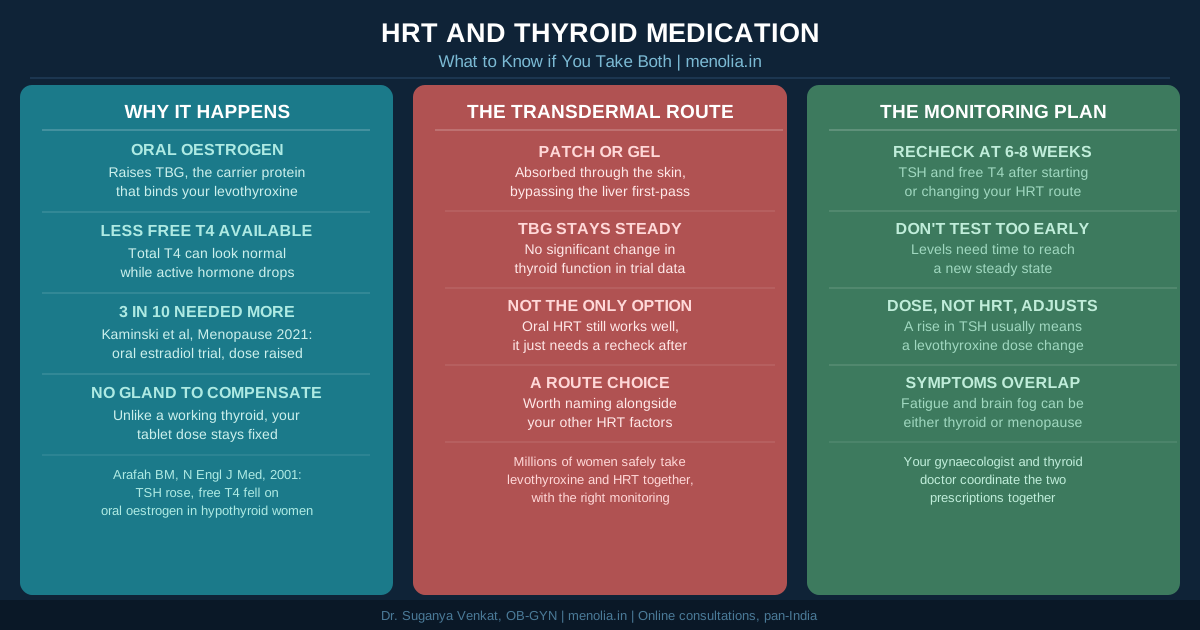
Oral oestrogen passes through the liver first before it reaches the rest of your body, a route called first-pass metabolism. One of the things that first pass does is prompt the liver to make more TBG. More TBG in circulation means more of your existing levothyroxine gets bound up and taken out of the active, free pool, even though your total T4 level on a blood test can look unchanged or even higher.
For a woman with a working thyroid, her gland simply produces a bit more hormone to compensate, and nothing changes symptomatically. For a woman on levothyroxine, there is no gland left to compensate. The dose she was taking, calibrated to her needs before HRT, can become quietly insufficient.
A randomised clinical trial in menopausal women with hypothyroidism (Kaminski J et al., Menopause, 2021) measured this directly. Women given oral estradiol tablets saw a significant rise in both total T4 and TBG, and TSH changes were substantial enough that three of ten participants needed their levothyroxine dose increased. Women given transdermal estradiol gel instead showed no significant change in thyroid function at all. This lines up with earlier work: a study of postmenopausal women starting oral oestrogen therapy (Arafah BM, N Engl J Med, 2001) found that women with hypothyroidism on thyroxine replacement had rising TSH and falling free T4 over the following weeks, with several needing a formal dose increase to stay in range.
Neither study found this to be dangerous or unmanageable. What both found is that it is real, common enough to expect rather than dismiss as coincidence, and specific to the oral route.
On levothyroxine and considering HRT? Dr. Suganya reviews your current thyroid control and symptom picture over a video consultation before recommending a route and monitoring plan built around your numbers.
Why Transdermal Is Often Preferred When Levothyroxine Is Already in the Picture
This is the same logic that shows up whenever a comorbidity enters the HRT conversation: the route of oestrogen matters as much as the decision to take it at all.
Transdermal oestrogen, delivered through a patch or gel, is absorbed through the skin directly into general circulation, bypassing the liver’s first pass almost entirely. Because it does not trigger the same rise in TBG production, it does not typically disturb an established levothyroxine dose the way oral oestrogen can. In the Kaminski trial above, this was exactly the finding: the transdermal arm showed no meaningful change in thyroid parameters.
This does not mean oral HRT is off the table if you are on levothyroxine. It means the sequence and monitoring look a little different depending on which route you and your gynaecologist choose. Many women on levothyroxine do perfectly well on oral HRT, they simply need their dose checked and adjusted afterward rather than assumed to be unaffected.
Our guide to the estradiol patch in India covers cost, brands, and how to use it if transdermal is the route that fits your situation. If you are earlier in the decision and want the fuller picture on HRT benefits, risks, and who it suits, our complete HRT guide is the place to start before narrowing down to route.
The TSH Recheck: What the Timing Looks Like
If you are on levothyroxine and start oral HRT, or switch from transdermal to oral, the practical step is straightforward:
Get a TSH recheck around six to eight weeks after starting or changing your oestrogen route. This window matches how long it takes thyroid hormone levels to reach a new steady state after any dose or route change, oestrogen included, and it is when a genuine shift will show up clearly on a blood test rather than as day-to-day noise.
This is not a test you need to chase down urgently in week one or two. A too-early recheck mostly reflects the old steady state and can be misleading either way. Waiting for the six to eight week mark gives an accurate read.
If TSH has risen out of range, the fix is usually a modest levothyroxine dose adjustment, not a reason to stop HRT. The endocrinologist or physician managing your thyroid makes this call, the same doctor who has been adjusting your dose all along, working alongside your gynaecologist rather than in place of them.
If you are already on transdermal HRT, this recheck matters less, since the route itself is less likely to disturb your dose. Your existing thyroid monitoring schedule, whatever that has been for you, can largely continue as is.
If you switch routes later, oral to transdermal or the reverse, the same six to eight week recheck logic applies again. A route change is a legitimate reason to check TSH, the same way starting HRT in the first place is.
Already juggling levothyroxine and HRT, or about to? Dr. Suganya works out the right route, the recheck timing, and who manages what over a WhatsApp consultation at Rs 399, so nothing falls through the gap between two prescriptions.
Telling the Symptoms Apart
This is the part that trips women up most, because an under-replaced thyroid and untreated menopause symptoms overlap almost completely: fatigue, brain fog, low mood, weight gain that will not shift, feeling cold, hair that seems to be thinning more than usual. If you start HRT expecting these to ease and they instead persist or worsen, the instinct is often to assume the HRT dose is wrong or that it simply is not working for you.
Before adjusting HRT itself, it is worth asking whether the levothyroxine dose has quietly become insufficient underneath it. This is exactly the pattern the woman who wrote to me was living through: her HRT was doing what it was meant to, and her thyroxine dose, unchanged since before she started oestrogen, no longer matched what her body needed.
The distinguishing step is the TSH and free T4 blood test above, not guesswork from symptoms alone, since the two overlap too closely to tell apart by feel. Our guide on menopause fatigue and menopause weight gain go into these individual symptoms in more depth if either is your main concern right now.
What This Looks Like in Practice
For most women on levothyroxine who message me about starting HRT, the path is simple: decide on a route with the usual factors in mind (symptoms, other health history, personal preference), start at the appropriate dose, and book a TSH recheck for around six to eight weeks out regardless of which route is chosen, since even a route that is unlikely to interfere is worth confirming rather than assuming.
At Fertilia and Menolia, Dr. Suganya Venkat sees this scenario often in video consultations with women across India managing hypothyroidism alongside menopause: two prescriptions that quietly affect each other, each usually managed by a different doctor, sometimes with no one checking whether they intersect. That gap is the actual risk here, not either medication on its own. The fix is not complicated: name the interaction, pick a route with it in mind, and put a recheck on the calendar.
If levothyroxine dosing itself, rather than the HRT interaction, is the part you are unsure about, that conversation sits with your endocrinologist or physician; your gynaecologist’s role is coordinating the HRT side around it, collaboratively, the way any shared medical picture should be managed.
Frequently Asked Questions
Does HRT affect thyroid medication?
Yes, if you take oral HRT. Oral oestrogen increases a liver protein called thyroxine-binding globulin, which can bind up more of your levothyroxine and reduce the active, free hormone available, even though total T4 on a blood test may look normal or higher. A randomised trial found three of ten women on oral estradiol needed a levothyroxine dose increase, while transdermal estradiol caused no significant change.
Do I need a higher levothyroxine dose after starting HRT?
Not automatically, but it is common enough to check for. The practical step is a TSH recheck about six to eight weeks after starting oral HRT. If your levels have shifted out of range, your endocrinologist or physician adjusts the dose from there. Not every woman needs an increase, but everyone on levothyroxine and oral HRT should get the test rather than assume nothing changed.
Is transdermal HRT better than oral HRT if I’m on levothyroxine?
It tends to interact less. Transdermal oestrogen, delivered through a patch or gel, bypasses the liver’s first-pass processing that drives up thyroxine-binding globulin, so it is less likely to disturb an established levothyroxine dose. This does not mean oral HRT is unsafe on levothyroxine, it simply means the oral route is more likely to need a dose recheck afterward.
How soon after starting HRT should I get my thyroid checked?
Around six to eight weeks after starting or changing your oestrogen route. This is roughly how long thyroid hormone levels take to reach a new steady state after a change, so testing earlier can be misleading, and testing at this window gives an accurate picture of whether your levothyroxine dose still matches your needs.
Can hypothyroidism symptoms be mistaken for HRT not working?
Very easily, because fatigue, brain fog, low mood, and weight gain that will not shift are symptoms of both under-replaced thyroid function and unmanaged menopause symptoms. If these persist or worsen after starting HRT, it is worth checking TSH and free T4 before assuming the HRT dose or type needs changing.
Who manages my thyroid dose if I’m also on HRT?
The same doctor who has been managing your levothyroxine, usually an endocrinologist or physician, continues to make dosing decisions based on your TSH results. Your gynaecologist manages the HRT side and coordinates timing, such as when to schedule the post-HRT TSH recheck, working alongside your thyroid doctor rather than replacing that relationship.
Is it safe to take HRT and levothyroxine together?
Yes. This is a well-documented, manageable interaction rather than a reason to avoid either medication. Millions of women take both. The only real requirement is awareness: know that oral HRT can shift your levothyroxine needs, get the TSH recheck at the right time, and let your two doctors coordinate if a dose adjustment is needed.
If you are on levothyroxine and weighing HRT, or already taking both and wondering if your thyroid dose still fits, this is worth a direct conversation rather than guesswork. Message Dr. Suganya Venkat on WhatsApp to talk it through.