A woman with type 2 diabetes, well controlled for eight years on metformin, wrote to me last month. Her periods had become unpredictable, the night sweats were costing her sleep, and her gynaecologist had raised HRT as an option. Then she went looking for reassurance online and found the opposite: forum posts warning that hormones “mess with your sugars,” a relative who insisted diabetics should never touch HRT, and nothing that actually answered her question. She wanted to know if her diabetes closed the door before she had even opened it.
It does not. Type 2 diabetes is not a reason to rule out HRT, and the evidence on what HRT actually does to blood sugar is more reassuring than most of what circulates informally. What changes, once diabetes is part of the picture, is how the decision gets made: which route of oestrogen fits your overall risk profile, what gets monitored once you start, and how your gynaecologist and the physician managing your diabetes stay in the loop with each other.
This post walks through what the research actually shows about HRT and glycaemic control, why route selection in diabetes is really about cardiovascular and clotting risk rather than blood sugar itself, what changes for a woman on metformin or other diabetes medication, and the monitoring plan that follows. If you want the fuller picture of why blood sugar shifts at menopause even without HRT in the picture, our guide to menopause and diabetes risk covers that mechanism separately. This post is about the treatment decision once type 2 diabetes is already part of your history.
The Short Answer: Type 2 Diabetes Is Not a Contraindication to HRT
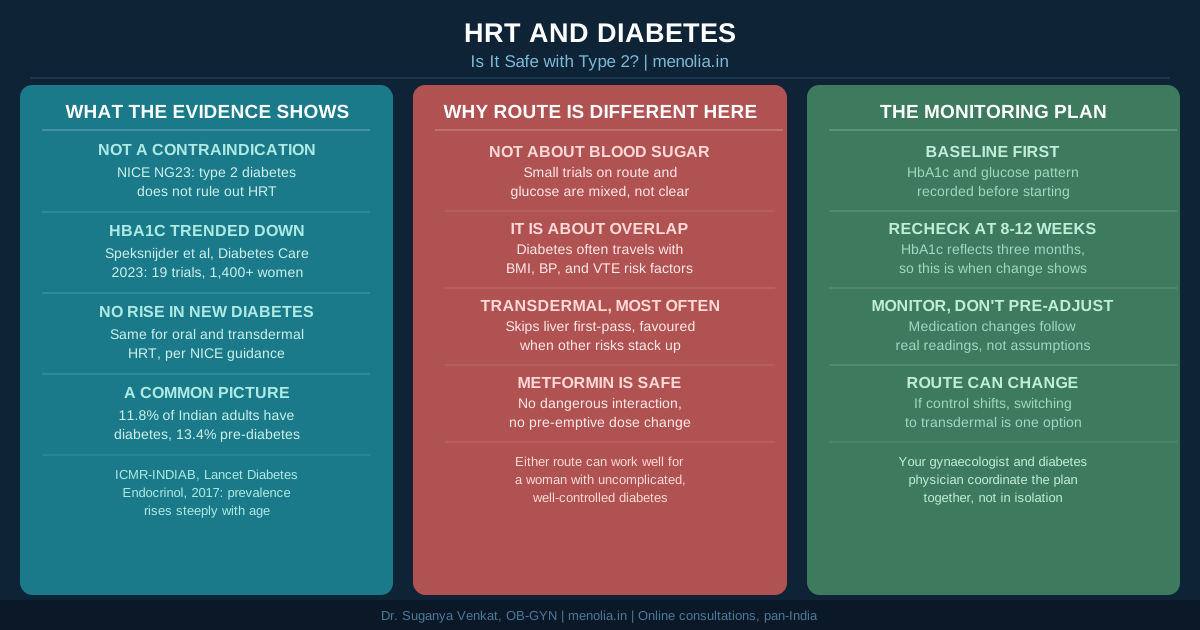
This is worth stating plainly, because so much of what women hear informally suggests the opposite. NICE guideline NG23 (nice.org.uk, Menopause: identification and management) states directly that HRT does not increase the risk of developing type 2 diabetes, and that it is generally not associated with an adverse effect on blood glucose control in women who already have it. NICE also notes this risk profile does not differ meaningfully between oral and transdermal HRT, and recommends considering HRT for menopausal symptoms in women with type 2 diabetes once other comorbidities have been accounted for.
If anything, the research trend runs the other way. A 2023 systematic review and meta-analysis of 19 randomised controlled trials in Diabetes Care (Speksnijder EM et al., PMID 37729504), covering over 1,400 women with type 1 or type 2 diabetes, found that postmenopausal hormone therapy modestly reduced both HbA1c (mean difference -0.56%) and fasting glucose compared with no HRT. The authors’ conclusion was that HRT is expected to have a neutral-to-beneficial impact on glucose regulation in women with type 2 diabetes considering it for menopausal symptoms.
None of this means HRT is a treatment for diabetes, and it should never be started or continued for that reason. It means the fear that HRT will destabilise blood sugar control is not what the evidence shows.
Managing type 2 diabetes and wondering if HRT is on the table for you? Dr. Suganya reviews your glycaemic control, current medication, and overall cardiovascular picture before recommending a route.
Why the Route Question Here Is Different from Blood Pressure or Thyroid
If you have read our posts on HRT with high blood pressure or HRT and thyroid medication, you have seen a consistent pattern: transdermal oestrogen bypasses the liver’s first-pass processing, and that consistently comes out ahead for those specific comorbidities. Diabetes is more nuanced, and the evidence on route does not line up as neatly for blood sugar specifically.
A small randomised trial from Imperial College London (Darko DA et al., Diabetes Res Clin Pract, 2001, PMID 11689270) compared oral and transdermal combined HRT in 33 postmenopausal women with type 2 diabetes over 12 weeks. Oral HRT significantly improved HbA1c in this trial; transdermal HRT did not show the same glycaemic benefit, though it did improve one clotting-related marker. A separate trial from Turkey (Fenkci S et al., Hum Reprod, 2003, PMID 12660287) looked at transdermal HRT specifically in postmenopausal women with type 2 diabetes or hypertension and found no detrimental effect on glucose, fasting sugar, or fructosamine over 12 weeks, with fasting glucose actually improving slightly in the diabetic group.
Read together, these trials are small and do not point to one route being clearly superior for blood sugar itself. What tips the decision toward transdermal in most women with type 2 diabetes is not glycaemic control; it is that diabetes so often travels alongside the same risk factors, obesity, hypertension, and elevated venous thromboembolism (VTE) risk, that make transdermal oestrogen the more cautious choice for other reasons. Our guide to VTE risk and HRT covers that mechanism in full. In practice, your gynaecologist is weighing your whole cardiometabolic picture, not choosing a route to protect your blood sugar specifically.
What Determines the Route for You
Since blood sugar control alone does not settle the route question, your doctor is looking at the fuller picture:
Body weight and BMI. A higher BMI independently raises VTE risk, and diabetes and elevated BMI frequently occur together. This alone often tips the decision toward transdermal.
Blood pressure. Many women with type 2 diabetes also manage hypertension. When both are present, transdermal oestrogen’s first-pass avoidance becomes more clearly favourable, following the same logic as our HRT and blood pressure guide.
Existing cardiovascular disease or strong family history. Diabetes plus established heart disease, a prior clot, or a strong family history of either shifts the conversation toward the lowest-risk route and sometimes toward involving a cardiologist or diabetologist directly.
How long the diabetes has been present, and whether there are vascular complications. Diabetes with evidence of vascular involvement, retinopathy, nephropathy, or peripheral vascular disease, gets a more cautious, individualised route discussion than newly diagnosed, uncomplicated diabetes.
Smoking status. As with any HRT decision, current smoking meaningfully changes the VTE and cardiovascular calculation and is usually addressed alongside the HRT conversation itself.
For a woman with type 2 diabetes and none of these additional factors, either oral or transdermal HRT can reasonably be considered, and the decision often comes down to symptom pattern and personal preference as much as anything else.
On metformin or another diabetes medication and considering HRT? Dr. Suganya works through your glycaemic history, current control, and cardiovascular risk over a video consultation and gives you a route recommendation built around your specific numbers, not a generic rule. WhatsApp consultation at Rs 399.
What Changes for Women on Metformin or Other Diabetes Medication
Metformin is cleared by the kidneys and does not go through the liver enzyme pathways that many drug interactions run on, so there is no dangerous direct interaction between metformin and oestrogen HRT. Oral oestrogen can, in some women, produce a mild pharmacodynamic effect on glucose metabolism rather than a true drug interaction, which is why glucose monitoring after starting matters more than a pre-emptive dose change.
No automatic metformin dose adjustment is needed when starting HRT. The sensible approach is to keep the current dose, monitor glucose readings and HbA1c over the following weeks, and adjust only if control genuinely shifts, and only after ruling out the more common culprits (diet changes, illness, missed doses, weight change).
Insulin and sulfonylureas carry the same principle: start HRT, monitor rather than pre-adjust, and let real readings guide any change.
If glucose control does shift noticeably after starting oral HRT, switching to transdermal oestrogen is a reasonable next step to discuss, since it reduces the first-pass hepatic exposure that is the most plausible mechanism behind any change.
This is a collaborative decision between your gynaecologist and whoever manages your diabetes, whether that is a physician, endocrinologist, or diabetologist. Neither prescriber should be making this call in isolation from the other.
The Monitoring Plan Once You Start
If you and your doctor decide HRT is appropriate, monitoring becomes a normal part of the plan rather than a special precaution:
A baseline HbA1c and recent glucose pattern, so there is a clear starting point to compare against, rather than reacting to a single reading later.
A recheck around eight to twelve weeks after starting or changing dose. This gives HbA1c time to reflect any real shift, since it averages roughly three months of blood sugar.
Home glucose monitoring at your usual frequency, if you already track this. Starting HRT is a reasonable moment to keep that habit consistent rather than let it lapse.
A clear plan for what happens if readings change. This does not automatically mean stopping HRT. It might mean confirming the route and dose are right for you, adjusting diabetes medication in consultation with your physician, or occasionally reconsidering the plan. The point of monitoring is to catch a shift early, not to treat one reading as an emergency.
When Other Specialists Join the Conversation
Most women with well-controlled type 2 diabetes and no other significant complications do not need anyone beyond their gynaecologist, working alongside the physician who already manages their diabetes, to start HRT.
A more coordinated, specialist-involved conversation makes sense when:
Diabetes has been present for many years or has evidence of vascular complications (retinopathy, nephropathy, peripheral vascular disease), where the overall cardiovascular risk picture needs a fuller review before HRT is added.
Blood sugar has been genuinely difficult to control, regardless of the HRT question, since that itself usually already involves closer specialist input.
Multiple risk factors sit together, diabetes plus hypertension plus obesity plus a family history of clotting or heart disease, where a combined view helps more than a single-factor decision.
There is a personal history of a cardiovascular event or blood clot alongside the diabetes.
This is not a sign that something has gone wrong. It reflects the same collaborative approach we take with any medical comorbidity: your gynaecologist manages the hormonal and menopause-specific side of the decision, and works alongside the physician managing your diabetes, so the plan is built around your complete picture rather than one number in isolation.
Why This Matters More for Indian Women
Type 2 diabetes is not a rare comorbidity in Indian women approaching menopause; it is close to routine. The ICMR-INDIAB study (Anjana RM et al., Lancet Diabetes Endocrinol, 2017, PMID 28601585) found 11.8 percent of Indian adults already have diabetes and another 13.4 percent have pre-diabetes, with both figures rising steeply with age. Add to that the earlier average age of menopause in India, generally cited between 46 and 47, and a large number of Indian women reach the HRT conversation with diabetes, pre-diabetes, or a strong family history already part of their story.
That makes this exactly the kind of question worth answering with evidence rather than leaving women to assume HRT is off the table by default. At Fertilia and Menolia, Dr. Suganya Venkat sees this scenario often in video consultations across India: a woman managing type 2 diabetes well who assumed hormone therapy was simply not an option for her. It usually is. The more useful question to bring to your gynaecologist is which route, at what dose, with what monitoring, fits your specific numbers, and that is a conversation she is well placed to have with you directly.
If you are earlier in the decision and want the fuller picture on benefits, risks, and who HRT suits generally, our complete HRT guide is a good place to start. And if cost or brand choice for the estradiol patch is your next question once transdermal comes up, our estradiol patch guide covers that.
Frequently Asked Questions
Can I take HRT if I have type 2 diabetes?
Yes, in most cases. NICE guideline NG23 states that type 2 diabetes does not increase risk when using HRT and is not, by itself, a reason to avoid hormone therapy. Your gynaecologist will look at your diabetes control alongside other factors like weight, blood pressure, and cardiovascular history to recommend the right route and dose.
Does HRT raise blood sugar in diabetics?
The evidence does not show this. A 2023 meta-analysis of 19 randomised trials involving over 1,400 women with diabetes found HRT modestly reduced HbA1c and fasting glucose rather than raising it. Individual trials on route (oral versus transdermal) show mixed but generally reassuring results, with no trial finding HRT worsened glycaemic control.
Is transdermal HRT better than oral for diabetes?
Not clearly, when it comes to blood sugar specifically; the trial evidence on route and glycaemic control is small and mixed. Transdermal oestrogen is still often preferred in women with type 2 diabetes, but mainly because diabetes frequently coexists with obesity, hypertension, or elevated clotting risk, where transdermal’s avoidance of liver first-pass metabolism is the clearer advantage.
Does HRT interact with metformin?
No dangerous direct interaction exists between metformin and HRT; metformin is cleared by the kidneys rather than through liver pathways that typically cause interactions. Oral oestrogen can occasionally have a mild effect on glucose metabolism, which is why monitoring after starting matters, but a pre-emptive metformin dose change is not usually needed.
Will HRT increase my risk of developing diabetes if I don’t already have it?
No. NICE guidance states clearly that HRT does not increase the risk of developing type 2 diabetes, and this holds for both oral and transdermal routes.
How often will my blood sugar be monitored once I start HRT?
A typical pattern is a baseline HbA1c and glucose pattern before starting, a recheck around eight to twelve weeks after starting or changing dose, and ongoing monitoring at whatever frequency you and your diabetes physician already use.
Do I need to see a diabetologist before starting HRT?
Not usually, if your diabetes is well controlled and you have no other significant complications. Your gynaecologist can manage the decision directly, ideally staying in communication with the physician managing your diabetes. A more coordinated, specialist-involved conversation makes sense when diabetes has vascular complications, has been difficult to control, or sits alongside several other cardiovascular risk factors.
If you are managing type 2 diabetes and weighing whether HRT is right for you, this is exactly the kind of decision worth talking through directly rather than guessing from general advice. Message Dr. Suganya Venkat on WhatsApp to start the conversation.