A woman wrote to me recently with a question that comes up often but rarely gets a straight answer. She had lived with fibroids through her forties, heavy periods some months, quieter ones others, and her periods had just stopped for the first time in nine months. Her hot flashes were disruptive enough that her gynaecologist had raised HRT. Then she paused. She had read, somewhere, that hormones “feed” fibroids. Would starting HRT undo the one thing menopause was finally doing for her?
It is a fair question, and the real picture sits between “hormones are fine, don’t worry” and “hormones are dangerous with fibroids.” Fibroids are genuinely sensitive to oestrogen and progesterone, and HRT can, in some women, slow the natural shrinkage that follows menopause or cause a modest, usually temporary increase in fibroid size. None of that makes fibroids an automatic reason to avoid HRT. It changes how the decision gets made: which regimen, what monitoring, and when the fibroid itself needs attention first.
This post covers what fibroids actually do to hormones and vice versa, what the evidence shows about HRT and fibroid growth, which regimen is generally preferred when fibroids are part of your history, when the fibroid needs treating before or alongside starting HRT, and what a sensible monitoring plan looks like.
Why Fibroids Respond to Hormones in the First Place
Uterine fibroids, also called leiomyomas, are benign growths of the muscular wall of the uterus. They carry a higher density of oestrogen and progesterone receptors than the surrounding normal uterine tissue, which is why they behave the way they do across a woman’s reproductive life: growing through the hormone-rich years, often stabilising or shrinking as oestrogen and progesterone fall at menopause.
That receptor sensitivity is also exactly why the HRT question is a real one rather than a formality. Systemic hormone therapy reintroduces oestrogen, and in combined regimens, a progestogen, into a body that had started to wind that signal down. Whether that meaningfully disturbs an already-quiet fibroid depends on the dose, the regimen, and the individual fibroid.
If you want the fuller picture of what happens to fibroids naturally, without HRT, our guide to what happens to fibroids after menopause covers the shrinkage timeline and the one growth pattern that always needs evaluation. This post is specifically about the decision once HRT is on the table.
Have fibroids and weighing whether HRT is right for you? Dr. Suganya reviews your fibroid history, current symptoms, and a recent scan before recommending a regimen.
What the Evidence Shows
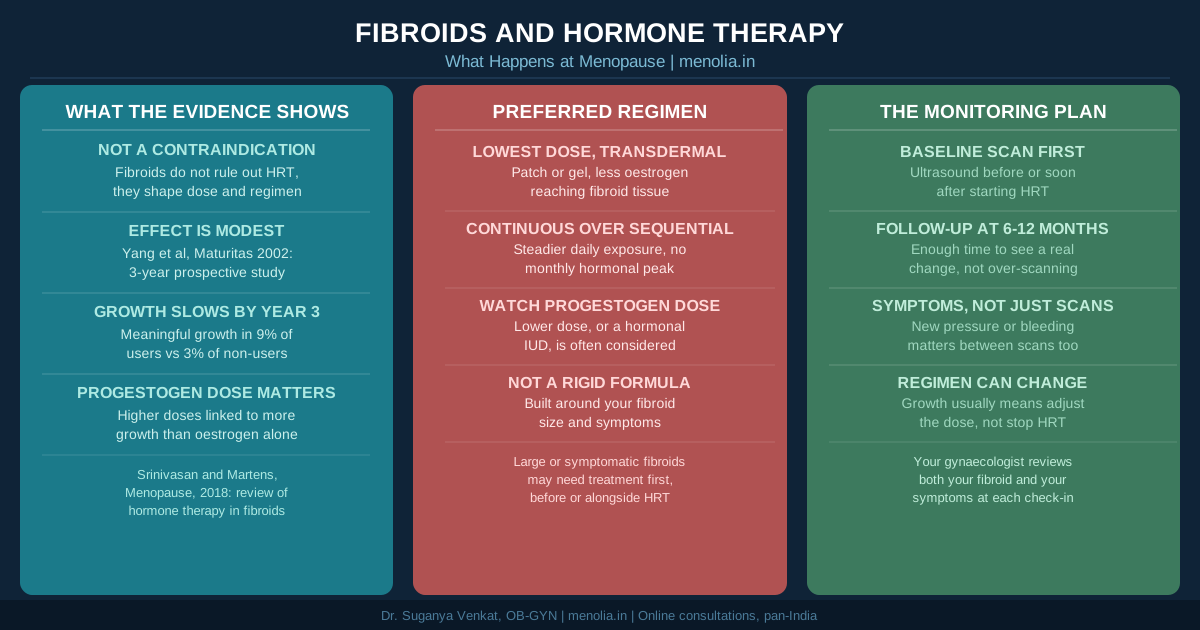
The short answer, stated plainly: having fibroids is not a contraindication to HRT. It is a factor that shapes which regimen and dose your gynaecologist recommends, not a door that closes.
A 2018 review in Menopause (Srinivasan V & Martens MG, PMID 29613885) looked specifically at hormone therapy in menopausal women with fibroids and found the effect on fibroid volume was variable. Some studies showed an increase in size of pre-existing fibroids, and occasionally new fibroid formation, with higher doses of progestogen used in combination therapy. In many cases, though, the effect was small and not statistically meaningful.
A prospective 3-year study in Maturitas (Yang CH et al., PMID 12270580) followed postmenopausal women with a single fibroid, comparing those on combined HRT (conjugated equine oestrogen plus medroxyprogesterone) against women who took no HRT. Fibroid volume rose in both groups in year one. It kept rising through year two in the HRT group but not in the non-HRT group. By year three, growth had slowed and levelled off close to baseline in both groups. Clinically meaningful growth, defined as more than a 25 percent increase in volume, occurred in 3 of 34 HRT users compared with 1 of 34 non-users over the full three years. The authors’ own conclusion is worth stating directly: the effect of HRT on fibroid volume should not be over-emphasised, at least across three years of use.
Read together, what this tells you is that HRT can modestly slow the natural regression of fibroids or, less often, produce a small temporary increase in volume, mostly in the first one to two years. It does not typically cause dramatic new growth in a fibroid that was already stable, and it is not associated with fibroids turning into anything they were not before. This is genuinely different from the growth pattern that needs urgent evaluation, a fibroid enlarging on its own after menopause without any HRT involved, which our guide to fibroids after menopause covers as the one exception worth knowing.
Which Regimen Is Generally Preferred
Since dose and regimen, not the presence of fibroids alone, drive most of the effect, this is where the real decision sits.
Lowest effective dose, transdermal route. As with most HRT decisions where you want to limit systemic exposure, the patch or gel form of oestrogen at the lowest dose that controls your symptoms is generally the preferred starting point when fibroids are part of your history. This mirrors the same logic our HRT and blood pressure guide and HRT and diabetes guide describe for other comorbidities: less oestrogen reaching the general circulation, less stimulus reaching fibroid tissue.
Continuous combined over sequential, in women with a uterus. A continuous combined regimen delivers oestrogen and progestogen together every day, without the monthly withdrawal bleed that a sequential regimen produces. In practice, this generally means steadier, lower-intensity hormonal exposure to the endometrium and to fibroid tissue than the cyclical peaks a sequential regimen creates, which is one reason it is often the preferred starting point for women with fibroids who are past the perimenopausal transition. It also avoids the monthly bleed that can be confusing to track when a fibroid is already part of the picture.
Watch the progestogen dose specifically. The Srinivasan and Martens review flagged higher-dose progestogen in combination therapy as the factor most associated with fibroid growth, more than oestrogen alone. This is one reason your gynaecologist may choose a lower-dose progestogen, or in some cases a hormonal IUD (levonorgestrel-releasing) to provide the progestogen component locally rather than systemically, alongside a transdermal oestrogen for symptom relief.
None of this is a rigid formula. A woman with a small, asymptomatic fibroid and severe hot flashes may reasonably start standard combined HRT and simply be monitored. A woman with a large fibroid causing pressure symptoms may need a different sequence altogether, discussed next.
Not sure which regimen fits your fibroid history? Dr. Suganya works through your fibroid size, symptoms, and menopausal symptoms together over a video consultation and recommends a specific regimen, not a generic rule. WhatsApp consultation at Rs 399.
When the Fibroid Needs Treating First
For some women, the more useful conversation is not which HRT regimen to start, but whether the fibroid itself needs addressing before HRT enters the picture at all.
Fibroids still causing heavy bleeding or significant pressure symptoms as you approach menopause. If flooding, clots, or pelvic pressure are still disrupting your life, treating the fibroid, whether with a hormonal IUD, endometrial ablation, or surgery, is often the right first step, both for your quality of life now and to remove a variable before HRT is added. Our guide to heavy bleeding in perimenopause covers the fuller range of options for this stage.
A large fibroid that has not been re-scanned recently. If it has been more than a year or two since your last ultrasound, a baseline scan before starting HRT gives you and your doctor a clear reference point to compare against later, rather than guessing whether any change on a future scan is new.
A fibroid with any atypical feature on a previous scan. This is uncommon, but if a fibroid has ever been flagged as having an unusual appearance, resolving that question with your gynaecologist comes before adding HRT to the picture, not after.
For most women, though, the fibroid does not need separate treatment before HRT starts. It simply needs to be part of the conversation about dose, regimen, and follow-up.
The Monitoring Plan Once You Start
If you and your doctor decide HRT is the right choice, monitoring your fibroid becomes a normal, low-key part of follow-up rather than a special precaution.
A baseline ultrasound before or shortly after starting, if you do not already have a recent one. This gives you a clear reference point.
A follow-up scan at 6 to 12 months. This is enough time to see whether the fibroid has changed meaningfully, without over-scanning for a change that, per the evidence above, is usually small even when present.
Attention to symptoms, not just scan numbers. New or worsening pelvic pressure, a return of heavier bleeding, or any bleeding after 12 months without a period (which always needs prompt evaluation on its own) are the practical signals to bring back to your doctor sooner than a scheduled scan.
A clear next step if the fibroid does grow. Growth on HRT is usually the signal to reassess the regimen, most often by lowering the dose or switching to a lower-progestogen approach, rather than an automatic instruction to stop HRT altogether. The two of you can also revisit whether treating the fibroid directly makes more sense at that point.
This is a collaborative process between you and your gynaecologist over time, not a single decision made once and left alone. Fibroids and hormone therapy both change gradually, and the plan should be able to change with them.
Supporting Your Body Through the Transition
Many women who have carried fibroids for years also carry the after-effects of iron-deficiency anaemia from years of heavy bleeding, and this does not resolve automatically once periods slow down or HRT begins. Building iron-rich foods into your daily meals is worth doing regardless of what you decide about hormone therapy.
Rajma and kala chana, roughly 3 to 5 mg iron per cooked katori, absorbed better with a squeeze of nimbu alongside the meal.
Ragi, useful both for its iron content and as a calcium source that supports bone health through this stage.
Til (sesame seeds), concentrated in iron at around 14.5 mg per 100g, easy to add as a chutney or sprinkled over dal.
Palak and methi, 2 to 3 mg iron per serving, with the added benefit of folate.
Pairing these with a source of Vitamin C, amla or nimbu, improves how much iron your body actually absorbs, and it is worth avoiding strong chai immediately before or after an iron-rich meal, since the tannins in tea interfere with absorption.
When to See a Doctor
Most women with fibroids who choose HRT do well and need only routine follow-up. The following are worth bringing to your gynaecologist promptly rather than waiting for a scheduled visit:
- Any bleeding after 12 months without a period, with or without HRT in the picture
- New or worsening pelvic pain or pressure after starting HRT
- A follow-up scan showing the fibroid has grown noticeably since your last one
- Heavier bleeding returning on a continuous combined regimen, which is meant to avoid regular bleeding
- Symptoms of anaemia, fatigue, breathlessness, or palpitations, returning or worsening
This is Dr. Suganya Venkat’s approach across her fifteen years as an OB-GYN and through Menolia’s online consultations: fibroids and hormone therapy are both manageable on their own, and manageable together, with the right regimen and a follow-up plan that actually gets used. If you are earlier in the HRT decision generally, our complete HRT guide covers benefits, risks, and who HRT suits before fibroids enter the picture specifically.
WhatsApp Dr. Suganya if you have fibroids and want to think through the regimen and monitoring plan that fits your situation.
Frequently Asked Questions
Can I take HRT if I have fibroids?
Yes, in most cases. Having fibroids is not an automatic reason to avoid hormone therapy. It is a factor your gynaecologist accounts for when choosing the dose, route, and regimen, generally favouring the lowest effective transdermal dose and a continuous combined regimen where a uterus is present.
Does HRT make fibroids grow back after menopause?
It can cause a modest, usually temporary slowing of the natural shrinkage or a small increase in size, mostly in the first one to two years of use, more often linked to higher progestogen doses than to oestrogen alone. A 3-year study found meaningful growth (over 25 percent volume increase) occurred in about 9 percent of HRT users compared with 3 percent of non-users, a real but modest difference, and growth typically levelled off by the third year in both groups.
Which type of HRT is safest with fibroids?
Transdermal oestrogen (patch or gel) at the lowest effective dose, combined with a continuous rather than sequential progestogen regimen, is generally preferred. Some women are also offered a hormonal IUD to deliver the progestogen locally rather than systemically, alongside transdermal oestrogen for symptom control.
Do I need a scan before starting HRT if I have fibroids?
A baseline ultrasound is reasonable if you do not already have a recent one, since it gives you and your doctor a clear reference point. A follow-up scan at 6 to 12 months after starting is a sensible check-in, though not every woman needs this depending on fibroid size and symptoms.
Should I treat my fibroid before starting HRT?
Only if it is still causing heavy bleeding, significant pressure symptoms, or has any atypical feature on a previous scan. Most women with quiet, asymptomatic fibroids can start HRT and monitor alongside it, without treating the fibroid separately first.
What happens if my fibroid grows while I’m on HRT?
This is usually the signal to reassess your regimen, often by lowering the dose or adjusting the progestogen component, rather than an automatic instruction to stop HRT. Your gynaecologist will also consider whether the fibroid itself now needs direct treatment.
Is bleeding on HRT with fibroids something to worry about?
On a continuous combined regimen, which is designed to avoid regular bleeding, any return of bleeding is worth reporting to your doctor, since fibroids can be one explanation among several. Any bleeding after 12 months without a period always warrants evaluation, regardless of whether HRT or fibroids are involved.
If you have fibroids and are weighing whether HRT is right for you, this is a decision worth making with a specific plan rather than a general rule. Message Dr. Suganya Venkat on WhatsApp to start the conversation.