The surgery is behind you. The recovery is ahead of you, and nobody has given you a reliable map.
This is a gap I see often. Women go through major surgery and leave the hospital with a list of things to avoid but not much guidance on the shape of the weeks that follow: what a smooth recovery looks like, how to tell the difference between expected discomfort and something that needs attention, and when different activities are actually safe to return to.
This post is that map. It covers the three surgical routes and how recovery differs between them, a week-by-week breakdown of what to expect, the specific activity restrictions and the reasons behind them, warning signs that warrant a call to your doctor, and the emotional side of recovery, which is often the part that surprises women most.
If you want to understand the hormonal consequences of hysterectomy, including whether you are likely to experience surgical menopause, that question is covered separately in Menopause After Hysterectomy: Ovaries In or Out. This post focuses on the physical recovery from the surgery itself.
Three Routes, Three Recovery Timelines
The first thing to understand is that “hysterectomy” refers to the removal of the uterus, but the surgical approach varies significantly, and your recovery timeline depends on which approach was used.
| Surgical Route | Approach | Typical Hospital Stay | Light Activity | Full Recovery |
|---|---|---|---|---|
| Abdominal (open) | Lower-abdomen incision | 3-5 days | 4-6 weeks | 8-12 weeks |
| Laparoscopic | 4-5 small keyholes | 1-2 days | 2-3 weeks | 4-6 weeks |
| Vaginal | Through the vagina, no external incision | 1-3 days | 2-3 weeks | 4-6 weeks |
A Cochrane review comparing surgical approaches for benign gynaecological disease found that both vaginal and laparoscopic hysterectomy result in significantly shorter hospital stays and faster return to normal activities compared to the open abdominal route (Aarts et al., Cochrane Database Syst Rev 2015, CD003677, PMID 26264829). The abdominal approach gives the clearest surgical view but involves a larger incision and correspondingly longer healing.
If you are not sure which approach was used, check your discharge summary or call the hospital.
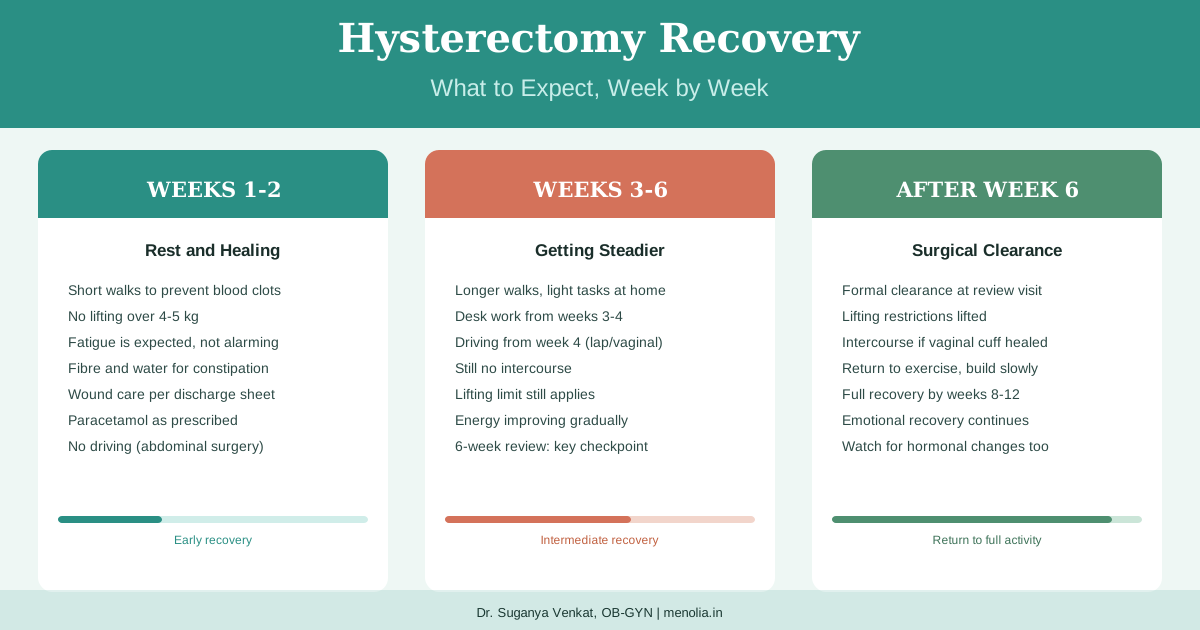
Week 1: Rest Is the Work
You will be tired in a way that feels different from ordinary tiredness. Anaesthesia, the physical demands of major surgery, blood loss, and the initial inflammation response all converge in the first week. Your body is directing a significant share of its resources toward healing. That is not a problem. It is what healing looks like.
For most women, the first week home involves:
Sleep and rest. The fatigue is real and functional. Sleep as much as you need to.
Short walks around the house. Movement helps prevent blood clots, which are a genuine risk in the 4-6 weeks following major pelvic surgery. Short walks to the kitchen and back are enough in the early days. Do not sit in one position for long periods.
Compression stockings. If your surgeon prescribed them, wear them consistently. They reduce the risk of deep vein thrombosis (DVT) during the period when mobility is limited.
Pain management. Paracetamol (Crocin 500-1000 mg every 6 hours) is the standard base. Your surgeon may have added a mild NSAID such as diclofenac (Voveran). Take NSAIDs with food, and do not continue them beyond what was prescribed without checking. Avoid anything stronger than what you were sent home with unless your doctor has reviewed you.
Constipation. This is very common in week 1. Anaesthesia and opioid painkillers slow gut motility considerably. Add fibre gradually (soft cooked dal, sabzi, well-cooked vegetables), drink plenty of water throughout the day, and do not strain during bowel movements. Straining increases intra-abdominal pressure, which is precisely what you want to avoid. Your doctor may have given you a mild laxative at discharge. Use it as directed.
Wound care (abdominal surgery). Keep the incision site dry and covered per the instructions given at discharge. Watch for redness, swelling, or discharge beyond what you were told to expect. The warning signs section below covers what to look for.
Weeks 2-3: When Feeling Better Feels Like Permission
Many women feel noticeably better in week 2, particularly after laparoscopic or vaginal surgery. This is where the most common recovery mistake happens. Feeling better and being fully healed are not the same thing. Internal healing, including the vaginal cuff closure, is still in progress even when you feel reasonably comfortable on the surface.
What is appropriate in weeks 2-3:
- Short walks outside, gradually increasing the distance each day. Stop if you feel pelvic pressure or pulling pain.
- Light household tasks that do not involve lifting, bending from the waist, or sustained standing: folding clothes, light meal preparation while seated, reading, desk work for short periods.
- Regular rest between activities. Energy levels will still fall more quickly than usual. That is normal.
- Continue avoiding heavy lifting, driving (if you had abdominal surgery), and sexual activity.
Many women return to desk-based work during weeks 3-4 after laparoscopic or vaginal hysterectomy. If your job involves physical activity, waiting until weeks 6-8 is the standard recommendation.
Weeks 4-5: Getting Steadier
By weeks 4-5, women who had laparoscopic or vaginal surgery are usually approaching their pre-surgery energy levels. Women who had an abdominal hysterectomy are still in a more cautious phase.
At this point:
- Longer walks (20-30 minutes) are fine and beneficial.
- Gentle yoga and flat walking on level ground are generally appropriate. Check with your surgeon before starting swimming or more structured exercise.
- Most driving restrictions ease around week 4 for laparoscopic and vaginal surgery, provided you are off narcotic pain medication and can brake sharply without pain or hesitation. For abdominal hysterectomy, most surgeons advise waiting 6 weeks before driving.
- Continue avoiding lifting anything heavier than approximately 4-5 kg.
Week 6: The Review Appointment
Most surgeons schedule a 6-week review. This is the key checkpoint, and it is when most restrictions are formally lifted for women who are healing normally.
After the 6-week review (assuming normal healing):
Sexual activity. The standard recommendation is to wait until the 6-week review and formal surgical clearance before resuming penetrative intercourse. The vaginal cuff (the sutured top of the vagina after the uterus is removed) needs time to heal. Vaginal cuff dehiscence, a separation of that closure, is rare but can happen with premature activity. It presents as a sudden gush of fluid, significant pelvic pressure, or visible pink tissue at the vaginal opening. If any of these occur, seek emergency care immediately.
Lifting restrictions. Usually lifted after surgical clearance.
Return to exercise. Build gradually rather than returning immediately to your pre-surgery intensity. Listen to how your body responds.
Weeks 6-12: Full Recovery
Full recovery from hysterectomy, including return to full strength, resolution of internal scarring, and complete hormonal adjustment if ovaries were removed, takes approximately 3 months on average. Some women feel fully themselves at week 8. Others find energy levels and pelvic comfort continue improving through to week 12 or slightly beyond. Both are within the normal range.
If you are in the middle of recovery and something does not feel right, a short conversation often gives more clarity than a week of uncertainty. You can reach me on WhatsApp at +91 99402 70499.
Activity Restrictions: The Details
Lifting
The most consistent guideline across surgical routes is to avoid lifting anything heavier than approximately 4-5 kg for at least 4-6 weeks. For abdominal hysterectomy, most surgeons extend this to 6-8 weeks.
The reason is mechanical. The pelvic floor and abdominal wall are both healing, and increased intra-abdominal pressure from lifting can strain the vaginal cuff closure and slow wound healing.
A practical note for Indian households: a pressure cooker filled with water weighs 3-4 kg before you add the pot itself. A filled bucket of water is 8-10 kg. A full bag of rice or atta is typically 5-10 kg. All of these are above the restriction threshold. In many Indian families, there is an expectation that a woman should be “up and about” within days of returning home. This restriction is not excessive caution. It is giving the internal healing the conditions to complete properly.
Driving
Driving requires the ability to brake sharply in an emergency. That movement engages the abdominal core and puts stress on the pelvic region. General guidelines:
- Laparoscopic or vaginal hysterectomy: avoid driving for 2-4 weeks, or until you are off narcotic pain medication and can brake firmly without pain.
- Abdominal hysterectomy: 4-6 weeks minimum.
Check with your surgeon at your follow-up, and check your vehicle insurance policy. Some policies do not cover you if you drive while medically unfit following surgery.
Returning to Intimacy
After your 6-week review and surgical clearance, many women find some changes in vaginal sensation, lubrication, or comfort during intercourse, particularly if the ovaries were removed and oestrogen levels have shifted. This is a known and manageable aspect of post-hysterectomy recovery. The post on Menopause and Painful Intercourse: Why It Happens and What Helps covers the range of options, from lubricants to local vaginal oestrogen.
Pelvic floor recovery also plays a role in returning to intimacy and general pelvic comfort after surgery. Menopause and the Pelvic Floor: Why Muscles Weaken and What Helps has the detail on what is actually happening and what the evidence supports.
Warning Signs: When to Call Your Doctor
Most hysterectomy recoveries follow a predictable pattern. These symptoms warrant prompt medical attention.
Contact your doctor the same day or go to the emergency department if you notice:
- Heavy vaginal bleeding: soaking more than one pad per hour for two consecutive hours, or passing clots larger than a 50-rupee coin.
- Fever above 38 degrees Celsius: a single reading is worth monitoring; a sustained fever above 38°C for more than a few hours needs assessment. Fever can signal pelvic infection, urinary tract infection, or wound site infection.
- Leg pain or swelling: pain, swelling, warmth, or redness in one calf, particularly if the skin feels firm. Blood clots (DVT) are more common in the 4-6 weeks after major pelvic surgery than at almost any other time.
- Sudden shortness of breath or chest pain: these can be signs of pulmonary embolism, a clot that has moved to the lungs. Seek emergency care immediately.
- Difficulty urinating: inability to pass urine for more than 6-8 hours, or burning on urination that is significantly worse than at discharge. Urinary tract infections are common after hysterectomy because of catheterisation during surgery.
- Wound site changes (abdominal surgery): redness extending beyond the wound edges, increasing pain at the site, yellow or foul-smelling discharge, or any feeling that the wound is opening.
- A sudden gush of vaginal fluid or visible pink tissue: these can indicate vaginal cuff dehiscence. Seek emergency care.
Some light spotting and pale discharge in the first 4-6 weeks is expected as the vaginal cuff heals. The concern is heavy or bright red bleeding. If you are unsure whether the amount is within normal range, calling your doctor is always the right call. The post on Post-Menopausal Bleeding: Causes and When to See a Doctor covers what different bleeding patterns mean.
The Emotional Side
The physical recovery has a clear arc. The emotional recovery is less linear, and it is the part that surprises women most.
Relief is common, and data-supported. A long-term study following women who had hysterectomy for benign conditions found that the majority reported significant improvements in wellbeing, reduced symptom burden, and better quality of life at 6-month and 12-month follow-up, particularly those who had surgery for heavy bleeding, fibroids, or chronic pelvic pain (Carlson et al., Obstet Gynecol 1994). If you have been managing difficult symptoms for years and the surgery has resolved them, relief is not only expected but well-supported by the evidence.
Grief alongside relief is also common, and the two feelings are not contradictory. The end of menstrual cycles, even cycles that were a source of difficulty, can carry an unexpected sense of loss. For women in the Menolia audience (typically 40-55), this often connects to questions about the body changing, about this chapter of life closing, and about what comes next. These are real feelings, and they are worth taking seriously.
Emotional variability in the first weeks is also typical. Tearfulness, irritability, or low mood in the early post-operative period is partly physiological: anaesthesia, disrupted sleep, enforced rest, and pain all affect mood. If the ovaries were removed and oestrogen levels have dropped, hormonal changes add another layer.
When to ask for support: if low mood or persistent tearfulness continues beyond 4-6 weeks of recovery, or if you find yourself withdrawing from people you care about in ways that do not resolve, it is worth raising with your doctor. Recovery does not have to be emotionally difficult in isolation.
For the fatigue and sleep disruption that often accompany the recovery period, the posts on Menopause Fatigue: Why You’re Always Tired After 45 and Menopause Sleep Problems: What Actually Helps have practical guidance on what is within the expected range and what warrants further attention.
Recovery questions are common and often simple to answer once you have spoken to someone who can assess your specific situation. If you are unsure about anything in the weeks after surgery, you are welcome to reach me on WhatsApp at +91 99402 70499.
Frequently Asked Questions
How long does it take to fully recover from a hysterectomy?
Full recovery takes approximately 6-12 weeks depending on the surgical approach. Laparoscopic and vaginal hysterectomy typically allow return to normal activities in 4-6 weeks. Abdominal (open) hysterectomy generally requires 8-12 weeks for full recovery. Internal healing, including the vaginal cuff, continues for several weeks after you feel well on the surface. The 6-week review with your surgeon is the formal checkpoint where restrictions are assessed and usually lifted.
When can I drive after a hysterectomy?
For laparoscopic or vaginal hysterectomy, most surgeons allow driving at around 2-4 weeks, provided you are completely off narcotic pain medication and can brake sharply without pain or hesitation. For abdominal hysterectomy, the standard recommendation is 4-6 weeks. Check with your surgeon at your follow-up appointment. Check your vehicle insurance policy as well, since some policies do not cover you while medically unfit following surgery.
When can I resume sexual activity after a hysterectomy?
The consistent recommendation across all surgical routes is to wait until the 6-week review and formal clearance from your surgeon. The vaginal cuff (the sutured top of the vagina) needs time to heal fully. Resuming intercourse too early carries a small but real risk of vaginal cuff dehiscence. After clearance, it is normal to experience some adjustment in sensation, lubrication, or comfort. Lubricants and, where appropriate, local vaginal oestrogen can help significantly.
Is it normal to feel tired for weeks after a hysterectomy?
Yes, this is entirely expected. Fatigue after major surgery is real and physiological: blood loss, anaesthesia, the healing process, and disrupted sleep all contribute. Many women are surprised by how long the fatigue persists, particularly after abdominal surgery. Energy levels typically improve gradually through weeks 3-6. If fatigue is severe and does not improve at all after week 4, or if it is accompanied by other symptoms (such as heavy bleeding or fever), raise it with your doctor.
Hysterectomy ke baad kitne din rest karna chahiye?
Yah surgical approach par depend karta hai. Laparoscopic ya vaginal hysterectomy ke baad, typically 4-6 hafte tak complete rest ki zaroorat hoti hai heavy lifting aur strenuous activity ke liye. Abdominal (open) hysterectomy ke baad, 6-8 hafte ki rest recommended hai. Ghar par family se ye expect karna ki aap jaldi se “normal” kam karengi, recovery ko slow kar sakti hai. 4-5 kg se zyada kuch uthana pehle 6 hafte mein avoid karna chahiye.
What should I eat during hysterectomy recovery?
Focus on foods that support healing and prevent constipation. Protein helps tissue repair: dal, rajma, paneer, eggs, fish. Fibre prevents constipation, which is the most common post-operative gut problem: cooked vegetables, soft fruits, whole-grain roti. Iron helps if blood loss was significant during surgery: palak, rajma, sesame seeds, jaggery with lemon juice. Drink adequate water throughout the day. Avoid very spicy food in the first 2-3 weeks if the gut is still adjusting, and eat small frequent meals rather than large ones while activity is limited.
Will I go into menopause after a hysterectomy?
Not automatically. Whether you experience menopause after hysterectomy depends almost entirely on whether your ovaries were removed or kept. If both ovaries were retained, they continue producing oestrogen and menopause follows its natural timeline. If both ovaries were removed (bilateral oophorectomy), surgical menopause begins within 24-48 hours of surgery and can produce more intense symptoms than natural menopause because the hormonal shift is abrupt rather than gradual. This is covered in detail in Menopause After Hysterectomy: Ovaries In or Out.