A purple-blue mark on the forearm from a minor knock against a kitchen counter. A bruise on the back of the hand that appeared from something you cannot quite remember. The bruise is larger than you expected, took almost no force to produce, and lingers for two weeks before fully fading. Meanwhile the skin around it looks thinner, almost translucent in good light.
This is a pattern many women in their late forties and early fifties notice, often without connecting it to the menopause transition. It feels like a change in resilience rather than an illness. That instinct is largely correct. The mechanism is real and well understood, and for most women the explanation is the same shift in skin architecture that drives dryness, thinning, and reduced elasticity at this stage of life. For a smaller number, easy bruising has a different cause alongside or underneath the hormonal one, and it is worth knowing which signs call for a blood test.
This post covers the mechanism behind menopause-related bruising, the specific pattern called actinic purpura, the differentials to consider, and the practical steps that genuinely help.
How oestrogen supports the skin’s protective layers
Oestrogen is not simply a reproductive hormone. It acts through receptors in skin fibroblasts, and those fibroblasts are the cells responsible for manufacturing collagen, the structural protein that gives skin its thickness, resilience, and mechanical protection.
Collagen loss after menopause begins quickly and is substantial in the early years. Research published in Obstetrics and Gynecology (Brincat M et al, 1987, PMID 3120067) showed that postmenopausal women lose approximately 2.1 per cent of skin collagen per year in the first five years after their last period, translating to around 30 per cent of total skin collagen over that decade. A review in Maturitas (Brincat MP, 2000, PMID 10924839) confirmed that this thinning extends to dermal thickness overall, and that women on hormone therapy maintained measurably thicker skin compared to those who were not.
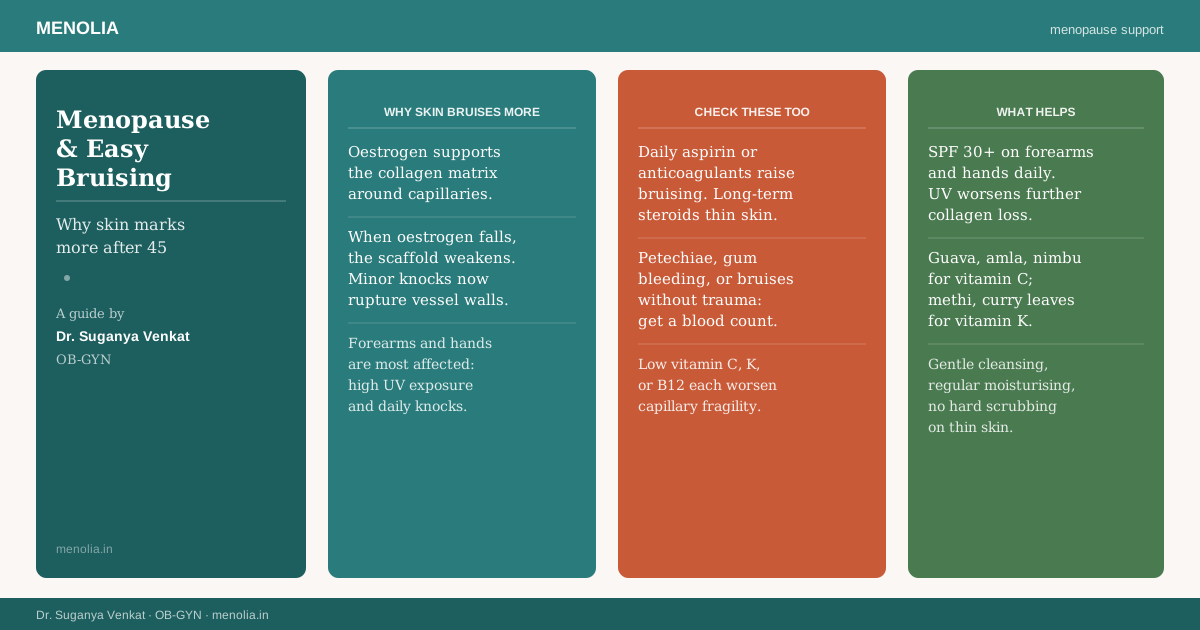
The connection to bruising is direct. Blood vessels in the skin, specifically the small capillaries, are not free-floating. They are embedded in and supported by the surrounding collagen matrix, which acts as a mechanical scaffold. When the skin receives a knock, collagen absorbs and distributes the force, protecting the capillary walls from rupturing. When collagen content drops and the dermis thins, that protective scaffold weakens. A minor force that would previously have left no mark is now enough to break the vessel wall. Blood leaks into the surrounding tissue, producing a bruise.
Two additional changes compound this.
Subcutaneous fat padding changes. The fat layer beneath the dermis also shifts after menopause, much of it redistributing centrally. The cushioning it once provided to the skin on the hands, forearms, and shins becomes thinner, leaving less protection between a knock and the underlying capillaries.
UV-damaged skin loses collagen faster. Ultraviolet radiation degrades dermal collagen independent of hormonal changes. Women with significant lifetime sun exposure on the forearms and hands (a common pattern given outdoor exposure in India) carry an additional collagen deficit in those specific areas. This is why the forearms and backs of the hands are almost always the most affected sites.
The menopause and skin dryness post covers the broader picture of oestrogen-driven collagen loss and its effects on skin texture, hydration, and elasticity.
Actinic purpura: the specific pattern to recognise
Dermatologists use the term actinic purpura (also called senile purpura) for the bruising pattern that appears characteristically in postmenopausal women on sun-exposed skin. Several features distinguish it from bruising with a different cause.
Flat and sharply defined. Actinic purpura is not raised or palpable. It sits within the skin surface, not above it. The edges are relatively sharp. This is different from vasculitis, which produces raised, palpable purpura, and from infected tissue, which is warm and tender.
Purple fading to brown. The initial colour is purple-red, from fresh blood in the dermal tissue. As the red blood cells break down over days, haemosiderin (a yellowish-brown iron compound) is deposited in the dermis. Old actinic purpura often leaves a brownish stain that persists for four to six weeks after the purple has gone, and in women with extensive chronic sun damage, some staining can become long-lasting.
Forearms, hands, and lower legs. These are the areas with the highest lifetime UV exposure and the most frequent incidental knocks from daily activity. Bruising predominantly in these locations fits the pattern. Bruising predominantly elsewhere, especially the trunk or face, points in a different direction.
No systemic symptoms alongside it. Actinic purpura in isolation, without gum bleeding, petechiae (pinprick spots on skin or palate), heavy nosebleeds, or prolonged bleeding from small cuts, is a local skin-fragility phenomenon, not a signal of a systemic bleeding disorder.
If this description matches what you are seeing, it is most likely a skin-architecture consequence of the menopause transition. If it does not match quite right, the section below is relevant.
If the bruising pattern is new and you are unsure whether it needs a check-up, message Dr. Suganya on WhatsApp. She consults online across India via video call and can help you think through whether blood tests are appropriate.
When to look beyond menopause: the key differentials
Knowing which features point to a cause other than hormonal skin thinning is the most useful part of this topic. These are the ones most relevant in women over 45.
Medications. This is the single most common non-hormonal reason for easy bruising in this age group. Low-dose aspirin, taken daily for cardiovascular prevention, inhibits platelet aggregation and extends bleeding time, producing larger bruises from minor knocks. Clopidogrel has a stronger effect. Warfarin and the newer anticoagulants (apixaban, rivaroxaban) significantly increase bruising. Non-steroidal anti-inflammatory drugs used regularly also reduce platelet function. Long-term oral corticosteroids, prescribed for inflammatory conditions, thin the skin directly and substantially increase bruising. If bruising has worsened since starting a new medication or changing a dose, the timing itself is often the most important clue.
Vitamin C. Ascorbic acid is a cofactor in collagen synthesis at every step. Without adequate vitamin C, the body cannot properly cross-link the collagen chains that give skin and capillary walls their tensile strength. Severe deficiency produces classic scurvy, but subclinical deficiency can manifest as increased bruising and slow wound healing before any other obvious sign. Guava (amrood) is one of the richest sources of vitamin C available in India: one fruit provides more than the daily requirement. Fresh nimbu (lemon), amla, and tomatoes all contribute meaningfully, and regular inclusion of these in the diet addresses the risk at minimal cost.
Vitamin K. Vitamin K is required for activating several clotting factors in the coagulation cascade. Deficiency severe enough to cause bruising is not common in women eating a varied diet, but it can appear after prolonged broad-spectrum antibiotic use (which depletes the gut bacteria that synthesise some vitamin K) or with very low intake of green vegetables. Methi (fenugreek leaves or seeds), palak (spinach), curry leaves, and moringa (drumstick leaves) are all high in vitamin K and standard in South Indian cooking. Women on warfarin need a consistent rather than high intake, as large fluctuations in vitamin K affect INR stability, but for women not on anticoagulants there is no reason to restrict these foods.
B12. Severe vitamin B12 deficiency affects platelet maturation through its role in haematopoiesis and can lead to low platelet counts, increasing bleeding tendency. This is a late-stage manifestation. Earlier, B12 deficiency typically presents with fatigue, neurological tingling, or a sore tongue. Vegetarians, women on long-term proton pump inhibitors, and women over 50 (as gastric acid secretion declines with age, reducing B12 absorption) are at higher baseline risk. The Menolia post on B12 deficiency after 40 covers this in more detail, including which blood test to request.
Liver function. The liver manufactures most of the body’s clotting factors. Significant liver disease impairs this production and leads to a tendency to bleed and bruise. Non-alcoholic fatty liver disease is increasingly common in perimenopausal women, driven by the same metabolic shifts that raise cholesterol and blood sugar at this stage of life. Mild fatty liver does not typically impair clotting factor synthesis, but more advanced liver disease does. If bruising is paired with any yellowish tinge to the skin or eyes, persistent unexplained fatigue, or recent weight changes, liver function tests are worth requesting. The menopause and fatty liver post explains the connection between the menopause transition and liver health.
Platelet disorders. These produce a recognisably different pattern from actinic purpura. Bruises appear in areas not subjected to trauma: the trunk, the inner upper arms, around the face. Petechiae appear on the skin, especially the lower legs, or on the palate. Gum bleeding when brushing teeth, nosebleeds that are difficult to stop, and prolonged bleeding from small cuts are the accompanying signs. Autoimmune thrombocytopenia is not uncommon in middle-aged women, and it is entirely treatable once identified. A full blood count reveals the platelet count and is the straightforward starting test.
Thyroid. Severe hypothyroidism can affect platelet aggregation and contribute to easy bruising, though this is less common than the mechanisms above. Most women with thyroid-related bruising have other symptoms pointing to thyroid dysfunction: fatigue, cold intolerance, constipation, weight gain, or a slower pulse. The thyroid changes in menopause post covers the overlap between thyroid function and the menopause transition.
When to see a doctor
Most bruising after 45 does not need urgent investigation. These patterns do.
Bruises appearing without any identifiable knock. If you cannot trace the bruise to any contact, that matters.
Bruises in unusual locations. Forearms, hands, and shins are expected in skin thinning. Bruising on the trunk, the face, or the inside of the upper arms is not typical of actinic purpura and warrants investigation.
Petechiae. Small, flat, red or purple pinprick spots that do not blanch (turn white) when pressed are a sign of platelet-level bleeding, not skin thinning, and need assessment.
Bleeding elsewhere. Gum bleeding when brushing, nosebleeds that are difficult to control, or blood in urine or stool alongside new bruising needs medical review.
Bruising that started with a new medication. Often the explanation is clear, but it is still worth a conversation with the prescribing doctor to confirm the current dose and indication remain appropriate.
Bruising alongside pallor, fatigue, a sore tongue, or tingling in the hands and feet. These are the constellation of B12 or folate deficiency signs. A full blood count and B12 level are the two tests to start with.
The Menolia red flags guide covers the full range of menopause symptoms that warrant prompt medical review.
What helps
For bruising that fits the actinic purpura pattern, forearms and hands, from minor knocks, with no systemic symptoms, several practical measures make a genuine difference.
Protect skin from further UV damage. Ultraviolet radiation breaks down dermal collagen independent of the hormonal loss. Applying SPF 30 or above to the forearms and hands when outdoors, or covering them with light cotton or a dupatta, limits the UV contribution to ongoing collagen loss. In India this is worth maintaining year-round, not only in peak summer.
Vitamin C daily. Guava, amla, nimbu, and fresh tomatoes are accessible, inexpensive, and consistent with ordinary Indian eating. Including one of these every day keeps vitamin C intake well above the threshold at which capillary and collagen synthesis suffer.
Adequate protein. Collagen is a protein and is rebuilt from amino acids. A diet chronically low in protein reduces the raw material for collagen repair. Toor dal, rajma, chana, ragi, and dahi are all good everyday sources. Eating a dal-based main meal daily covers the foundation.
Vitamin K from green vegetables. Methi, curry leaves, palak, and moringa leaves support normal coagulation and are already part of most South Indian cooking. No special supplementation is needed; regular inclusion in meals is sufficient.
Gentle skin care. Harsh soaps, vigorous scrubbing, or very hot water worsen the barrier function of skin that is already thinner and drier than before. Gentle cleansing and regular moisturising support skin integrity. The Menolia guide to menopause skin care covers the broader approach.
Handling bruised skin carefully. Rubbing or pressing hard on a fresh bruise spreads blood further into the dermal tissue and increases the eventual size of the mark. Brief cold (wrapped in cloth, not directly on skin) in the first few hours can limit the spread. After that, leaving it to reabsorb without disturbing it is the best approach.
I am Dr. Suganya Venkat, and in the consultations I run through Menolia, bruising that appears after minor knocks is one of those changes women mention almost as an afterthought, as if it is too minor to take seriously. It is worth taking seriously, not because it is usually a serious problem, but because it divides into two clear categories: the straightforward skin-architecture change that responds to nutrition and protection, and the smaller category where a blood test gives you important information. Knowing which one you are dealing with is useful.
Frequently asked questions
Is easy bruising after 45 always a menopause symptom? Most easy bruising in women after 45 is related to skin thinning from oestrogen withdrawal, a real and well-understood physiological change. It produces a recognisable pattern on sun-exposed areas like the forearms and backs of the hands. However, medications (aspirin, anticoagulants, corticosteroids), vitamin deficiencies (C, K, and B12), platelet disorders, and liver disease can all cause or worsen bruising. If bruising appears without any trauma, in unusual locations, or alongside gum bleeding or petechiae, blood tests are the appropriate next step.
What is actinic purpura and is it the same as a regular bruise? Actinic purpura (also called senile purpura) is the specific bruising pattern that appears on postmenopausal skin as a consequence of dermal thinning and collagen loss. It looks similar to an ordinary bruise but tends to be sharply demarcated, flat, appearing on sun-exposed forearms and hands from minimal trauma, and it leaves a brownish haemosiderin stain that can persist for weeks after the purple phase. The underlying mechanism is the same (blood outside vessels in the tissue) but the cause is structural skin fragility from oestrogen withdrawal rather than significant injury.
Should I get blood tests for easy bruising during menopause? If the bruising fits the classic pattern on forearms and hands with identifiable (if minor) knocks, and there are no other bleeding signs, tests are not urgent. If bruises appear without known trauma, in unusual locations, or alongside petechiae, gum bleeding, or symptoms suggesting B12 or thyroid problems, a full blood count, clotting screen, liver function tests, and B12 level are the appropriate starting tests. If bruising has clearly worsened since starting a new medication, that is a conversation with the prescribing doctor first.
Can HRT improve easy bruising? Oestrogen therapy maintains skin collagen and dermal thickness, and women on HRT show measurably less age-related skin thinning than those not on therapy (Maheux R et al, Am J Obstet Gynecol, 1994, PMID 8116726). Whether this translates to a clinically significant reduction in bruising specifically has not been studied in large trials, but the physiological basis is sound. HRT has other reasons it may or may not be appropriate for an individual woman, and bruising alone is not a primary indication. If HRT is already being used for vasomotor or other menopause symptoms, improvement in skin resilience over time is a reasonable secondary benefit to expect.
What foods help strengthen capillaries and reduce bruising? Vitamin C is the most direct nutritional support for capillary integrity, as it is a cofactor for collagen cross-linking. Guava, amla, nimbu, and fresh tomatoes are excellent everyday sources. Vitamin K from methi, palak, curry leaves, and moringa supports normal coagulation. Protein from dal, rajma, ragi, and dahi provides the amino acids needed for ongoing collagen synthesis. Regular inclusion of these foods in the diet addresses the nutritional layer of this problem without any supplementation.
I am on aspirin for my heart. Is that making my bruising worse? Very likely, yes. Aspirin irreversibly inhibits platelet function for the life of the platelet, typically seven to ten days. Even low-dose aspirin taken for cardiovascular protection consistently increases bruising from minor knocks. This is an expected effect, not a reason to stop the aspirin independently. The right response is to protect thin skin (sun protection, avoiding vigorous scrubbing, handling bruised areas carefully) and to remain alert to bruising beyond what is expected, such as spontaneous bruises or bruises in unusual locations. Do not stop or reduce aspirin without discussing it with the doctor who prescribed it, as the cardiovascular protection it provides is significant.
How long does a bruise from thin menopausal skin take to heal? Longer than bruises did in younger years. Actinic purpura on thin postmenopausal skin typically takes two to four weeks to move through the purple and yellow phases. The brownish haemosiderin stain that follows can persist for four to six weeks or longer, and in women with extensive chronic sun damage some deposits can become near-permanent. This extended healing time reflects the same collagen and microcirculation changes that made the bruise easier to cause. Leaving the area undisturbed and protecting it from further trauma is the practical approach.
If you are noticing new or changing bruising after 45 and want to understand what is driving it, or whether blood tests are appropriate for your situation, message Dr. Suganya on WhatsApp. She consults online, pan-India, via video call.