Many women in their mid-forties start noticing their nails in a way they never did before. Not because of how they look in nail polish, but because they keep breaking. A nail that was reliable for peeling mangoes or opening a yogurt lid now splits across the middle. The tip of the nail peels apart in thin layers. Lines appear running lengthways from the base to the tip that were not there before. Some women notice the nails seem to grow slower and need cutting less often.
These changes are common during the menopause transition, and they have a clear physiological explanation: falling oestrogen affects the structure of the nail itself. This post covers what drives the change, what other conditions can mimic it, and what practical care helps.
How oestrogen shapes your nails
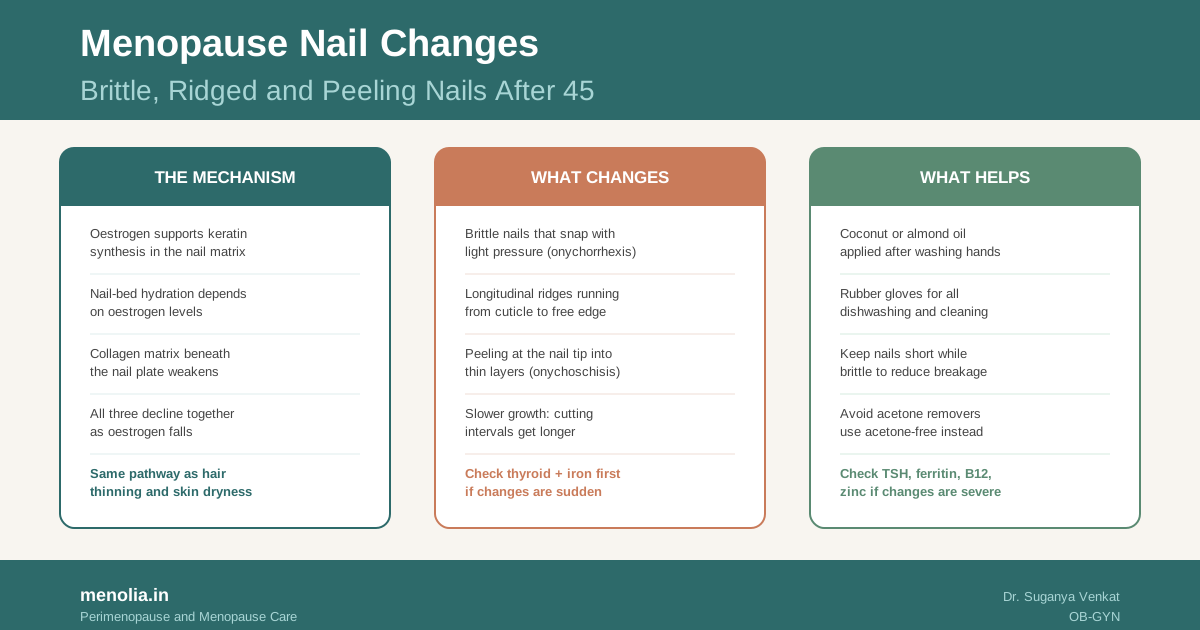
Nails are made of keratin, the same structural protein found in hair. Oestrogen plays a direct role in keratin synthesis. The cells that produce keratin in the nail matrix, the growing zone at the base of the nail, respond to oestrogen signals. When oestrogen is at normal reproductive levels, keratin is produced at a healthy rate, nail-plate cells bind tightly together, and the nail plate remains flexible and smooth.
Oestrogen also maintains hydration in the nail bed, the soft tissue the nail plate rests on. This hydration gives the nail its flexibility. A well-hydrated nail bends rather than snaps. A dehydrated nail breaks.
Beneath the nail plate sits a collagen-rich connective tissue layer. Oestrogen supports collagen production throughout the body, including in this tissue beneath the nail. This collagen scaffolding keeps the nail plate aligned and smooth. When collagen production falls, the scaffolding becomes less regular, which shows up as ridging on the nail surface.
A 2013 review by Thornton documented the broad role of oestrogen in maintaining the skin and its appendages, including the changes in keratin, collagen, and hydration that follow falling oestrogen (Thornton MJ. Dermatoendocrinol. 2013;5:264-270. PMID 24194966). Although the review addresses the skin as a whole, its findings on keratin and collagen apply directly to the nail, which is a specialised skin appendage sharing the same hormonal dependencies.
As oestrogen falls in perimenopause and continues to fall after the final period, all three of these functions, keratin production, nail-bed hydration, and subungual collagen, decline together. The nails show the result.
The same mechanism drives changes in hair and skin during the menopause transition. If you have noticed thinning hair or increased skin dryness alongside nail changes, they are all part of the same hormonal picture. See Menopause Hair Loss and Thinning and Menopause Skin Dryness and Collagen Loss for those connected aspects.
The three changes women notice most
Brittle nails that split and break easily
The most common complaint is nails that break more easily than before. A nail that used to survive a day of cooking or hand-washing now snaps with light pressure. The nail plate becomes thinner as keratin production slows, and thinner nails are both weaker and more prone to dehydration. Clinically, this pattern of thinning, longitudinal splitting, and rough nail surface is called onychorrhexis.
Longitudinal ridges
Running from the cuticle to the free edge, these vertical ridges are a normal part of aging but become more pronounced during the menopause transition. They reflect the irregularity in nail matrix activity that follows hormonal change and reduced collagen support in the underlying tissue. They are benign. They are not a sign of disease. Many women find them distressing because they catch the light and make nails look unhealthy, but they carry no clinical significance beyond that.
Peeling at the nail tip
The free edge of the nail splits horizontally into thin layers, which then peel off. The clinical term is onychoschisis or lamellar onychoschizia. This happens because the intercellular bonds between nail-plate cells weaken as hydration falls. Each layer of the nail plate is normally sealed together by lipids and moisture. When moisture is chronically depleted, the layers separate from the free edge inward, where moisture loss is greatest. Repeated wetting and drying, such as from frequent dishwashing without gloves, accelerates this. The dehydration that menopause drives creates the underlying vulnerability; the daily routine delivers the physical stress that reveals it.
Slower nail growth
Nail growth rate is partly driven by hormonal signals. Nails grow more slowly with age in general, and the menopause transition can accelerate this slowing. Women who were accustomed to trimming their nails every ten days may find the interval extends to two weeks or longer. This simply reflects reduced cellular turnover in the nail matrix.
Other causes to consider alongside menopause
Nail changes in women in their forties and fifties are not always from menopause alone. Several conditions that become more common at this life stage produce similar nail changes, and because management differs, it is worth checking them.
Hypothyroidism
Underactive thyroid slows metabolism throughout the body, including in the nail matrix. Hypothyroid nail changes include slow growth, brittleness, and sometimes a yellowish or dull appearance. Because hypothyroidism and perimenopause are often concurrent in women over forty-five, and because their symptoms overlap considerably (fatigue, dry skin, hair thinning, mood changes), it is easy to attribute everything to menopause without checking the thyroid. A simple TSH blood test will clarify this quickly. If you have nail changes alongside fatigue, weight gain, cold intolerance, or hair thinning, ask your doctor to include TSH in the next blood panel. See Menopause and Thyroid Changes for more on how these two conditions intersect.
Iron deficiency
Iron deficiency, even before it becomes full anaemia, changes nail quality. The classic sign of severe iron deficiency is koilonychia, where the nails become concave and spoon-shaped. More commonly, women with moderate iron deficiency simply notice brittle, fragile nails that look identical to menopause-related nail changes. A ferritin test is the most sensitive early indicator of iron stores. It measures stored iron rather than just the circulating haemoglobin that a routine blood count checks, so it catches iron depletion earlier. Iron-rich Indian foods include ragi, til (sesame), rajma, chana, and palak. Eating them with a vitamin C source (amla, lime, tomato) improves absorption from plant foods.
Zinc deficiency
Zinc is required for nail matrix cell growth. Low zinc can produce Beau’s lines, horizontal grooves across the nail that appear when nail growth slows or pauses, as well as general brittleness and occasional white spots. Dahi, rajma, til, and pumpkin seeds are good dietary sources. Zinc is less commonly tested than iron or thyroid but worth asking for if nail changes are prominent and thyroid and iron come back normal.
Vitamin B12 deficiency
B12 deficiency can cause nail changes including darkening or streaking of the nail, slow growth, and brittleness. B12 deficiency is common in women who have followed vegetarian or vegan diets for many years, and in women on metformin for PCOS or diabetes, since metformin reduces B12 absorption from the gut. Worth checking alongside iron and thyroid if any of these risk factors apply to you.
Repeated water exposure and harsh detergents
Chronic wetting and drying is one of the most common causes of brittle, peeling nails, independent of menopause. Frequent dishwashing without gloves, extended cooking with repeated hand rinsing, or any work that keeps hands in water subjects the nail plate to repeated expansion and contraction cycles that gradually strip lipids and weaken intercellular bonds. When menopausal changes are already reducing nail hydration, this daily physical stress produces damage faster. A single change, wearing rubber gloves for kitchen and cleaning tasks, reduces this considerably.
In Dr. Suganya Venkat’s consultations at Fertilia, nail changes often come up in the context of a broader conversation about what oestrogen was quietly maintaining and what its decline begins to reveal. Nails, skin, hair, and connective tissue are all keratin or collagen-dependent structures, and changes in them together give a coherent picture of where the transition is heading. You can read about the related skin changes at Menopause Skin Care and What Changes and the easy bruising that comes from similar connective tissue shifts at Menopause and Easy Bruising.
If you have noticed your nails changing and you are not sure whether it is menopause, a nutrient gap, or a thyroid issue, a conversation with a doctor who can look at your full picture is the most direct route to an answer.
Talk to Dr. Suganya on WhatsApp
Practical steps that help
There is no single measure that fully reverses oestrogen-driven nail changes without addressing the underlying hormonal shift. But practical steps make a meaningful difference to nail resilience and comfort.
Keep nails short during this period
Long nails have more leverage when they catch on something, and leverage is what breaks a brittle nail. Keeping nails at or just below fingertip length reduces mechanical stress on the free edge. The benefit is immediate and costs nothing.
Apply oil or cream immediately after washing
The window immediately after washing is when water is still in the nail plate, and applying a barrier at that point seals the moisture in rather than letting it evaporate. Nariyal tel (coconut oil) is an affordable, effective option. Sesame oil (til tel) and almond oil also work. A small pot kept beside the kitchen sink turns this into a habit rather than an intention. Any hand cream containing glycerin or urea as active ingredients will also help. Plain petroleum jelly (Vaseline) is effective and underrated for nail and cuticle care.
Rubber gloves for water tasks
For dishwashing, cleaning surfaces, or any task involving prolonged water exposure, wearing rubber gloves prevents repeated wetting and drying cycles that degrade the nail plate. This one change, more than any supplement, consistently reduces nail fragility over time.
Avoid acetone-based nail polish removers
Acetone strips lipids from the nail plate and accelerates the same dehydration process that menopause is already driving. Acetone-free removers are widely available and work adequately for regular nail polish, though not for gel or acrylic. If you do use acetone, follow immediately with coconut or almond oil.
Eating for nail health
A varied diet with adequate protein supports keratin production broadly, since keratin is a protein. Specific nutrients worth attention:
- Iron: ragi, til, rajma, chana, palak. Absorption from plant sources improves with a vitamin C source alongside.
- Zinc: dahi, rajma, til, pumpkin seeds, whole grains.
- Vitamin B12: important for vegetarians and anyone on metformin. Eggs, dairy, or supplementation if dietary intake is consistently low.
- Protein overall: low-protein diets show in nail and hair quality before other systems are obviously affected.
Biotin: what the evidence shows
Biotin (vitamin B7) is widely marketed for nail and hair strength and is a common supplement recommendation in menopause. The evidence is limited. Lipner and Scher reviewed the available literature and found that while case reports and small studies suggested benefit for people with brittle nails, rigorous randomised controlled trials in the general population are lacking (Lipner SR, Scher RK. J Dermatolog Treat. 2018;29(4):411-414. PMID 29057689). Biotin is unlikely to cause harm at standard supplement doses of 2.5 to 5 mg per day. However, high-dose biotin interferes with several laboratory tests, including thyroid function tests and troponin assays used in cardiac care. If you are having blood tests done while taking biotin, tell your doctor or the lab so they can account for this. The US FDA issued a safety communication on this interference in 2017 after cases of falsely normal troponin results in people with cardiac disease.
What does not help
Gelatin supplements are sometimes promoted for nails and hair but have no clinical evidence of benefit. Nail “hardeners” containing formaldehyde can make nails temporarily harder but with repeated use increase brittleness by making the nail too rigid and prone to cracking. These are best avoided.
For women considering HRT for other symptoms
For women already discussing hormone replacement therapy with their doctor for hot flashes, sleep, or bone protection, oestrogen does improve skin and nail quality as a secondary benefit. It is not a reason to start HRT for nail changes alone, but it is part of the broader picture when weighing up HRT. Nail and skin improvement reflects the connective tissue and collagen benefit that oestrogen replacement provides. Your doctor is the right person to help you weigh that up in the context of your full health history.
Also worth reading: Menopause and Itchy Skin, which covers a related skin change that shares some of the same management steps.
Frequently asked questions
Can menopause cause nail ridges?
Yes. Longitudinal ridges running from base to tip become more common with age and are more pronounced during menopause because falling oestrogen reduces collagen production in the tissue beneath the nail plate. The ridges are benign and cosmetic. They do not indicate disease. They do not need treatment, though keeping nails buffed and moisturised reduces their visibility.
Do nails grow slower during menopause?
Nail growth does slow with age, and the menopause transition can accelerate this. Women who trimmed their nails every ten days may find the interval extends to two weeks or longer. This reflects reduced cellular turnover in the nail matrix driven partly by lower oestrogen levels. It is not harmful, though it does mean recovery from a broken nail takes longer than it used to.
How do I know if my brittle nails are from menopause or from something else?
The nail changes from menopause, hypothyroidism, iron deficiency, and B12 deficiency look similar. A blood panel that includes TSH, ferritin (not just haemoglobin), B12, and zinc will tell you whether a nutrient or thyroid issue is contributing. If those come back normal and you are in the perimenopause or postmenopause range, menopause is the most likely explanation. It is worth doing the blood tests before assuming everything is hormonal.
Does biotin help with menopause nail changes?
Biotin is commonly taken for nail fragility. The evidence from controlled studies is limited. It is unlikely to cause harm at standard doses of 2.5 to 5 mg per day, but high-dose biotin interferes with thyroid function tests and cardiac enzyme tests. If you are on biotin and having blood work done, tell the lab or your doctor so they can adjust for this.
Menopause ke baad nakhoon kyun toote aur kamzor ho jaate hain?
Menopause ke baad oestrogen ka star kam ho jaata hai, jisse nail matrix mein keratin ki production aur nail bed ki hydration dono kam hote hain. Isse nakhoon patle, kamzor aur jaldi toote hain, aur unki growth bhi slow ho jaati hai. Rubber gloves ka istemal aur nariyal ya til tel ki malish helpful hoti hai. TSH, ferritin aur B12 check karna bhi useful hai, kyunki inki kami bhi same changes la sakti hai.
Are there Indian foods that help with nail health during menopause?
Adequate protein intake matters most broadly, since keratin is a protein. For specific nutrients: iron from ragi, til, rajma, chana, and palak (with lime or amla for absorption); zinc from dahi, til, rajma, and pumpkin seeds; B12 from dairy and eggs, or supplementation for vegetarians. No single food reverses hormonal nail changes, but deficiency in any of these nutrients will make fragility worse and is worth addressing in its own right.
Is nail peeling different from nail breaking in menopause?
Yes, and they respond to slightly different things. Nail breaking (onychorrhexis) is the brittle snapping of the nail plate, driven mainly by thinning keratin. Nail peeling at the tip (onychoschisis) is horizontal separation of the nail plate into layers, driven mainly by dehydration and lipid loss at the free edge. Both are common in menopause. Peeling responds best to hydration measures (oil after washing, gloves for water work), while brittle breaking reflects the underlying keratin change more directly. In practice, most women have both going on at the same time.
If nail changes are one of several things you have noticed shifting in your forties or fifties, a video consultation with Dr. Suganya Venkat can help you understand what is driving what and whether any of it warrants further investigation.