You go for a routine check-up, perhaps an abdominal ultrasound ordered alongside a thyroid panel or a gynaecological review. The report comes back with a phrase you were not expecting: Grade 1 hepatic steatosis or bright liver or mild fatty changes noted. You do not drink alcohol. Your weight is not dramatically high. You feel well. So what is this, and why now?
If you are in your mid-to-late 40s or early 50s, there is a good chance the answer connects to menopause. Fatty liver is one of the metabolic shifts that follows oestrogen decline, and it is one of the less-discussed ones. Understanding the connection takes the alarm out of that scan report and puts you in a position to act on it early.
What “Fatty Liver” Means on Your Scan Report
Fatty liver, now formally called MASLD (Metabolic dysfunction-Associated Steatotic Liver Disease), means that more than 5% of liver cells have accumulated fat. An international consensus of hepatology societies updated the name in 2023 (Rinella ME et al. Hepatology 2023; 78(6):1966-1986. PMID 37363821) to replace the older NAFLD (Non-Alcoholic Fatty Liver Disease), reflecting that the condition is driven by metabolic factors, not simply by the absence of alcohol.
Your scan report may still use NAFLD or the older terminology. Both refer to the same condition.
There is a spectrum:
- Grade 1 steatosis (mild): More than 5% but less than 33% of liver cells contain fat. The most common finding on a routine scan. Reversible with lifestyle changes.
- Grade 2 steatosis (moderate): 33-66% of liver cells affected. Requires closer monitoring.
- Grade 3 steatosis (severe): Over 66% of liver cells affected. Needs specialist input.
- MASH (Metabolic Steatohepatitis): Steatosis plus liver inflammation. A smaller proportion of cases.
- Fibrosis and cirrhosis: Advanced stages, rare at the Grade 1 level typically caught on routine checks.
Most women who receive a fatty liver finding on a routine scan are at the mild, reversible end of this spectrum. The relevant question is not whether to panic, but how to address it before it progresses.
The Oestrogen-Liver Connection
Your liver is not the first organ most people associate with menopause, but oestrogen plays a direct role in how the liver handles fat. A comprehensive review of sex differences in NAFLD confirmed that pre-menopausal women have significantly lower rates of fatty liver than men of the same age, and that this protection disappears at menopause (Lonardo A et al. Hepatology 2019; 70(4):1457-1469. PMID 30924946).
Three mechanisms explain why.
1. The liver loses direct hormonal protection.
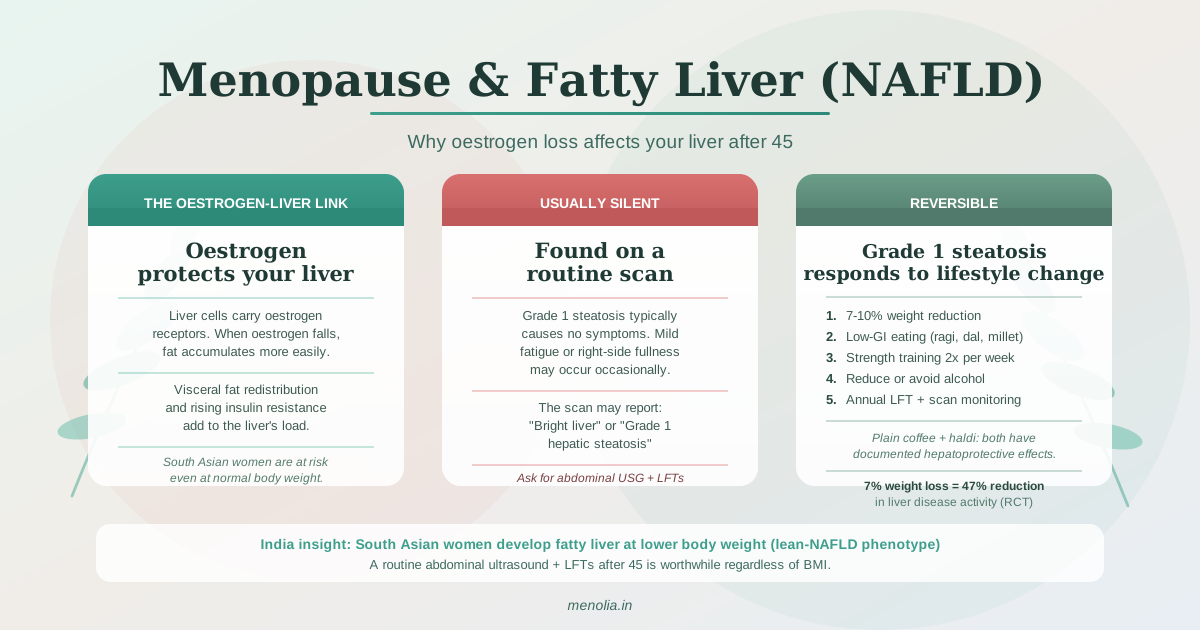
Oestrogen receptors (primarily ERα) are present in liver cells. When oestrogen is present, it helps regulate triglyceride handling, promotes the breakdown of fatty acids, and inhibits fat accumulation within liver cells. When oestrogen declines at menopause, this regulatory function weakens, and the liver becomes more susceptible to fat accumulation.
2. Visceral fat redistributes toward the abdomen.
The pattern of fat storage shifts after menopause from the hips and thighs toward the abdomen. Visceral abdominal fat is metabolically active. It releases free fatty acids into the portal circulation, which drains directly into the liver. The liver then receives a higher incoming fat load than it did before the hormonal shift. This is why the menopause-related shift in belly fat has a direct relationship with liver health.
3. Insulin resistance increases.
Falling oestrogen contributes to declining insulin sensitivity. As cells respond less efficiently to insulin, the liver compensates partly by increasing fat production through de novo lipogenesis. Rising blood sugar and HbA1c are visible markers of this shift, and elevated insulin itself signals the liver to store additional fat. These three pathways reinforce each other.
The Indian Context: Lean-NAFLD Phenotype
In South Asian populations, fatty liver often develops at lower body weights than in Western populations. This lean-NAFLD phenotype is well-documented. A study of a non-obese Indian population found a substantial prevalence of significant fatty liver disease in people who would not be classified as overweight by standard BMI criteria (Das K et al. Hepatology 2010; 51(5):1593-1602. PMID 20222092).
For Indian women at menopause, this has a practical implication: you do not need to be overweight to develop fatty liver through the metabolic shift that menopause triggers. A normal body weight does not protect against it. A routine abdominal ultrasound as part of a post-menopausal health review is worthwhile regardless of your BMI.
Why It Is Usually Found by Chance
Fatty liver in its early stages causes no reliable symptoms. There is no characteristic warning sign. Occasionally, a woman may notice:
- A vague sense of fullness or mild discomfort under the right ribcage
- Fatigue that persists despite adequate sleep
- A mildly elevated ALT (SGPT) on a liver function test, noticed during a routine blood panel
But in most cases, Grade 1 steatosis is found incidentally, during a scan ordered for something else entirely. The ultrasound shows the liver as slightly bright or hyperechoic compared to the kidney, and the radiologist notes steatosis or fatty changes.
If your report says “Grade 1 hepatic steatosis” and you are in perimenopause or early post-menopause, the explanation is almost certainly the metabolic shift described above. Your liver is signalling something useful about your metabolic environment at this stage of life. The useful response is to act on that signal early.
If you have received a scan report showing fatty changes and would like to understand what it means for your specific situation, Dr. Suganya Venkat sees women from across India for perimenopause and menopause concerns. You can reach her directly on WhatsApp: wa.me/919940270499. Going through your scan results alongside your full metabolic history is often the most clarifying thing a short online consultation can do.
What Reverses Fatty Liver: Five Levers
The evidence on reversing Grade 1 steatosis through lifestyle change is genuinely encouraging. This is not a permanent state.
1. Weight reduction of 7-10%
Even modest weight loss consistently reduces liver fat. A randomised controlled trial showed that losing 7% of body weight through lifestyle changes led to a 47% reduction in histological liver disease activity (Promrat K et al. Hepatology 2010; 51(1):121-129. PMID 19827166). For a woman weighing 65 kg, that is roughly 4.5 kg. This is achievable through the dietary and exercise shifts below, without a severe calorie deficit.
The AASLD practice guidance on MASLD confirms that sustained weight reduction of 7-10% consistently improves both steatosis and inflammation in the liver (Chalasani N et al. Hepatology 2018; 67(1):328-357. PMID 28714183).
2. Low-GI eating pattern
High-GI foods cause repeated spikes in blood glucose and insulin, signalling the liver to produce and store more fat. Replacing refined carbohydrates (maida, polished white rice in large portions, sugary drinks) with millets, pulses, and fibre-rich vegetables directly reduces this signal. This does not require a drastic dietary overhaul. Swapping one or two refined-grain meals a day for a millet or dal-based alternative makes a measurable difference over weeks. The menopause diet guide covers this in more detail.
3. Strength training twice a week
Resistance training improves insulin sensitivity in muscle tissue, reducing the metabolic load on the liver. Building muscle mass, which declines with oestrogen loss, is one of the most effective ways to improve glucose disposal and reduce the liver’s fat-production burden. Two sessions of body-weight exercises, resistance bands, or light weights per week is the evidence-backed starting point.
4. Reduce or eliminate alcohol
Even moderate alcohol adds to liver fat. The liver metabolises alcohol as a metabolic priority, setting aside its fat-processing work for the duration of alcohol clearance. At menopause, when the liver’s fat-handling is already under more pressure, this matters more than it did at 35. A full discussion of how alcohol interacts with menopause symptoms is in the post on menopause and alcohol. The practical position for someone with Grade 1 steatosis is to reduce frequency significantly, or to stop alcohol entirely while the liver is recovering.
5. Regular monitoring: LFTs and scan follow-up
Reversing fatty liver requires knowing where you are. An annual check that includes fasting liver function tests (ALT, AST, GGT), a fasting lipid panel (with particular attention to the triglycerides-to-HDL ratio), fasting glucose and HbA1c, and an abdominal ultrasound every one to two years gives you and your doctor the data to confirm improvement or catch progression early.
The liver’s response to lifestyle change is faster than most people expect. In the Promrat trial above, meaningful histological improvement was visible within 48 weeks of sustained lifestyle change. At Grade 1, the liver has not been damaged, only loaded. Unloading it consistently produces results.
Indian Foods That Support Liver Health
These fit naturally into a South Indian diet and work through the mechanisms above:
| Food | Why it helps | How to use it |
|---|---|---|
| Ragi (finger millet) | Low GI (around 54), high fibre, reduces post-meal insulin spikes | Ragi mudde, ragi porridge, ragi dosa, ragi roti |
| Rajma and chana | High-protein legumes reduce hepatic fat; low GI; protein-to-calorie ratio supports weight management | Dal, sundal, chana curry, rajma chawal |
| Dahi (curd) | Probiotic bacteria support the gut-liver axis; gut dysbiosis worsens liver inflammation | One bowl daily, ideally home-set with full-fat milk |
| Haldi (turmeric) | Curcumin has documented anti-inflammatory and hepatoprotective effects in multiple trials | Cooked into sabzis, haldi milk, haldi water in the morning |
| Amla (Indian gooseberry) | High Vitamin C, antioxidant support for liver cells under oxidative stress | Fresh amla, amla juice, amla powder in water |
| Palak and methi (spinach and fenugreek) | Folate and Vitamin E support hepatocyte function; fibre slows glucose absorption | Dal palak, methi paratha (with ragi or jowar flour), palak sabzi |
| Drumstick leaves (moringa) | Documented hepatoprotective properties in laboratory research; also a useful source of calcium and iron | Moringa in sambar, moringa leaves in dal |
| Plain coffee (unsweetened) | Multiple large epidemiological studies and meta-analyses consistently associate 2-3 cups of coffee daily with lower liver enzyme levels and lower risk of fibrosis progression; this association is one of the most replicated findings in liver research | Two cups daily, without sugar and with minimal milk |
| Walnuts (aakhrot) | Omega-3 fatty acids reduce hepatic triglyceride accumulation | 5-6 pieces daily as a snack |
Reduce or limit:
- Maida-based foods and packaged biscuits: High GI, repeatedly spike insulin
- Sweetened fruit juices and soft drinks: Concentrated fructose is processed by the liver and converted directly to fat
- Fried snacks in refined oil: High in pro-inflammatory fats that worsen hepatic steatosis
- Very large portions of polished white rice: Swap for smaller portions with more dal and vegetables alongside
When to See a Gastroenterologist
A Grade 1 finding on a routine scan in an otherwise well woman at menopause does not require an urgent specialist referral. Your OB-GYN and GP can monitor liver enzymes and guide lifestyle changes.
Refer to a gastroenterologist or hepatologist if:
- ALT (SGPT) is more than twice the upper limit of normal on a repeat test, taken after 3 months of consistent lifestyle changes
- The scan shows Grade 2 or Grade 3 steatosis
- There is any suggestion of fibrosis (the report may mention a firm or coarsened liver texture, or your doctor may refer for a FibroScan)
- You have both fatty liver and Type 2 diabetes, as this combination progresses more rapidly and requires closer monitoring
- The platelet count is falling on serial blood tests (a late sign of portal hypertension, rare at this stage but worth recognising)
The collaborative approach works well here. The OB-GYN addresses the hormonal context (managing cholesterol shifts, advising on HRT route if relevant, and monitoring insulin resistance), while the gastroenterologist manages liver-specific assessment. If you are considering HRT and have fatty liver, discuss the route with your OB-GYN: transdermal oestrogen bypasses first-pass liver metabolism and does not carry the same triglyceride concern as oral HRT.
Frequently Asked Questions
What is MASLD (or NAFLD) and how common is it in Indian women after menopause?
MASLD (formerly NAFLD) means more than 5% of liver cells have accumulated fat due to metabolic factors rather than alcohol. Fatty liver is increasingly common in women in their 40s and 50s, and it is particularly relevant for Indian women because of the lean-NAFLD phenotype: South Asian populations develop significant fatty liver at lower BMI thresholds than Western populations. The metabolic shift at menopause accelerates this risk regardless of body weight.
Does falling oestrogen directly cause fatty liver?
Not directly, but it removes a layer of protection. Oestrogen has a hepatoprotective effect through receptors on liver cells. When it falls at menopause, the liver becomes more susceptible to fat accumulation. This combines with visceral fat redistribution toward the abdomen and worsening insulin resistance, both of which increase the liver’s fat load. The three mechanisms together explain why fatty liver risk rises substantially at menopause.
Can fatty liver be reversed after menopause?
Grade 1 steatosis is reversible. Weight reduction of 7-10%, a low-GI eating pattern, strength training, alcohol reduction, and consistent monitoring are the evidence-backed levers. Randomised trials confirm that even modest weight loss produces significant histological improvement in the liver within 48 weeks. The earlier you act, the more completely it reverses.
Which Indian foods help with fatty liver?
Ragi, rajma, chana, dahi, haldi, amla, palak, methi, moringa, and walnuts are all liver-supportive. Plain coffee (without sugar) has one of the strongest hepatoprotective epidemiological associations in liver medicine, and two unsweetened cups daily is a simple, low-effort addition. On the other side, reducing maida-based foods, packaged juices, and sweetened drinks makes an equally meaningful difference, as fructose from sugary drinks is processed by the liver into fat.
Does HRT affect fatty liver?
Oral HRT passes through the liver on its first pass and can, in some women, modestly raise triglycerides, which adds to the liver’s metabolic load. Transdermal HRT (patch or gel) largely bypasses first-pass liver metabolism and does not carry this concern to the same degree. If you have fatty liver and are considering HRT, discuss the route of administration with your OB-GYN. This is covered in more detail in the guides on HRT in India and the estradiol patch.
I am not overweight. Can I still get fatty liver after menopause?
Yes. This is the lean-NAFLD phenotype that is particularly well-documented in South Asian women. Fatty liver is driven by metabolic function, not body weight alone. Visceral fat redistribution, insulin resistance, and dyslipidaemia can all develop at a normal BMI, especially after menopause and especially in women of Indian descent. A routine abdominal ultrasound as part of a post-menopausal health check is worthwhile regardless of your weight.
When should I see a gastroenterologist rather than just monitoring with my OB-GYN?
Your OB-GYN and GP can manage Grade 1 steatosis with lifestyle guidance and annual LFT monitoring. See a gastroenterologist if your ALT is more than twice the upper limit of normal on a repeat test after lifestyle changes, if the scan shows Grade 2 or 3 steatosis, or if you have both fatty liver and Type 2 diabetes (this combination progresses faster and warrants closer specialist follow-up).
A Grade 1 fatty liver finding at menopause is an early metabolic signal. It is telling you that the hormonal shift at this stage of life has increased your liver’s fat load, and that this is a good time to adjust the levers that reduce it. The evidence on reversing it is solid, and the lifestyle changes it calls for overlap substantially with what reduces your overall cardiovascular, bone, and metabolic risk at this stage of life anyway. This is one scan result that points toward action you were probably going to take in some form regardless.
If you would like to go through your specific results, your LFTs, or your metabolic picture with Dr. Suganya Venkat, you can reach her directly for an online consultation on WhatsApp: wa.me/919940270499. She sees women from across India for perimenopause and menopause concerns, and a scan report is exactly the kind of starting point from which a useful conversation can grow.