A woman came to see me last year describing a tight, pressing sensation across her chest that had started three weeks earlier. She was 49, otherwise well, and had put off mentioning it to anyone because she was afraid of what an answer might tell her. “I kept thinking, if I don’t go, it isn’t real yet,” she said. When her ECG came back completely normal, she cried in my consulting room, not from relief exactly, but from the exhaustion of carrying that fear alone for three weeks.
Chest pain after 45 sits at the exact point where a woman’s own worry and a doctor’s genuine caution overlap. It is one of the few menopausal symptoms that reasonably deserves both: taken seriously because heart disease risk does rise after menopause, and understood calmly because most chest discomfort at this age turns out to be something else entirely, usually reflux, muscle strain, anxiety, or the hormonal shifts of the transition itself.
This post is not here to tell you not to worry. It is here to give you a clear way to sort what you are feeling: the specific pattern that means get checked today, and the far more common pattern that is uncomfortable but not dangerous, so you know which one you are dealing with rather than guessing at 2 AM.
Get it checked once. That is not overreacting.
I want to say this plainly before anything else: getting a new chest symptom evaluated is not something to feel embarrassed about, and it is not “wasting a doctor’s time.” Women’s cardiac symptoms are under-assessed compared to men’s, partly because women themselves are more likely to attribute chest discomfort to anxiety or muscle strain and delay seeking care, and partly because the medical system has historically been slower to investigate chest pain in women presenting the same way as men. An ECG takes minutes. Bloodwork for cardiac enzymes, when indicated, takes an hour. Either one gives you an answer with actual data behind it, rather than a guess you carry around for weeks.
The goal of getting checked once is not to confirm something is wrong. Most of the time, it confirms the opposite, and that confirmation is worth having. Certainty is a form of relief that reassurance alone cannot give you.
New chest discomfort and not sure whether it needs same-day attention? Dr. Suganya can talk through your specific symptoms and help you decide the right next step, over a video consultation.
The pattern that needs same-day attention
These are not subtle warning signs. They are specific, and recognising them is more useful than a general instruction to “see a doctor if worried.”
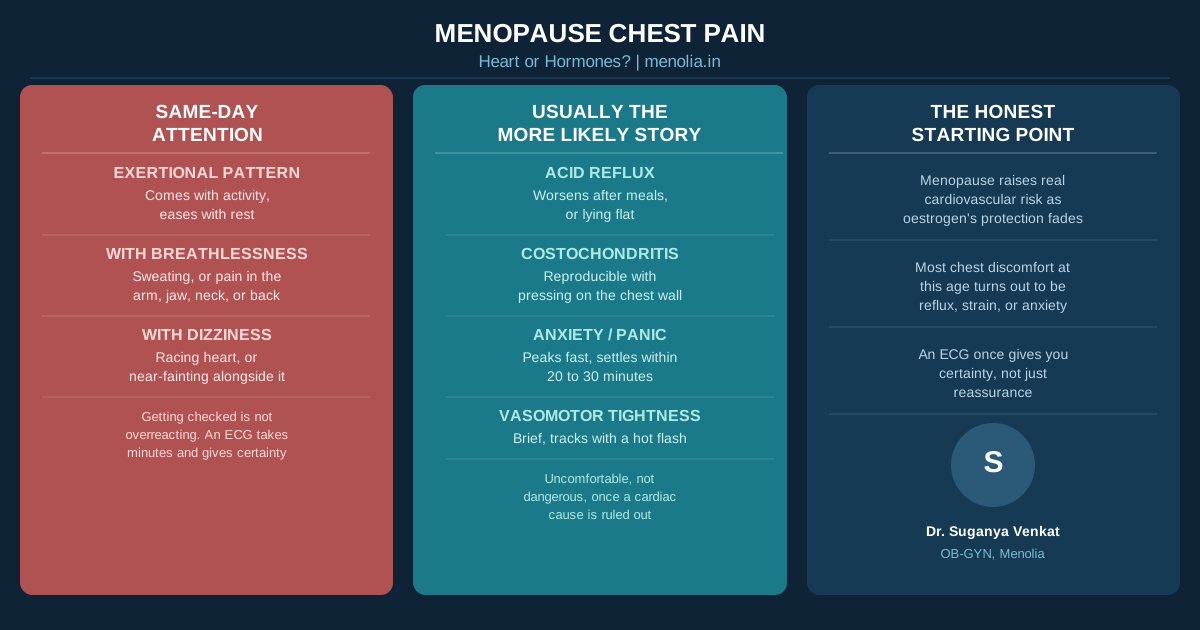
Pain that comes on with exertion and eases with rest. Chest pressure or tightness that appears when you climb stairs, walk briskly, or exert yourself, and settles again once you stop, is the classic pattern of angina, chest pain caused by reduced blood flow to the heart muscle. This exertional pattern is the single most important feature to notice.
Pain with breathlessness, sweating, or pain spreading to the arm, jaw, neck, or back. A heart attack in women does not always present as the crushing central chest pain shown in films. It often shows up as pressure or tightness accompanied by these additional features, sometimes with nausea or a cold sweat, and sometimes with the pain radiating outward rather than staying central. This combination, chest discomfort plus any of these accompanying features, needs emergency assessment, not a wait-and-see approach.
Pain with dizziness, a racing or irregular heartbeat, or a feeling of nearly fainting. When chest discomfort comes with these features together, an ECG and clinical assessment the same day is the right call.
Any chest pain in a woman with existing risk factors (diabetes, high blood pressure, high cholesterol, a smoking history, or a family history of early heart disease) deserves a lower threshold for getting checked, even if the pain itself feels mild. Menopause raises cardiovascular risk as the protective effect of oestrogen falls away, and risk factors that were manageable before 45 carry more weight afterward.
If any of this describes what you are feeling right now, please seek care today rather than finishing this article first.
The far more common picture: what usually turns out to be true
For the large majority of women in their 40s and 50s who come to me with new chest discomfort, once a cardiac cause has been reasonably excluded (which is the point of getting checked, not a step to skip), the explanation is one of these four.
Acid reflux and heartburn
This is, by a wide margin, the most common cause of a burning or pressing chest sensation that gets mistaken for a heart problem. Reflux tends to worsen during perimenopause, both because falling progesterone relaxes the muscle at the top of the stomach that normally keeps acid down, and because many women are eating later, sleeping less, and carrying more stress than they were a decade earlier. The burning typically sits centrally, often worsens after meals or lying flat, and can be accompanied by a sour taste or a lump-in-the-throat sensation. Our full guide to menopause and acid reflux covers the hormonal mechanism, the common Indian food triggers, and what actually helps.
Costochondritis and musculoskeletal chest wall pain
This is inflammation of the cartilage connecting the ribs to the breastbone, and it is a frequently overlooked cause of chest pain in women at this stage of life. The defining feature is that the pain is reproducible: pressing on the chest wall over the breastbone or along the rib margins recreates the exact pain you have been feeling, and it often worsens with certain movements, a deep breath, twisting, or reaching overhead, and stays essentially unchanged whether you are resting or active. This distinguishes it clearly from angina, which is triggered by exertion specifically and eases at rest, not by touch. Costochondritis usually settles with anti-inflammatory measures and time, and does not indicate any heart problem.
Anxiety and panic-related chest tightness
Chest tightness, a racing heart, and breathlessness are core features of a panic episode, and perimenopause makes panic attacks more likely for many women for the first time in their lives, driven by the same erratic oestrogen swings that destabilise mood and the nervous system’s fight-or-flight balance. The tightness in a panic episode tends to come on quickly, is often accompanied by a sense of dread and tingling in the hands or around the mouth, and typically resolves within 20 to 30 minutes as the adrenaline surge passes. Our guide to menopause panic attacks covers how to tell this pattern apart from a cardiac one and what genuinely helps once you know that is what it is.
Vasomotor chest tightness alongside a hot flash
Some women notice a brief tightness or pressure sensation in the chest right at the start of a hot flash, before the heat and flushing fully arrive. This is thought to relate to the same sudden autonomic nervous system surge that triggers the flash itself, the same pathway that also produces the palpitations many women notice alongside hot flashes. It is brief, tends to track closely with other flash symptoms, and settles as the flash passes.
A simple way to tell these apart
None of this replaces a doctor’s assessment, especially the first time a new symptom appears. But this comparison can help you describe what you are feeling more precisely, which makes any consultation faster and more useful.
| Feature | Cardiac pattern | Usually benign |
|---|---|---|
| Trigger | Comes on with exertion | Comes on with meals, position, touch, stress, or a hot flash |
| What changes it | Eases specifically with rest | Reflux worsens lying flat; costochondritis reproduces with pressing; anxiety settles as the surge passes |
| Accompanying features | Breathlessness, sweating, arm/jaw/back pain, nausea | Sour taste (reflux), reproducible tenderness (costochondritis), dread and tingling (anxiety) |
| Duration | Persists or worsens until treated | Reflux and vasomotor tightness are typically brief; anxiety-related tightness settles within 20 to 30 minutes |
If you genuinely cannot place your symptom into either column with confidence, that uncertainty is itself the reason to get it checked. You do not need to self-diagnose before seeing someone.
What helps, once a cardiac cause is ruled out
For reflux: smaller, earlier evening meals, avoiding lying down within two to three hours of eating, and reducing common triggers (very spicy food, excess caffeine, alcohol) make a genuine difference for most women. The reflux guide has the full detail.
For costochondritis: anti-inflammatory measures, warm compresses, and avoiding the specific movements that reproduce the pain usually resolve it over several weeks. It is uncomfortable, not dangerous, and does not require ongoing investigation once identified.
For anxiety-driven tightness: paced breathing during an episode, addressing sleep and caffeine intake, and support for the underlying anxiety when it is frequent all reduce how often this happens. This is not a symptom to push through silently.
For vasomotor chest tightness: the same measures that reduce hot flash frequency overall, layered clothing, a cooler bedroom, and identifying your personal triggers, tend to reduce this alongside the flash itself. The hot flash guide covers the evidence in depth.
Across all of these: a conversation with your gynaecologist about your overall cardiovascular risk at this life stage, blood pressure, cholesterol, blood sugar, and lifestyle factors together, is worth having regardless of what today’s chest pain turns out to be. Menopause is the point where this risk profile shifts, and getting ahead of it matters more than any single episode.
Frequently Asked Questions
Can menopause itself cause chest pain?
Yes, indirectly. Menopause does not cause chest pain through a single direct mechanism the way it causes hot flashes, but several menopause-related changes contribute to it: worsening acid reflux from falling progesterone, brief vasomotor tightness alongside hot flashes, and a higher likelihood of panic attacks and anxiety, all of which can produce chest discomfort. Separately, menopause raises actual cardiovascular risk as oestrogen’s protective effect fades, which is exactly why any new chest pain at this age deserves a proper assessment rather than an assumption either way.
How do I know if my chest pain is my heart or something else?
The features most specific to a cardiac cause are pain that comes on with physical exertion and eases with rest, and pain accompanied by breathlessness, sweating, or pain spreading to the arm, jaw, neck, or back. Pain that is reproduced by pressing on the chest wall, that worsens after meals or lying flat, or that comes with a clear sense of panic and tingling points toward a musculoskeletal, reflux, or anxiety cause instead. If you are not confident which pattern fits, getting an ECG is the definitive way to know, and it is a quick, low-burden test.
Should I go to the emergency room for chest pain during menopause?
Yes, if the pain came on with exertion, is accompanied by breathlessness, sweating, or pain radiating to your arm, jaw, or back, or if you feel dizzy or close to fainting alongside it. These features warrant same-day emergency assessment regardless of your age or menopausal status. If the pain is mild, reproducible with pressing, clearly tied to meals or position, or resolving within half an hour alongside anxiety symptoms, a routine appointment with your doctor in the next few days is a reasonable step, though a first-time episode is always worth mentioning promptly.
Why does my chest feel tight right before a hot flash?
Some women notice a brief pressure or tightness sensation in the chest in the moments just before the heat and flushing of a hot flash arrive. This is believed to relate to the same sudden surge in the sympathetic nervous system that triggers the flash itself, the same pathway responsible for the heart palpitations many women notice during or after a flash. It is typically brief and resolves as the flash passes. If this tightness is severe, lasts well beyond the flash itself, or comes with other concerning features, it should still be mentioned to your doctor.
Can anxiety really cause chest pain that feels this real?
Yes, and this is worth taking seriously rather than dismissing as “just anxiety.” A panic episode produces genuine physical sensations through a real adrenaline surge, chest tightness, a racing heart, shallow breathing, and sometimes a fear of dying, all of which closely mirror a cardiac event. The sensations are not imagined, even though the underlying cause is not cardiac. The reassuring pattern is that anxiety-related chest tightness typically peaks and then settles within 20 to 30 minutes, whereas cardiac pain tends to persist or worsen until treated.
Is chest pain more dangerous for women than men during menopause?
Not more dangerous when it is cardiac, but it is more often missed or delayed, because women’s heart attack symptoms can present less classically than the crushing central chest pain typically described in men, and because women themselves, along with some clinicians, are statistically more likely to attribute chest symptoms in women to anxiety or musculoskeletal causes without adequate investigation first. This is precisely why getting a new symptom checked matters as much for women as for men, arguably more, given that historical pattern.
What tests will my doctor run for chest pain?
Typically an ECG as the first step, which takes only a few minutes and gives an immediate read on heart rhythm and any signs of reduced blood flow. Depending on your symptoms and risk factors, your doctor may also order blood tests for cardiac markers, a chest X-ray, or refer you for further cardiac evaluation such as an echocardiogram or stress test. If reflux is suspected, no cardiac testing is needed once a cardiac cause has been reasonably excluded, and the conversation shifts to managing the reflux directly.
I am Dr. Suganya Venkat, an OB-GYN with fifteen years of clinical experience, and I would rather see a woman for chest pain that turns out to be reflux than have her sit at home wondering for three weeks. Getting checked is not overreacting. It is the fastest route from uncertainty to a plan, whichever direction that plan takes.
If you are dealing with new or ongoing chest discomfort and want to talk it through, reach out to Dr. Suganya Venkat on WhatsApp. A single conversation is often enough to know what you are dealing with.