Many women in their mid-forties or later notice something they cannot quite place at first. A scent that is slightly different from what they have known for decades. Not unwashed, not unwell, just shifted. The usual deodorant that always worked now seems to need reapplying earlier. The smell after a hot flash is different in character from ordinary exertion sweat.
If this sounds familiar, you are not imagining it. Body odour can change during the menopause transition, and there is a clear physiological explanation for why. This post covers what drives the change, what other factors can overlay it, and what practical approaches genuinely help.
Your skin has two types of sweat glands
Understanding why body odour changes in menopause starts with a basic distinction in how sweating works.
Eccrine glands are found across most of the body surface. They produce watery, dilute sweat whose primary function is temperature regulation. Eccrine sweat is mostly water and salt and has very little odour on its own.
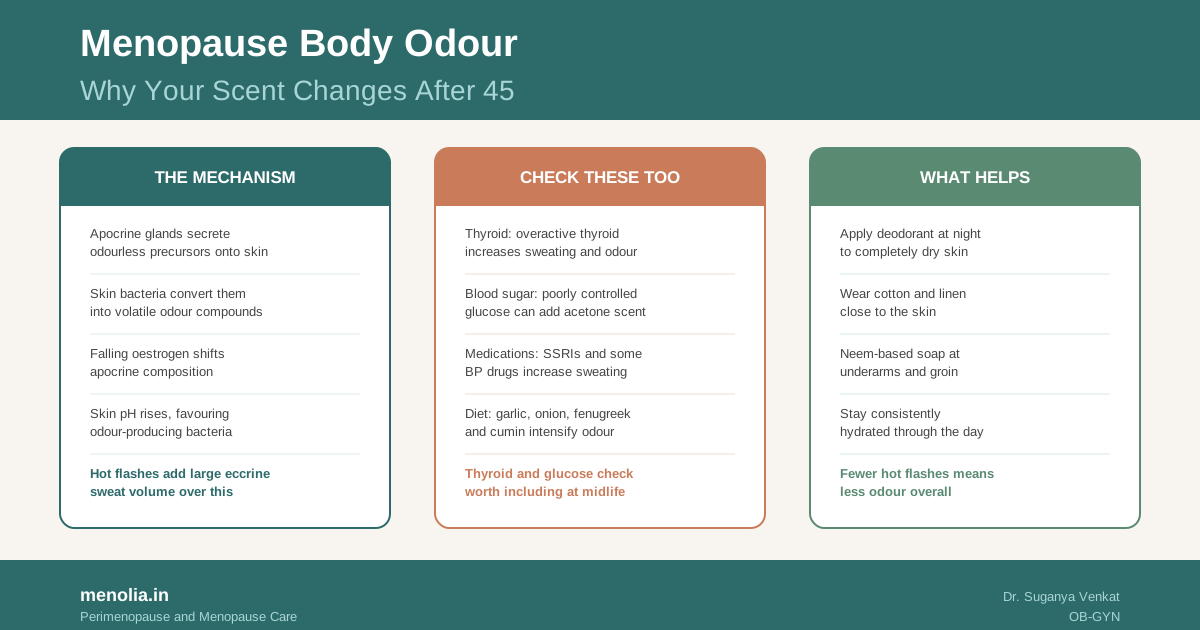
Apocrine glands are concentrated in the underarms, groin, and around the nipples. They produce a thicker, protein-rich secretion. This secretion is also odourless when it first reaches the skin surface. The odour comes from what happens next: bacteria that live naturally on the skin metabolise these apocrine secretions and produce volatile compounds, including short-chain fatty acids and thioalcohols, that we register as body odour.
Research has identified the specific bacterial enzymes responsible for this conversion, and there are two separate routes. Corynebacteria use an aminoacylase to cut 3-methyl-2-hexenoic acid free from an odourless glutamine-bound precursor (Natsch A et al. J Biol Chem. 2003;278:5718-5727. PMID 12468539). Staphylococcus hominis takes up a different odourless precursor and releases the sulphurous thioalcohol that gives underarm odour much of its character (Minhas GS et al. eLife. 2018. PMID 29966586). The bacteria doing this work are present on everyone’s skin. What varies is the amount of apocrine secretion they have to work with, and the skin conditions that favour or suppress their activity.
How falling oestrogen shifts the picture
Several things change as oestrogen levels fall, each contributing to a shift in body odour.
Apocrine gland composition alters. Apocrine glands are sensitive to hormonal signals, including androgens. As oestrogen falls and the oestrogen-to-androgen ratio shifts, the composition of apocrine secretions changes. The precursor compounds that reach the skin surface may differ from what they were during the reproductive years, giving bacteria a different substrate to work with and producing a different odour profile. Oestrogen also plays a role in the structural health of skin glands more broadly. A 2013 review by Thornton documented the wide role of oestrogen in maintaining skin integrity, hydration, and gland function, all of which are affected by the fall in oestrogen at menopause (Thornton MJ. Dermatoendocrinol. 2013;5:264-270. PMID 24194966).
For more on this, read our guide on Perimenopause Mood Changes. Skin pH shifts upward. Healthy skin is mildly acidic, typically with a surface pH between 4.5 and 5.5. This acidity is part of what dermatologists call the acid mantle, and it limits the growth of certain odour-producing bacteria. After menopause, skin tends to become less acidic, partly because oestrogen influences the mechanisms that maintain this acidity. A more alkaline skin surface can favour bacterial species that produce more odorous metabolites from apocrine secretions, so even if the volume of apocrine secretion stays similar, the odour profile can shift.
Skin barrier function changes. Oestrogen supports collagen production and the skin’s ability to retain moisture. As oestrogen falls, the skin barrier becomes less efficient. These structural changes affect how the skin’s microbial community is balanced. The skin dryness and collagen changes of menopause are covered separately, but the two processes are connected.
Hot flashes as an odour amplifier
For many women, the most immediate driver of the change is not the apocrine mechanism alone but the volume of sweating that comes with hot flashes.
Hot flashes are caused by a narrowing of the thermoneutral zone, the range of core body temperatures the hypothalamus is comfortable with. As oestrogen falls, this zone narrows, and small fluctuations in core temperature trigger disproportionate thermoregulatory responses, including flushing and eccrine sweating (Freedman RR. Semin Reprod Med. 2005;23:117-125. PMID 15852197).
This eccrine sweat is not strongly odorous on its own. But it creates damp, warm conditions on the skin that allow bacteria to multiply more rapidly, and it mixes with apocrine secretions already on the skin. The combination of high eccrine sweat volume, a shifted apocrine profile, and an altered skin environment produces a smell that many women recognise as different from ordinary exercise sweat.
Night sweats, which are hot flashes that occur during sleep, produce the same mechanism but while the body has been warm under covers for hours, giving bacteria more time to act. This is often when the change in odour is most noticeable.
If night sweats are a significant part of what you are experiencing, Menopause Night Sweats: Why You Wake Up Soaking Wet covers the mechanism and management in detail. For context on the vasomotor picture more broadly, What Are Hot Flashes? and Hot Flash Treatment: From Lifestyle to HRT are useful companions to this post.
What else can change body odour
Menopause is a common and well-understood reason for body odour changes in women over 45, but a few other contributors are worth being aware of, since they can overlay or mimic the hormonal change.
Thyroid changes. Both underactive and overactive thyroid function alter sweating patterns. Hyperthyroidism, an overactive thyroid that can coincide with the menopause transition, tends to increase overall sweating and can intensify body odour. Thyroid function changes are more common in midlife women than at other life stages. If you have also noticed unexplained weight change, significant fatigue, or heart palpitations alongside the odour change, a thyroid check is worth including in a conversation with your doctor. The thyroid and menopause guide covers this overlap in more detail.
Blood sugar fluctuations. Rising insulin resistance and blood sugar instability become more common after 45. Poorly controlled blood glucose produces metabolic byproducts including acetone, which can contribute an unusual or faintly sweet quality to body odour. If you have not had a fasting glucose checked recently, it is a reasonable thing to include in a midlife health review. Menopause and Blood Sugar explains this connection.
Medications. Some medications, including antidepressants (particularly SSRIs and SNRIs) and certain blood pressure drugs, list increased sweating as a side effect. If the body odour change coincided with starting a new medication, that is worth noting when you next speak with your prescribing doctor.
Diet. Certain foods intensify body odour regardless of menopause: garlic, onion, heavily spiced dishes with fenugreek or cumin, alcohol, and very high-protein diets can all create compounds that exit through sweat. The effect is usually short-lived after consumption. In women who are already noticing hormonal body odour changes, these dietary triggers can amplify the overall picture.
None of these require alarm. They are identifiable, and naming what is contributing gives you something specific to address rather than a vague background concern.
If your body odour has changed noticeably alongside other symptoms and you want to understand what might be driving it, message Dr. Suganya on WhatsApp. A brief conversation about your full picture can help clarify whether it is worth investigating further.
Practical management
Managing menopause-related body odour works best when it addresses both the immediate layer (bacterial activity on skin) and the underlying driver (sweating from hot flashes).
Timing matters more than product strength. Antiperspirant or deodorant is most effective when applied to completely dry skin at night, rather than in the morning after a shower. At night, sweat volume is lower, so the active ingredients have time to settle into the skin properly. Many women who switch to nighttime application find their morning odour control improves noticeably without any change in the product they use.
Fabric choice makes a meaningful difference. Synthetic fabrics trap body heat, increase local sweating, and provide a surface on which odour-producing bacteria multiply more actively. Cotton, particularly lighter cotton weaves, allows better airflow. In the Indian climate, ambient heat compounds the hot flash trigger, so loose-fit cotton or linen close to the skin is especially practical. Checking that undergarments are cotton rather than synthetic is the most important adjustment.
Gentle antimicrobial soap at the specific sites. Apocrine-driven odour is produced primarily at the underarms and groin. Gentle antibacterial soap used at these areas during showering reduces bacterial load without stripping the broader skin surface. Neem-based soaps, widely available across India, have documented antibacterial properties and tend to be gentler on skin that is already drier than it was before menopause. Avoid vigorous scrubbing, which disrupts the skin barrier and can worsen the bacterial environment over time.
Consistent hydration supports skin from within. Well-hydrated skin maintains its acid mantle more effectively. Eccrine sweat from well-hydrated women is also more dilute, which reduces the substrate available for bacterial metabolism. Six to eight glasses of water through the day is sufficient; more is not necessarily better, but consistent hydration matters more than quantity on any given day.
Dietary adjustments for short-term odour triggers. If specific foods reliably intensify your odour (particularly garlic, onion, or heavy cumin and fenugreek), reducing them on days when odour is already noticeable is a simple adjustment. A daily portion of dahi (yoghurt) supports the gut microbiome and may, over time, also have some modest benefit for the broader body microbial environment. This is a low-risk daily habit with benefits across several menopause symptoms regardless.
A practical note on clothing washing. Apocrine secretion compounds can embed in fabric, particularly synthetics, in ways that persist through a standard wash cycle. Adding white vinegar (about 60 ml) to the rinse water, or soaking garments before washing, helps break down these compounds in cotton items. This small step prevents the buildup of odour in fabric that reactivates when warm and damp again.
Addressing hot flashes reduces odour volume. Because hot flashes drive much of the eccrine sweating that amplifies body odour, approaches that reduce hot flash frequency also reduce odour. Keeping rooms cool, wearing layered cotton, avoiding hot drinks and alcohol in the hour before sleep, and where appropriate, discussing non-hormonal or hormonal options with your doctor, all work toward this. The non-hormonal hot flash guide covers these options if you want to explore that avenue.
Frequently Asked Questions
Why does my body odour smell different from sweat I have always had?
The sweat you are accustomed to is mostly eccrine sweat, which is watery and has little odour. The change in menopause comes from shifts in apocrine gland secretion (producing different precursor compounds for skin bacteria to work with), a rise in skin pH that favours more odour-producing bacteria, and the increased volume of eccrine sweating during hot flashes. The combination creates a smell that is genuinely different in character, not simply stronger. This is a physiological change, not a hygiene issue.
Does every woman notice body odour changes during menopause?
Not all women notice it to the same degree. Women who have more frequent or intense hot flashes tend to notice it more. Women with naturally higher apocrine gland activity may also be more aware of a change. The skin microbiome varies from person to person, which influences how much odour is produced from apocrine secretions. It is a common experience in the menopause transition, but the degree varies widely.
Will my body odour return to what it was before?
For most women, body odour stabilises after the menopause transition as hormonal levels settle into a post-menopausal pattern rather than fluctuating. The hot flash phase typically peaks and then gradually reduces over months to years. Women in post-menopause often find the odour picture shifts again, usually toward something closer to their pre-transition baseline. Individual variation is wide, but ongoing significant change is not the expected long-term picture.
Can changing my diet help with menopause body odour?
Diet plays a supporting role. Reducing foods with strongly odorous metabolites (garlic, onion, high amounts of fenugreek or cumin) can reduce short-term intensification. Consistent hydration dilutes eccrine sweat. Dahi and fermented foods support gut and possibly skin microbial balance over time. These are steady background contributors rather than dramatic levers, and they work best alongside practical hygiene adjustments.
I noticed my body odour changed around the time I started a new medication. Could the medication be responsible?
Yes, this is possible. Antidepressants (SSRIs and SNRIs in particular), some blood pressure medications, and certain other drugs list increased sweating as a side effect. If the timing clearly aligns with a medication start, raise it with your prescribing doctor. Do not stop a medication without discussing it first, but the side effect is worth mentioning in your next conversation.
What soap or deodorant do you recommend?
For soap, anything gentle and fragrance-light that suits your skin works. Neem-based soaps are a practical India-specific choice that tends to be gentle. For deodorant or antiperspirant, the key variable is not the brand but the application timing: dry skin at night before bed, rather than after your morning shower. Avoid strongly fragranced products designed to mask rather than address odour, as these can irritate skin that is already drier than before menopause.
When should I speak to a doctor about body odour changes?
If the odour change is accompanied by other new symptoms (unexpected weight change, significant fatigue, heart palpitations, a consistently sweet or fruity smell on the skin or in urine), it is worth discussing with your doctor, since these patterns can point to thyroid function changes or blood sugar issues. If body odour is the only new symptom, it is most likely part of the menopause transition and manageable with the practical approaches described here. You do not need to wait for additional symptoms to seek advice if the change is bothering you.
Menopause body odour changes are common and manageable. If you would like a personalised assessment of your symptom picture, message Dr. Suganya on WhatsApp. She consults online across India via video call.