A woman in her late forties came to me convinced she simply needed a holiday. She was exhausted by 3pm most days, snapping at people she loved, and could not hold a train of thought through a single meeting. She had booked leave twice in the past year hoping to reset. Both times, she came back and felt the same within a week. What finally brought her to a video consultation was not the tiredness itself but a pattern she could not explain: the worst days did not line up with her worst weeks at work. They lined up with her cycle.
This is one of the more common mix-ups I see in women between 42 and 52. Fatigue, irritability, poor concentration, and a flat, joyless feeling toward things that used to interest you: all of it fits burnout, and all of it fits perimenopause. Most women, and often the people around them, default to the workload explanation because it is the more visible one. Sometimes that is correct. Often, both are happening together, each making the other harder to manage. Telling them apart matters, because the fix for one does very little for the other.
This post covers why perimenopause and burnout look so similar on the surface, the specific features that point toward each one, why they frequently coexist and worsen each other, what a doctor actually checks to separate them, and why getting the label right changes what helps.
Why they look identical at first
Burnout and perimenopause share a strikingly overlapping symptom list. Burnout is described as a syndrome with three core features: emotional exhaustion, a sense of cynicism or detachment from the work itself, and a reduced feeling of effectiveness or accomplishment (Maslach C et al., Annu Rev Psychol, 2001, PMID: 11148311). Layer perimenopause on top and the picture gets murkier still: fatigue that does not lift with rest, irritability that surprises you as much as anyone else, difficulty holding focus through a task you used to manage easily, disrupted sleep, and a general loss of motivation for things you would normally push through.
A woman who is short-tempered, forgetful, tired, and flat by 4pm every day has no obvious way to know, just from the symptom list, whether she is looking at an unsustainable workload, a hormonal transition, or both running at once. Neither condition announces itself with a single unmistakable sign. Both build gradually, which is exactly why they get misread as “just stress” or “just getting older” for months before anyone looks closer.
What points toward perimenopause
A few features tend to separate a hormonally driven pattern from a purely work-driven one.
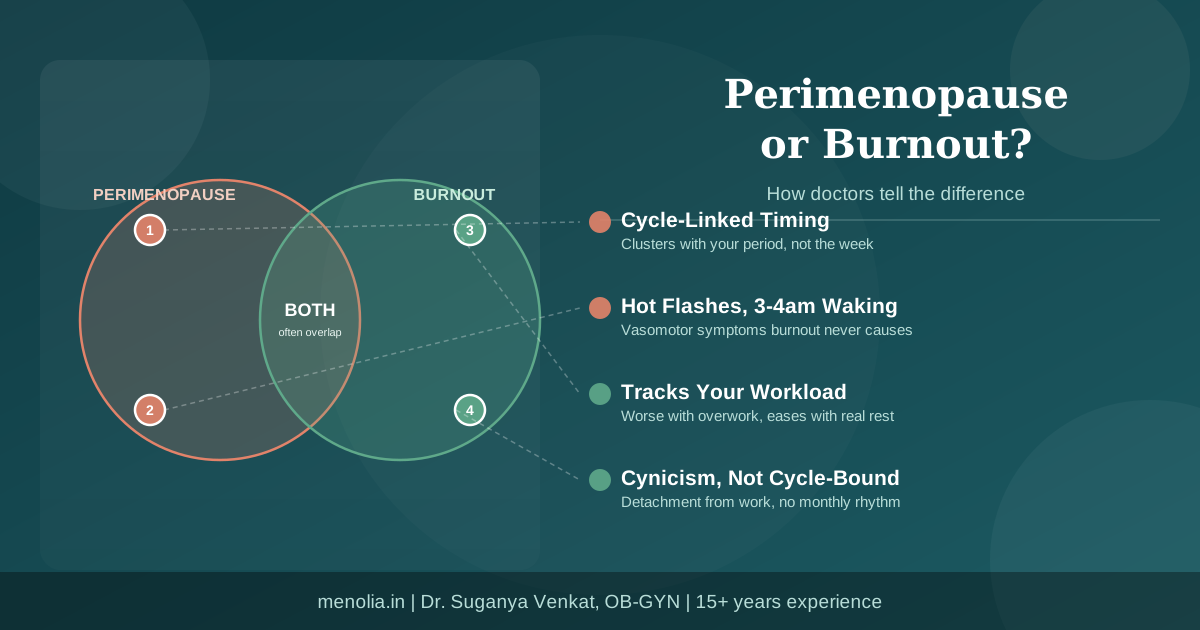
The timing tracks your cycle, not your calendar. If exhaustion, irritability, or brain fog cluster in a recognisable window, worse in the week or so before your period, or shifting as your cycle becomes less predictable, that clustering is a strong clue. Burnout does not have a two-week rhythm. A hormonal pattern usually does, even if it takes tracking a few cycles to see it clearly.
Vasomotor symptoms are present. Hot flashes and night sweats do not belong to burnout at all. If disrupted sleep is accompanied by waking up drenched, or you notice sudden waves of heat through the day that were not there two years ago, that points toward the perimenopausal transition specifically, not a general stress response.
Sleep breaks in a specific way. Burnout classically makes it hard to fall asleep because the mind will not switch off. Perimenopause more often disrupts sleep in the second half of the night: falling asleep without much trouble, then waking around 3 or 4am and struggling to drop back off, frequently alongside a night sweat. A large community study following women through the menopausal transition found sleep disturbance became significantly more common as women moved from the premenopausal stage into early and late perimenopause (Kravitz HM et al., Sleep, 2008, PMID: 18652093). This particular pattern, the early-hours wake rather than difficulty falling asleep, is worth mentioning to your doctor by name.
New joint aches or genitourinary symptoms. Unexplained joint stiffness, vaginal dryness, or changes in urinary symptoms are not something burnout produces. If any of these have appeared alongside the fatigue and irritability, they shift the picture toward a hormonal cause.
Your periods have started changing. Cycles becoming shorter, longer, heavier, lighter, or less predictable is often the clearest single clue, because it is the one symptom with no plausible workload explanation at all.
What points toward burnout
A clear temporal link to your workload. The exhaustion tracks a specific stretch of overwork, a demanding project, an unmanageable role, or a period with no real recovery time between demands, rather than a monthly rhythm.
It eases, at least partly, with real time off. Genuine burnout usually improves, even if only somewhat, after a proper stretch away from the source of the strain. If two weeks of true rest changes nothing at all, that is itself informative. It is one of the details that made the woman in my consultation room start to question the “I just need a holiday” explanation.
Cynicism and detachment, not just tiredness. Burnout has an emotional flavour that plain fatigue does not: a growing sense of disengagement from work you used to care about, irritation with colleagues or tasks that did not used to bother you, and a nagging feeling of reduced effectiveness even when your output has not actually dropped.
No cycle-linked pattern, no new physical symptoms. If your periods are unchanged, there is no vasomotor symptom, and the bad days map cleanly onto deadlines rather than dates, burnout is doing more of the work here.
Why they often happen together
These two are not mutually exclusive, and in my experience they frequently travel together. A woman entering perimenopause who is also carrying a demanding job, ageing parents, and a household is rarely choosing between two explanations. She is often managing both, and each one makes the other harder to cope with. Poor sleep from night sweats leaves less resilience for a difficult day at work. A punishing schedule leaves less bandwidth to notice or manage hormonal symptoms that would otherwise be manageable on their own. Mood symptoms, including irritability and a flatter emotional range, become more common during the perimenopausal transition itself, independent of what is happening at work, based on findings from the Study of Women’s Health Across the Nation, a large cohort that followed women through this transition for over a decade (Bromberger JT, Kravitz HM, Obstet Gynecol Clin North Am, 2011, PMID: 21961723). Layer a genuinely unsustainable workload on top of that biological shift, and the two amplify each other rather than staying separate.
Expect the answer to sometimes be “both,” and plan to treat both rather than assuming fixing one will resolve the other.
Talk to Dr. Suganya about your symptoms over WhatsApp
What a doctor tests
This is where a proper consultation earns its place over guessing at home. A few things worth knowing before you go in:
A single FSH blood test is not a reliable yes-or-no answer in perimenopause. Hormone levels, including FSH and oestradiol, fluctuate considerably from cycle to cycle during the transition, sometimes swinging between what looks like a postmenopausal range one month and a normal premenopausal range the next (Randolph JF Jr et al., J Clin Endocrinol Metab, 2004, PMID: 15070912). This is exactly why the internationally used staging framework for reproductive aging defines perimenopause primarily by changes in menstrual cycle characteristics, not by a single hormone number (Harlow SD et al., Menopause, 2012, PMID: 22343510). A doctor who orders an FSH test is not using it as a definitive diagnosis. It is one data point read alongside your cycle history and symptom pattern, covered in more depth in our perimenopause test guide.
Thyroid function. An underactive thyroid can produce fatigue, low mood, and brain fog that overlaps heavily with both perimenopause and burnout, and it is common enough in this age group to check as a matter of course. A simple TSH test usually settles the question. Our thyroid and menopause guide covers this overlap in detail.
Ferritin and iron studies. Low iron stores cause exhaustion that mimics both conditions, and are common in women with heavier or unpredictable perimenopausal bleeding.
B12. B12 deficiency becomes more common after 40 and produces fatigue, brain fog, and low mood that can be mistaken for either hormonal change or burnout, but is straightforward to correct once identified. Our B12 and menopause guide has the detail.
HbA1c and vitamin D. Both affect energy and mood, and both are worth including in a fatigue workup at this age rather than assumed to be normal.
None of this needs to happen all at once, and it does not need to be self-directed. Rule of thumb: this is a conversation for your OB-GYN or physician to order and interpret alongside your symptom pattern, not a set of tests to chase down on your own. Dr. Suganya Venkat, an OB-GYN with over 15 years of experience, runs exactly this kind of assessment with women in Fertilia and Menolia’s video consultations when the picture is unclear, because getting the label right is what determines whether the next step is hormonal support, addressing the workload, or both.
Why the mislabel matters
If a woman is told, or tells herself, that this is simply burnout when a real hormonal shift is underway, she may take leave, delegate work, and even change roles, and still feel largely the same, because none of that addresses the biology. If she is told it is purely hormonal when an unsustainable workload is the dominant driver, she may start a treatment plan for perimenopause and see only partial relief, because the underlying strain never eased. Neither outcome is a failure of willpower on her part. It is a mislabel, and mislabels lead to the wrong first step.
A survey by Abbott India and Ipsos of over 1,200 respondents across seven Indian cities found that 81% agreed menopause can affect a woman’s work life, alongside 79% who said women are not comfortable discussing menopause with family, friends, or colleagues (Abbott India, “Quality of Life” survey, abbott.in, accessed August 2026). That discomfort is part of why the burnout explanation so often wins by default: it is simply the easier one to say out loud.
You are not imagining this, and it is not only stress, even when stress is genuinely part of the picture. A tired, foggy, irritable version of yourself deserves an accurate explanation, not just a more socially acceptable one.
Ask Dr. Suganya to help sort out what’s driving your symptoms
Practical next steps
- Track your cycle alongside your symptoms for 6 to 8 weeks. A simple note of period dates next to your worst fatigue, irritability, or brain-fog days is often enough to reveal, or rule out, a cycle-linked pattern before you even see a doctor.
- Notice whether time off actually helps. A weekend or short break that changes nothing points more toward a hormonal driver. Real improvement after rest points more toward workload.
- Ask specifically about vasomotor symptoms. Night sweats and hot flashes are the clearest tell that does not belong to burnout at all, so mention them even if they seem minor or infrequent.
- Get the basic bloodwork done rather than guessing. Thyroid, ferritin, B12, HbA1c, and vitamin D are inexpensive to check and rule out several treatable causes that mimic both conditions.
- Expect “both” to be a legitimate answer. If your doctor says you are dealing with perimenopause and an unsustainable load at work, that is not an unhelpful answer. It is usually the most accurate one, and it means both need attention.
Frequently Asked Questions
How can I tell if I’m burnt out or perimenopausal without seeing a doctor?
You cannot get a fully reliable answer on your own, but a few home clues help: track whether your worst days cluster around your cycle rather than your workload, note whether you have any hot flashes or night sweats (which burnout does not cause), and see whether real time off actually improves how you feel. If the pattern still is not clear after a few weeks of tracking, that uncertainty itself is a good reason to see a doctor rather than keep guessing.
Can perimenopause cause burnout, or make it worse?
Yes, indirectly. Perimenopause disrupts sleep, affects mood regulation, and reduces the physical resilience you would otherwise have to cope with a demanding workload. A woman managing a genuinely heavy job while also going through hormonal changes is often dealing with both at once, each one making the other harder to manage, rather than one causing the other outright.
What blood tests help tell perimenopause and burnout apart?
There is no blood test for burnout itself, since it is a pattern of symptoms tied to workload and recovery, not a hormonal or biochemical marker. For perimenopause, a doctor typically looks at your cycle history alongside thyroid function (TSH), ferritin, B12, HbA1c, and vitamin D, since low levels of several of these can independently cause fatigue and brain fog. A single FSH reading is not treated as a definitive yes-or-no test because levels fluctuate significantly during this transition.
Why did my FSH come back normal even though I feel like I’m in perimenopause?
FSH levels swing considerably from cycle to cycle during perimenopause and can look entirely normal in one test even while your cycles and symptoms clearly show the transition is underway. Doctors generally weigh your menstrual history and symptom pattern more heavily than a single FSH number for exactly this reason. Our perimenopause test guide explains what actually helps confirm the transition.
Is it normal to feel fine at work but exhausted and irritable at home?
Yes, and this pattern can happen with either condition or both. Many women hold things together during work hours through sheer routine and then have little left for family in the evenings, regardless of whether the underlying driver is hormonal, workload-related, or both. This split does not rule either explanation in or out on its own, but it is a detail worth mentioning to your doctor, since the timing of when symptoms are worst can be a useful clue.
Does treating perimenopause fix burnout, or do I need to address both separately?
Generally both need their own attention. Treating the hormonal component, whether through lifestyle changes, HRT, or other approaches your doctor recommends, can meaningfully reduce fatigue, sleep disruption, and mood symptoms, but it will not resolve an unsustainable workload or a lack of recovery time. If burnout is genuinely part of the picture, that side needs to be addressed on its own terms alongside any hormonal treatment.
Perimenopause ki thakan ya kaam ka stress, kaise pata karein?
Agar thakaan aur chidchidapan aapke period cycle ke saath judi hui lagti hai, ya raat ko paseena aata hai, to yeh perimenopause ki taraf ishara karta hai. Agar chhutti lene se thodi rahat milti hai aur cycle se koi sambandh nahi dikhta, to yeh zyada tar kaam ke bojh (burnout) se juda ho sakta hai. Aksar dono ek saath ho sakte hain, isliye doctor se milkar sahi wajah pata karna sabse behtar tarika hai.
If your energy, focus, and mood have not felt like your own lately, and you cannot quite tell whether it is your job, your hormones, or both, that is a reasonable thing to bring to a consultation rather than sort out alone. This is precisely the kind of overlapping picture Dr. Suganya Venkat works through with women at Menolia every week, using your cycle history and a short set of blood tests to get past the guesswork.