She Had Not Had a Pap Smear in 14 Years
Saranya came in at 56 for a routine review. She had been managing her hot flashes reasonably well, her sleep had stabilised, and she wanted to check in and make sure nothing was being missed. We went through her symptoms, her blood pressure, her weight. Near the end of the appointment, I asked when her last Pap smear was.
She had to think about it. Her younger daughter had just turned two the last time she went for one. Her daughter is now 16.
“I stopped having periods,” Saranya said. “I assumed I did not need them anymore.”
She is not unusual. Most women I see in their 40s and 50s have stopped cervical screening at some point around the perimenopausal years, and the reason is almost always the same: Pap smears feel connected to periods, to fertility, to the years when pregnancy was possible. Once those are behind you, the test seems like a relic of another phase of life. But cervical cancer does not follow that logic, and stopping too early carries real consequences.
For more on this, read our guide on Colorectal Cancer Screening After 45. This post covers what actually changes about the Pap smear after 40, why HPV matters even after menopause, how co-testing differs from a Pap alone, and when you can, with confidence, consider stopping.
Why Cervical Cancer Risk Does Not End at Menopause
Cervical cancer is caused, in nearly all cases, by persistent infection with high-risk strains of human papillomavirus (HPV). The World Health Organisation estimates that HPV accounts for approximately 99% of all cervical cancers globally. The virus is common, spreads through skin-to-skin contact, and in most women is cleared naturally by the immune system. The risk arises when high-risk strains, particularly HPV 16 and HPV 18, are not cleared and instead remain in the cervical tissue over years.
Here is what often surprises women: HPV can lie dormant for decades. A woman who was infected in her 20s or 30s may have shown no abnormal cells during those years at all. The virus can reactivate later, particularly when immune function is under more pressure. Menopause itself does not cause HPV reactivation, but the hormonal and immune shifts that accompany the transition can reduce the body’s ability to suppress a latent infection. The cervical cancer detected in a 55-year-old may trace back to a virus that has been present since she was 28.
India’s cervical cancer burden makes this urgency concrete. Globocan 2022 data records approximately 1.23 lakh new cases per year in India and around 68,000 deaths annually, placing the country among those with the highest burden globally. A significant proportion of affected women are over 45, many of them never screened or screened only once. The NFHS-5 survey found that only 1.9% of Indian women between 30 and 49 had ever had a cervical cancer screening test. Cervical cancer is largely preventable with adequate, consistent screening. That statistic explains a great deal about why the disease remains such a significant cause of death in this country.
What Changes About the Pap Smear After Menopause
The Pap smear itself works the same way it always did. A sample of cells is collected from the cervix and examined under a microscope for changes that might, over time, progress to cancer. What changes after menopause is the nature of the tissue being sampled.
Oestrogen plays a role in maintaining the thickness and health of the cells lining the cervix and vagina. As oestrogen falls after menopause, these cells become thinner and more fragile. This is part of the broader genitourinary syndrome of menopause (GSM), the same process behind vaginal dryness and discomfort after the final period. Atrophic cells look different under the microscope from well-oestrogenised cells, and this difference can cause a Pap smear to come back as “unsatisfactory” (not enough cells to evaluate) or with apparent changes that look like mild abnormalities but are simply an effect of hormonal change rather than any disease.
This is not a reason to avoid the test. It is a reason to prepare for it.
If you have vaginal dryness or discomfort, or if a previous Pap came back unsatisfactory, let your gynaecologist know before booking the next one. A short course of local oestrogen cream applied to the vaginal area for two to three weeks before the smear restores enough tissue thickness to produce a reliable sample. Local oestrogen is absorbed at the tissue level, reaches the general circulation in very small amounts, and is considered safe for most women. It is prescribed specifically for this purpose and changes nothing about the interpretation of the result except to make it more accurate.
Liquid-based cytology (LBC) is also worth requesting where available. It produces a cleaner sample than the conventional Pap smear and reduces the chance of an unsatisfactory result caused by debris or atrophic artefact. Ask for LBC when you book, or confirm whether your referral lab offers it.
If you are unsure whether your screening is up to date, or want to know how to prepare for a Pap smear at this stage of life, Dr. Suganya is happy to go through it with you. WhatsApp Dr. Suganya for a 1:1 conversation about your specific situation.
Pap Smear or HPV Test: What Is the Difference
A Pap smear and an HPV test look at different things from the same cervical sample collected during the same examination.
The Pap smear checks the cervical cells themselves, looking for changes in shape or character that suggest early cellular damage. The HPV test checks the same sample for the genetic material of high-risk HPV strains. When both are performed from a single swab, the combination is called co-testing.
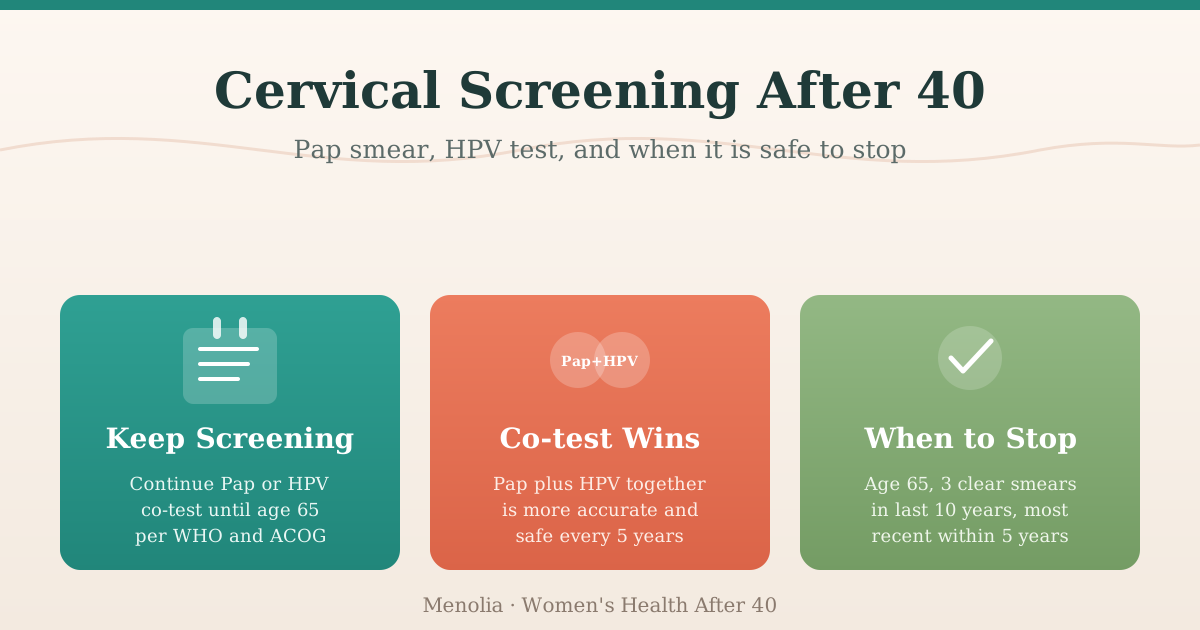
Co-testing is more sensitive than a Pap smear alone. When both results come back negative, the probability of missing significant cervical disease in the following five years is very low. This is why a negative co-test extends the safe screening interval to five years, while a Pap smear done alone should be repeated every three years.
For women over 40, co-testing also gives more useful information when a result is borderline. If the Pap shows mild changes but the HPV test is negative, the risk of those changes progressing is low, and a repeat co-test in one year is usually appropriate rather than immediate further investigation. If the HPV test is positive even with a normal Pap, it signals that closer surveillance is warranted. The combination reduces both unnecessary procedures and missed cases.
From your side, co-testing looks identical to a standard Pap smear. The examination and sample collection are the same. The additional HPV analysis is carried out in the laboratory on the same sample. The only difference is in the information you receive.
What the Guidelines Say
Multiple major organisations have reviewed the same body of evidence and reached consistent conclusions.
ACOG (American College of Obstetricians and Gynecologists) recommends either a Pap smear every three years or a co-test every five years, continuing until age 65. The WHO and the International Agency for Research on Cancer (IARC) recommend primary HPV testing every five to ten years as the preferred strategy, covering women through the 30 to 65 age window. India does not yet have a universal national cervical screening programme, but the National Health Mission’s preventive cancer screening protocol includes cervical screening for women aged 30 to 65. Major Indian gynaecological oncology bodies align with this guidance.
No guideline, anywhere, recommends stopping cervical screening at menopause. The transition out of the reproductive years is not a signal to stop. It is, if anything, a reason to make sure the remaining recommended years of screening are not inadvertently skipped.
Any new vaginal bleeding after menopause, or discharge that is unusual in character or amount, warrants evaluation outside the routine screening cycle. The post-menopausal bleeding guide covers the range of causes and when to seek review. The discharge after menopause guide covers what different types of discharge typically indicate.
When You Can Safely Stop
The most common question I am asked on this topic is when it is safe to stop, and the answer is specific rather than arbitrary.
For more on this, read our guide on Contraception in Perimenopause. A woman who is 65 or older and has had three consecutive normal Pap smears, or two consecutive normal co-tests, all within the last 10 years, with the most recent test within the last 3 to 5 years, can have a conversation with her gynaecologist about stopping. In this group, the risk of a new, significant cervical lesion developing is very low, and continued screening is unlikely to add clinical value.
Two conditions matter here. First, recency counts. A woman whose last Pap was at 60 and who is now 67 cannot rely on those older results, even if they were entirely normal. The window matters as much as the number of tests. Second, if screening has been infrequent or has long gaps, age alone is not a sufficient reason to stop. The relevant question is whether adequate prior screening exists, not simply how old you are. If you have had fewer than three normal smears in your lifetime, start now and build toward the stopping criteria from where you are.
Women who have had a complete hysterectomy for a benign reason, with no history of CIN 2 or higher (pre-cancerous cervical changes) and no positive HPV finding, generally do not need continued Pap smears. The cervix has been removed, so there is no tissue to sample. If you are unsure whether your hysterectomy was complete (uterus and cervix both removed) or whether it was for a benign reason, ask your gynaecologist to review your surgical notes before making any decision.
If you have a history of CIN 2, CIN 3, or cervical cancer, the standard stopping criteria do not apply. Continued follow-up for a defined period, typically 20 to 25 years from treatment, is recommended regardless of age.
Practical Steps
Check when your last Pap smear was. If it was more than three years ago, it is overdue. If you genuinely cannot remember, that is itself a signal worth acting on.
Ask for liquid-based cytology with an HPV co-test. This is available at major private labs in most Indian cities, including Metropolis, SRL Diagnostics, Dr. Lal Pathlabs, and Thyrocare. A conventional Pap smear costs approximately Rs.500 to Rs.1,500. LBC with HPV co-test costs approximately Rs.1,500 to Rs.3,000. At government hospitals under the National Health Mission, cervical screening is available free or at minimal cost for women aged 30 to 65.
Mention vaginal dryness before the test. If you have symptoms of dryness or discomfort, say so before the examination. Local oestrogen for two to three weeks beforehand improves the quality of the sample and reduces the chance of a misleading result.
If you are over 65, have the stopping conversation explicitly. Do not assume either that you must continue indefinitely or that you can stop because of your age. Go through the criteria with your gynaecologist based on your specific screening history.
For a broader picture of which tests matter in the post-menopausal years, the post-menopause health checklist covers eight recommended tests including bone density, cholesterol, thyroid, and blood sugar alongside cervical screening. Cervical screening is one piece of a larger picture; none of the tests in that list can be replaced by another.
If you are in the 8 signs to see a gynaecologist window for any reason, a cervical screening review is a natural part of that appointment.
If your last Pap smear was more than three years ago, or if you have questions about co-testing and what it means for your situation, WhatsApp Dr. Suganya. She reviews screening histories routinely and can advise on the right timing and test for where you are now.
Frequently Asked Questions
Do I still need Pap smears after menopause?
Yes. Cervical cancer risk continues after menopause because HPV, which causes nearly all cervical cancers, can lie dormant in the cervical tissue for decades and may reactivate during or after the hormonal transition. Current guidelines from ACOG and WHO recommend continuing cervical screening until age 65, provided results have been consistently normal.
What is cervical atrophy and how does it affect my Pap result?
After menopause, falling oestrogen causes the cells lining the cervix and vagina to thin. These atrophic cells can look unusual under the microscope, making a Pap result harder to interpret or causing it to come back unsatisfactory. A short course of local oestrogen cream for two to three weeks before the test restores enough tissue thickness to produce a reliable result, without affecting what the smear is actually looking for.
What is an HPV co-test and how is it different from the Pap smear?
A Pap smear checks cervical cells for changes in shape or character. An HPV test checks the same sample for high-risk HPV strains. Done together from a single swab, this is called co-testing. Co-testing is more sensitive than a Pap alone and, when both are negative, extends the safe screening interval to five years rather than three.
My Pap smear came back unsatisfactory. What does that mean?
An unsatisfactory result means the laboratory could not evaluate the sample properly, usually because of atrophic changes, too few cells, or a preparation issue. It does not mean something is wrong with your cervix. Your doctor will typically repeat the test, often after a course of local oestrogen to improve the sample quality.
I had a hysterectomy. Do I still need cervical screening?
If you had a total hysterectomy (uterus and cervix both removed) for a benign reason with no history of CIN 2 or higher and no positive HPV finding, you generally do not need continued Pap smears. If you had a subtotal hysterectomy, the cervix may still be present and screening should continue. Check your surgical notes or ask your gynaecologist.
How much does a Pap smear cost in India?
A conventional Pap smear costs approximately Rs.500 to Rs.1,500 at private labs. Liquid-based cytology with an HPV co-test costs approximately Rs.1,500 to Rs.3,000 at major labs including Metropolis, SRL Diagnostics, and Dr. Lal Pathlabs. At government hospitals under the National Health Mission, cervical screening is available free or at minimal cost for women aged 30 to 65.
At what age can I safely stop getting Pap smears?
At age 65, if you have had three consecutive normal Pap smears or two consecutive normal co-tests within the last 10 years, with the most recent test within the last 3 to 5 years, you can discuss stopping with your gynaecologist. If your screening history has gaps or you have never been adequately screened, age 65 is not an automatic stopping point. The criteria need to have been met, not just the age.