If you have been told HRT is not an option for you, managing hot flashes can feel like a long series of compromises. The SSRIs help some women but not others. Gabapentin works for a few but comes with its own side-effect profile. For years, most doctors told women in this position the same thing: the non-hormonal options are decent but nowhere near as effective as oestrogen.
Fezolinetant changes that framing. It is the first drug in a completely new class, one that reduces hot flashes through neither hormonal nor antidepressant pathways, and whose trial results are, for the first time, genuinely close to what MHT achieves. This post explains what it is, what the clinical evidence shows, the specific monitoring requirement that matters before starting it, and where things stand for Indian women right now.
If you want a broader comparison of all non-hormonal prescription options, including SSRIs, SNRIs, and gabapentin, the companion post Non-Hormonal Hot Flash Treatment: What the Evidence Shows covers that in detail. This post focuses specifically on fezolinetant.
How Fezolinetant Works: The NK3 Pathway
To understand why fezolinetant is different from everything that came before it, you need a brief look at what triggers hot flashes at the level of the brain.
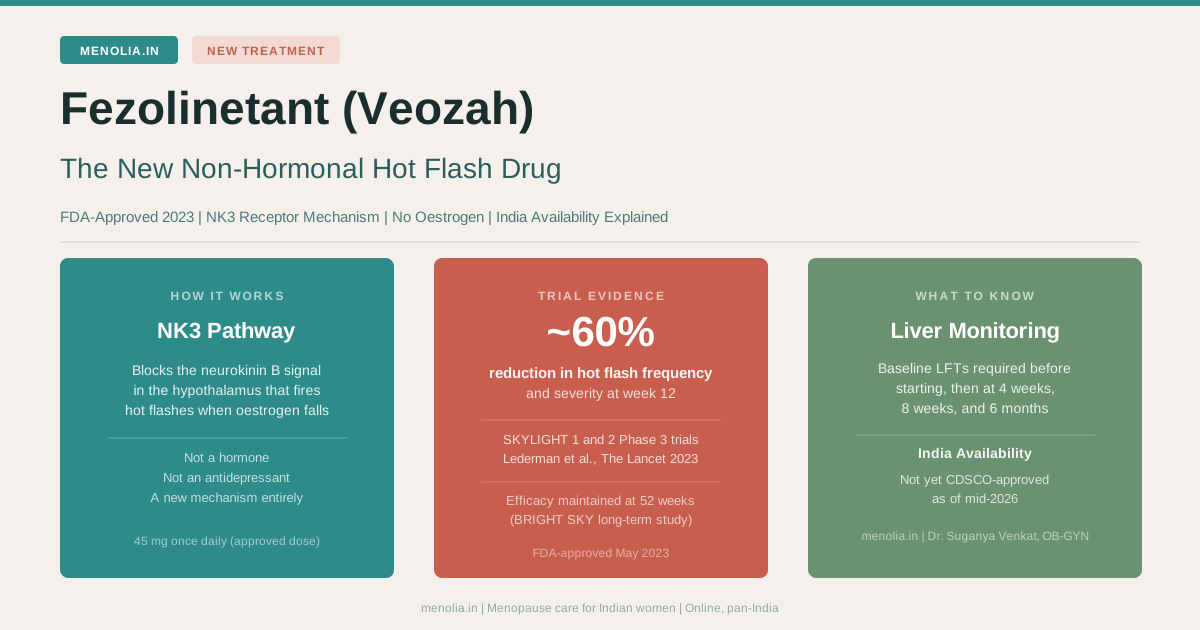
Deep in the hypothalamus, there is a cluster of neurons called KNDy neurons. They release three signalling molecules: kisspeptin, neurokinin B, and dynorphin. During the reproductive years, oestrogen regulates these neurons, keeping the neurokinin B signal relatively quiet. When oestrogen levels fall at menopause, that regulatory influence disappears. Neurokinin B (NKB) signalling rises significantly, and it acts on a receptor called the NK3 receptor. Activation of NK3 receptors in the hypothalamus directly triggers the thermoregulatory cascade that produces a hot flash.
Fezolinetant is an NK3 receptor antagonist. It blocks NK3 receptors, interrupting that cascade before the thermoregulatory signal fires. It has no hormonal activity, no oestrogen-like effects on breast or uterine tissue, and no mechanism of action that overlaps with antidepressants. It targets the source of the hot flash rather than modulating mood pathways downstream.
This specificity is what makes fezolinetant useful for women who cannot take oestrogen, and what separates it mechanistically from SSRIs, SNRIs, and gabapentin, all of which reduce hot flashes through pathways that were identified somewhat incidentally.
What the Clinical Trials Found
Fezolinetant went through a well-documented clinical development programme before receiving regulatory approval. The key trials are worth understanding individually.
Establishing the Dose
The Phase 2b dose-finding work (Fraser et al., 2020) compared multiple doses of fezolinetant against placebo in menopausal women with moderate-to-severe vasomotor symptoms. The dose-response relationship was clear: efficacy rose with dose up to a point, but so did the signal for liver enzyme elevations. The 45 mg once-daily dose emerged as the one that offered the best balance between hot flash reduction and tolerability, and that is the dose that progressed to Phase 3 and is now the approved dose. (DAYLIGHT is a separate, later Phase 3b trial, run in women for whom hormone therapy is unsuitable.)
SKYLIGHT 1: The First Pivotal Trial
The SKYLIGHT 1 trial (Lederman et al., The Lancet, 2023, PMID 36924778) was a Phase 3, randomised, double-blind, placebo-controlled study in 501 postmenopausal women with moderate-to-severe hot flashes. Women were randomised to fezolinetant 30 mg, fezolinetant 45 mg, or placebo.
The 45 mg dose produced approximately 60 percent reduction in moderate-to-severe hot flash frequency from baseline at week 12. Severity scores fell by 60 to 70 percent. Both of these were significantly greater than the reductions seen with placebo, and the difference was clinically meaningful, not just statistically significant. Women in the trial reported improvement beginning in the first week, with further gains across the 12-week period.
SKYLIGHT 2: Confirming the Results
A second Phase 3 pivotal trial, SKYLIGHT 2, enrolled a similar population and produced results that closely mirrored SKYLIGHT 1. This kind of replication across two independent trial populations strengthens the confidence in both the size of the effect and its consistency. The regulatory approvals from the US FDA (May 2023) and the European Medicines Agency (March 2024) were based on the combined evidence from both SKYLIGHT trials.
SKYLIGHT 4: The Long-Term Picture
SKYLIGHT 4 (Neal-Perry et al., Obstetrics & Gynecology, 2023) was the 52-week safety study: a separate randomised, double-blind trial of placebo versus fezolinetant 30 mg versus 45 mg, in 1,830 women. Rates of side effects were similar across all three groups, endometrial hyperplasia and malignancy were rare and within the FDA’s pre-specified limits, and bone density changes were similar across groups. Liver enzyme elevations were seen more often on fezolinetant, which is why monitoring is advised.
SKYLIGHT 1 and 2 also carried their own built-in 40-week extensions after the 12-week blinded phase, so there is year-long follow-up from those trials too. This matters because some non-hormonal options, including clonidine and some SSRIs, can lose effectiveness with prolonged use in a subset of women.
The Liver Monitoring Protocol
The one aspect of fezolinetant that requires careful attention before starting it is the liver enzyme signal identified across the Phase 2 and Phase 3 programme.
In the trials, mild-to-moderate elevations in ALT or AST (liver enzymes) were seen in approximately 4 percent of women on fezolinetant, compared to around 1 percent on placebo. Most of these elevations were transient, resolved on discontinuation, and were not accompanied by symptoms of liver injury. However, because the signal was present and because a small subset of women had more significant elevations, the FDA Prescribing Information for Veozah includes a specific monitoring requirement.
Before starting fezolinetant, your doctor will check your baseline liver function (ALT, AST, bilirubin). Liver function is then rechecked at four weeks and eight weeks after starting, and again at six months. This is not a sign that the drug is dangerous for everyone; it is a sensible protocol to catch the small number of women who develop a meaningful elevation early, so the drug can be stopped before any serious harm occurs.
Fezolinetant is contraindicated in women with severe hepatic impairment. Women with pre-existing liver disease should discuss this explicitly with their doctor before considering it.
If your liver enzymes are normal at baseline and remain normal through the first few months of monitoring, the ongoing risk is low. Most women who are going to have a liver enzyme issue see it within the first 12 to 16 weeks.
If you are managing difficult hot flashes and want to understand which treatment approach fits your specific health history, WhatsApp Dr. Suganya Venkat for an online consultation. The conversation begins with your medical history, not a standard protocol.
Who Is Fezolinetant Best Suited For?
Fezolinetant is most relevant in a few specific situations.
Women with a history of hormone-receptor-positive breast cancer. This is the group for whom non-hormonal treatment is most necessary. Fezolinetant has no oestrogenic activity, no interaction with the oestrogen receptor, and no mechanism that would theoretically support residual cancer cell growth. While no trial has specifically enrolled breast cancer survivors in large numbers, the mechanistic case for its use in this group is substantially stronger than for SSRIs, which modulate mood pathways, or clonidine, which has blood pressure effects. Your oncologist should be involved in the decision.
Women who tried SSRIs or SNRIs and found them insufficient. Some women get only a partial response to venlafaxine or paroxetine. Others find the initial side effects (nausea, sleep disruption, sexual side effects at higher doses) outweigh the benefit. Fezolinetant is not an antidepressant, acts through a completely different pathway, and has a side-effect profile that does not include mood-related effects.
Women with severe vasomotor symptoms who prefer to avoid hormones. For women with 10 to 15 hot flashes per day and multiple night awakenings from sweating, the approximately 60 percent frequency reduction that fezolinetant delivers is meaningful. It may not be the same as MHT (which reduces frequency by 75 to 85 percent in most women), but it is considerably better than the 35 to 50 percent reductions typically seen with SSRIs.
Women who want a non-hormonal option with a targeted mechanism. Some women prefer to understand precisely how a treatment works. The NK3 pathway explanation is mechanistically coherent in a way that “antidepressants also happen to reduce hot flashes” simply is not.
Comparing Fezolinetant to the Existing Non-Hormonal Options
For context, here is how fezolinetant sits relative to what was already available:
| Treatment | Hot flash frequency reduction | Notes |
|---|---|---|
| MHT (oestrogen) | 75-85% | Most effective; not suitable for all women |
| Fezolinetant 45 mg | ~60% | No hormonal mechanism; liver monitoring required |
| Venlafaxine 75 mg | ~50% | Safe with tamoxifen; weight-neutral |
| Paroxetine 7.5 mg | ~50% | Avoid with tamoxifen; FDA-approved for VMS |
| Gabapentin 300 mg | ~45% | Sedating; useful if sleep is the main issue |
| Escitalopram 10-20 mg | ~40-45% | Well tolerated; broad anxiety + mood overlap |
Fezolinetant sits clearly above the existing prescription non-hormonal options in terms of efficacy, though the trial populations and measurement methods are not identical across studies, so direct comparisons should be read as approximate.
For a full discussion of the SSRIs, SNRIs, and gabapentin options with their individual evidence, the companion post covers each in depth.
Is Fezolinetant Available in India?
As of mid-2026, fezolinetant is not available in India. The drug received US FDA approval in May 2023 under the brand name Veozah, and European Medicines Agency approval in March 2024. The Indian regulatory pathway under the Central Drugs Standard Control Organisation (CDSCO) runs independently of these approvals, and no confirmed submission or approval timeline for India had been announced as of the time this post was written.
The typical lag between FDA approval and CDSCO approval for new molecules has historically been between two and five years, depending on how quickly the manufacturer pursues Indian regulatory submission and whether local trial data is required. Fezolinetant may become available here in the coming years, but there is no confirmed date.
Women in India who have read about fezolinetant or seen it discussed online, or who have family members in the US or UK asking about it, should understand that it is not yet something a doctor in India can prescribe from a pharmacy shelf. It is worth being aware of, and worth raising with your doctor, because the landscape can change. If you are managing this transition and want to know what is currently available for your specific situation, that conversation is a reasonable one to have now.
A legal personal-import pathway does exist. With a prescription from a registered Indian doctor, an individual can apply to import a medicine that is not marketed in India for personal use (the Form 12A route), and some licensed import agencies facilitate this. Two caveats matter. First, the cost is substantial because you pay international prices: the US list price is around 580 dollars for a month’s supply, roughly Rs 50,000, before shipping and duties. Second, the liver-monitoring protocol described above applies regardless of how the tablets arrive, so this route only makes sense with an Indian doctor actively supervising the treatment.
Questions to Ask Your Doctor
If fezolinetant becomes available in India, or if you are consulting a doctor in a country where it is already approved, the following questions are useful starting points.
Do my liver enzyme levels need to be checked before starting? The answer should always be yes. If a doctor agrees to prescribe fezolinetant without a baseline liver function test, that is not aligned with the regulatory guidance.
Does my medical history (liver conditions, current medications) affect whether this is appropriate for me? Some medications can interact with fezolinetant’s metabolism; your doctor should review your full medication list.
What happens to the monitoring schedule after the first six months? The protocol is more intensive in the early period; after the first few months without enzyme elevations, monitoring continues but at a lower frequency.
Is there a reason to try an SSRI or SNRI first, or would fezolinetant be appropriate as a first-line non-hormonal option for my situation? This depends on your complete symptom picture, including whether mood symptoms, sleep disruption, or vasomotor symptoms alone are the primary concern.
For a broader understanding of hot flash treatment options from lifestyle to prescription, the complete tiered guide on this site covers the full picture.
WhatsApp Dr. Suganya Venkat to discuss what is currently available for you, based on your specific situation. Online consultation, available to women across India.
Frequently Asked Questions
What is fezolinetant and how is it different from SSRIs for hot flashes?
Fezolinetant is a selective NK3 receptor antagonist. It works by blocking the neurokinin B signalling pathway in the hypothalamus, which is directly responsible for triggering hot flashes when oestrogen levels fall. It has no hormonal activity and no antidepressant mechanism. SSRIs reduce hot flashes by modulating serotonin pathways, a mechanism that was identified somewhat incidentally. Fezolinetant specifically targets the pathway at its origin. There are no head-to-head trials of fezolinetant against an SSRI, so any comparison between them is indirect and should be treated with that caution.
What were the results of the fezolinetant clinical trials?
The main Phase 3 trials, SKYLIGHT 1 and SKYLIGHT 2, both showed approximately 60 percent reduction in moderate-to-severe hot flash frequency and 60 to 70 percent reduction in severity at week 12, compared to significantly smaller reductions on placebo. The 52-week SKYLIGHT 4 safety study, plus the 40-week extensions built into SKYLIGHT 1 and 2, provide the year-long data. These are the strongest efficacy figures seen in non-hormonal hot flash treatment to date.
Do I need a blood test before taking fezolinetant?
Yes. The FDA Prescribing Information requires a baseline liver function test before starting fezolinetant, with follow-up tests at four weeks, eight weeks, and six months. This is because a small proportion of women in the trials showed liver enzyme elevations. For women with normal baseline liver function, the protocol is manageable and similar to monitoring required for other long-term medications. Fezolinetant should not be started without the baseline test.
Is Veozah (fezolinetant) available in India?
Not as of mid-2026. Fezolinetant received US FDA approval in May 2023 and EMA approval in March 2024 but has not yet been approved by India’s CDSCO. The timeline for Indian availability is not confirmed. Indian women who want to know what non-hormonal treatment options are currently accessible to them should discuss SSRIs, SNRIs, or gabapentin with their doctor in the meantime. The availability picture may change over the next few years.
What is the price of fezolinetant (Veozah) in India?
There is no Indian price because the drug has not been launched here. In the US, the list price is around 580 dollars for a 30-day supply, roughly Rs 50,000, and retail prices often run higher. A personal import with an Indian prescription costs more still once shipping and duties are added. If cost is a deciding factor, the established non-hormonal options (SSRIs, SNRIs, gabapentin) cost a small fraction of this, and HRT, where suitable, is also far less expensive. Prices were checked in August 2026.
Who should not take fezolinetant?
Fezolinetant is contraindicated in women with severe hepatic impairment. Women with a history of liver disease or abnormal baseline liver function should discuss this carefully with their doctor. As with all prescription medications, the suitability depends on individual health history, current medications, and specific symptom picture. It is a prescription-only drug and should only be initiated and monitored by a doctor.
Can fezolinetant be taken alongside HRT?
The clinical trials studied fezolinetant as a standalone treatment. Some women may consider combination approaches, but this is an area where clinical guidance is still emerging. Any combination of fezolinetant with hormonal therapy would need to be discussed and supervised by a doctor, taking into account the individual’s reasons for considering each treatment separately.
Will fezolinetant help with night sweats as well as daytime hot flashes?
Yes. The trials measured both daytime vasomotor symptoms and night-time sweating. The mechanism, NK3 receptor blockade in the hypothalamic thermoregulatory pathway, does not distinguish between day and night; the drug reduces the frequency and severity of all vasomotor events. For more detail on night sweats specifically, the Menopause Night Sweats guide on this site covers the full picture, including sleep impact and management alongside or without prescription treatment.