A woman I spoke to recently had been prescribed tamoxifen following breast cancer treatment. Her oncologist had been clear: standard menopausal hormone therapy was off the table. But her hot flashes were severe, four or five a night, arriving without warning in the middle of meetings and waking her repeatedly through the early hours. She was not looking for hormones. She was looking for something that would let her sleep again.
This post is for women in her position. Women who cannot take menopausal hormone therapy (MHT) because of their medical history, and women who have made an informed decision that it is not for them. There are prescription non-hormonal options with genuine evidence behind them. The evidence for each is different, the side-effect profiles differ, and the right choice depends on which symptoms are most disruptive and what else is already in your medical picture.
For more on this, read our guide on CBT for Menopause. This is a companion to the tiered hot flash treatment guide already on this site. That post covers lifestyle changes and gives a brief overview of non-hormonal medications as a tier. This post goes deeper on the prescription options specifically: what they are, what the trials found, who each suits, and what to ask your doctor.
Who This Post Is For
Menopausal hormone therapy is generally not recommended, or requires careful specialist review, in the following situations:
- Personal history of hormone-receptor-positive breast cancer. Oestrogen can support the growth of ER-positive tumour cells. This is the most common reason oncologists advise against conventional MHT.
- Personal history of venous thromboembolism (deep vein thrombosis or pulmonary embolism) when on oral oestrogen. Note that transdermal oestrogen does not carry the same VTE risk increase. Your doctor would review whether a patch is an option for you specifically.
- History of stroke or TIA, where oestrogen’s effects on coagulation are a consideration.
- Active liver disease or unexplained vaginal bleeding that has not yet been investigated.
- Personal choice: some women have weighed the benefits and risks and prefer to manage their symptoms without hormones. That is a legitimate and respected decision.
For all of these situations, the five prescription options below are the current evidence-based choices.
SSRIs and SNRIs: The Most Studied Class
The largest body of evidence for non-hormonal hot flash treatment sits with two closely related antidepressant classes: SSRIs (selective serotonin reuptake inhibitors) and SNRIs (serotonin-norepinephrine reuptake inhibitors). They were first studied specifically in breast cancer survivors who could not take oestrogen, and the mechanism is separate from the hormonal axis. They work by modulating the noradrenergic and serotonergic pathways in the brain that govern the thermoregulatory response.
Paroxetine: the only one formally approved for vasomotor symptoms
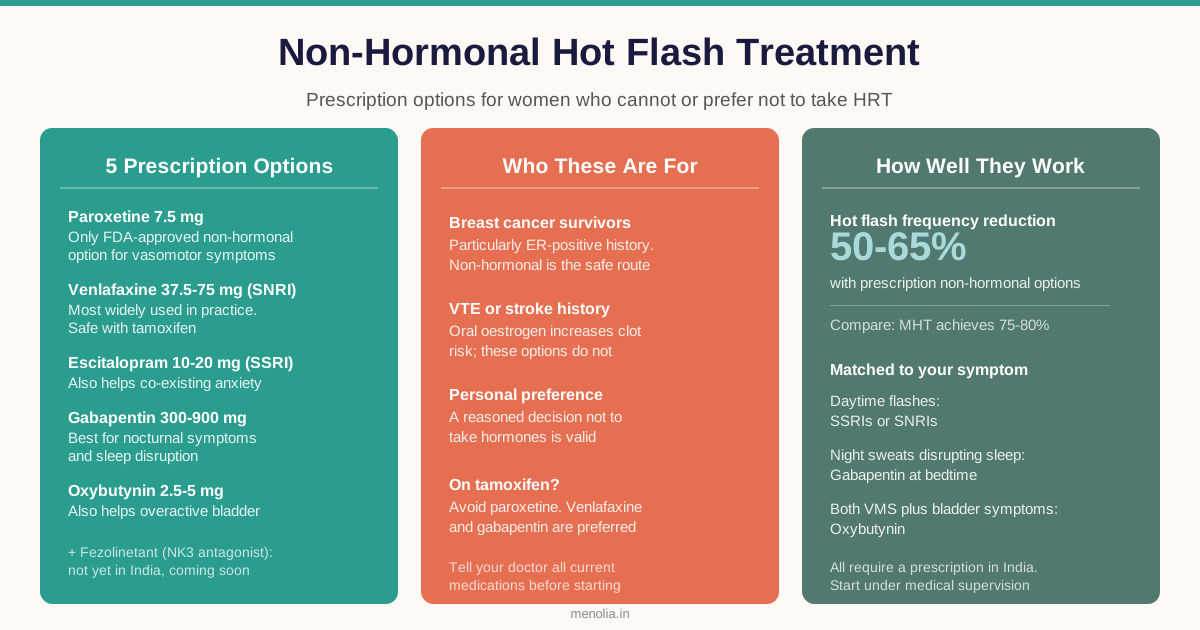
Paroxetine 7.5 mg (sold under the brand name Brisdelle in the United States) is the only non-hormonal treatment with formal regulatory approval specifically for vasomotor symptoms from the US Food and Drug Administration (FDA). The approval came in 2013, based on randomised controlled trial data showing a meaningful reduction in hot flash frequency and severity compared to placebo (Simon JA et al., 2013).
In India, Brisdelle as a specific branded formulation is not currently available. Paroxetine itself is widely available as a generic and is used off-label for hot flashes in clinical practice here.
One critical drug interaction with paroxetine: paroxetine is a strong inhibitor of the CYP2D6 enzyme that converts tamoxifen into its active metabolite, endoxifen. For women currently on tamoxifen, paroxetine can reduce tamoxifen’s effectiveness and is generally avoided. If you are on tamoxifen, the preferred options are venlafaxine or gabapentin, neither of which carries this interaction. Your oncologist will confirm what is appropriate for your regimen.
Venlafaxine: the most widely used in clinical practice
Venlafaxine, an SNRI, is probably the most commonly prescribed non-hormonal option for hot flashes in women who cannot take HRT. A randomised controlled trial published in JAMA Internal Medicine in 2014 (Joffe H et al., PMID 24861828) compared low-dose venlafaxine against low-dose oestradiol in 339 menopausal women. Both reduced hot flash frequency significantly. Oestradiol performed better overall, but venlafaxine produced a clinically meaningful reduction on its own. Importantly, it is safe to use alongside tamoxifen.
The doses used for vasomotor symptoms (37.5 to 75 mg per day) are lower than the doses used for depression, which helps with tolerability. Most women do not experience the weight or sexual side effects that can occur at higher antidepressant doses.
One caution when stopping: venlafaxine should be tapered gradually rather than stopped abruptly, as discontinuation can cause symptoms including dizziness, flu-like feelings, and mood changes. Your doctor will guide you on tapering if and when you decide to come off it.
Escitalopram: well-tolerated and broadly studied
Escitalopram, an SSRI, also has good randomised trial evidence for hot flash reduction. A trial published in JAMA in 2011 (Freeman EW et al., PMID 21245182) found escitalopram at 10 to 20 mg per day reduced hot flash composite scores by approximately 47 percent compared to 33 percent for placebo in healthy menopausal women without a depression history. For women who have anxiety alongside menopausal symptoms, escitalopram may address both with one prescription.
What to expect across all three
These medications typically take two to four weeks to show noticeable benefit. Across the trial evidence, they reduce hot flash frequency by roughly 50 to 60 percent. That is meaningful, but it is worth keeping context in mind: MHT produces a 75 to 80 percent reduction in well-powered trials. The gap matters for women with severe symptoms, but for moderate symptoms, a 50 percent reduction can be enough to restore sleep and quality of life.
Common early side effects include nausea (usually settles within the first week), some initial sleep disturbance, and, in a minority of women, mild sexual side effects. These effects are generally dose-dependent.
Gabapentin: Especially Useful for Nocturnal Symptoms
Gabapentin is an anticonvulsant used in neuropathic pain management. Several well-designed randomised trials have established that it reduces hot flash frequency and severity, with particular effectiveness for women whose flashes are worst at night.
The landmark trial for gabapentin in hot flashes (Guttuso T Jr et al., Obstetrics and Gynecology, 2003, PMID 12576259) found that 300 mg three times daily reduced hot flash severity score by approximately 54 percent versus 31 percent for placebo in postmenopausal women. A subsequent trial specifically in breast cancer survivors found comparable results, making it one of the more commonly used options in oncology settings.
Why gabapentin specifically suits nocturnal symptoms: the mechanism of gabapentin in reducing thermoregulatory instability works particularly well when taken as a bedtime dose. For women whose main complaint is being woken repeatedly by night sweats rather than daytime flashes, a single bedtime dose of 300 mg is often the starting strategy.
Side effects: Drowsiness is the most common one, which makes the bedtime-dose approach an advantage (the sedation works in your favour when you are trying to sleep). At higher doses or in divided daytime doses, dizziness and coordination difficulties can occur. These effects often diminish after the first few weeks. Gabapentin should be used with particular caution if you are also taking opioids, benzodiazepines, or other central nervous system depressants.
India availability: Gabapentin is widely available in India as a generic under brands including Gabapin and Gabapen. It requires a prescription. Its use for vasomotor symptoms is off-label in India, but it is an established clinical application.
For more on sleep disruption during the menopause transition, read Menopause Night Sweats: Why You Wake Up Soaking Wet.
If you have been told you cannot take HRT and want to understand which of these options suits your specific health history, WhatsApp Dr. Suganya Venkat for an online consultation. She works with women across India, fully online.
Clonidine: The Older Option
Clonidine is an alpha-2 adrenergic agonist, better known as a blood pressure medication. It has been used for hot flash management since before the evidence for SSRIs existed, and it does have randomised trial support, though the effect size is smaller than the SNRI/SSRI class and more recent options.
Older meta-analyses reported a 25 to 45 percent reduction in hot flash frequency with clonidine versus placebo. More recent comparative data suggests it works less well than venlafaxine or gabapentin when placed side by side.
When clonidine might be considered: for a woman with both mild-to-moderate hot flashes and hypertension, clonidine can address both with one medication. For hot flashes alone, it is generally not the first choice among currently available options because the benefit-to-side-effect ratio is less favourable.
Side effects: dry mouth, constipation, fatigue, and orthostatic hypotension (lightheadedness on standing). These can be limiting, particularly in older women.
India availability: Oral and transdermal clonidine is available in India under brands including Catapres. The hot flash application is off-label.
Oxybutynin: A Newer Addition to the List
Oxybutynin is primarily prescribed for overactive bladder. Its mechanism (anticholinergic, reducing bladder hyperactivity) is different from the thermoregulatory pathways, but there is a biological rationale and now clinical trial evidence for hot flash benefit.
A well-designed randomised controlled trial published in 2022 (Leon-Ferre RA et al., JAMA) found that oxybutynin 2.5 mg twice daily reduced hot flash frequency by approximately 65 percent versus 26 percent for placebo, with significant improvements in quality of life scores. These numbers are impressive. The trial population was smaller than the large SSRIs trials, so the evidence base is less mature, but the result warrants attention.
Side effects: dry mouth is the main one at lower doses. At higher doses, constipation and cognitive effects can occur, particularly in older women. At the 2.5 mg dose used for VMS, tolerability is generally acceptable.
When it might be considered: for a woman who has both overactive bladder symptoms and significant hot flashes, oxybutynin addresses both. It is also an option when SSRIs are not tolerated or are contraindicated.
India availability: Oxybutynin is available in India under brands including Ditropan. The VMS application is off-label.
Fezolinetant: The Newest Class, Not Yet in India
The neurokinin B (NK3-receptor) pathway in the hypothalamus has been a focus of menopause research for over a decade. When oestrogen falls, NK3 activity increases, directly activating the thermoregulatory pathway responsible for hot flashes. NK3 antagonists block this at source, without any hormonal action.
Fezolinetant (brand name Veozah, 45 mg daily) is the first NK3 antagonist approved for vasomotor symptoms. The SKYLIGHT 1 randomised controlled trial (Lederman RL et al., The Lancet, 2023, PMID 36924778) reported approximately 60 percent reduction in hot flash frequency and 60 to 70 percent reduction in severity scores at week 12. A second confirmatory trial (SKYLIGHT 2) produced comparable results. These figures put fezolinetant closer in efficacy to MHT than any previous non-hormonal option.
For more on this, read our guide on Fezolinetant (Veozah). Fezolinetant received FDA approval in May 2023 and EMA approval in March 2024.
India availability: As of mid-2026, fezolinetant is not available in India. The timeline for regulatory submission and local launch is not confirmed. This is a meaningful development worth watching. If it becomes available here over the next few years, it will likely change the non-hormonal treatment landscape for Indian women significantly.
How These Options Compare
A practical summary for a woman making a decision:
| Medication | Approximate reduction in frequency | Particularly useful for | Key consideration |
|---|---|---|---|
| Paroxetine 7.5 mg | ~50-55% | General VMS; only FDA-approved option | Avoid with tamoxifen |
| Venlafaxine 37.5–75 mg | ~50-60% | General VMS; safe with tamoxifen | Taper gradually when stopping |
| Escitalopram 10–20 mg | ~47-50% | VMS plus anxiety | CYP2D6 interaction minor vs paroxetine |
| Gabapentin 300–900 mg | ~50-54% | Nocturnal VMS, sleep disruption | Drowsiness; caution with CNS drugs |
| Clonidine 0.05–0.15 mg | ~25-45% | VMS plus hypertension | Modest effect; noticeable side effects |
| Oxybutynin 2.5–5 mg | ~65% (single RCT) | VMS plus overactive bladder | Dry mouth; evidence base smaller |
| Fezolinetant 45 mg | ~60-70% | Strong non-hormonal effect | Not yet available in India |
None of these matches the 75 to 80 percent efficacy of MHT for moderate-to-severe vasomotor symptoms. That context matters. For women with severe symptoms who cannot take hormones, the question is: which of these options offers the best benefit-to-side-effect profile for this specific woman, with her specific health history and other medications?
What to Discuss with Your Doctor
These are the specific questions that will make the conversation with your gynaecologist or oncologist more productive:
Are you on tamoxifen? If yes, paroxetine is specifically contraindicated. Request venlafaxine or gabapentin instead.
Are your hot flashes worst at night? If sleep disruption is the primary problem, gabapentin taken at bedtime has specific trial data for nocturnal VMS.
Do you have anxiety alongside your menopausal symptoms? An SSRI (especially escitalopram) may address both.
Do you also have overactive bladder symptoms? Oxybutynin addresses both.
Are you on any other medications, particularly antidepressants, opioids, or benzodiazepines? Drug interactions vary across these options and need clinical review.
What are the costs? Generic gabapentin and generic paroxetine are inexpensive in India. The consultation with a doctor who knows your full history is the more important investment.
A Note on Non-Prescription Options
The lifestyle-first approach and the herbal supplement evidence (phytoestrogens, black cohosh, shatavari) are covered in the tiered hot flash treatment guide and the evidence-based menopause supplements guide on this site. Those posts cover what works and what does not in that category. This post focuses on prescription medications only.
For women who want the full clinical picture on MHT before deciding it is not for them, the HRT guide for Indian women covers who it suits, the different formulations, and what the current evidence says on safety. The HRT and breast cancer risk post specifically addresses the risk numbers in a way that puts them in context.
Frequently Asked Questions
Are SSRIs safe for long-term use for hot flashes?
SSRIs and SNRIs have a well-established safety record from many years of use in depression and anxiety at doses that are typically higher than those used for hot flashes. The doses used for vasomotor symptoms are generally well tolerated over extended periods. As with any medication, periodic review with your doctor is appropriate to assess whether continued use is warranted.
I was told I cannot take HRT after breast cancer. Which of these is safest?
Venlafaxine and gabapentin have the most trial data specifically in breast cancer survivors on tamoxifen, and neither inhibits tamoxifen metabolism the way paroxetine does. Oxybutynin is also an option if bladder symptoms are also present. Please confirm with your oncologist before starting anything, as your cancer type, hormonal sensitivity, and full medication list all need to inform the choice.
How long before these medications take effect?
SSRIs and SNRIs typically show benefit within two to four weeks. Gabapentin can show benefit more quickly for nocturnal symptoms, sometimes within a week or two. If there is no noticeable benefit after six to eight weeks at a therapeutic dose, it is worth discussing a switch or dose adjustment with your doctor.
Can I take gabapentin alongside my antidepressant?
This depends on your specific antidepressant, dose, and other medications. Some combinations are used clinically with appropriate monitoring; others warrant more caution. This is a question for your doctor or pharmacist, who can check for interactions and guide monitoring.
Why is fezolinetant not available in India yet?
Fezolinetant received FDA approval in May 2023 and EMA approval in March 2024. Regulatory timelines in India run separately, and the drug had not received CDSCO approval or a confirmed Indian launch date as of mid-2026. It is likely to become available here within the coming years as the regulatory process progresses.
Does clonidine work as well as SSRIs?
The available evidence suggests clonidine produces a smaller reduction in hot flash frequency than SSRIs and SNRIs, based on both trial data and comparative studies. It remains a reasonable option for women with co-existing hypertension, where one medication addresses both issues, or when SSRIs are not suitable. It is generally not the first choice when SSRIs or gabapentin are available and appropriate.
Are these medications available in India without a prescription?
No. All of the options in this post (SSRIs, SNRIs, gabapentin, clonidine, oxybutynin) require a prescription in India. They should be started under the guidance of a doctor who knows your full medical history, including any current medications and relevant conditions.
If you are managing menopausal symptoms without HRT and want to understand which prescription option suits your situation, WhatsApp Dr. Suganya Venkat for an online consultation. The conversation starts with your specific history, not a standard approach.