The question comes up in almost every weight-related consultation now. A woman in her late 40s or 50s, eating carefully, exercising, frustrated that nothing is shifting the same way it used to. She has heard about Ozempic. Her neighbour started it. Her colleague lost eight kilograms. She wants to know: is this right for her?
It is a fair question, and it deserves a fair answer. Not enthusiasm, not dismissal. Let me explain what these medicines actually do, what the evidence shows for menopause-related weight, who is a genuine candidate, and what the conversation with your doctor should include.
Why Menopause Weight Is Genuinely Different
Before getting to the medicines, it helps to understand what is happening in the body, because GLP-1 drugs do not fix everything and the biology matters.
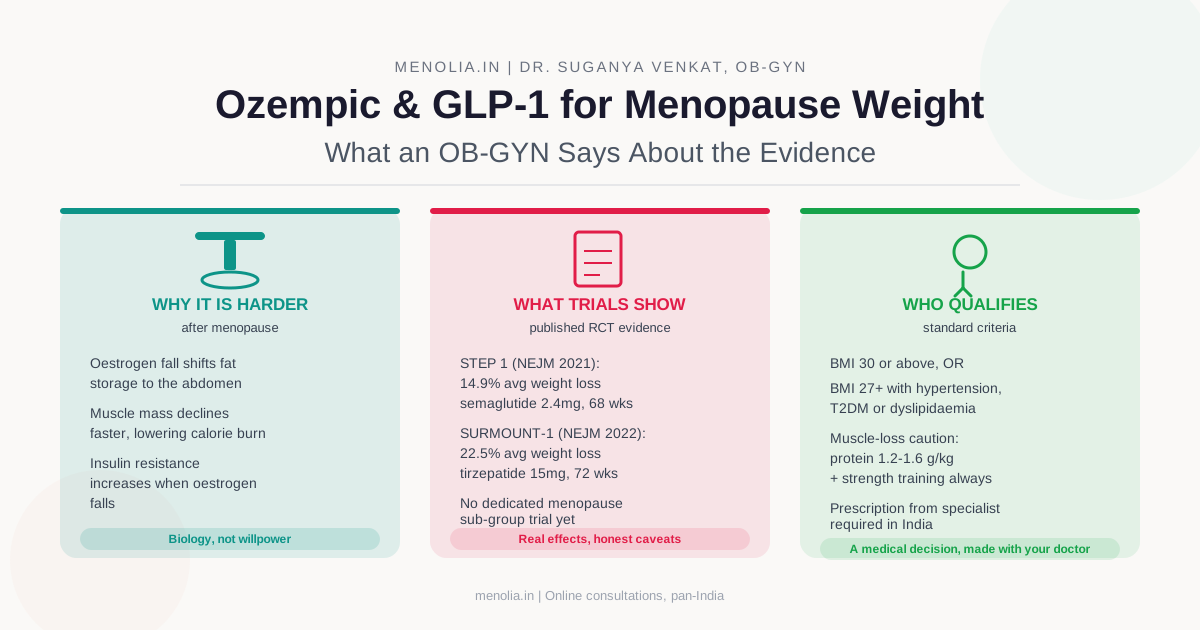
When oestrogen falls through the perimenopause transition, fat distribution shifts. The body begins to store more fat centrally, around the abdomen and organs, rather than at the hips and thighs. This is not a failure of willpower. It is a metabolic consequence of oestrogen withdrawal: lower oestrogen reduces the activity of lipoprotein lipase at peripheral fat depots and increases it centrally. The result is the firm, round belly that many women notice in their late 40s even when their weight on the scale has not changed much.
At the same time, muscle mass begins to decline faster than it did before menopause. Muscle is metabolically expensive tissue. When you carry less of it, your resting calorie burn drops. The same diet that maintained weight at 40 starts to produce a slow, steady gain at 50.
Insulin sensitivity also changes. Oestrogen has a protective effect on the pancreatic beta cells and on how efficiently muscle takes up glucose. When it falls, insulin resistance tends to increase, and that makes further fat accumulation easier and weight loss harder.
This is the weight challenge that is specific to menopause. Not laziness, not ageing badly, but a specific hormonal shift with specific metabolic consequences. I have written about this in detail in the menopause weight gain guide and the menopause belly fat post if you want the full picture first.
What GLP-1 Drugs Are
GLP-1 stands for glucagon-like peptide-1. It is a hormone your gut releases after eating. It signals the pancreas to produce insulin, tells the liver to stop releasing glucose, and, crucially for weight management, reaches the brain’s satiety centres to reduce appetite. It also slows how quickly the stomach empties, which means you feel full from smaller amounts of food and that feeling lasts longer.
GLP-1 receptor agonists are medicines that mimic this hormone at much higher and sustained levels than the body produces naturally. The main ones you will hear about:
Semaglutide (brand names Ozempic and Wegovy): a weekly injection. Ozempic is the diabetes dose (0.5 to 2mg weekly). Wegovy is the higher obesity-treatment dose (2.4mg weekly). The two are the same molecule at different doses for different licensed indications.
Tirzepatide (Mounjaro): a dual agonist, activating both GLP-1 and GIP receptors. Weekly injection. Produces larger average weight loss than semaglutide in head-to-head trial analyses.
Liraglutide (Saxenda for weight, Victoza for diabetes): daily injection. An older molecule in this class, now largely superseded by weekly options in terms of efficacy.
What the Clinical Trials Show
The major trials are the STEP programme for semaglutide and the SURMOUNT programme for tirzepatide. These are large, randomised, placebo-controlled trials.
STEP 1 (Wilding et al., New England Journal of Medicine, 2021; PMID 33567185): 1,961 adults with obesity (BMI 30 or above) or with BMI 27 or above plus at least one weight-related comorbidity. Semaglutide 2.4mg weekly versus placebo over 68 weeks. Mean weight loss: 14.9% in the semaglutide group versus 2.4% in the placebo group. Nearly a third of participants lost 20% or more of their starting weight.
STEP 5 (Garvey et al., Nature Medicine, 2022; PMID 36216945): 104 weeks of treatment, same dose. The weight loss at 15.2% was maintained across the full two-year period. This is important because one of the legitimate questions about these medicines is whether the effect lasts.
SURMOUNT-1 (Jastreboff et al., NEJM, 2022; PMID 35658024): tirzepatide at 5mg, 10mg, and 15mg versus placebo in 2,539 participants over 72 weeks. At the 15mg dose, mean weight loss was 22.5% versus 2.4% with placebo. A larger response than semaglutide, on average.
What the trials do not do is study postmenopausal or perimenopausal women as a distinct group. The trials enrolled mixed-age adult populations, and the menopausal status of participants was not analysed as a primary sub-group in the published data. So when someone asks whether these drugs work differently in menopause, we do not have a dedicated trial to answer that. What we do have is evidence that they work in the general adult population, including the age groups where menopause falls.
The weight loss in trials is real and clinically meaningful. It is not the same as surgical weight loss. The average of 15% means some people lose less than 10% and some lose more than 20%. These are medicines that produce a real and sustained reduction in body weight for most people who take them at the effective dose.
WhatsApp Dr. Suganya to talk through whether a GLP-1 medicine makes sense for your situation. She works online, pan-India, and her ₹399 consultation covers your history, any current medications, and what to ask your prescribing doctor.
Chat with Dr. Suganya on WhatsApp
Who Qualifies
GLP-1 drugs for obesity are not a general lifestyle tool. They have defined indications based on BMI and health status, and those criteria matter both medically and practically (most insurance plans, if they cover it at all, follow these thresholds).
The international standard for qualifying:
- BMI of 30 or above, OR
- BMI of 27 or above with at least one weight-related comorbidity: type 2 diabetes, hypertension, dyslipidaemia (high cholesterol or triglycerides), or obstructive sleep apnea
For Indian and South Asian women, the context is slightly different. South Asian populations carry higher metabolic risk at lower BMI values. A WHO expert consultation on BMI for Asian populations identified 23 as the public-health action point for elevated risk and 27.5 for high risk (Lancet 2004;363:157-63, PMID 14726171), compared to the Western cutoffs of 25 and 30. Many diabetes and obesity specialists in India are starting to apply the Asian-specific thresholds, particularly when comorbidities are present.
In practice, this means a woman with BMI 28, hypertension, and rising fasting blood sugar is a reasonable candidate for a conversation with her doctor about these medicines. A woman with BMI 27 and no comorbidities, looking for help with 5 to 8 kilograms she would like to lose, is not the population these trials were designed for, and the risk-benefit calculation is different.
The prescribing doctor, whether an endocrinologist, diabetes specialist, or physician with obesity medicine experience, makes this determination. It is not a decision to make independently or based on what a friend or neighbour is taking.
Who should not take GLP-1 drugs:
- Personal or family history of medullary thyroid carcinoma
- Multiple endocrine neoplasia type 2 (MEN2)
- Pregnancy or planning pregnancy in the near term
- History of pancreatitis (relative contraindication, needs careful evaluation)
- Severe gastrointestinal disease
Kidney function and liver function should be checked before starting. These are not casual medicines. They require proper baseline assessment and regular monitoring.
The Side Effects That Matter for Menopause
Most people experience some gastrointestinal side effects when they start GLP-1 drugs: nausea, sometimes vomiting, constipation, or reflux. These typically improve over the first 4 to 8 weeks as the dose is titrated up slowly. The starting dose is low deliberately, to let the gut adjust.
For women in menopause specifically, two side effects deserve particular attention.
Muscle loss. GLP-1 drugs cause weight loss by reducing calorie intake. When you eat significantly less, the body loses both fat and lean muscle. Analysis of the STEP trials found that a meaningful proportion of the total weight lost came from lean body mass rather than fat alone. This matters more in menopause than it does in a 35-year-old, because the background rate of muscle loss is already higher, oestrogen’s anabolic support for muscle is already reduced, and muscle is the primary driver of resting metabolic rate and bone-loading during physical activity.
This is not a reason to refuse the medicine if you are a genuine candidate. But it is a strong reason to prioritise two things while on it: adequate protein intake (aiming for at least 1.2 to 1.6 grams per kilogram of body weight per day) and resistance training throughout the course of treatment. Without these, women can lose weight on these drugs but come out the other side with less muscle than they started with, which makes long-term weight maintenance harder, not easier. The muscle loss guide and strength training post have practical detail on both.
Blood sugar management. GLP-1 drugs lower blood sugar. If you are also on metformin, sulphonylureas, or insulin, the interaction needs careful management by your prescribing doctor. Do not start these medicines without disclosing your full medication list.
The gut side effects are also worth mentioning for women who are on HRT as oral tablets: repeated nausea and vomiting in the early weeks can affect absorption. Transdermal HRT (patches or gel) avoids this problem entirely.
Availability and Cost in India
This part of the conversation is genuinely complicated, and it is changing rapidly.
Ozempic (semaglutide at the diabetes doses: 0.5mg, 1mg, 2mg per week) is available in India through specialist prescription. It is not a medicine you can walk into a pharmacy and buy without a prescription from an endocrinologist or physician. Approximate cost at the time of writing: Rs 6,000 to 12,000 per month, depending on dose and pharmacy. Verify with your pharmacist, as this changes.
Wegovy (semaglutide at the obesity dose of 2.4mg weekly) has not been formally launched in India as of mid-2026. Some specialists are prescribing a higher semaglutide dose off-label. This is a conversation to have with your prescribing doctor, not a self-managed decision.
Mounjaro (tirzepatide) has limited availability in India currently; the situation is evolving. Your endocrinologist or obesity physician will have the current picture.
The medicines are expensive. Ongoing cost is a real consideration. The clinical trials showed that weight regain occurs when the medicine is stopped, which means this is not typically a short course of treatment. The financial planning aspect of this conversation matters.
Lifestyle First: Why This Frame Is Not Just a Platitude
I am not saying this to discourage you from asking about GLP-1 drugs. But I want to be clear about what the evidence shows.
In the STEP trials, participants also received lifestyle support alongside the medicine. The medicine on its own, without any lifestyle change, still produced weight loss. But the women who do best on these medicines are those who also use the reduced appetite the drug produces to build better habits: moving the diet toward more protein, establishing a strength training routine, improving sleep. The drug creates a window. What you build in that window determines what happens if and when the medicine stops.
Losing weight in perimenopause requires different strategies from weight loss at 35. The menopause-specific factors, shifting fat distribution, declining muscle mass, insulin resistance, are real biological challenges. They can be addressed with lifestyle, with medication, or with both together. The combination tends to produce the best and most durable results.
If you are struggling with weight in the menopause transition and have not yet worked through a structured approach to protein intake, strength training, sleep, and blood sugar management, that is where I would start. If you have done that consistently for three to six months and weight remains a significant health concern with objective markers to support treatment, then a conversation with an endocrinologist about GLP-1 therapy is reasonable. The two approaches are not in competition. They work best together.
If you want to talk through where you are with weight, what has been tried, and whether it is time to consider a specialist referral, book a ₹399 consultation with Dr. Suganya. She consults online, pan-India.
Chat with Dr. Suganya on WhatsApp
FAQ
Is Ozempic safe to take during menopause? Semaglutide and other GLP-1 drugs have been tested in clinical trials that included women in the menopause age range. There are no specific contraindications related to menopause itself. However, menopause-related changes, particularly the baseline reduction in muscle mass and the effects on bone, mean that protein intake and strength training need to be prioritised while on these medicines. Any decision should be made with a prescribing doctor who knows your full health picture.
Will GLP-1 drugs work for menopause belly fat specifically? GLP-1 drugs produce overall weight loss, and studies show that central fat (visceral fat) tends to reduce proportionally. They do not selectively target abdominal fat. The menopause-related redistribution of fat toward the abdomen reflects hormonal changes, and while weight loss helps, the visceral fat aspect of menopause weight is also influenced by oestrogen levels. Some women find that addressing both weight and HRT together produces better results for central fat than either alone.
Do I need a prescription for Ozempic in India? Yes. Ozempic and all GLP-1 obesity medicines in India require a prescription from a registered medical practitioner, typically an endocrinologist, diabetologist, or physician with obesity medicine experience. These are not over-the-counter medicines and should not be sourced informally. Incorrect dosing and the absence of medical monitoring carry genuine risks.
How much weight can I expect to lose on Ozempic? In the large STEP trials, the average was approximately 15% of starting body weight over 68 weeks. That is an average, which means individual results vary. Some people lose less than 10%, some lose more than 20%. Tirzepatide (Mounjaro) showed higher average results, around 20% at the highest dose, in the SURMOUNT trials. These are not small effects, but they require consistent use at an effective dose, ongoing lifestyle support, and medical monitoring.
What happens when I stop taking GLP-1 drugs? The evidence from trial extension phases shows that most people regain weight when the medicine is stopped. This is similar to what happens after stopping many other medicines for chronic conditions. The implication is that these are likely long-term treatments for most people, rather than a course you take until target weight is reached and then discontinue. The cost, ongoing monitoring, and long-term commitment are real considerations to discuss with your doctor.
Can I take Ozempic if I am already on HRT? There is no known contraindication between GLP-1 drugs and HRT. However, if you are on oral HRT tablets, repeated nausea in the early weeks of GLP-1 treatment can theoretically affect absorption. Transdermal HRT (patches or gel) bypasses this. Disclose everything you are taking to your prescribing doctor so the full medication picture is considered.
My blood sugar is in the normal range but I have gained 10kg since menopause. Does Ozempic make sense for me? If your BMI is below 30 and you have no weight-related comorbidities (normal blood pressure, normal cholesterol, normal fasting glucose), you do not currently meet the standard criteria for GLP-1 obesity treatment. A structured menopause-specific approach to diet, particularly protein and blood sugar management, and strength training is the appropriate first step. If you have tried this consistently and there are objective metabolic concerns developing, that is when to revisit the conversation with a specialist. The blood sugar guide has more on what to watch for during menopause.