If you take a blood thinner every day, you may have assumed that HRT is simply off the table for you. Many women on long-term anticoagulants reach that conclusion on their own, often after hearing from a relative that “hormones cause clots”, and never raise it with a doctor while the hot flushes and night sweats carry on.
That assumption is common, and it is often wrong. A blood thinner changes how an HRT decision is made and brings more doctors into it, but for many women HRT remains possible.
This post is for women who are already taking an anticoagulant and are wondering whether HRT can be added. It covers why the reason you are on a blood thinner shapes the answer, why the route of oestrogen matters even more in this group, what the research says about hormones taken during and after anticoagulation, which HRT option is most likely to change your INR, and how heavy bleeding is handled. If you have never had a clot and simply want to understand HRT’s own clot risk, our guide to HRT and blood clots covers that question instead.
First, Which Blood Thinner, and Why?
“Blood thinner” covers several different medicines, and the reason you take one matters as much as the medicine itself.
The medicines. Most women on long-term anticoagulation take one of two kinds:
- Vitamin K antagonists (VKAs): warfarin, or acenocoumarol (sold in India as Acitrom, among other brands). These need regular INR blood tests, and their effect shifts with diet, illness and other medicines.
- Direct oral anticoagulants (DOACs): apixaban, rivaroxaban, dabigatran and edoxaban. These do not need INR testing.
Aspirin and clopidogrel are antiplatelet medicines, sometimes also called blood thinners. They work differently, and this post is mainly about anticoagulants.
The reasons. Three situations cover most women I see:
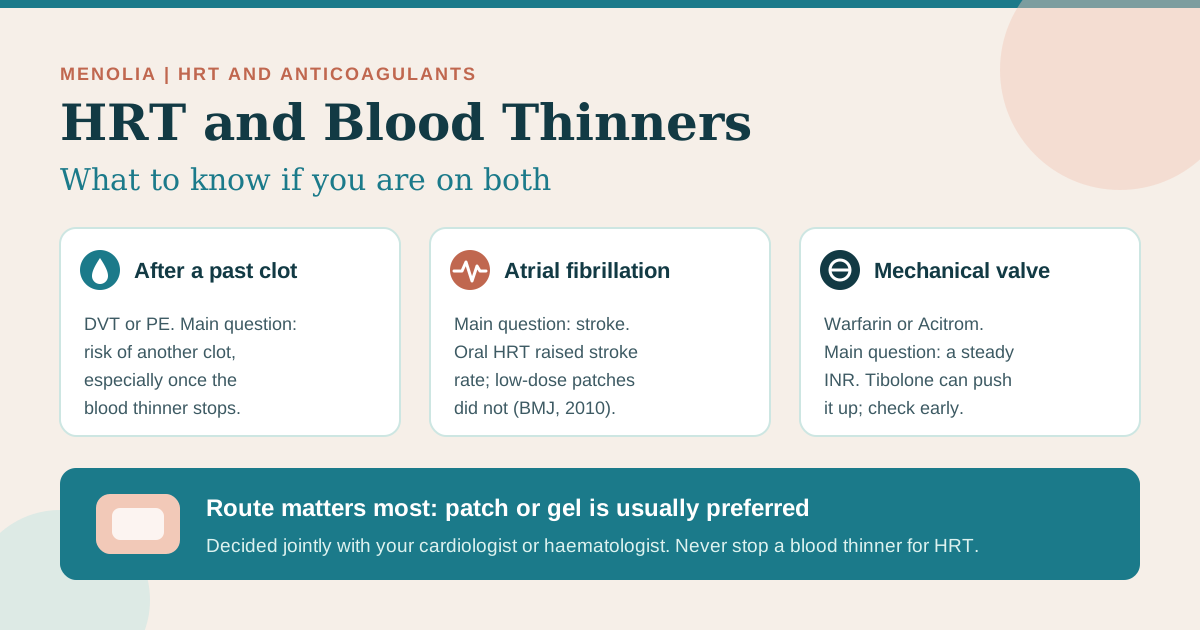
- A past deep vein thrombosis (DVT) or pulmonary embolism (PE). Some women take an anticoagulant for a few months after a clot; others stay on it long term, especially after an unprovoked or repeat clot.
- Atrial fibrillation (AF). Here the blood thinner is there to prevent a stroke, because an irregular heart rhythm allows clots to form inside the heart.
- A mechanical heart valve. These women take a VKA with close INR monitoring, and the valve’s safety depends on keeping the INR in range.
Each of these changes what the HRT conversation focuses on. After a clot, the question is the risk of another clot. With AF, the bigger question is stroke. With a mechanical valve, the question is keeping the INR steady.
Why the Route of Oestrogen Matters Even More Here
Oestrogen taken as a tablet is absorbed from the gut and passes through the liver before it reaches the rest of the body. On that first pass it increases the liver’s production of several clotting proteins. That is the same clotting system your anticoagulant is working to hold down.
Oestrogen through the skin, as a patch or gel, enters the bloodstream directly and largely avoids that first-pass effect on the liver. Our guide comparing the HRT patch, gel and pill explains this difference in more detail.
For a woman who has had a clot, the most useful evidence comes from a French study of 1,023 postmenopausal women aged 45 to 70, followed for an average of 79 months after their anticoagulation was stopped following a first VTE. Transdermal oestrogen was not linked to a significant rise in repeat clots compared with no HRT (hazard ratio 1.0), but the estimate was imprecise (95% confidence interval 0.4 to 2.4), so some increase in risk cannot be ruled out. Women using oral oestrogen had a higher risk (hazard ratio 6.4) (Olié V et al., Menopause, 2011, PMID 21178641). Only 10 women in that study used oral oestrogen, so the exact size of the oral risk is uncertain, but the direction matches the wider evidence on route.
For a woman with AF, the parallel concern is stroke. In a large UK study, current users of oral HRT had a higher rate of stroke than non-users (rate ratio 1.28), while transdermal HRT overall showed no increase (0.95). Low-dose patches showed no increase (0.81), but high-dose patches did (1.89) (Renoux C et al., BMJ, 2010, PMID 20525678). So in this group, both the route and the dose count. Our post on HRT and stroke risk walks through these numbers.
In practice, this is why a woman on a blood thinner who does start HRT is usually offered a transdermal oestrogen at the lowest dose that controls her symptoms.
On a blood thinner and struggling with hot flushes or night sweats? Dr. Suganya reviews why you are anticoagulated, which medicine you take and your full history, then works out whether HRT fits, over a video consultation.
What Happens to Clot Risk While You Are Anticoagulated
A reasonable question is whether taking hormones while the anticoagulant is still running undoes its protection.
The largest study on this looked at 1,888 women under 60 who were being treated with rivaroxaban or enoxaparin followed by a VKA for a confirmed clot. Repeat clots occurred at 3.7% per year while women were on hormonal therapy and 4.7% per year while they were off it, and the difference was not statistically significant. Rates were similar for oestrogen-containing and progestogen-only therapy (Martinelli I et al., Blood, 2016, PMID 26696010). The authors concluded that hormonal therapy was not associated with more repeat clots in women receiving therapeutic anticoagulation.
That study was framed around contraception in women under 60, not menopausal HRT, so it does not settle every question for a woman in her fifties. What it does show is that an anticoagulant at full dose appears to protect well even when hormones are on board.
The period that needs more thought is when the anticoagulant stops. If you took a blood thinner for a set number of months after a clot and your haematologist plans to stop it, tell them if you are on HRT or thinking of starting it. The French study above suggests that from that point on, the route of oestrogen matters a great deal.
Does HRT Change Your INR?
If you take warfarin or acenocoumarol, this is usually the practical worry: will HRT push your INR out of range?
Tibolone is the option most clearly shown to raise the INR. Tibolone (sold as Livial and other brands) is a synthetic steroid used for menopause symptoms in India. In a randomised crossover study in healthy postmenopausal women stabilised on warfarin, 21 days of tibolone 2.5 mg a day raised the INR by an average of 0.40 compared with placebo and lowered several clotting factors (Elbers J et al., Maturitas, 2007, PMID 16887301). A Scottish review of anticoagulated women found that starting tibolone consistently led to over-anticoagulation that needed a dose adjustment, while other HRT preparations did not consistently change INR control or dose needs (McLintock LA et al., BJOG, 2003, PMID 12892692).
First, tibolone is not suitable for women who have had a DVT or PE, who have a known clotting disorder (thrombophilia), or who have had an arterial clot such as a stroke or heart attack, and taking an anticoagulant does not change that (Livial UK Summary of Product Characteristics, section 4.3, revised 2025). For many women reading this, that rules it out. If you take a VKA for another reason and tibolone is being considered, your INR will need close checking in the first weeks, and your anticoagulant dose may need to come down. Stroke is a second consideration for women with AF: in a trial of 4,538 women aged 60 to 85 with osteoporosis, tibolone roughly doubled the risk of stroke compared with placebo (relative hazard 2.19), and the trial was stopped early for that reason (Cummings SR et al., N Engl J Med, 2008, PMID 18703472). Our guide to tibolone covers what else to know about it.
Standard oestrogen HRT did not consistently shift INR control in that review. Even so, any new medicine can nudge a VKA, so a sensible plan is an INR check a week or two after starting HRT and after any dose or route change, as agreed with whoever manages your INR. This matters most for women with a mechanical heart valve, whose INR target is strict.
If you take a DOAC, the interaction studies above do not apply, because DOACs are not monitored by INR. The questions for you are about overall clot risk and bleeding pattern. Some other medicines can raise or lower DOAC levels, so give your cardiologist or haematologist your complete medicine list whenever something is added.
Heavy Bleeding: The Other Side of the Balance
For women still having periods, bleeding is often the bigger day-to-day problem. Anticoagulants tend to make periods heavier, and perimenopause can do the same on its own.
The choice of anticoagulant can make a difference. In the same 1,888-woman study, abnormal uterine bleeding was about twice as common with rivaroxaban as with enoxaparin followed by a VKA (hazard ratio 2.13), and hormonal therapy itself did not increase abnormal bleeding (Martinelli I et al., Blood, 2016, PMID 26696010). In a smaller German registry of women on DOACs, menstrual blood loss scores were 54% higher with rivaroxaban than with apixaban (Lindhoff-Last E et al., Thromb Haemost, 2026, PMID 41224211). Which anticoagulant you take is your cardiologist’s or haematologist’s decision, but if your periods have become very heavy, it is worth telling them.
A hormonal IUS is often the most useful tool. A 2017 review in Blood lists the levonorgestrel intrauterine system (the best-known brand is Mirena), tranexamic acid during the period, and progestogen therapy among the effective options for heavy bleeding on anticoagulants (Boonyawat K et al., Blood, 2017, PMID 29092828). In a Brazilian series of 117 women with a history of thrombosis or a clotting disorder, most of them on oral anticoagulants, around two-thirds reported absent or infrequent periods at 12, 24 and 54 months of follow-up with the 52 mg device, and no bleeding complications occurred during placement (Brull EP et al., Int J Gynaecol Obstet, 2020, PMID 32966599).
The hormonal IUS has a second advantage for women on HRT. If you still have a uterus, oestrogen needs to be paired with a progestogen to protect the womb lining, as our post on why HRT needs progesterone explains. The 52 mg device can often fill that role, so one device may reduce bleeding and complete the HRT plan. Lower-dose hormonal IUS devices are not relied on for this.
Two cautions:
- Bleeding after menopause is never simply put down to the blood thinner. If you have gone 12 months without a period and then bleed, it still needs to be checked. Our guide to post-menopausal bleeding explains what that assessment involves.
- Ask before taking painkillers for cramps. Ibuprofen and other anti-inflammatory painkillers add to bleeding risk when you are on an anticoagulant.
Who Decides, and How
HRT with an anticoagulant is always a shared decision. Your gynaecologist manages the menopause side: whether HRT is needed, which route, what dose and which progestogen. The cardiologist or haematologist who prescribed your blood thinner manages the anticoagulation, and their view on your clot or stroke risk is central.
A careful plan usually looks like this:
- Confirm why you are anticoagulated, for how long, and whether there is a plan to stop.
- Weigh your symptoms against your risk. For some women, non-hormonal treatment for hot flushes is the better first step. For others, symptoms are severe enough that transdermal HRT is worth the discussion.
- If HRT is chosen, start with a transdermal oestrogen at a low dose, with a progestogen (or a 52 mg hormonal IUS) if you have a uterus.
- Check the INR after starting or changing HRT if you take a VKA, and more closely with tibolone or a mechanical valve.
- Review at three months, and again whenever the anticoagulation plan changes.
Some situations call for extra caution or may make HRT unsuitable, including a recent clot, clots that have recurred, a past stroke, and some mechanical valve situations. That judgment belongs to the specialists who know your heart or blood history, working together.
I am Dr. Suganya Venkat, an OB-GYN with more than 15 years of clinical experience, and at Menolia I manage the HRT side of this decision over video consultation for women across India, alongside the cardiologist or haematologist they already see. In many cases, the discussion is about which route, which dose and which checks, rather than whether HRT is allowed at all.
Before Your Next Appointment: A Short Checklist
- Write down the name and dose of your anticoagulant, and the reason you take it.
- Note your usual INR range, if you are on warfarin or acenocoumarol.
- List every other medicine, supplement and herbal product you take.
- Describe your periods: how heavy, how often, and whether they have changed since the blood thinner started.
- Ask your cardiologist or haematologist whether your anticoagulation is long term or has a planned end date.
- Ask both doctors to agree who will check what after HRT starts.
Frequently Asked Questions
Can I take HRT while on blood thinners?
Often, yes, but it depends on why you are on the blood thinner and on the route of HRT. Many women on long-term anticoagulation can use transdermal oestrogen (patch or gel) after a joint decision between their gynaecologist and their cardiologist or haematologist. Oral oestrogen and higher doses are generally avoided in this group.
Is it safe to take HRT with warfarin?
Standard oestrogen HRT did not consistently change INR control in anticoagulated women in a UK review, but an INR check a week or two after starting is sensible. Tibolone (Livial) is different. It is not used at all if you have had a clot in a vein or an artery, and in women who can use it, it has been shown to raise the INR on warfarin, so it needs closer monitoring and sometimes a warfarin dose change. The studies used warfarin, but acenocoumarol (Acitrom) works the same way, so it is sensible to apply the same caution.
Can I take HRT with apixaban or rivaroxaban?
DOACs do not need INR checks, so the INR concern does not apply. The questions are your underlying clot or stroke risk and your bleeding pattern. Transdermal oestrogen is usually preferred, and your prescriber should see your full medicine list, because some medicines change DOAC levels.
Does HRT make blood thinners less effective?
In a study of women being treated for a clot, repeat clots were not more common while they were on hormonal therapy alongside full-dose anticoagulation. That study was mainly about contraception in women under 60, so it is reassuring rather than conclusive for menopausal HRT. The bigger question comes when the anticoagulant is stopped, when oral oestrogen has been linked to more repeat clots and transdermal oestrogen has not.
Which type of HRT is best if I am on an anticoagulant?
Most specialists favour a transdermal oestrogen patch or gel at the lowest effective dose, because it largely avoids the liver’s effect on clotting proteins. If you have a uterus, a progestogen is added, and a 52 mg levonorgestrel IUS (such as Mirena) can do this while also reducing heavy bleeding.
My periods are very heavy on my blood thinner. What can help?
Tell the doctor who prescribed the anticoagulant, because the choice of medicine can affect bleeding. Options include a hormonal IUS, tranexamic acid during periods, and progestogen therapy. Each is an individual decision for your doctor, especially if your clot was recent, because how these treatments affect clot risk during anticoagulation has not been well studied, though it is thought to be low. Avoid anti-inflammatory painkillers such as ibuprofen for cramps unless your doctor agrees, since they add to bleeding risk.
Should I stop my blood thinner to start HRT?
No. Never stop or change an anticoagulant because of HRT without the doctor who prescribed it. The anticoagulant treats a serious condition of its own, and HRT is planned around it, not the other way round.
On a blood thinner and wondering whether HRT could help with your symptoms? Bring the name of your anticoagulant, the reason you take it and your recent INR results if you have them, and we can work through it together, alongside your cardiologist or haematologist. Message Dr. Suganya Venkat on WhatsApp for a Rs 399 video consultation.