A woman in her early fifties wrote to me with a question that comes up more than almost any other when HRT is mentioned: her mother had a deep vein thrombosis in her sixties, and now she was afraid that hormone therapy would give her one too. Her hot flashes were disrupting her sleep most nights, but she had quietly decided HRT was not for her before even raising it with a doctor.
Blood clots are, in my experience, the single most common reason Indian women rule out HRT for themselves before the conversation even starts. Sometimes it is a family member’s history. Sometimes it is a general sense, picked up from a relative or an old newspaper article, that “hormones cause clots.” The fear is understandable, and the underlying concern, venous thromboembolism, is a genuine safety consideration in HRT decisions. But the blanket version of the fear, that any woman with any clot connection should avoid HRT entirely, is not accurate, and it is keeping women who could safely use HRT from ever finding that out.
This post covers what VTE actually is, why the way oestrogen enters your bloodstream changes your risk more than whether you take it at all, what a personal or family history of DVT or PE actually means for your eligibility, when thrombophilia testing genuinely helps, and when a haematologist joins the conversation.
What VTE Is
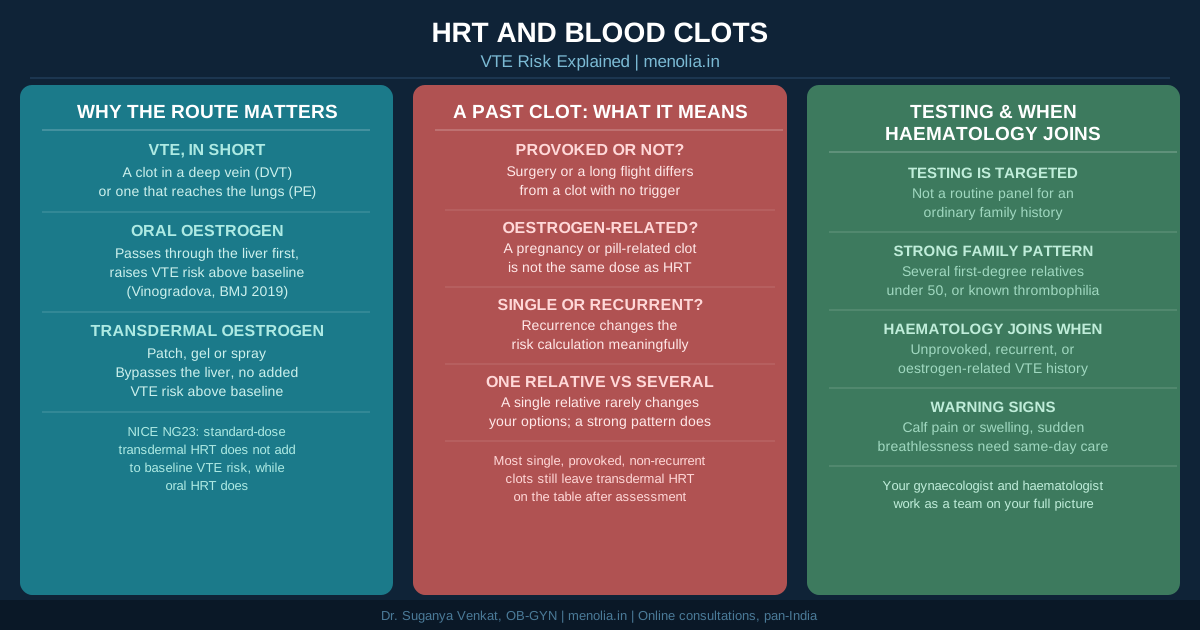
Venous thromboembolism, VTE, is the umbrella term for two related problems: a deep vein thrombosis (DVT), a blood clot that forms in a deep vein, most often in the calf or thigh, and a pulmonary embolism (PE), where part of that clot breaks free and travels to the lungs. A DVT causes calf pain, swelling, warmth, or redness, usually in one leg. A PE causes sudden breathlessness, chest pain, or a rapid heartbeat, and is a medical emergency.
VTE is not rare in the general population. Several factors raise the baseline risk regardless of hormones at all: age over 60, obesity, immobility, recent surgery, cancer, pregnancy, and inherited clotting tendencies. Oestrogen, taken as HRT or as the contraceptive pill, is one factor among several that can add to this baseline risk. It does not act alone, and how much it adds depends heavily on the route it is taken by.
Why the Route of Oestrogen Changes Everything
This is the single most useful thing to understand about HRT and VTE risk, and it is rarely explained clearly.
Oral oestrogen, the tablet form, is absorbed through the gut and passes through the liver before reaching the rest of your circulation. This first pass through the liver increases the production of several clotting proteins, which is why oral oestrogen carries a measurable increase in VTE risk compared to not taking hormones at all. A large UK case-control study by Vinogradova and colleagues, published in The BMJ in 2019, found that most oral HRT preparations were associated with an increased risk of venous thromboembolism compared to non-users. An earlier French cohort, the ESTHER study led by Canonico and colleagues, published in the Journal of Thrombosis and Haemostasis in 2006, found a similarly raised relative risk for VTE among oral oestrogen users.
Transdermal oestrogen, delivered through a patch, gel, or spray, bypasses the liver almost entirely, absorbed directly into the bloodstream through the skin. Because it skips that first-pass step, it does not meaningfully activate the same clotting pathway. Both the Vinogradova BMJ data and the Canonico ESTHER study found transdermal oestrogen was not associated with a significant increase in VTE risk compared to women taking no hormones at all. NICE guideline NG23 (nice.org.uk, last reviewed April 2026) states this plainly: standard-dose transdermal HRT does not add to a person’s baseline VTE risk, while oral HRT does.
Avoided HRT because of a clot in your family or your own history? Dr. Suganya reviews your specific history before recommending a route, rather than applying a blanket rule.
This is why, when a woman raises clot risk with me, the conversation almost never ends at “no.” It moves to “which route.” Our guide to the estradiol patch in India covers the practical side of that route: cost, brands, and how to use one, once transdermal is the direction your doctor recommends.
What a Personal History of DVT or PE Means for Eligibility
A woman who has had a DVT or PE herself is in a genuinely different position from a woman whose mother or aunt had one, and this distinction matters more than most informal advice suggests.
NICE NG23 does not offer a blanket statement that every woman with a past clot is automatically eligible for HRT, but it also does not close the door outright. What it asks your doctor to assess is the shape of that history:
Was the clot provoked or unprovoked? A DVT that followed a long-haul flight, a surgery, a hospital stay, or a period of prolonged immobility is a provoked event, and it carries a different implication than a clot that appeared with no identifiable trigger.
Was it oestrogen-related? A clot that occurred during pregnancy or while on the contraceptive pill is relevant information, but it does not automatically mean HRT oestrogen, given at a much lower, transdermal, physiological dose, carries the same risk.
Was it a single event, or has it happened more than once? Recurrence changes the calculation meaningfully.
Are you currently on anticoagulation, and for what indication? Some women with a past VTE remain on long-term blood thinners, which itself changes the risk-benefit picture around HRT.
For most women with a single, clearly provoked, non-recurrent VTE in the past, especially one that occurred years ago and was not oestrogen-related, transdermal HRT can often still be considered after this fuller history is taken, sometimes alongside a haematology opinion. This is the detail that gets lost when the informal version of the advice is simply “you had a clot, so no HRT.” The real answer depends on what kind of clot, when, why, and what has happened since.
A past clot doesn’t automatically close the door on HRT. Dr. Suganya works through the details of your history, provoked or not, how long ago, whether you are on anticoagulation, over a video consultation, and gives you a specific answer rather than a blanket rule. WhatsApp consultation at Rs 399.
Family History: When It Matters and When It Doesn’t
A family history of blood clots, on its own, worries far more women than it should genuinely restrict. The distinction that matters is how strong that family history actually is.
One relative with a clot later in life, with an obvious trigger like surgery or immobility, is common in any large family and does not, by itself, change your HRT options. This describes a large share of the family histories women bring to me.
Multiple first-degree relatives (parent, sibling, child) who had VTE before age 50, or a known specific inherited thrombophilia in the family, such as Factor V Leiden, prothrombin gene mutation, or protein C, S, or antithrombin deficiency, is a different picture. NICE guidance recommends a haematology assessment before starting HRT in this situation, and the British Menopause Society takes the same position: this kind of family pattern is worth a specialist look before proceeding, even with the transdermal route.
Where this gets misunderstood is the assumption that any relative with a clot means you should be tested. The British Society for Haematology specifically advises against routine Factor V Leiden testing for a woman whose first-degree relative has the mutation but has never actually had a clot. Testing an ordinary family history does not usually change the plan, and a negative thrombophilia test does not fully erase a strong family pattern either, so testing is targeted rather than automatic.
Thrombophilia Screening: When It Helps
Thrombophilia is the general term for an inherited or acquired tendency toward clotting. Testing for it is not a routine step before starting HRT for most women, and the British Menopause Society is explicit that a general “just to be safe” thrombophilia panel is unlikely to change management for a woman with an unremarkable history.
Testing becomes genuinely useful in a narrower set of situations:
- A strong family history, multiple first-degree relatives with VTE before age 50
- A known specific thrombophilia already identified in a close family member
- A personal history of VTE that was unprovoked, oestrogen-related, or recurrent, or that occurred at a young age
If you fall into one of these categories, your doctor may order a targeted panel, or refer you directly to a haematologist rather than testing first. Either path is reasonable. What is not useful, and what I would caution against, is ordering a broad thrombophilia panel for a woman with an ordinary, unremarkable clot history purely out of general anxiety. It adds cost, can produce results that are hard to interpret in isolation, and rarely changes the transdermal-first recommendation that already applies to anyone with genuine risk factors.
When Haematology Joins the Conversation
Most women with mild VTE risk factors, a distant family history, being overweight, or a single provoked clot from years ago, do not need a haematologist involved. Your gynaecologist can manage the transdermal-route decision directly.
A haematology opinion becomes the right next step when:
You have had a personal VTE that was unprovoked, oestrogen-related, or has recurred more than once.
Your family history includes multiple first-degree relatives with early VTE, or a confirmed inherited thrombophilia.
You are currently on anticoagulation and the interaction between that treatment and any hormone therapy needs specialist input.
Your gynaecologist is uncertain after taking the full history, which is a legitimate and common reason for a referral, not a sign that something has gone wrong.
This is the same collaborative pattern that applies to any other significant comorbidity in an HRT decision. Your gynaecologist manages the menopause-specific side of your care and brings in the haematologist for the clotting-specific assessment, so the final decision reflects your complete picture rather than a single specialist’s narrow view.
What This Looks Like in Practice
For most women who raise blood clot concerns with me, the path looks like this: take a detailed personal and family VTE history, not just “has anyone in your family had a clot” but what kind, when, and why; if the history is unremarkable or only mildly elevated (age, weight, a distant provoked family event), proceed with transdermal oestrogen at the lowest effective dose, which current evidence does not associate with increased VTE risk; if the history includes a personal VTE or a strong family pattern, involve haematology before starting, and consider a targeted rather than blanket thrombophilia panel; add the appropriate progestogen if the uterus is present, generally micronised progesterone, which the current evidence associates with a more favourable clotting profile than some older synthetic progestogens.
At Fertilia and Menolia, Dr. Suganya Venkat has this exact conversation often in video consultations across India, women who assumed a family member’s clot, or one they had themselves years ago under very different circumstances, ruled HRT out entirely. Often it does not. The question worth bringing to your gynaecologist is not “can I take HRT with my history,” answered as a yes or no from a distance, but “what does my specific clot history mean for my options,” which is a conversation that needs your actual details in the room.
If you are earlier in the decision and want the fuller picture on benefits, risks, and who HRT suits, our complete HRT guide is the place to start. If you are managing a different comorbidity alongside this question, our guides to HRT with high blood pressure and HRT with migraine apply the same transdermal-first logic to those situations.
Frequently Asked Questions
Can I take HRT if I have had a blood clot in the past?
It depends on the details of that clot, not just the fact that it happened. A single, clearly provoked DVT or PE, from surgery or a long flight, for example, that occurred years ago and has not recurred, is a different picture from an unprovoked or recurrent clot. Your gynaecologist takes a full history and may involve a haematologist before deciding, but a past clot does not automatically rule out HRT.
Does HRT cause blood clots?
Oral HRT carries a measurable increase in venous thromboembolism risk compared to not taking hormones, because the tablet form passes through the liver and affects clotting proteins. Transdermal HRT, patch, gel, or spray, bypasses that liver processing step and current evidence does not show an increased VTE risk with standard doses compared to non-users.
Is transdermal HRT safer than oral HRT for blood clot risk?
Yes, specifically for VTE risk. Research including the Vinogradova 2019 BMJ study and the Canonico ESTHER study found oral oestrogen was associated with an increased VTE risk while transdermal oestrogen was not. This is why transdermal is the generally preferred route for women with any personal or family clot history.
Should I have a thrombophilia test before starting HRT?
Not routinely. Testing is recommended in specific situations: a strong family history of clots (multiple first-degree relatives before age 50), a known inherited thrombophilia already identified in the family, or a personal VTE that was unprovoked, oestrogen-related, or recurrent. For an ordinary or mild family history, testing is unlikely to change your treatment plan.
If my mother or sister had a blood clot, does that mean I can’t take HRT?
Not necessarily. One relative with a clot, especially one with an obvious trigger like surgery, does not usually change your HRT options. A stronger pattern, several first-degree relatives affected before age 50, or a specific inherited clotting condition identified in the family, is what prompts a haematology assessment before starting.
When would my doctor refer me to a haematologist for this?
Typically when you have had a VTE yourself that was unprovoked, oestrogen-related, or recurrent, when you are currently on blood thinners, when your family history is strong (multiple early cases or a known inherited thrombophilia), or when your gynaecologist wants a specialist opinion to confirm the safest route forward. This is a normal, collaborative step, not a sign that HRT is being ruled out.
What are the warning signs of a blood clot I should know while on HRT?
Calf pain, swelling, warmth, or redness in one leg can indicate a DVT and needs same-day assessment. Sudden breathlessness, chest pain, or a rapid heartbeat can indicate a pulmonary embolism and is a medical emergency requiring immediate care. These symptoms should never wait for a scheduled appointment, regardless of what route or dose of HRT you are using.
If a clot history, yours or a family member’s, has made you rule out HRT without ever discussing the specifics, that assumption is worth checking directly. Message Dr. Suganya Venkat on WhatsApp to talk through your history and what it actually means for your options.