A woman wrote to me last week with three browser tabs open: one for an estradiol patch, one for an oestrogen gel, one for an oral tablet, each from a different corner of the internet, each insisting it was the “best” option for menopause hormone therapy. She had already decided she wanted to start HRT. What she had not decided, and what nobody had actually explained to her, was which form to take it in.
That is a fair question to be stuck on, because it is rarely the first thing anyone explains. Most conversations about HRT jump straight from “should I start” to a specific prescription, and the reasoning behind why that particular format was chosen for you often gets compressed into a single sentence. This post is that missing conversation: what a patch, a gel, and a pill actually do differently once they are in your body, how each one fits into a real week, and the cost difference between them in India, so that when your gynaecologist recommends one, you understand why.
If you have not yet decided whether to start HRT at all, our complete guide to HRT in India covers benefits, risks, and timing first. This post assumes you are past that question and are now choosing a format.
One clarification before we compare formats: everything here is about the oestrogen part of HRT. If you still have your uterus, oestrogen on its own is not the complete prescription. It has to be balanced with a progestogen (such as oral micronised progesterone, a progestogen tablet, or a 52 mg levonorgestrel intrauterine system, the type sold as Mirena) to protect the lining of the womb, because oestrogen given on its own raises the risk of the lining thickening abnormally and, over time, of endometrial cancer. Some patches deliver both hormones in one. So the patch-versus-gel-versus-pill choice below is about how you take your oestrogen; your gynaecologist adds the progestogen component to whichever route you choose. The exception is if you have had a hysterectomy, in which case oestrogen alone is usually appropriate.
The One Fact That Explains Almost Every Difference Between Them
Before the practical comparison, it helps to understand the one mechanism that drives most of what separates these three options: how the oestrogen gets into your bloodstream.
Oral tablets (like Progynova or Premarin) are swallowed, absorbed through the gut, and then travel through the liver before reaching general circulation. This “first pass” through the liver is not a neutral step. It increases the liver’s production of several clotting proteins, and it interacts with pathways involved in blood pressure regulation. A large UK case-control study led by Vinogradova and colleagues, published in The BMJ in 2019 (PMID 30626577), found that most oral HRT preparations were associated with an increased risk of venous thromboembolism (blood clots) compared to women not taking HRT at all.
Patches and gels are both transdermal, meaning the oestrogen is absorbed directly through the skin into the bloodstream, bypassing the liver’s first pass almost entirely. The same Vinogradova study found transdermal preparations were not associated with a significant increase in that same clotting risk. A separate UK study led by Renoux and colleagues, published in BMJ in 2010 (PMID 20525678), found a comparable pattern for stroke, but with an important dose nuance. Oral HRT carried a higher stroke rate than not taking HRT (rate ratio 1.28). Low-dose transdermal oestrogen did not raise the stroke rate, whereas higher-dose oestrogen patches were associated with an increased stroke rate (rate ratio 1.89, 95% CI 1.15 to 3.11). In other words, with patches and gels it is the dose as much as the transdermal route that matters, which is one reason your gynaecologist starts at the lowest dose that controls your symptoms.
This is why, when route comes up in a consultation, the practical shorthand you will often hear is “transdermal first.” It is not that oral oestrogen is unsafe. For many healthy women starting HRT close to menopause, it remains a reasonable choice. It is that patch and gel start from a lower baseline risk on clotting and blood pressure, which matters more the older a woman is at starting, or if she carries other risk factors such as obesity, smoking, or a family history of clots. Your gynaecologist weighs this alongside your personal history rather than defaulting to one route for everybody.
Not sure which route fits your health history? Dr. Suganya reviews your blood pressure, clot risk, and daily routine before recommending a specific format, not just a hormone.
The Patch: Twice-Weekly, Visible, Steady
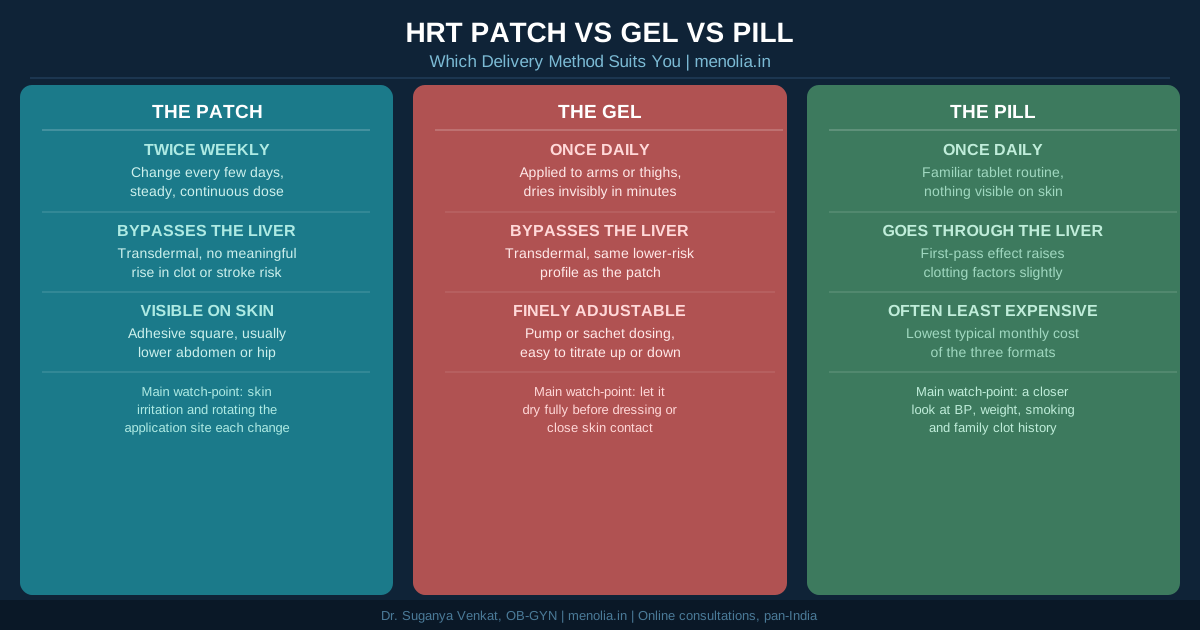
An estradiol patch is a small adhesive square applied to the lower abdomen or buttock (check your specific brand’s leaflet, since approved sites vary), changed twice a week (some formulations are once-weekly). It delivers a steady, continuous dose of oestrogen through the skin over several days rather than a single daily peak.
What suits this format:
- You want to “set and forget” for a few days rather than remember a daily step.
- You are comfortable with something visible on your skin, or can place it somewhere clothing covers.
- You want the most consistent, least fluctuating oestrogen level of the three options, since the patch releases continuously rather than in daily doses.
What to watch for: skin irritation at the application site is the most common complaint, and rotating the site with each change helps. Very humid weather, swimming, and vigorous sweating can occasionally loosen adhesion, which is worth mentioning at your review if it happens repeatedly. Patches are also the easiest format to forget you are wearing, which some women count as an advantage and others find mildly unsettling until they get used to it.
The Gel: Daily, Flexible Dosing, No Visible Patch
An oestrogen gel, such as Oestrogel or Divigel, is measured out (from a pump or a single-use sachet) and rubbed into the skin, usually on the arms or thighs, once a day. Like the patch, it is transdermal and bypasses the liver’s first pass, but the daily application means the dose can be adjusted more finely, in smaller increments, if your symptom control needs fine-tuning.
What suits this format:
- You would rather have nothing visible on your skin between applications.
- Your gynaecologist wants the flexibility to titrate your dose up or down in small steps, which is easier with a gel’s pump-metered dosing than with a fixed-strength patch (single-use gel sachets, by contrast, are a fixed dose and are not adjustable).
- You do not mind a daily routine step and can allow the applied area to dry fully (typically a few minutes) before dressing, so the gel is not wiped or rubbed off onto clothing or another person.
What to watch for: the gel needs to dry before you put on clothes over that area, and it should not be applied right before close skin contact with a partner or a young child, since inadvertent transfer of oestrogen to another person’s skin is a real, if usually manageable, consideration. Washing your hands after application, letting the site dry fully, and following the product leaflet’s instructions on covering the area and how long to avoid skin contact keeps this risk low.
The Pill: Once-Daily, Familiar, and the First-Pass Trade-Off
An oral tablet, most commonly Progynova (estradiol valerate) or Premarin in India, is the most familiar format simply because it works the same way as most other daily medicines: swallow once a day, at roughly the same time.
What suits this format:
- You already take other daily tablets and prefer to fold HRT into that same routine rather than add a new type of task (applying, changing, remembering a patch site).
- There is no comfortable, private place to apply a patch or gel in your daily circumstances, or you strongly prefer nothing on your skin at all.
- You have no personal or family history that raises particular concern about the first-pass effects described above, and your gynaecologist judges oral oestrogen reasonable for you specifically.
What to watch for: because of the first-pass effect, the actual practical trade-off is the one already described above: a small increase in clotting and, for stroke specifically, an increase tied to the oral route (and, separately, to higher-dose oestrogen patches) rather than to low-dose transdermal oestrogen. This is precisely why a gynaecologist reviewing a request for a pill will often ask more closely about blood pressure, weight, smoking, and family clot history before agreeing to it, rather than because the tablet itself is a poor option in general.
When to Seek Urgent Help on HRT
Whichever format you choose, it helps to know the small number of symptoms that mean same-day medical attention rather than waiting for your next review. Contact emergency care straight away if you notice new pain or swelling in one calf or leg, sudden breathlessness or chest pain, sudden weakness or numbness on one side of the body, drooping of the face or difficulty speaking, or a sudden severe headache or change in your vision. These are rare, but they are the signs of a clot or a stroke, and acting quickly matters. This is not a reason to avoid HRT; it is simply the same basic safety awareness that comes with any hormone treatment.
Side-by-Side: The Practical Differences
| Patch | Gel | Pill | |
|---|---|---|---|
| Frequency | Twice weekly (some once weekly) | Once daily | Once daily |
| Visibility | Visible adhesive square | Invisible once dry | Invisible (swallowed) |
| Dose adjustment | Fixed strengths, changed by switching patch | Adjustable in metered pump steps (sachets are fixed-dose) | Fixed strengths, changed by switching tablet |
| Bypasses liver first pass | Yes | Yes | No |
| Main practical downside | Skin irritation, occasional adhesion issues | Drying time, transfer-to-others precaution | First-pass clotting/stroke consideration |
| Typical India cost range | Moderate | Moderate | Usually the least expensive per month |
Cost varies by brand and city, and each product post above states current pricing in detail. As a general pattern, oral tablets tend to be the least expensive per month, patches sit in the middle, and gels vary depending on pack size and how much is used per application. If cost is the deciding factor for you, discuss the price difference against the clotting-risk difference explicitly with your gynaecologist rather than choosing on price alone. This is not a small caveat: for a woman with elevated baseline risk, the transdermal premium is usually worth paying, while for a woman with no such risk factors, price can reasonably tip the decision toward the tablet.
Can You Switch Formats Later?
Yes, and it is common. Many women start on one format and move to another after a few months, either because a side effect (skin irritation with a patch, or forgetting a daily gel step) made the original choice impractical, or because a change in health circumstances shifted the risk-benefit balance toward or away from oral oestrogen. Switching between patch, gel, and pill is generally straightforward and does not mean the first choice was a mistake. It usually means your gynaecologist is adjusting the plan to how your actual life and body responded, which is exactly what a follow-up review is for.
If you are already on HRT and unsure whether your current format is still the right one for your symptom control, that is worth raising at your next review rather than waiting for it to resolve on its own.
What This Looks Like in a Real Consultation
Most women do not walk into a consultation with a firm preference between patch, gel, and pill, and that is completely normal. In practice, I start by reviewing your blood pressure, weight, smoking status, and any personal or family history of blood clots or stroke. A family history or milder risk factors usually shift the starting recommendation toward transdermal (patch or gel). A personal history of a blood clot or stroke is more significant: it can mean systemic HRT is not advisable at all, or needs specialist input first, rather than simply a change of route. If none of those apply, the choice often comes down to lifestyle fit: daily routine versus twice-weekly change, visible versus invisible, and budget. At Menolia, this conversation happens over video consultation, pan-India, with time set aside specifically to walk through the trade-offs rather than hand over a prescription without the reasoning behind it.
Frequently Asked Questions
Which HRT delivery method is best overall?
There is no single “best” format for every woman. Transdermal options (patch and gel) generally carry a lower baseline risk for blood clots and stroke because they bypass the liver’s first-pass metabolism, which is why they are often the starting recommendation. But the pill remains a reasonable choice for many women with no elevated risk factors, and the final decision also depends on your daily routine, skin sensitivity, and budget.
Is a patch better than a gel, or is it the other way around?
Both are transdermal and, at the lower doses usually prescribed, share a lower clotting and stroke risk than oral oestrogen. The difference between them is mostly practical: a patch is changed twice a week and stays visible on the skin, while a gel is applied daily, dries invisibly, but needs a few minutes to dry before dressing and requires care to avoid transferring oestrogen to someone else’s skin. Neither is medically superior to the other for most women.
Why do doctors often prefer transdermal HRT over pills?
Because oral oestrogen passes through the liver before reaching general circulation, which increases certain clotting proteins and is linked to a higher risk of venous thromboembolism and, for stroke specifically, a higher risk than low-dose transdermal oestrogen (higher-dose oestrogen patches carry their own increased stroke risk, so dose matters alongside route). This does not make the pill unsafe for every woman, but it is why route becomes a more careful discussion for women with additional risk factors such as high blood pressure, obesity, smoking, or a family history of clots.
Can I switch from a pill to a patch or gel later if I change my mind?
Yes. Switching between formats is common and usually straightforward, whether it is because of a side effect, a change in your health picture, or simply a preference for a different routine. It does not mean your original choice was wrong.
Does the gel or patch cost more than the pill in India?
Generally, oral tablets tend to be the least expensive option per month, with patches in the middle and gels varying by pack size and how much is used. Each individual product guide states current pricing, and it is worth discussing the price difference against the risk-profile difference with your gynaecologist rather than choosing on cost alone.
Will a patch or gel show under my clothes?
A patch is a small adhesive square that some women find visible depending on placement and clothing; many apply it somewhere easily covered, such as the lower abdomen or hip. A gel dries invisibly within a few minutes of application and leaves nothing visible once dry.
If I have high blood pressure, can I still choose the pill if I prefer it?
This is a conversation to have directly with your gynaecologist rather than a fixed rule. Well-controlled blood pressure does not automatically rule out oral oestrogen, but many gynaecologists will lean more strongly toward transdermal options in this situation because of the added first-pass effect on blood pressure regulation. Our guide to HRT with high blood pressure covers this specific decision in more depth.
Still deciding which format fits you? Message Dr. Suganya Venkat on WhatsApp to talk through your health history and daily routine together, and land on a format that is easy for you to actually stick with.
If you have not yet worked through the full benefits-and-risks picture before starting, our complete guide to starting HRT in India is the place to begin.